





Welsh Wooden Armchair
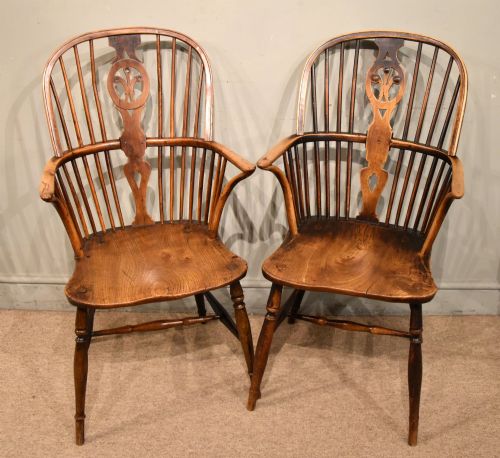
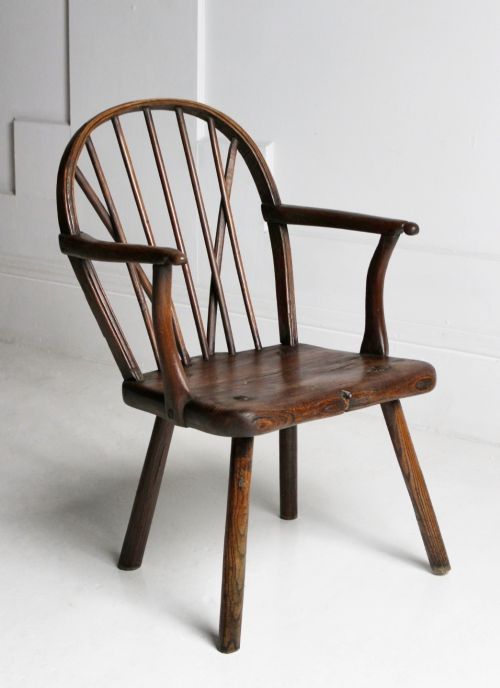
These welsh wooden armchair examples combine robust local craft and native timber, offering both enduring utility and distinct regional character.
Welsh Wooden Armchair
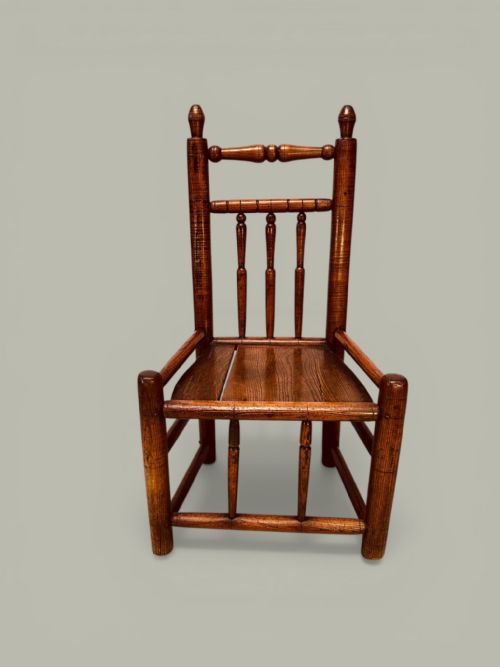
The selection frequently includes smaller children's variants alongside grander seating of substantial proportions from regions such as the Swansea Valley and Carmarthenshire. These pieces reflect diverse domestic needs of past centuries, including multi-functional chair-tables and commode seats designed for everyday rural life.
How they were made
Local makers constructed these seats using native hardwoods sourced directly from the landscape, predominantly oak, ash, elm, and yew. Burr elm surfaces occasionally appear to highlight figuring, while some functional examples receive an early coat of paint.
Construction relies upon traditional joinery and Windsor framing techniques, utilising turned spindles, stick-back supports, and pegged joints. Frameworks balance rigid structural integrity with ergonomic comfort through the careful shaping of solid timber seats and comb-back crest rails.
Welsh Wooden Armchair Retail Price Guide 2026
Typical asking prices for welsh wooden armchair among the pieces listed under this phrase on Sellingantiques today, from the lower quarter to the upper quarter. They describe what is for sale here now, not the wider market.
What varies in quality
Quality rests upon the harmony of proportions, the integrity of the timber selection, and the sophistication of the turning or stick-work. A superior example demonstrates deliberate regional styling, such as a well-balanced comb-back or crisp carved oak panel detailing, rather than purely utilitarian assembly.
The handling of the timber dictates distinction, where masterly integration of burr elm or substantial oak timbers elevates a piece. Subtle refinements in arm scrolls and spindle tapering separate exceptional country craftsmanship from standard provincial utility.
The Welsh Wooden Armchair Glossary
- Vernacular
- Everyday furniture built by local craftsmen for regional use rather than high-style metropolitan workshops. These pieces reflect local timber availability and traditional building methods.
- Comb-back
- A Windsor chair variation where the vertical spindles of the back extend upward through a horizontal head-piece resembling the teeth of a comb. This style provides high-backed support.
- Wainscot
- An early heavy wooden armchair constructed with panelled backboards and solid box seats. It represents a formal sixteenth or seventeenth-century domestic seating tradition.
- Stick-back
- A chair construction method where turned wooden rods are tenoned directly into a solid wooden seat slab. It forms a lightweight yet rigid structural support.
- Turner's chair
- An early chair form constructed entirely from turned wooden spindles and members joined together. These cylindrical parts create a geometric, cage-like framework.
Welsh Wooden Armchair: Frequently Asked Questions
How do I date a wooden armchair?
Dating relies upon examining construction methods, tool marks, and timber shrinkage patterns visible across the frame. Earlier pieces from the seventeenth century often show heavier panelled or turned assembly, whereas eighteenth and nineteenth-century examples lean towards stick-back and Windsor forms.
Regional styles and recorded regional provenances also help anchor a piece within a specific decade. Comparing joint construction with known examples provides further clarity on the period of origin.
Were these chairs made in workshops?
Most pieces originated in rural country workshops rather than large urban cabinet-making factories. Local joiners and turners utilised whatever native timbers grew nearby to supply farming and domestic households.
This localized production resulted in distinct regional variations unique to specific valleys or counties. Consequently, many chairs carry strong folk art characteristics reflecting individual maker traditions.
How should I care for timber chairs?
Maintain stable indoor humidity levels to prevent the native hardwoods like oak, ash, and elm from splitting or warping. Avoid placing antique seating near direct heat sources or strong sunlight which can dry out the ancient wood.
Apply traditional beeswax occasionally to nourish the surface and preserve the historic finish. Regular dusting with a soft dry cloth is sufficient for daily maintenance.
What is a chair-table?
A chair-table is a dual-purpose piece of furniture featuring a large back that pivots downward on wooden pegs to form a table surface. This ingenious design saved valuable floor space in modest seventeenth and eighteenth-century rural homes.
When upright, the wide back and arms provided comfortable seating by the hearth. When lowered, it served as a dining or working surface.