
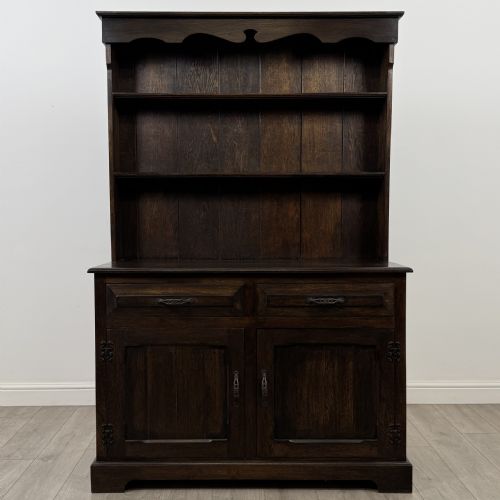
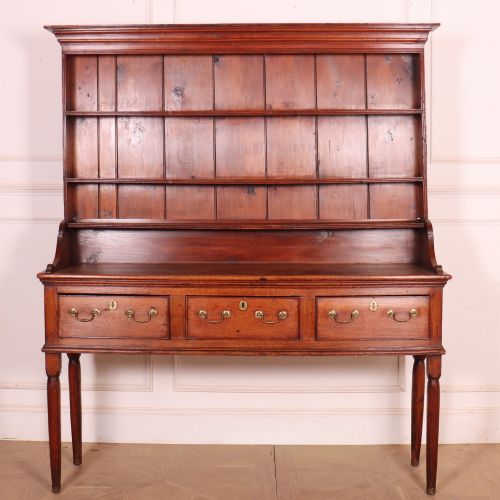
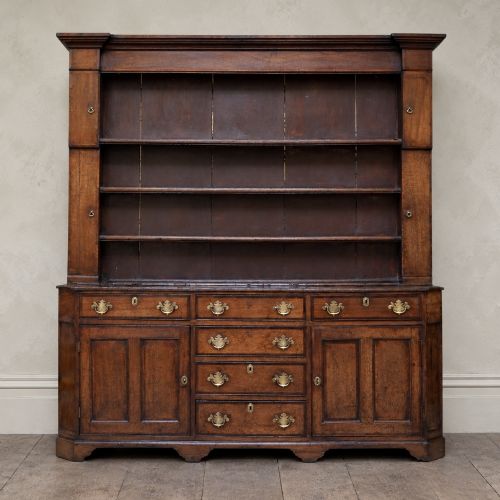
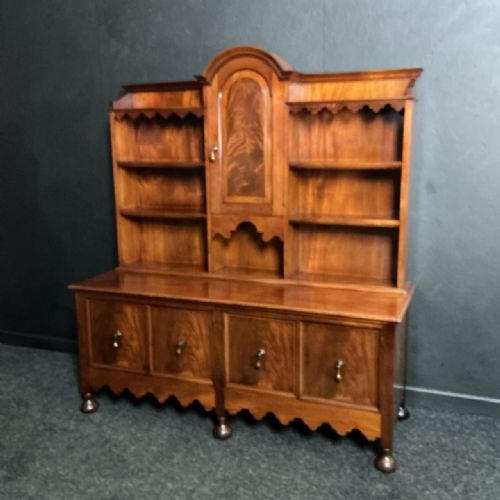

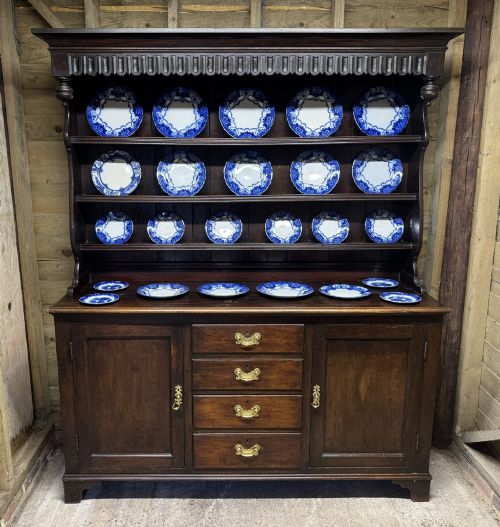
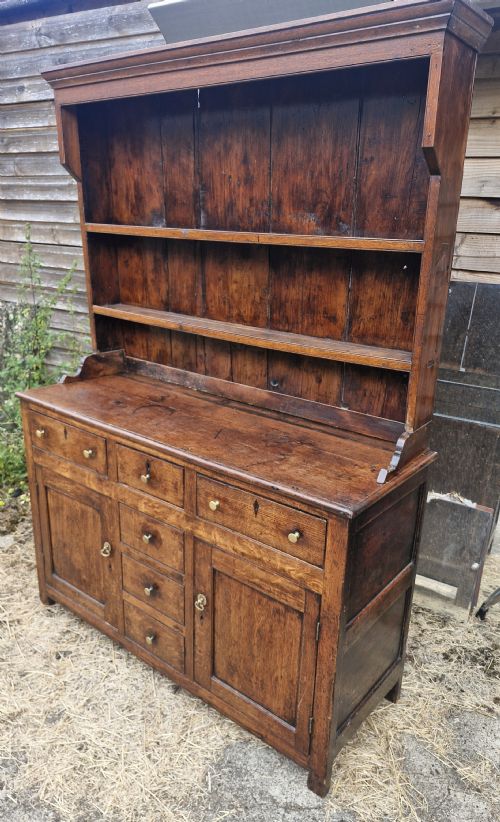
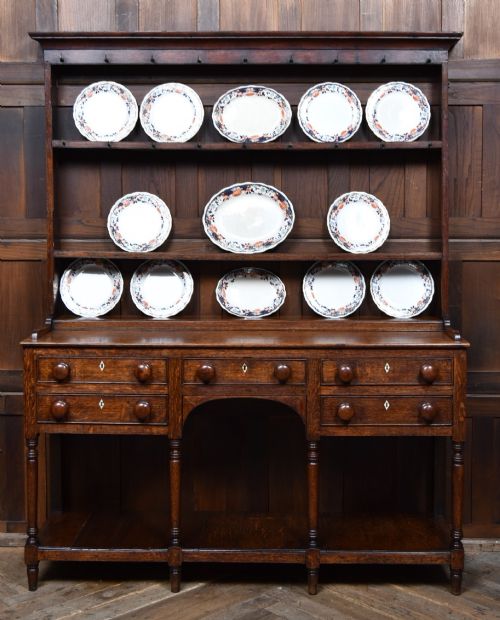
Welsh Plate Rack
These welsh plate rack pieces are traditional timber display shelving units designed for domestic crockery, offering practical kitchen storage with historical character.
Welsh Plate Rack
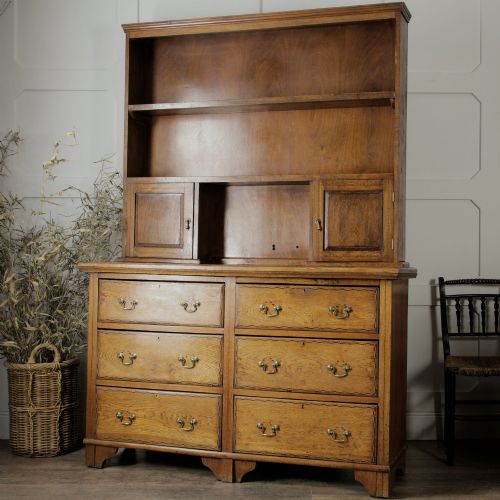
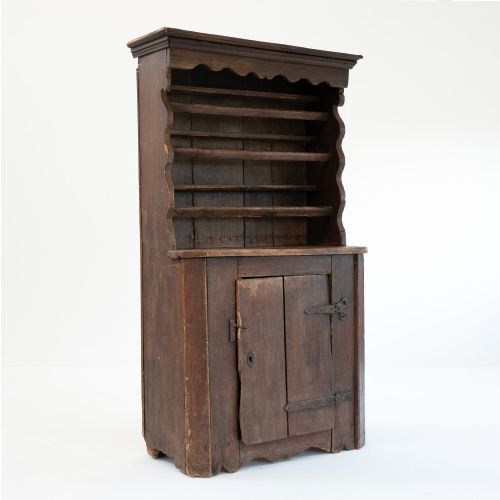
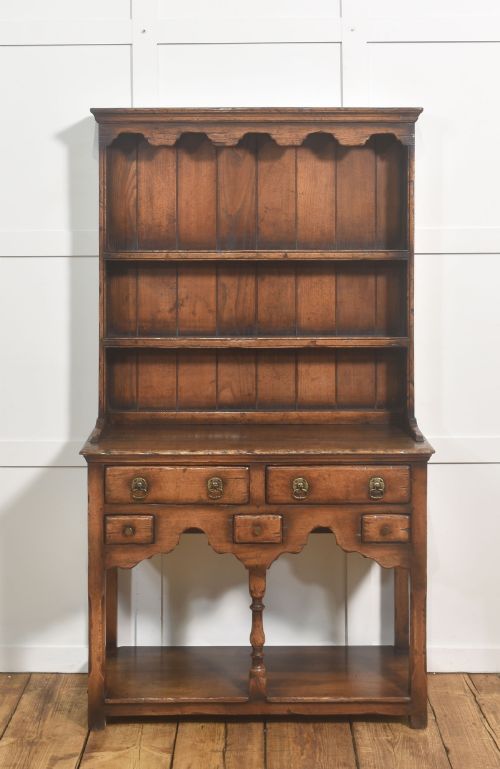
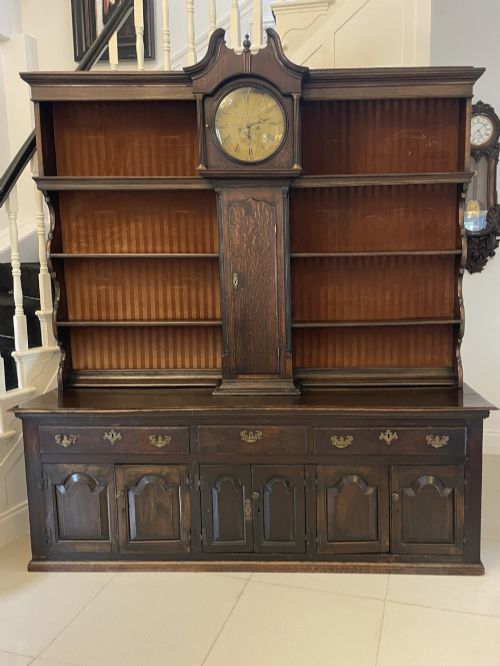
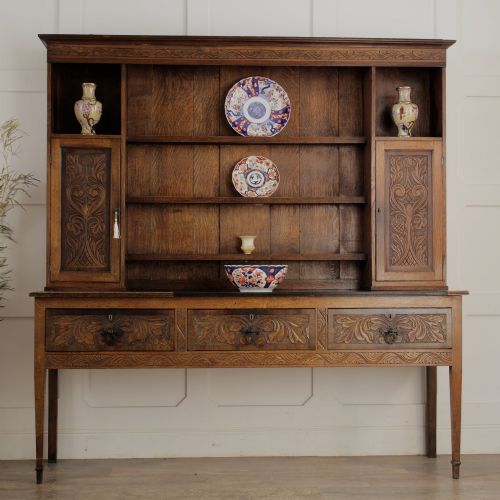
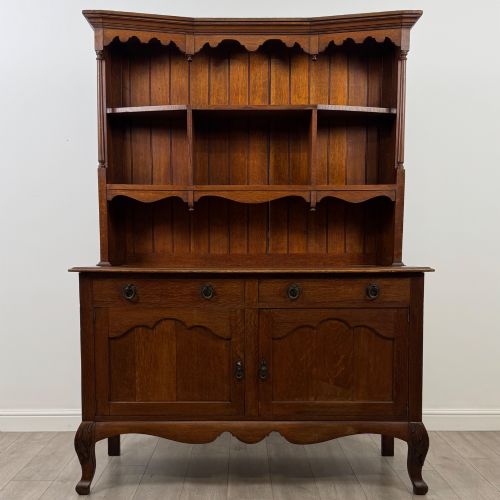
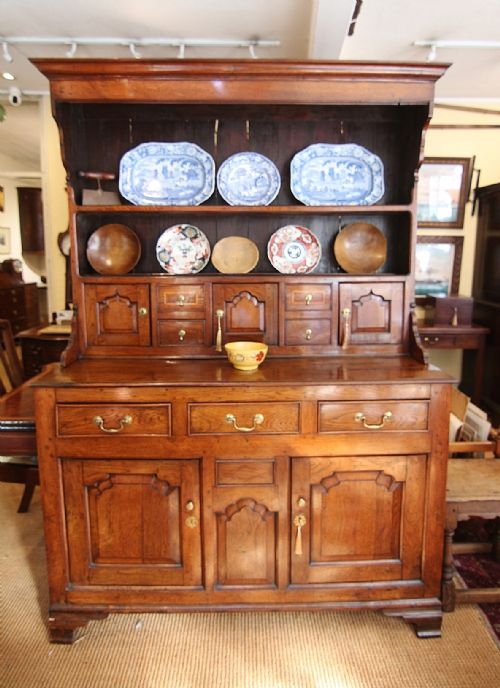
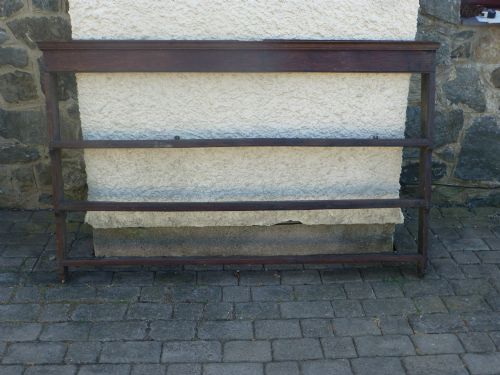
A welsh plate rack serves as a utilitarian timber fixture designed to hold ceramic plates upright against a wall or mounted atop a kitchen dresser base. When exploring this selection, buyers encounter pieces integrated into larger dresser units as well as standalone wall-hanging racks originating from regional English and Welsh workshops.
The forms span several centuries, with vernacular examples appearing alongside formal Georgian and Victorian iterations. Most survivors utilise sturdy domestic timbers constructed with open shelves for daily crockery display.
Regional variations emerge across the inventory, ranging from North Wales designs to West Country formats and Irish painted interpretations. These regional pieces reflect local furniture traditions through timber selection and structural joinery.
Factors determining quality
Quality rests upon the integrity of the original timber and the retention of matching plate shelves rather than later replacements. Superior examples demonstrate thoughtful proportions and harmonious joinery executed by skilled vernacular hands.
Regional styles represented include Welsh vernacular, George III, Edwardian, and West Country traditions.
The Welsh Plate Rack Glossary
- Plate rack
- A wall-mounted or dresser-integrated timber frame featuring grooved shelves designed to display ceramic plates upright.
- Potboard
- A lower open shelf built into the base of a dresser, historically utilised for storing pots and heavy kitchen utensils.
- Welsh vernacular
- Regional furniture styles originating from Welsh workshops, characterised by practical construction and local timber use.
- George III
- A British stylistic period spanning the mid to late eighteenth century, known for refined classical proportions in cabinetmaking.
- Delft rack
- An early shelving format specifically proportioned to display tin-glazed earthenware plates.
Welsh Plate Rack: Frequently Asked Questions
How do I hang a wall rack safely?
Heavy timber racks require secure attachment directly into structural wall studs or masonry using appropriate weight-bearing fixings. Because historical oak and pine units carry substantial self-weight before adding ceramics, proper anchoring is essential.
Distributing the load evenly across multiple fixing points prevents torsion on the antique joints. Consulting a professional installer ensures the wall substrate can support the combined mass of the timber and the display plates.
Were these racks always attached to dressers?
Many surviving examples functioned as standalone wall-hanging fixtures before being paired with dresser bases over successive generations. Regional workshops produced both integrated units and separate upper shelves according to domestic needs.
Examining the upper surfaces of a dresser base and the lower edges of a rack reveals whether the two components originated together. Variations in timber ageing and construction methods often indicate marriage between separate pieces.
What ceramics belong on these shelves?
Traditional country kitchens displayed slipware, delftware, and utilitarian earthenware on these timber shelves for daily access. The grooved ledges and retaining rails accommodated round plates safely without slipping forward.
Modern collectors frequently utilise the shelving for eighteenth and nineteenth-century ceramic wares that match the period of the woodwork. The open display format remains suited for showing patterned transferware and stoneware vessels.