

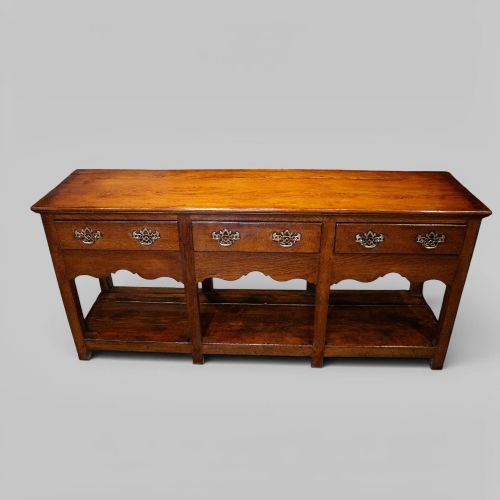


Welsh Oak Server
Welsh oak server pieces are substantial timber serving tables built for domestic utility, offering heavy character and enduring surface space.
Welsh Oak Server
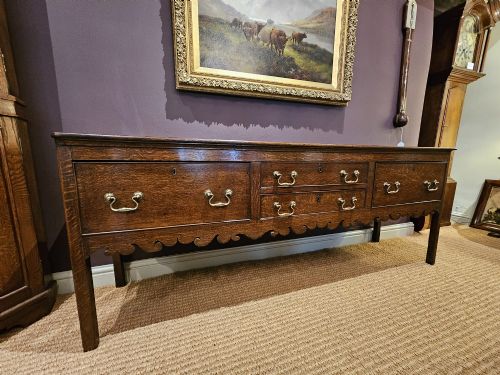
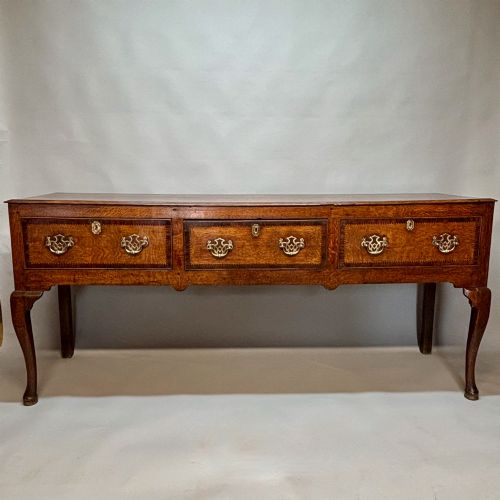
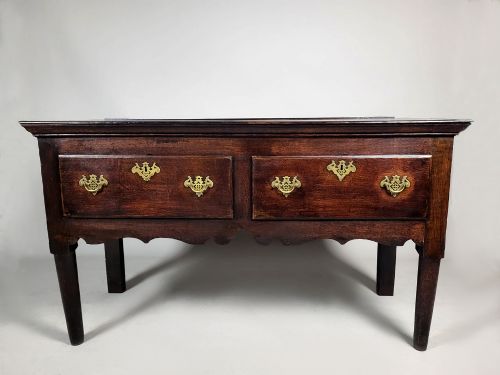
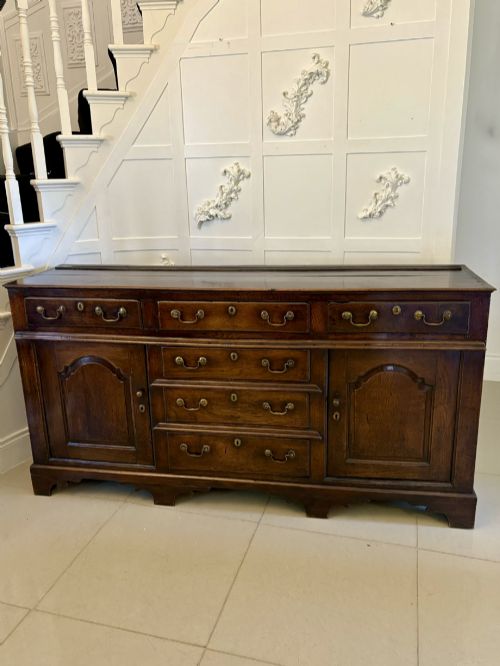
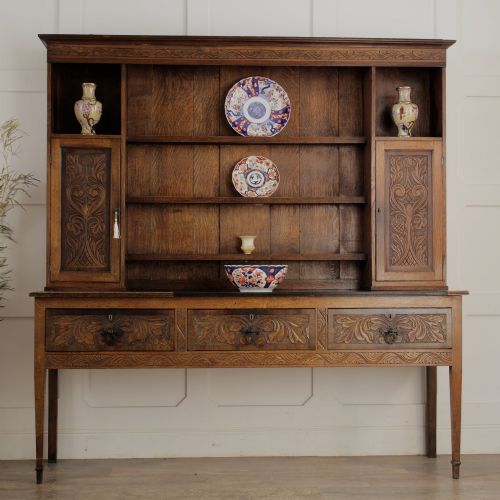
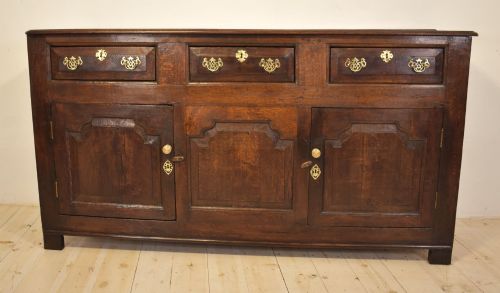
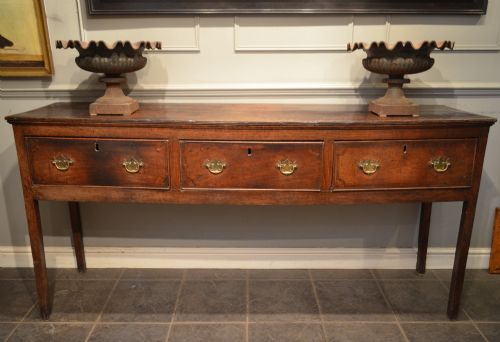
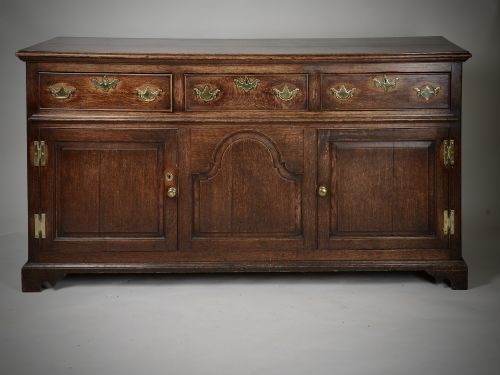
When you search for a welsh oak server, you encounter low serving furniture and dresser bases originating predominantly from the eighteenth and nineteenth centuries. These pieces function as heavy storage and display platforms traditionally associated with country houses and regional vernacular workshops.
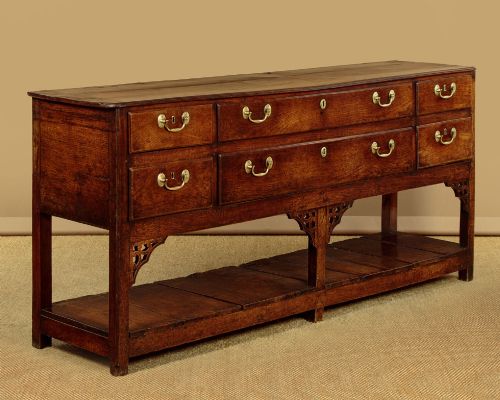
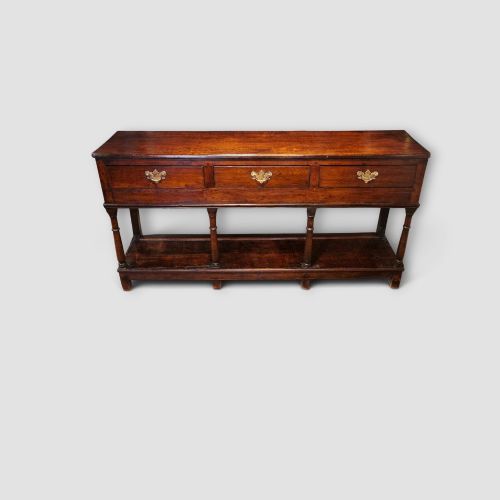
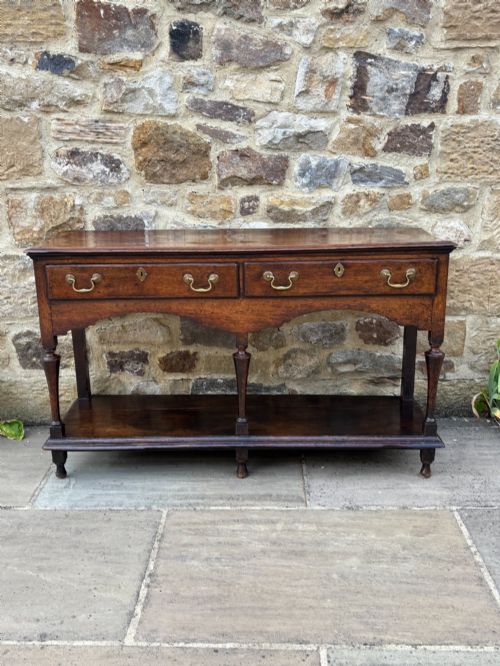
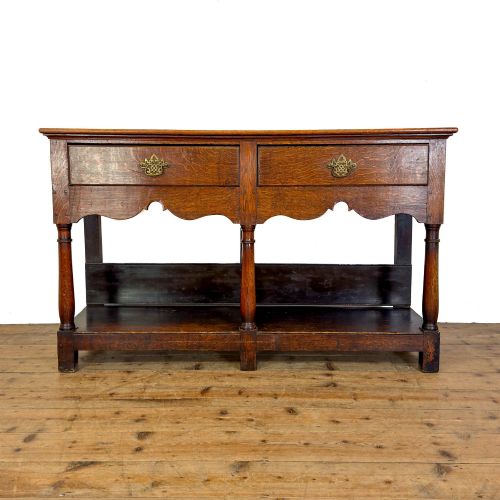
The most common form on this page is the open potboard base featuring multiple drawers across the top and a low shelf beneath. Examples span Georgian, George III, and Victorian periods, often identified simply as dresser bases or low sideboards.
Regional variations point toward Welsh and border county origins, sometimes incorporating elm or fruitwood inlay alongside the primary timber. Such servers provide deep drawers and expansive planked tops suited to modern dining rooms or hallways.
How they were made
Construction relies heavily on solid oak boards for the top and frame, joined using traditional peg and mortise techniques. Secondary timbers like elm or pine appear in drawer linings and internal divisions, reflecting local material availability.
Hardware consists of brass handles and escutcheons, alongside iron components, which secure doors and drawers. Surface detailing ranges from simple geometric carvings to plain planking shaped by hand tools.
Listings feature oak, elm, pine, and fruitwood inlay materials across eighteenth and nineteenth-century periods.
What varies in quality
The degree of surface patination and timber selection distinguishes standard items from superior examples. Natural wear accumulated over centuries creates a warm, unforced glow across the oak grain that chemical finishes cannot replicate.
Proportion and structural integrity define the architectural merit of each base. Pieces retaining original brass hardware, unblemished potboards, and balanced drawer arrangements command greater regard among collectors.
The Welsh Oak Server Glossary
- Potboard
- A low open shelf positioned near the floor beneath the main drawers of a dresser base. Originally used for storing pots and pans.
- Dresser base
- The lower section of a Welsh dresser, standing on legs or feet without the upper plate rack. It functions independently as a sideboard or server.
- Vernacular
- Regional furniture built by local joiners following traditional local patterns rather than London fashionable designs. These pieces display distinct county characteristics.
- Patina
- The deep sheen and surface texture acquired by timber through age, handling, and polishing. It serves as an indicator of genuine antiquity.
- Joined
- Constructed using tight mortise and tenon joints secured by wooden pegs rather than metal nails. This method frames traditional cabinet work.
Welsh Oak Server: Frequently Asked Questions
What is a welsh oak server?
A welsh oak server is a heavy timber sideboard or dresser base designed for food preparation and serving. These pieces typically feature a row of drawers above an open shelf or enclosed cupboard space.
Built largely in regional workshops during the eighteenth and nineteenth centuries, they combine utilitarian strength with domestic utility.
How do I date an oak server?
Dating relies on observing construction methods, timber choice, and hardware styles. Hand-cut dovetails, pegged joints, and original brasses offer clues pointing to Georgian or Victorian periods.
Regional vernacular details also help narrow down the decade and geographical workshop origin of the piece.
Where were these servers used?
These servers originated primarily in Welsh and border county kitchens and dining rooms. They held heavy ceramic dishes, metalware, and daily provisions.
Today, their low profile and ample surface area make them practical for modern hallways, living rooms, and large dining spaces.
Are potboard bases different from servers?
Potboard bases and servers overlap significantly in form, both providing surface space and lower storage. The inclusion of a bottom planked shelf defines the potboard variety.
Both terms describe robust timber furniture built to withstand heavy daily domestic use over centuries.