

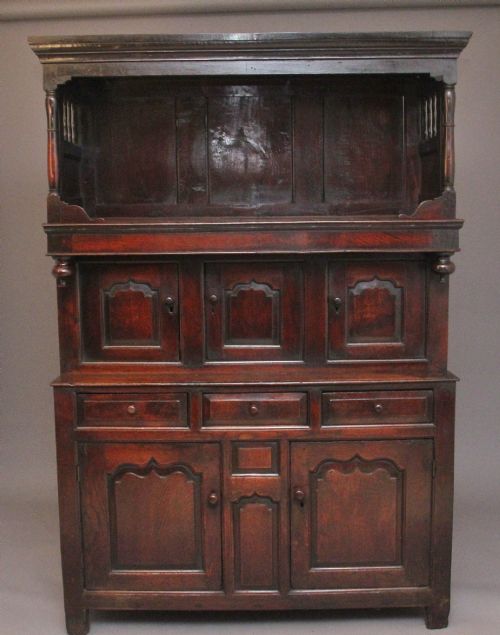


Welsh Court Cupboard
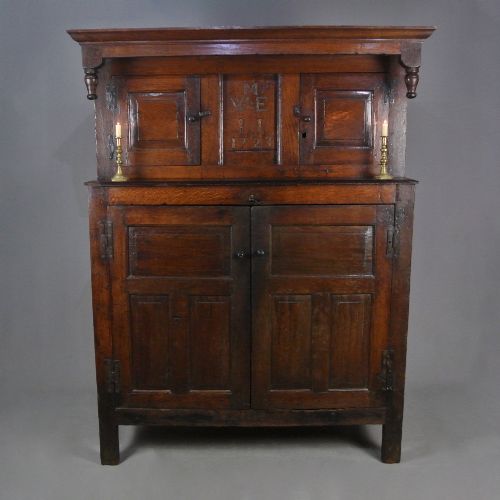
A welsh court cupboard is a substantial historic storage piece defined by its tiered structure, built for display and security in country houses.
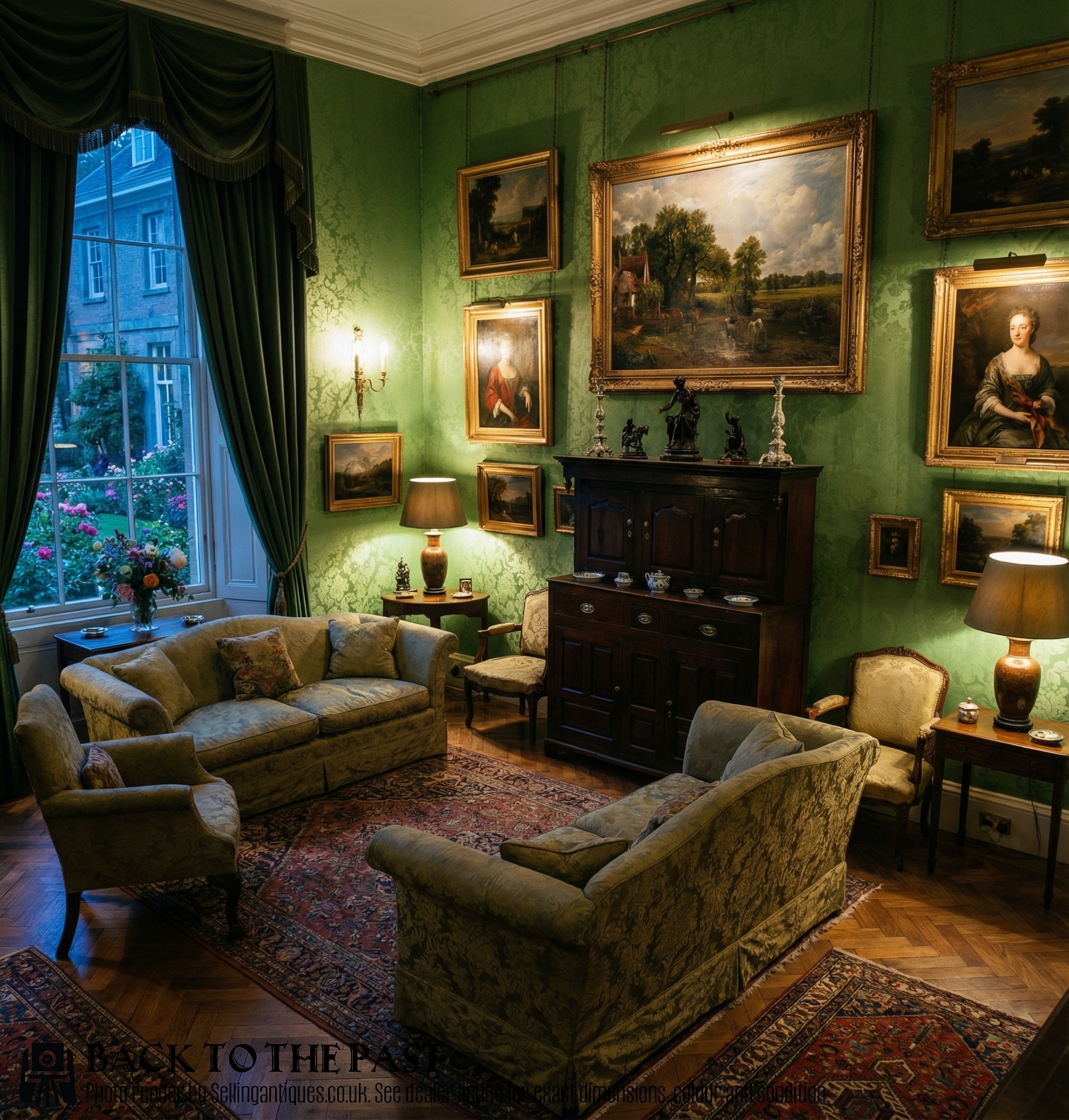
Welsh Court Cupboard
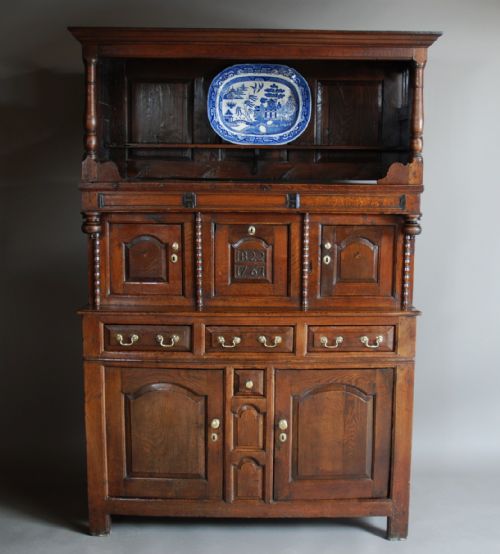
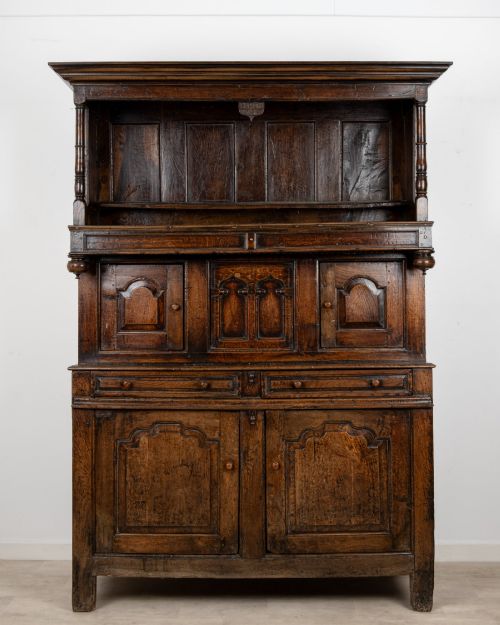
When you search for a welsh court cupboard, you encounter regional forms such as the two-part deuddarn and the three-part tridarn, originating mainly from the seventeenth and eighteenth centuries. These pieces combine enclosed lower cupboards with open or glazed upper tiers designed for displaying domestic goods.
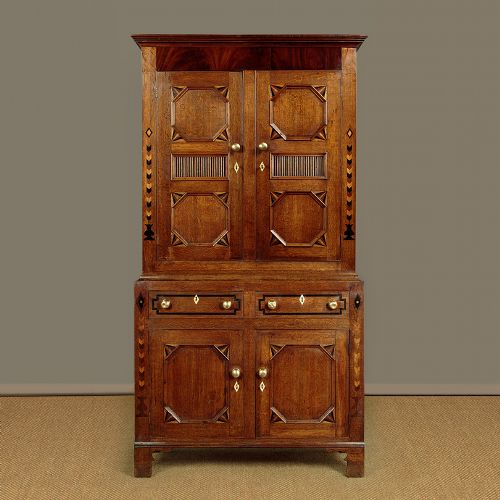
The material palette is predominantly solid oak, occasionally accented with contrasting inlays like ebony and holly, or constructed from yew-wood in specific regional examples from Snowdonia. Forms range from traditional vernacular press cupboards to revival pieces created in the Victorian period and around nineteen hundred.
Stylistic influences vary from plain vernacular working furniture to examples featuring geometric carvings and Jacobean details. The scale spans from compact domestic cabinets to grand multi-tiered structures intended for prominent rooms.
Materials and Construction
Makers utilised solid timber construction, relying heavily on oak framework joined with traditional pegged mortise and tenon joints to build stable multi-tiered carcasses. Secondary woods and decorative inlays of ebony and holly were incorporated to create visual contrast on panels and friezes.
Surface detailing relied on hand carving, geometric mouldings, and turned spindle work applied to doors and cornices. Iron and brass hardware, including hinges and latches, secured the doors while leaded glass panels were occasionally fitted into upper sections.
Listings feature pieces spanning from the seventeenth century through the Victorian revival, predominantly constructed from solid oak with iron and brass hardware.
Assessing Quality and Character
Quality rests in the depth of natural patina accumulated across centuries of polish and handling, particularly on timber surfaces that retain their original colour and texture. Original regional characteristics, such as specific Snowdonia formatting or dated inscriptions, elevate the significance of individual pieces.
The crispness of hand-carved geometric motifs and the integrity of joined structural elements dictate the refinement of the craftsmanship. Proportion also plays a role, with smaller, well-balanced formats generally commanding greater attention among collectors.
The Welsh Court Cupboard Glossary
- Cwpwrdd Deuddarn
- A traditional two-part Welsh cupboard featuring a lower section with doors and an upper recessed stage. This form provides substantial enclosed storage while maintaining a balanced architectural profile.
- Cwpwrdd Tridarn
- A three-tier Welsh cupboard incorporating an additional upper canopy or display section supported on turned posts. These taller pieces represent some of the most ambitious vernacular furniture from rural workshops.
- Patina
- The surface sheen and mellow colour developed by historic timber through decades of exposure, handling, and wax polishing. This quality serves as a key indicator of age and genuine preservation.
- Vernacular
- Furniture built by local country craftsmen following regional traditions rather than metropolitan academic designs. These pieces utilise readily available native timbers and practical construction methods.
- Livery Cupboard
- A traditional term for a storage piece historically used for keeping food and candles ventilated. In domestic settings, these evolved into general storage cabinets for household linens and dry goods.
Welsh Court Cupboard: Frequently Asked Questions
What is a deuddarn?
A deuddarn is a traditional two-part Welsh cupboard featuring enclosed lower storage and a recessed upper stage. It forms a primary category of vernacular storage furniture.
These pieces were built primarily from oak to hold household goods and provisions in rural homes. Their two-tier construction provides a distinctive architectural silhouette.
How do I identify a tridarn?
A tridarn is distinguished by its three-tier structure, which includes an additional upper canopy supported by turned columns. This creates an open middle display stage between the base and top.
Originating largely from regions like Snowdonia, these taller cupboards are rarer and represent more elaborate examples of Welsh country cabinet making.
What timber was used?
Oak is the predominant timber found in these historic cupboards, prized for its strength and abundance in local woodlands. Cabinet makers also utilised native yew-wood for specific regional pieces.
Inlays and decorative accents often incorporate contrasting materials such as ebony and holly. Iron and brass were utilised for functional hinges and hardware.
How should I care for it?
Historic oak furniture requires stable indoor humidity levels away from direct heat sources to prevent timber movement and splitting. Regular dusting with a soft, dry cloth preserves the surface.
Applying traditional beeswax occasionally helps maintain the timber's natural moisture and patina. Avoid modern liquid polishes that can build up and dull the historic finish.