

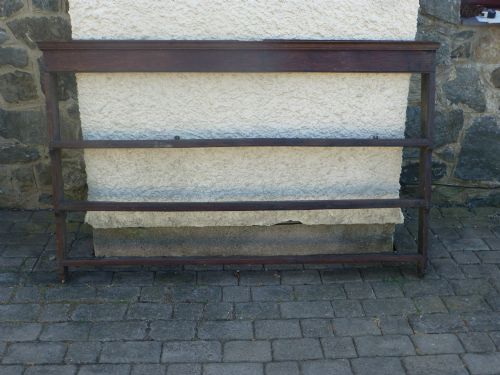
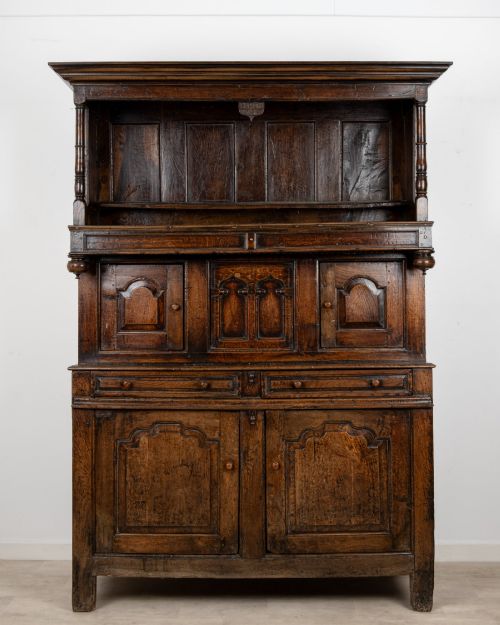
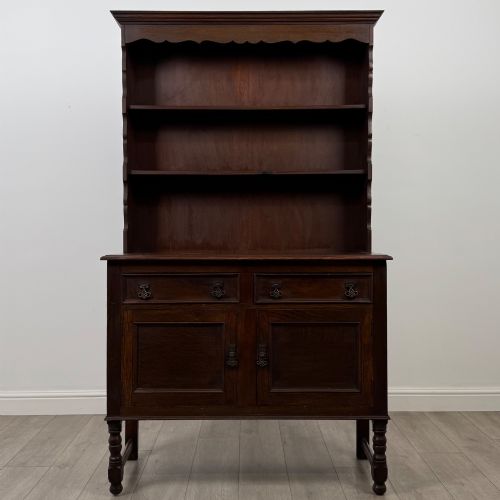
Welsh Country Oak Dresser
A welsh country oak dresser brings substantial utility and rustic character to a room, combining display shelving with deep lower storage.
Welsh Country Oak Dresser
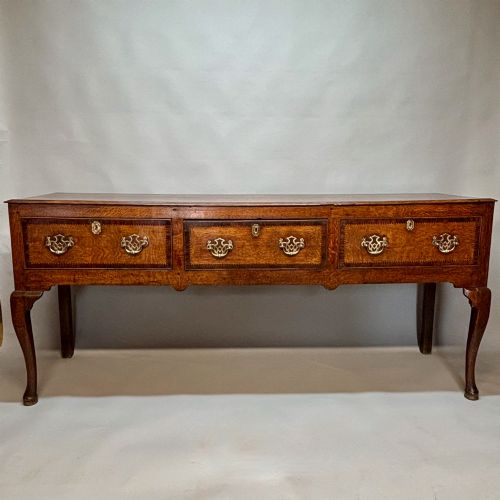
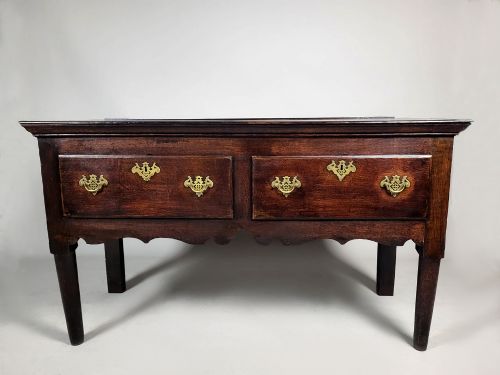
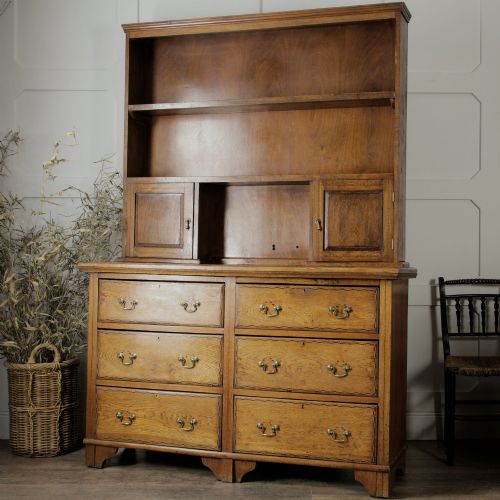
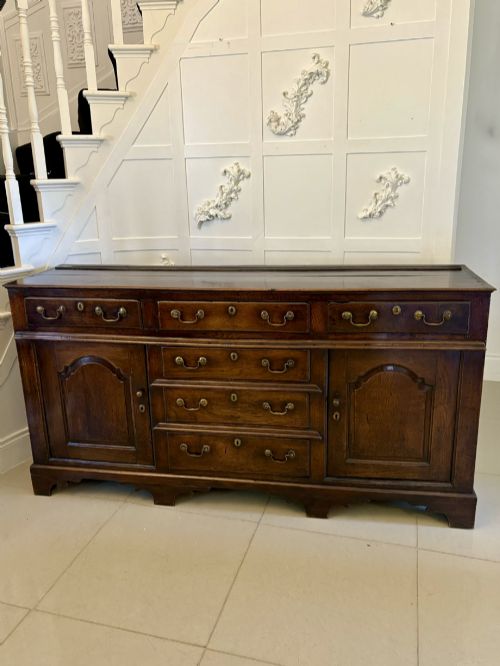
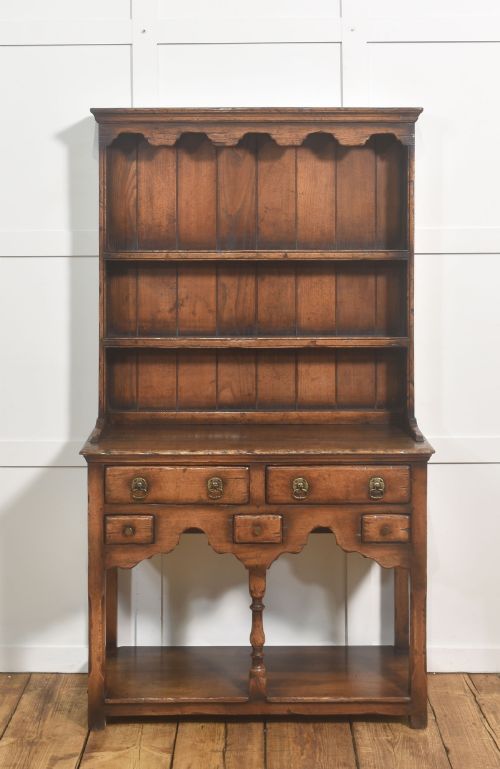
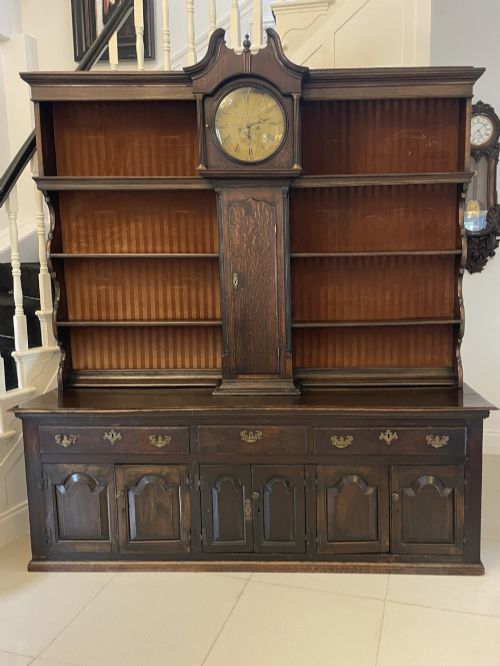
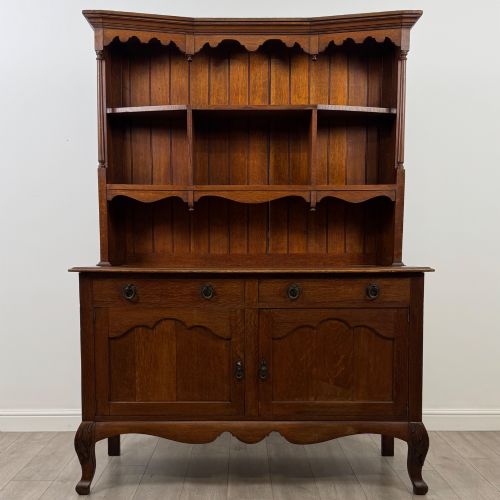
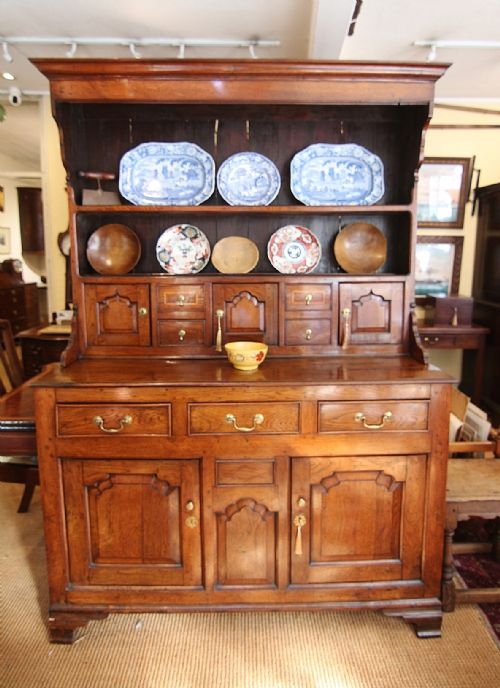
A welsh country oak dresser is a substantial domestic furniture piece typically comprising a lower sideboard base fitted with drawers and cupboards, often surmounted by an upper plate rack or display shelving. These items serve as practical storage and display units originating primarily from domestic kitchens and country houses.
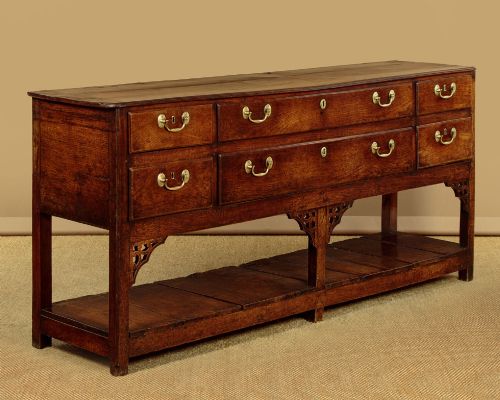
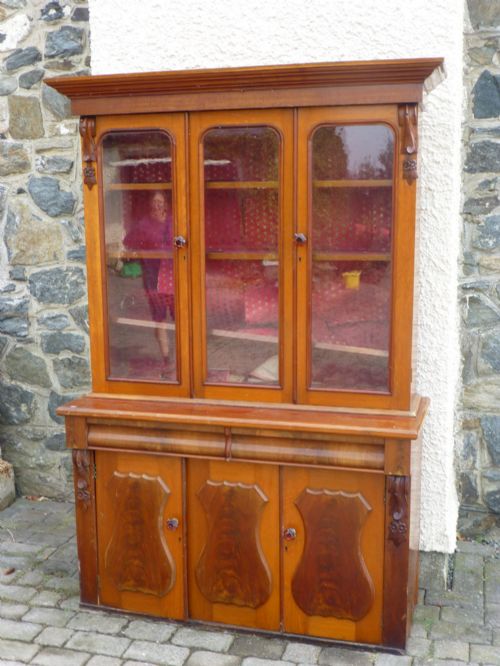
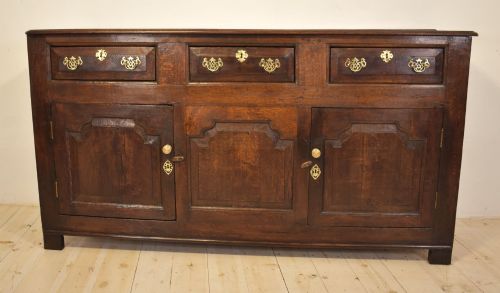
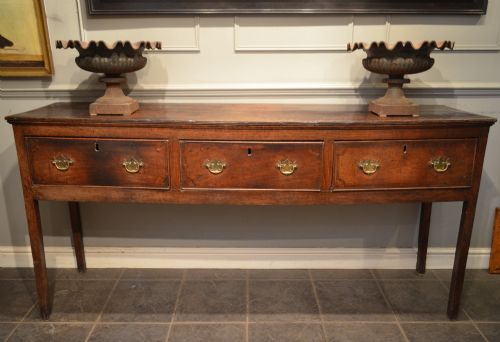
The selections available span multiple eras, most notably the eighteenth and nineteenth centuries, alongside Edwardian and early twentieth-century interpretations. Variations include open potboard bases, breakfront drawer arrangements, and integrated glazed upper bookcases.
Regional variations within the selection highlight specific vernacular traditions, such as pieces originating from Snowdonia, Llanrwst, and North Wales, as well as distinct forms like the cwpwrdd tridarn and bread and cheese cupboards.
How they were made
Construction relies heavily on solid oak timber complemented by secondary woods such as pine, elm, and mahogany, frequently assembled using traditional pegged joints and hand-cut dovetails. Hardware typically incorporates brass handles and escutcheons alongside iron hinges.
Upper display sections often feature tongue and groove backboards designed to support ceramics and delftware securely, while lower cabinet elements utilise panelled doors and robust planked timber tops.
Bread and cheese cupboards kept dairy rations safely ventilated behind turned spindles away from household pests.
What varies in quality
The standard of a welsh country oak dresser is determined by the figure and warmth of the timber grain, the originality of the brassware, and the crispness of any hand-carved or inlaid details. Proportion and scale also dictate value, with smaller vernacular formats and potboard designs commanding particular attention.
Proportion and structural integrity separate simpler utility pieces from high-status vernacular examples, particularly where lower potboards remain intact and drawer linings show minimal replacement.
The Welsh Country Oak Dresser Glossary
- Potboard
- An open lower shelf beneath a dresser base traditionally used for storing pots and pans. This platform sits raised on short legs or feet.
- Cwpwrdd Tridarn
- A traditional Welsh three-tier cupboard featuring an enclosed upper section, an open middle stage with turned spindles, and a lower base cupboard. It represents a substantial piece of vernacular cabinetry.
- Delftware
- Tin-glazed earthenware commonly displayed on the upper plate racks of period dressers. It provides the traditional colourful contrast to dark oak timber.
- Breakfront
- A cabinet design where the central section projects forward from the flanking outer sections. This arrangement creates visual depth across the drawer facade.
- Vernacular
- Furniture designed and built by local country craftsmen to serve practical household needs using regional timber. It reflects traditional local styles rather than formal metropolitan trends.
Welsh Country Oak Dresser: Frequently Asked Questions
How do I style a dresser?
Use the upper plate racks to display collections of ceramic plates, bowls, and vintage glassware against the timber backboards. Keeping heavier serving items on the lower shelves ensures visual and physical stability.
The lower drawers and cupboards provide enclosed storage for linens, cutlery, and dining accessories, keeping everyday tableware neatly concealed.
Are these dressers modular?
Most period dressers are constructed in two distinct sections, consisting of a heavy lower base and a separate upper plate rack that rests upon it. This traditional two-part construction allowed makers to transport large items more easily through narrow cottage doorways.
When positioning the furniture, the upper rack is typically secured directly to the wall or anchored to the base to ensure complete stability.
How do I identify age?
Dating relies on examining construction techniques, such as hand-cut dovetails in the drawers, pegged joints, and the type of secondary timber used in the backing boards. Eighteenth-century examples often exhibit deeper patination and broader oak planks compared to later nineteenth-century interpretations.
Regional stylistic traits, such as specific North Wales cornices or inlaid mahogany details, further help narrow down the period of manufacture.