
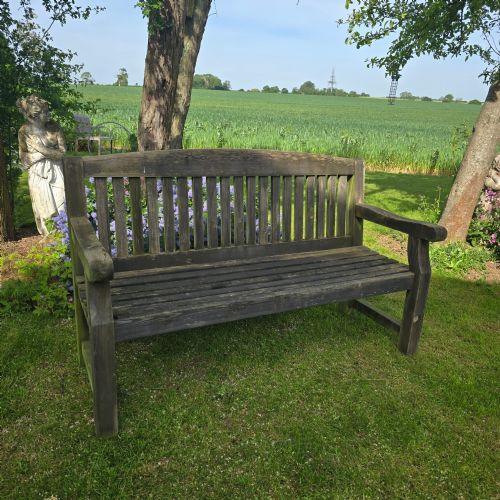
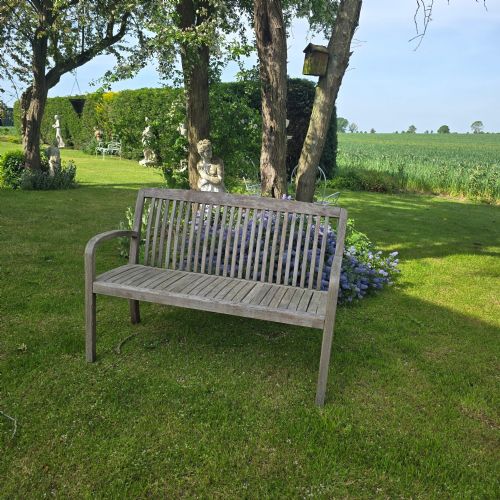


Weathered Wooden Garden Seat
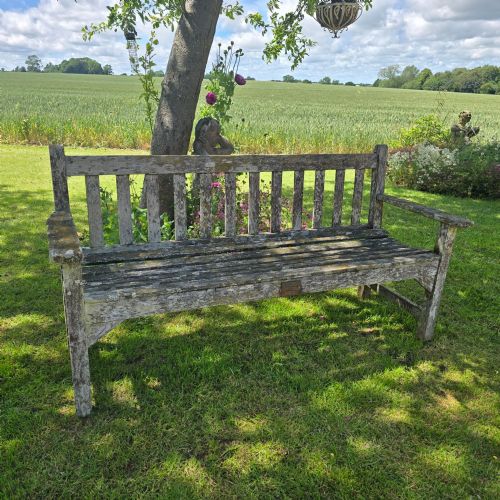
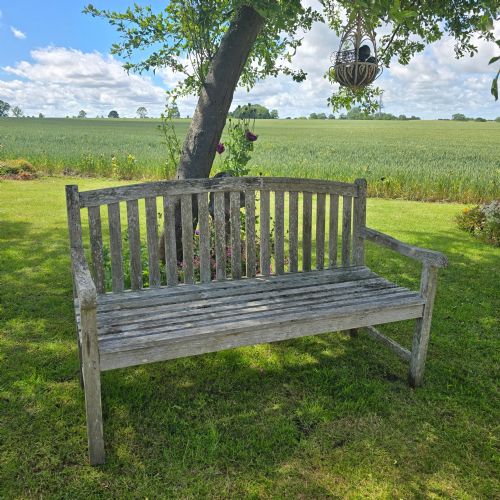
A weathered wooden garden seat brings decades of outdoor patination and robust timber framing to the terrace.
Weathered Wooden Garden Seat
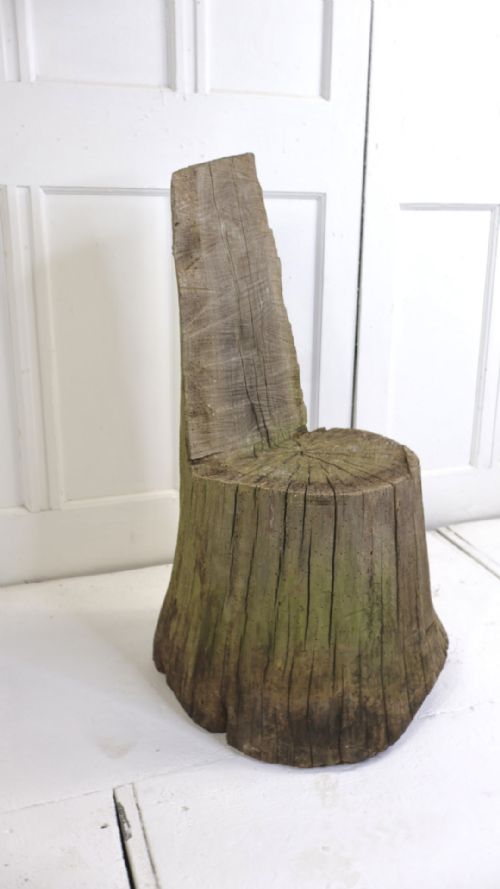
When you search for a weathered wooden garden seat, you encounter benches and tree seats spanning the Victorian, Edwardian, and 1930s periods. These pieces serve as functional outdoor furniture designed for gardens, parks, and patios.
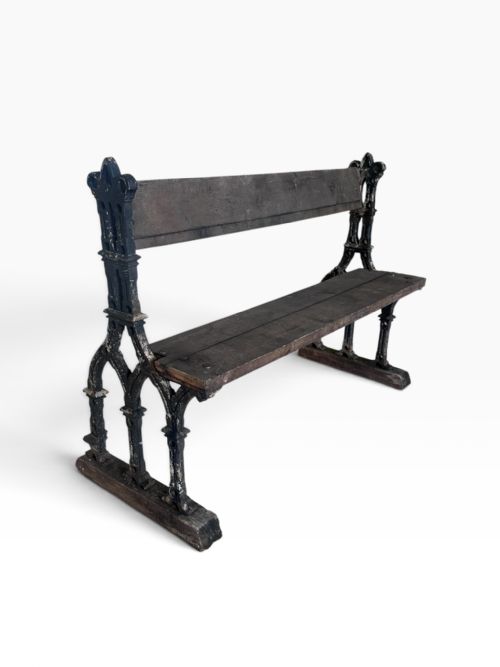
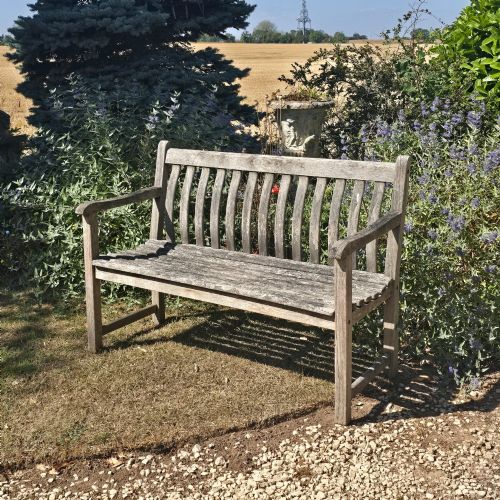
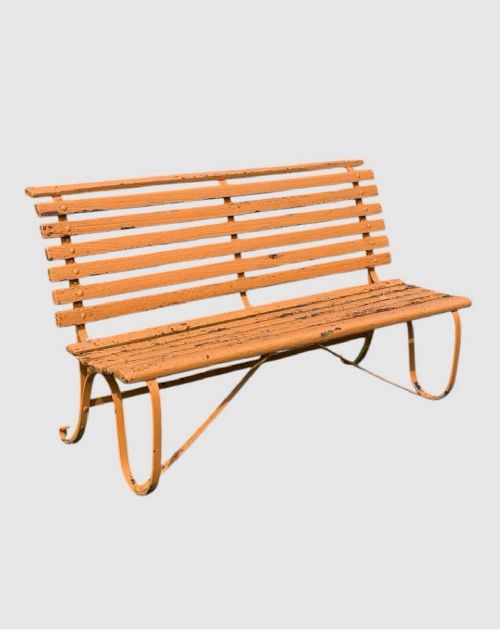
The most common forms on this page include straight slatted garden benches alongside circular tree seats built to encircle mature trunks. Many pieces combine slatted timber seating surfaces with robust cast iron frames.
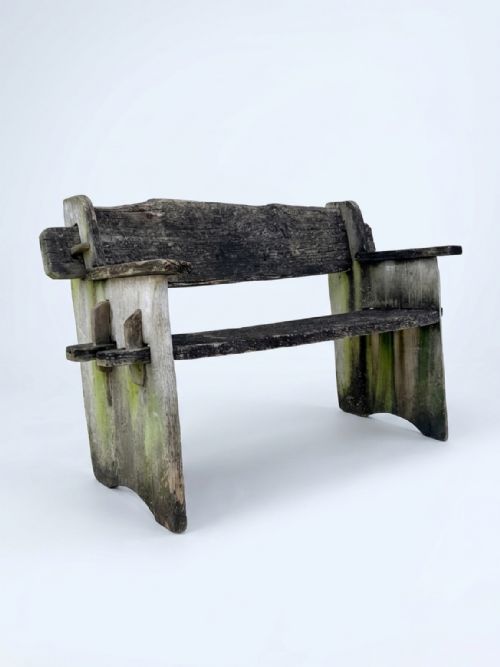
Origins stretch across English country houses and gardens, reflecting vernacular rustic country styles as well as more formal Victorian Gothic designs. Oak and various types of timber appear alongside durable teak.
How they were made
Construction relies heavily on durable timbers like teak and oak, paired frequently with heavy cast iron structural supports for stability outdoors. Artisans shaped these materials into slatted seats and substantial frames capable of withstanding the elements.
Decades of exposure to sun and rain create the characteristic weathered and silvered surface patination seen on the wood. Iron elements often retain traces of early paint finishes beneath oxidation.
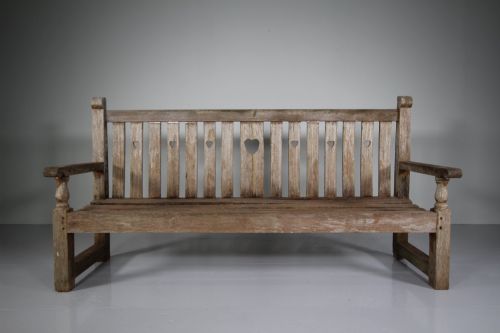
Several benches on this page feature heart motifs, proving that even Victorian ironfounders enjoyed a spot of romance in the shrubbery.
What varies in quality
The distinction between standard examples and superior pieces rests on the integrity of the timber and the sophistication of the design, such as heart motifs or unusual forms. Heavier casting on iron components and sculptural framing elevate certain benches above utility pieces.
Natural weathering patterns also influence desirability, where even silvering across teak slats indicates uniform exposure and careful ageing. Original construction details, including jointing methods and retained structural rigidity, set finer period seats apart.
The Weathered Wooden Garden Seat Glossary
- Teak
- A dense, oil-rich hardwood prized for outdoor furniture due to its natural resistance to decay. It turns a distinctive silver-grey when exposed to weather.
- Tree seat
- A circular or polygonal bench built around the trunk of a mature tree, providing a shaded seating area in a garden. These often feature segmented slatted construction.
- Victorian Gothic
- A style drawing on medieval architectural motifs, appearing on garden benches through pointed arches and heavy cast iron tracery. This aesthetic brings a formal architectural presence to outdoor settings.
- Slatted
- A method of construction using parallel strips of wood with gaps between them, allowing rainwater to drain quickly from the seat. This design prevents pooling and protects the timber from premature rot.
Weathered Wooden Garden Seat: Frequently Asked Questions
How do I care for a weathered wooden garden seat?
These pieces require very little intervention because the silvered patina is part of their established character. Simply wash them down occasionally with water to remove debris.
Avoid heavy sanding or varnishing, as this removes the historic surface finish that decades of outdoor exposure created.
Can these benches stay outside all year?
Hardwoods like teak and oak, combined with cast iron frames, are built to withstand permanent outdoor placement. They adapt naturally to seasonal changes in temperature and moisture.
Moving them under cover during the harshest winter months is optional, though many owners leave them exposed year-round.
How do I date a wooden garden bench?
Dating relies on observing construction methods, timber types, and stylistic indicators such as Victorian Gothic ironwork or Edwardian heart motifs. The presence of specific hardware and overall wear patterns also offer clues to the era of manufacture.
Pieces from the nineteenth century often feature heavier timber scantlings and more complex cast iron frames than later twentieth-century iterations.
What is a tree seat?
A tree seat is a specialised garden bench engineered in segments to encircle the trunk of a living tree. It offers a continuous ring of seating integrated directly into the landscape.
These sculptural forms require precise carpentry to accommodate the natural contours and ongoing growth of the tree.