

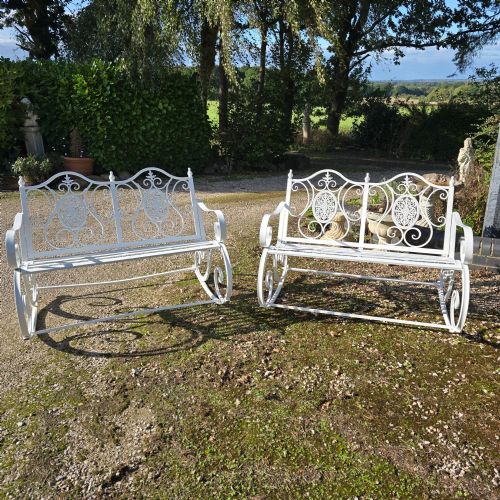
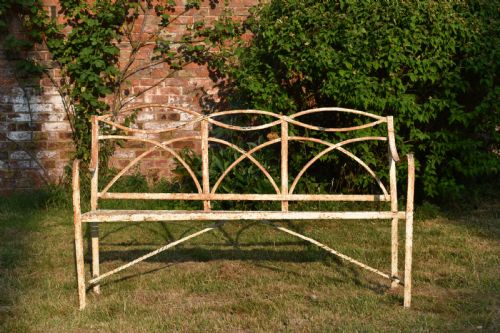
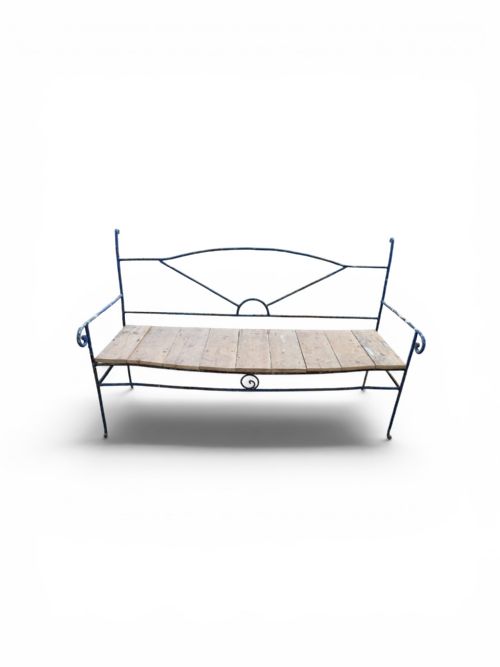
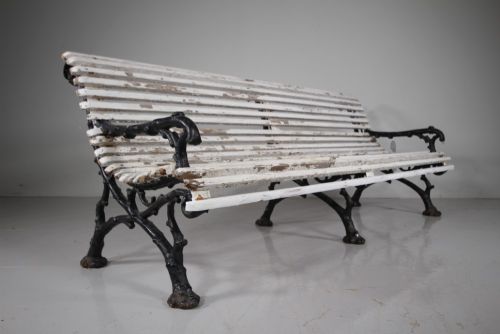
Painted Iron Garden Bench
A painted iron garden bench brings enduring weight and structural presence to a lawn or terrace.
Painted Iron Garden Bench
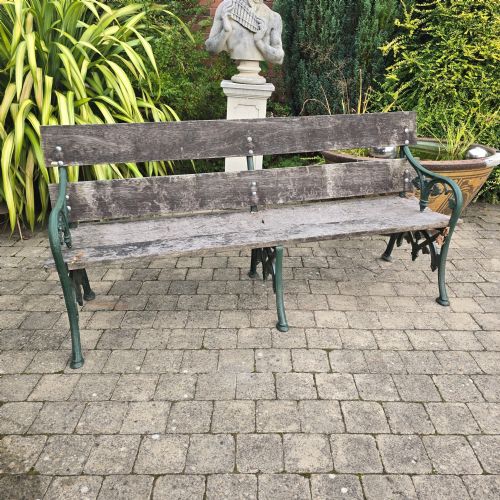
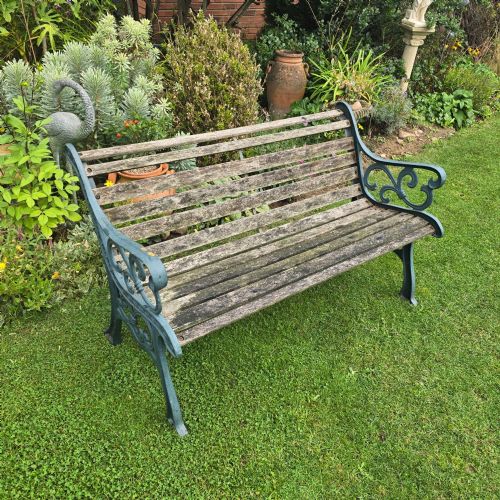
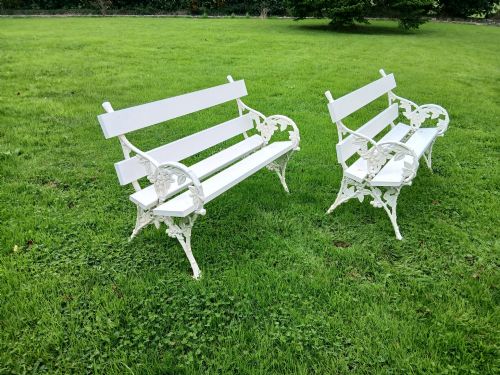
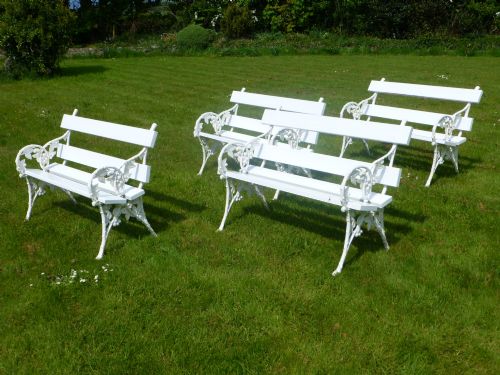
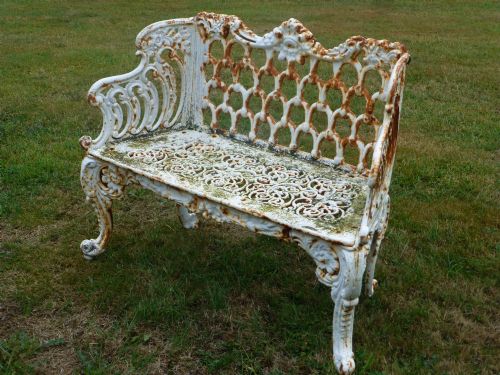
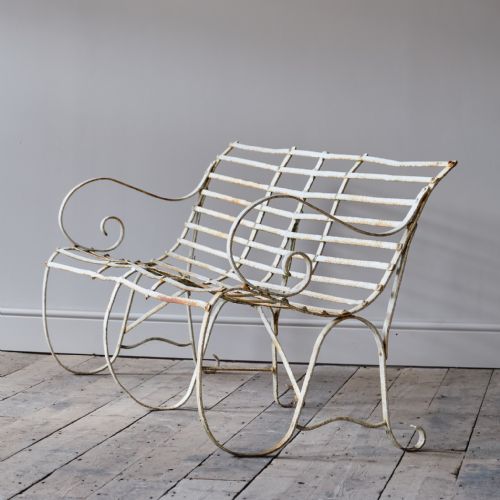
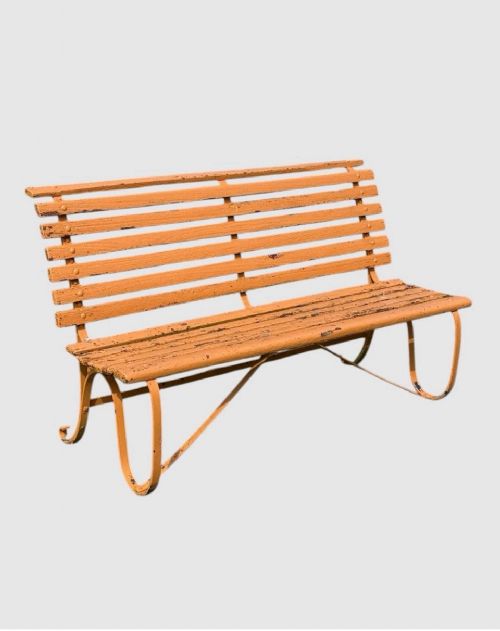
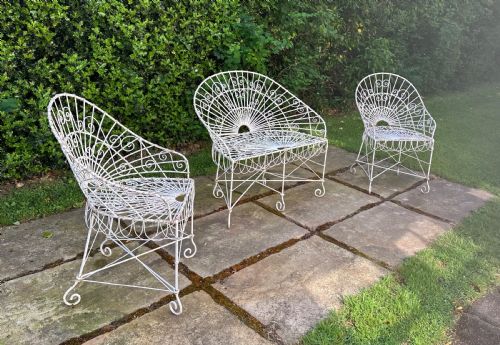
A painted iron garden bench is a heavy outdoor seat built from cast or wrought iron, often combined with timber or wood slats. When you search for a painted iron garden bench, you encounter forms ranging from ornate nineteenth-century foundry pieces to simpler twentieth-century strapwork and wirework designs.
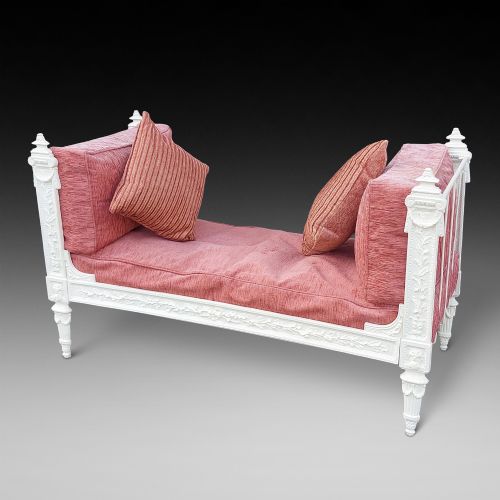
The pieces on this page span the nineteenth century, the Victorian era, and the early twentieth century, including Edwardian and interwar examples. Alongside standard two-seater benches, the selection includes armchairs, daybeds, arbours, and longer railway station seats.
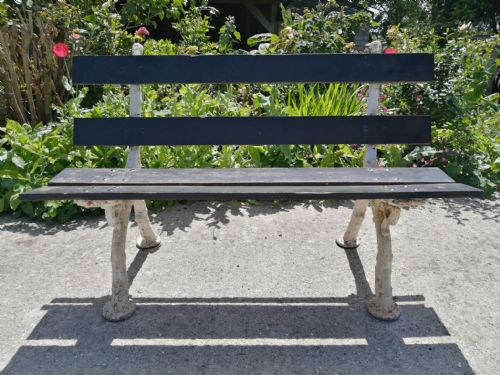
Foundry names and specific decorative patterns appear frequently, marking out particular workshops and regional styles. Many retain layers of historic paint or rest on cast iron bench ends shaped to resemble rustic branches or classical strapwork.
Quality factors in iron seating
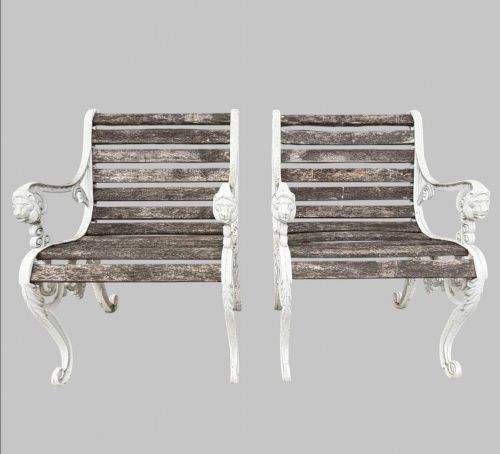
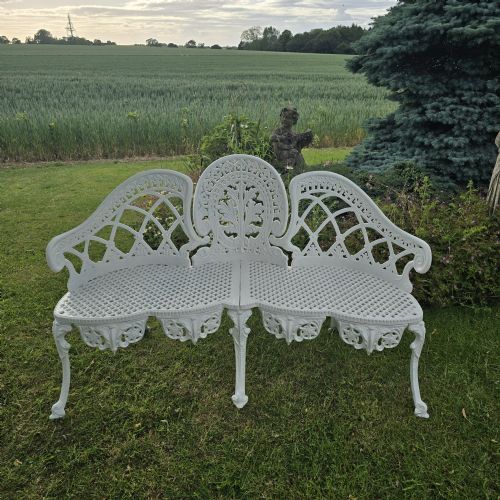
The clarity of the cast relief work dictates much of the visual merit, separating sharp, deeply modelled foundry castings from softer, later copies. Crisp detailing on motifs like leaves, lion masks, and faux bois bark indicates superior pattern-making.
Structural integrity depends on the original thickness of the iron and the preservation of the joins between cast iron ends and wooden slats. Complete sets with matching chairs or original bench ends command greater interest than assembled or heavily repaired pieces.
Surface character relies on how historic paint has weathered; surviving layers of original or early paint add distinct visual depth compared to modern, uniform respraying.
Painted Iron Garden Bench Retail Price Guide 2026
Typical asking prices for painted iron garden bench among the pieces listed under this phrase on Sellingantiques today, from the lower quarter to the upper quarter. They describe what is for sale here now, not the wider market.
Several benches carry the remote history of the Calcutta Polo Club right onto the lawn.
Falkirk Carron Foundry·Coalbrookdale
The Painted Iron Garden Bench Glossary
- Cast iron
- Iron melted and poured into a mould to create complex decorative shapes. This technique allowed Victorian foundries to produce intricate garden furniture with high relief detailing.
- Wrought iron
- Iron heated and hammered into shape by hand, producing tough and pliable structural components. It appears frequently in strapwork benches and scroll designs.
- Faux bois
- A decorative technique mimicking the texture and appearance of natural wood grain. Foundries applied this style directly to iron castings to resemble rustic branches.
- Strapwork
- A pattern of flat, intersecting metal bands resembling leather straps. It provides a geometric and durable framework for classical garden seats.
- Foundry
- A factory where metal is melted and cast into specific moulds. Notable nineteenth-century examples include Coalbrookdale and the Falkirk Carron Foundry.
Painted Iron Garden Bench: Frequently Asked Questions
How do I date an iron garden bench?
Dating relies on stylistic clues, foundry marks, and construction techniques. Victorian and nineteenth-century pieces often feature heavier castings with naturalistic motifs, while twentieth-century examples display simpler strapwork or wirework.
Paint layers and fastener types also offer chronological evidence. Hand-forged elements point to earlier manufacture, whereas standardised bolts suggest twentieth-century production.
Can these benches stay outside all year?
Iron garden benches tolerate outdoor placement well due to their heavy metal construction. Regular maintenance protects the underlying iron from moisture damage and progressive rusting.
Applying appropriate protective paint coatings helps preserve the surface through winter weather. Protecting wooden slats from standing water prevents premature rot.
Are cast iron and wrought iron benches different?
Cast iron is rigid and brittle, formed by pouring molten metal into moulds to create intricate, ornate decorative patterns. Wrought iron is tougher and more pliable, shaped by hammering to form straps and scrolls.
Many garden benches combine both materials, using cast iron for the decorative ends and back panels while wrought iron or timber forms the seat structure.
How should I care for original paint?
Preserving historic paint finishes requires gentle cleaning with mild soap and water rather than abrasive scraping. Inspecting the surface regularly catches minor flaking before moisture reaches the bare metal.
Applying a stabilizing clear coat can protect fragile original layers without obscuring the patina. Touch-ups should only cover exposed iron rather than the entire surface.