
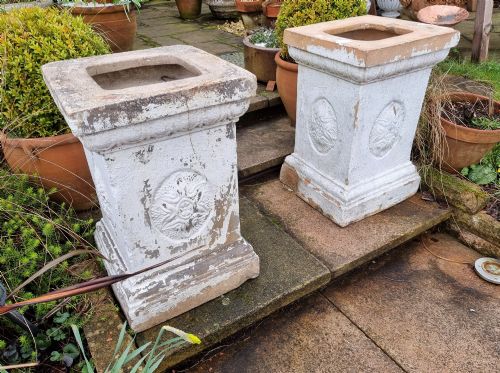
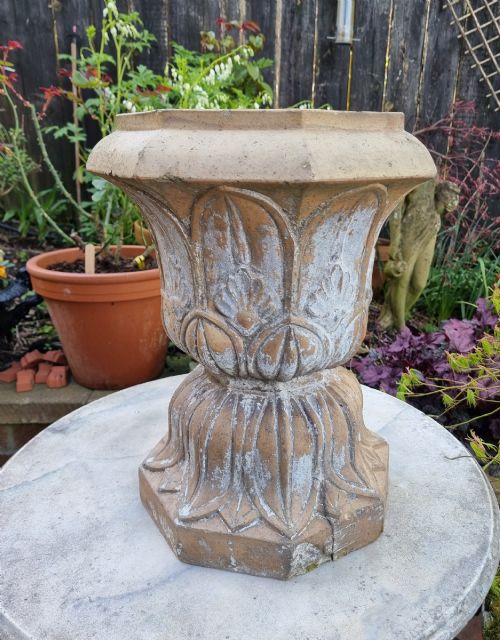


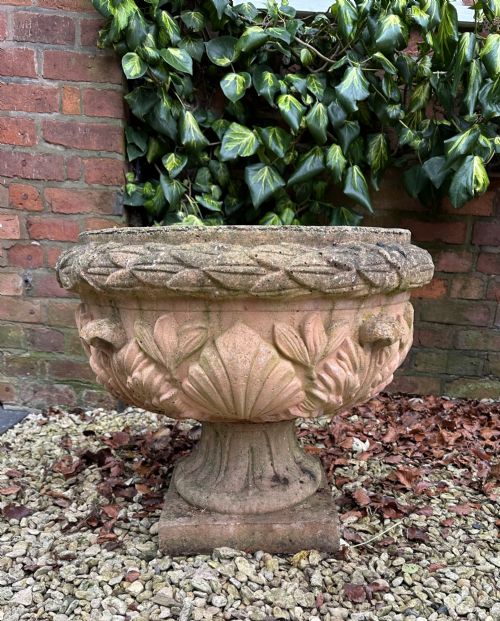
Weathered Terracotta Planter
These weathered terracotta planter options bring genuine garden age, offering porous earthenware surfaces shaped for planting.
Weathered Terracotta Planter
A weathered terracotta planter brings substantial garden presence through traditional fired clay forms spanning the nineteenth and early twentieth centuries. These garden vessels include campana urns, oil jars, amphorae, and pancheons designed for outdoor planting schemes.
Makers and styles represented span Neoclassical, Victorian, Arts and Crafts, and Rustic Mediterranean traditions. Forms range from simple garden pots to large urns mounted on pedestals or plinths.
How they were made
Potters shaped these vessels using local clays, earthenware, buff clay, and stoneware, sometimes finishing surfaces with paint or glazes. Traditional firing techniques produced durable garden ceramics capable of withstanding seasonal weather.
Many examples incorporate added structural elements such as wrought iron stands or carved handles. The natural porosity of the clay body allowed moisture to breathe, supporting healthy plant growth over generations.
A chimney pot makes an unexpected garden planter.
What varies in quality
The distinction between standard utility vessels and superior garden ornaments lies in the crispness of moulded detail and the balance of proportions. Pieces featuring carved heads, decorative scrollwork, or architectural pedestals demand finer craftsmanship.
Surface character also shapes the appeal, as natural weathering, lichen growth, and historical paint retention create individual patination. The density and firing quality of the clay body determine how well the structure endures external frost.
Dunfermline Clay Company·Compton Pottery
The Weathered Terracotta Planter Glossary
- Terracotta
- Fired unglazed clay containing iron oxide, which produces a characteristic reddish-brown or buff colour. This material is porous, allowing air and moisture to pass through the pot walls.
- Campana urn
- A bell-shaped garden vessel with a flared rim, a deep bowl, and a pedestal base, often associated with classical garden design. These forms were widely produced during the nineteenth and twentieth centuries.
- Pancheon
- A wide, shallow earthenware vessel traditionally used in dairies but frequently repurposed in gardens as a planter. They offer generous planting widths for shallow-rooting arrangements.
- Amphora
- A tall storage jar featuring two opposing handles and a pointed or rounded base, originating from ancient Mediterranean transport vessels. Later revival pieces serve as decorative garden focal points.
- Plinth
- An architectural block or pedestal used to elevate garden urns and planters above ground level. These supports add height and formal presence to planting schemes.
Weathered Terracotta Planter: Frequently Asked Questions
How do I protect weathered terracotta planter pots in winter?
Terracotta absorbs moisture, which can freeze and crack the clay during severe frosts. Elevating pots on pot feet prevents water from trapping at the base.
Moving heavy vessels under shelter or wrapping them in protective horticultural fleece during freezing spells helps preserve the historic clay body.
Can a weathered terracotta planter stay outside all year?
Most durable earthenware and stoneware pieces are designed for outdoor garden use. Their exterior patination often improves with seasonal exposure to rain and sun.
Ensuring drainage holes remain unblocked prevents internal water accumulation, which is the primary cause of winter damage to older garden ceramics.
What plants suit a large weathered terracotta planter?
Deep urns and oil jars accommodate architectural shrubs, small specimen trees, and cascading trailing plants. The generous soil volume helps maintain moisture around root systems.
Mediterranean herbs and drought-tolerant perennials complement the traditional earthy aesthetic of these vintage garden vessels.
How do I clean a weathered terracotta planter safely?
Gentle brushing with a soft bristle brush and plain water removes loose dirt while preserving accumulated surface patination and moss. Avoid harsh chemical cleaners or pressure washers.
Aggressive cleaning strips away the historic weathered skin that collectors and gardeners value on nineteenth-century clay vessels.