

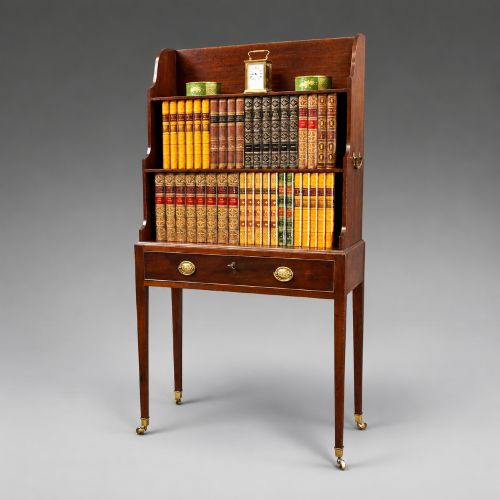
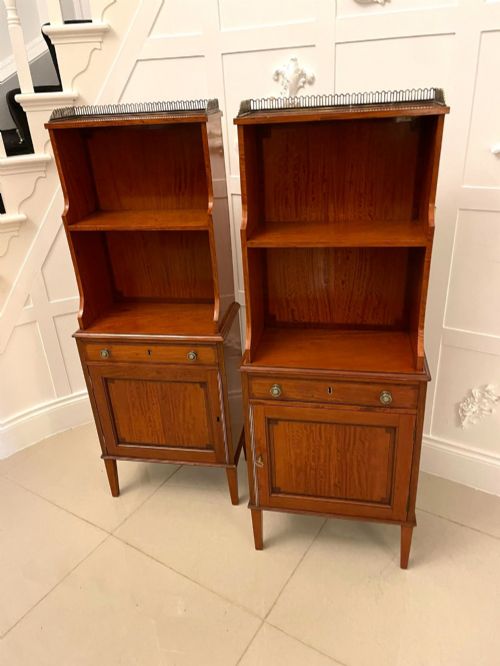
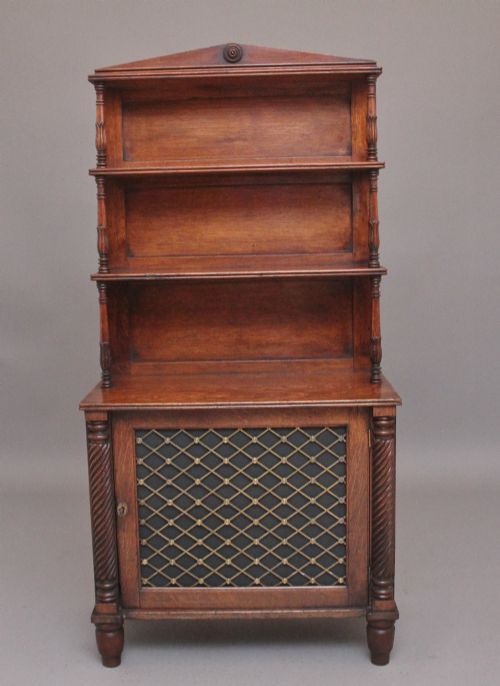
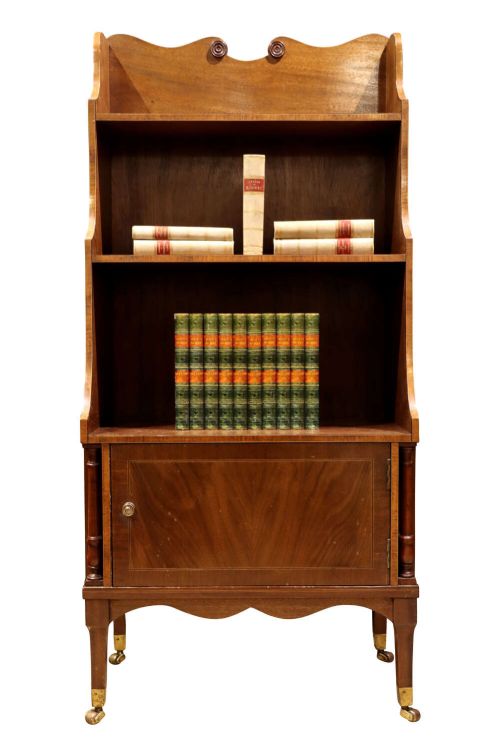
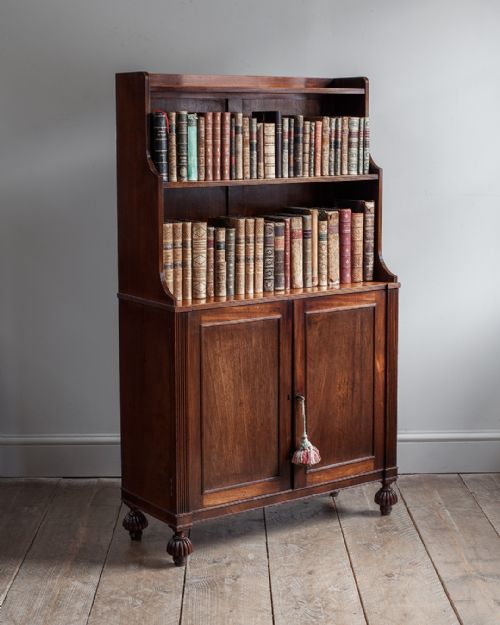
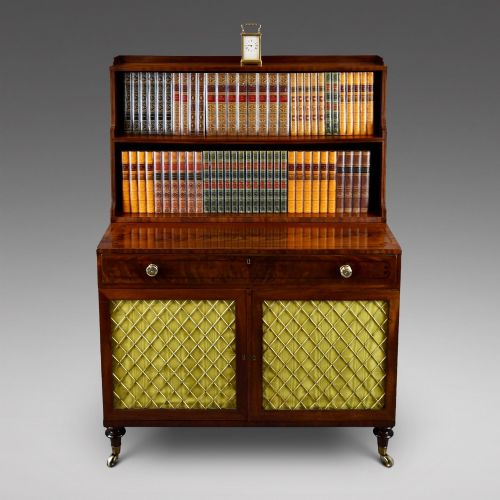
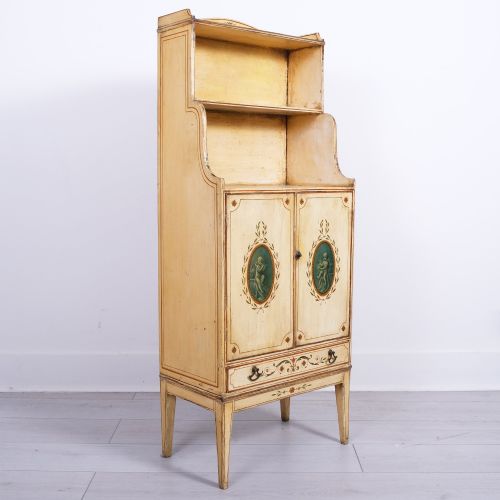
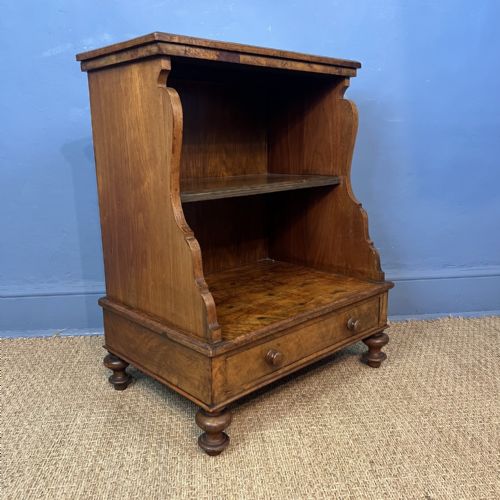


Waterfall Bookshelf Cabinet
These waterfall bookshelf cabinet examples combine stepped open tiers with lower storage, offering collectors an elegant solution for displaying cherished volumes.
Waterfall Bookshelf Cabinet
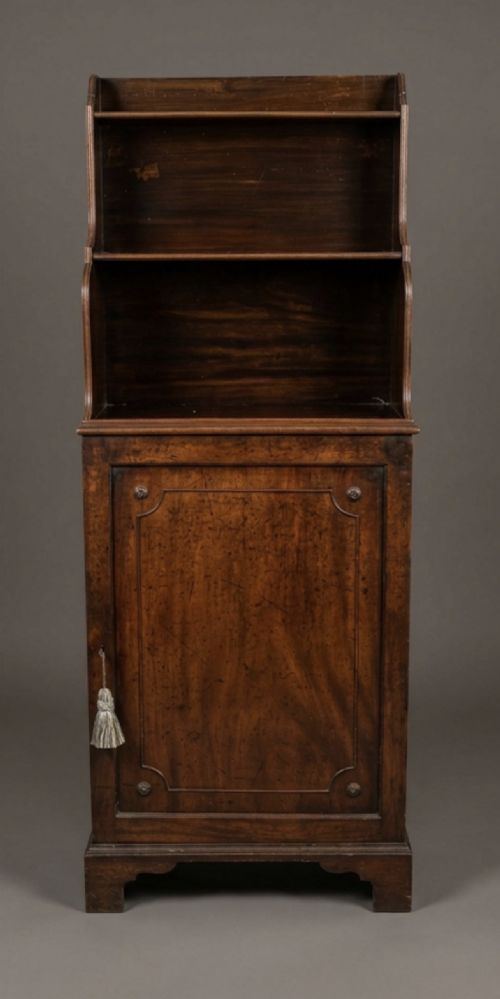
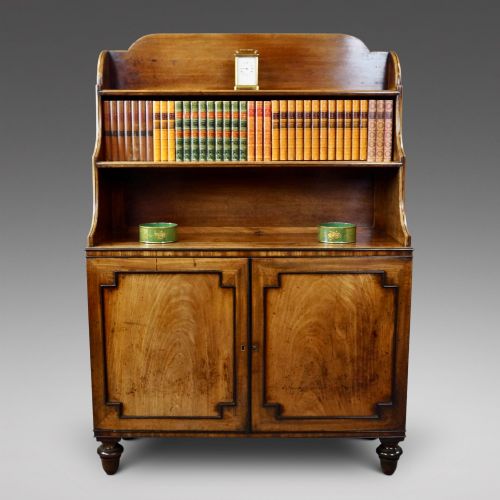
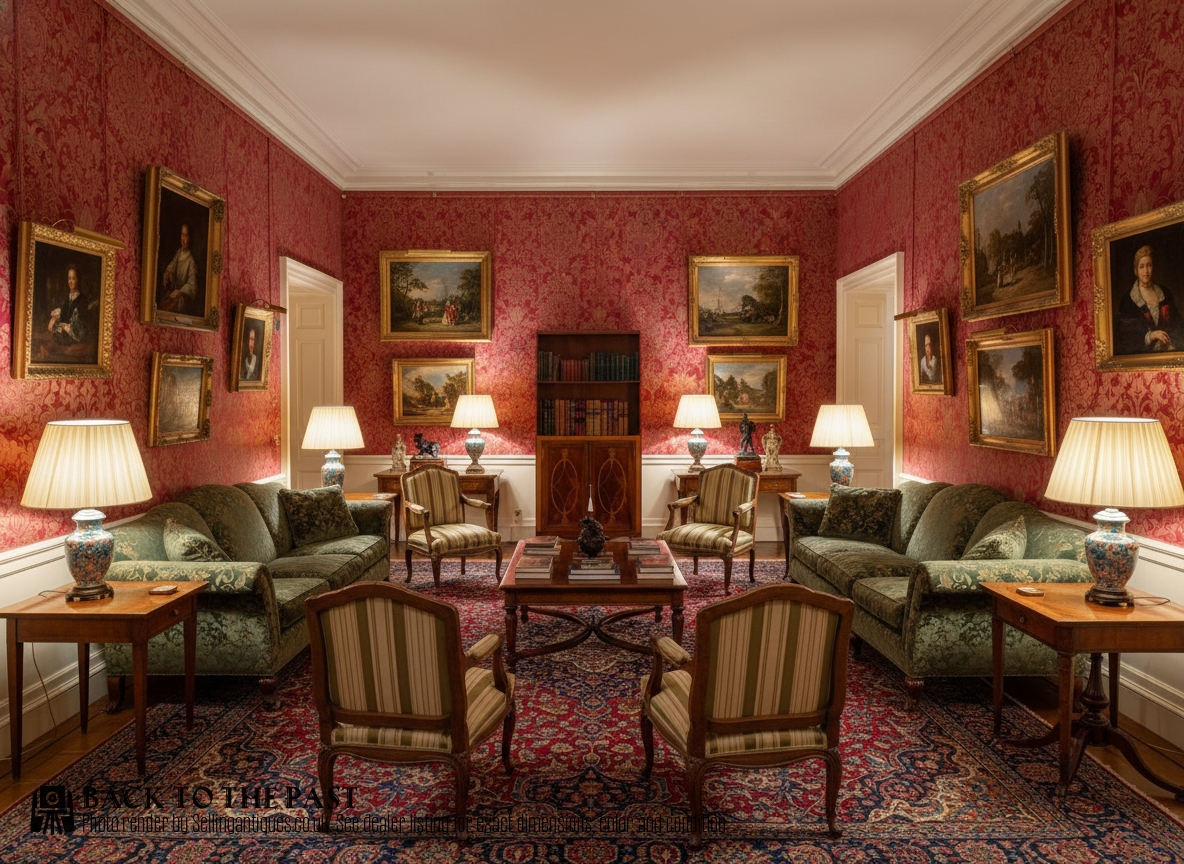
A waterfall bookshelf cabinet brings together stepped open shelving above a closed cupboard base, creating a distinctive profile seen across Georgian, Regency, and Victorian periods. The stepped shelves reduce in depth from bottom to top, allowing titles to be arranged neatly while keeping bindings visible.
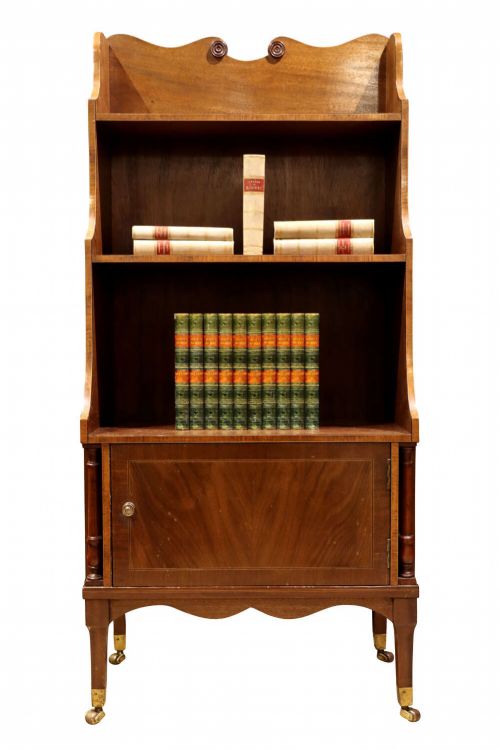
Most pieces encountered on this page date from the nineteenth and early twentieth centuries, spanning Regency elegance through Edwardian practicality. Formats range from low freestanding open display shelves to substantial cabinets fitted with lower cupboard doors and brass castors.
Makers adapted the cascading tier design for various domestic settings, producing dwarf bookcases alongside taller architectural library furniture. This variety ensures buyers find items suited to both intimate reading corners and larger reception rooms.
Materials and construction
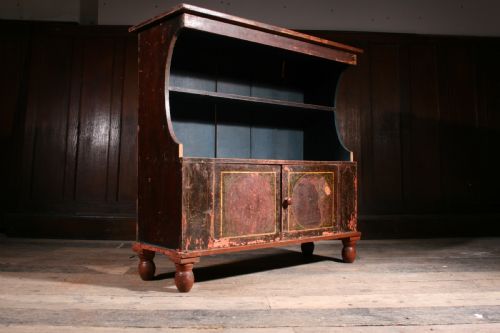
Cabinet makers relied heavily on rich timbers such as mahogany, satinwood, rosewood, and walnut, often accentuating the grain with crossbanding or intricate stringing. Inlaid details and painted finishes appear alongside figured veneers like burr walnut and flame mahogany.
Structural integrity depended on sound joinery, with shelves securely housed into upright sides that taper gracefully toward the top. Brass castors frequently support heavier freestanding library pieces, permitting smooth movement across carpets and wooden floors.
Waterfall Bookshelf Cabinet Retail Price Guide 2026
Typical asking prices for waterfall bookshelf cabinet among the pieces listed under this phrase on Sellingantiques today, from the lower quarter to the upper quarter. They describe what is for sale here now, not the wider market.
Listings feature mahogany, satinwood, rosewood, oak, painted wood, burr walnut, and walnut across Georgian, Regency, and Edwardian periods.
Judging quality and craftsmanship
Superior examples distinguish themselves through the choice of timber veneer and the precision of the graduated shelving tiers. Cabinet makers who selected finely figured flame mahogany or matched satinwood crossbanding elevated simple shelving into high-status furniture.
The integration of lower cupboards, dovetailed drawer construction, and original brass hardware separates standard utility items from masterwork pieces. Proportion and balance in the stepped tiers dictate whether a cabinet holds the eye or appears awkward.
Gillows·Shapland & Petter
The Waterfall Bookshelf Cabinet Glossary
- Waterfall bookcase
- A set of open shelves diminishing in depth from bottom to top, creating a stepped cascading profile. This form gained popularity during the Regency period for displaying small collections of literature.
- Crossbanding
- A narrow strip of veneer applied perpendicularly to the surrounding grain along the edges of shelves or cabinet tops. This decorative technique frames the primary timber and highlights the piece's outline.
- Burr walnut
- Wood taken from the warted excrescences of a walnut tree, yielding complex swirling grain patterns. Cabinet makers prized this material for veneering prominent surfaces.
- Dwarf bookcase
- A low-standing bookcase designed to sit below window height or against panels without obscuring wall art. These compact units frequently incorporate lower cupboards.
- Brass castors
- Small swivelling wheel attachments fitted to the feet of heavy furniture to aid mobility. They allow large cabinets to be repositioned safely.
Waterfall Bookshelf Cabinet: Frequently Asked Questions
How do I date a waterfall bookcase?
Dating relies on identifying timber choices, decorative inlay styles, and structural characteristics associated with periods like Regency or Edwardian.
Examining secondary woods and fixing methods inside drawers and cabinets offers further clues to age.
Where should I place one?
These cabinets suit studies, drawing rooms, and hallways where their shallow upper shelves display books without dominating floor space.
Low dwarf versions fit comfortably beneath windows or against shorter wall expanses.
Are these pieces stable?
Freestanding examples utilise solid timber construction and often incorporate heavy bases or brass castors to maintain balance.
The stepped design naturally distributes weight downward towards the deeper lower shelves.