


Watercolour Still Life Art
Watercolour still life art brings together delicate botanical studies and carefully arranged domestic scenes on paper from the nineteenth and twentieth centuries.
Watercolour Still Life Art
When you search for watercolour still life art, you encounter original paintings executed on paper using transparent pigments, bodycolour, and gouache. These works frequently depict arrangements of flowers, fruit, and household objects rendered with meticulous observation.
The selections span from Victorian botanical naturalism through Edwardian and 20th-century British interpretations to mid-century modern compositions. You will find pieces ranging from small, intimate floral studies to large exhibition-sized watercolours framed under glass.
Materials and Techniques
Artists painted these works primarily with watercolour pigment and bodycolour on paper supports, sometimes incorporating gouache and gold leaf for added luminosity and opacity. The paper was often mounted behind glass within timber frames to protect the delicate water-soluble pigments.
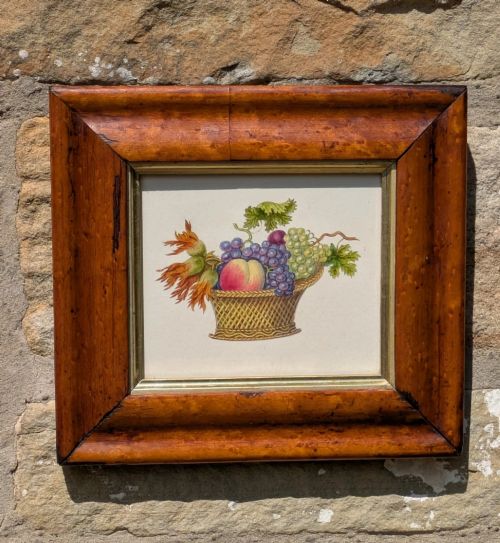
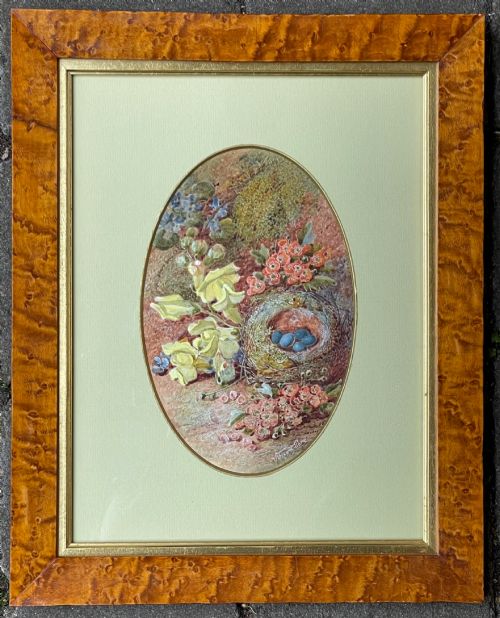
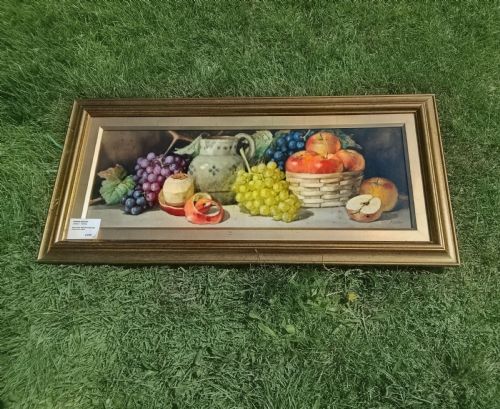
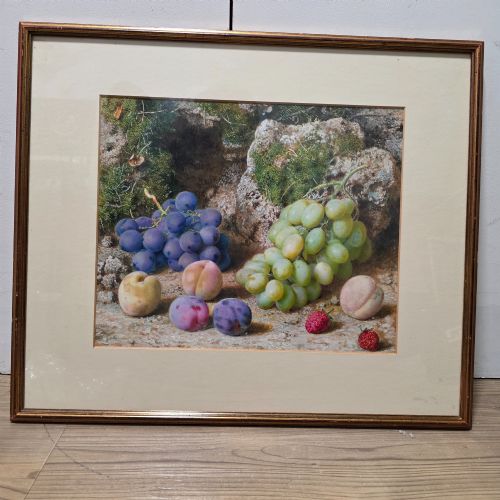
Techniques varied from transparent washes that allowed the bright white of the paper to illuminate floral petals to dense applications of opaque bodycolour and gouache that built up the rich textures of fruit, birds' nests, and ceramic jugs.
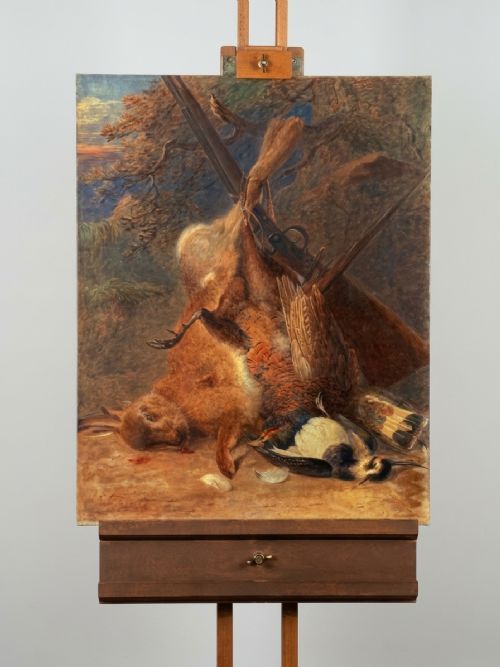
Object forms on this page include framed paintings, wall art, and botanical studies depicting flowers, fruit, and game.
Judging Quality
Quality rests upon the artist's command of line and tone, where superior examples exhibit precise botanical accuracy and subtle handling of light across fruit and petals. Lesser pieces rely on formulaic arrangements and stiff, unconvincing colour mixing.
The complexity of the composition also dictates distinction, separating simple single-stem studies from intricate multi-element arrangements featuring elaborate porcelain, woven baskets, and detailed mossy banks.
George Sydney Shepherd·Vincent Clare·Arthur Dudley·John Sherrin·James Tower·Henrietta Creswell·William Edward Fox·Lester Sutcliffe·Edward Carter Preston·William Hough·Eloise Harriet Stannard·Edith Barrow·Harry Davis·Rowland Henry Hill·Grace Hastie·Margaret Laing·Phyllis I Hibbert·Marian Chase·Jabez Bligh·Alice Macallan Swan·Marion Broom·Annie Mary Youngman·Edith Alice Andrews·James Kerr McArthur·Amy Reeve-Fowkes
The Watercolour Still Life Art Glossary
- Watercolour
- A painting method in which finely ground pigments are suspended in a water-soluble binder and applied to paper. This medium relies on the reflective quality of the paper underneath to create luminous colour washes.
- Bodycolour
- Watercolour paint mixed with a white pigment to make it opaque. This technique adds solidity and highlights to painted fruit, flowers, and ceramic surfaces.
- Gouache
- A heavy, opaque water-soluble paint similar to bodycolour. It produces a flat, matte finish that allows for dense colour saturation in floral and botanical studies.
- Botanical Study
- A detailed painting focused on the accurate depiction of plant species, flowers, or fruit. These works were valued for both their scientific precision and decorative appeal.
- Regency
- A style period spanning the early 19th century characterised by classical elegance and refined decorative arts. Paintings from this era often feature balanced arrangements of fruit and garden flowers.
Watercolour Still Life Art: Frequently Asked Questions
How should I display my watercolour still life?
Keep watercolours away from direct sunlight to prevent the pigments from fading over time. Framing them behind glass with conservation-grade mounts protects the paper from atmospheric moisture and dust.
Position your pieces on interior walls where light levels remain stable and moderate. This ensures the delicate colours of the flowers and fruit retain their original vibrancy.
What subjects are common in these paintings?
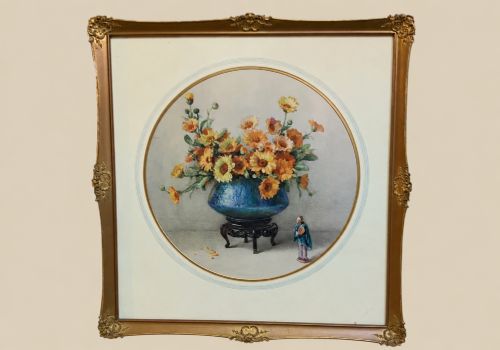
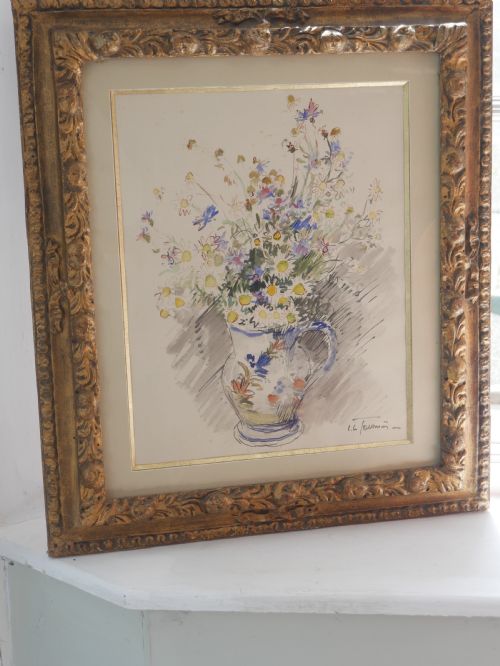
Floral subjects dominate these works, featuring seasonal blooms such as roses, pansies, wallflowers, and anemones arranged in ceramic jugs or glass vases. Artists also frequently painted bowls of fruit, game birds, and natural collections like birds' nests on mossy banks.
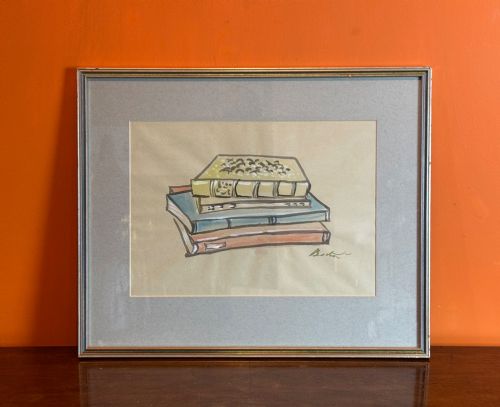
Domestic items such as books, baskets, and Chinese objects appear alongside natural specimens. These varied compositions reflect changing tastes from Victorian naturalism to mid-century modern abstraction.
How do I date an antique watercolour?
Examine the framing, paper type, and artist signatures to establish a chronological context. Victorian works often feature elaborate gilt frames and meticulous botanical realism, whereas 1950s pieces tend toward simpler framing and looser brushwork.
Artist records and exhibition histories provide precise dates for signed works. Stylistic shifts, such as the geometric tendencies of 1920s pieces, also help pinpoint the era.
Are gouache and watercolour the same?
Watercolour uses transparent washes where light passes through the pigment to reflect off the white paper beneath. This creates a luminous, delicate effect prized in traditional flower painting.
Gouache includes added white pigment that makes the paint opaque and matte. Artists often combined both mediums in a single still life to contrast soft petal washes with solid highlights on fruit.