
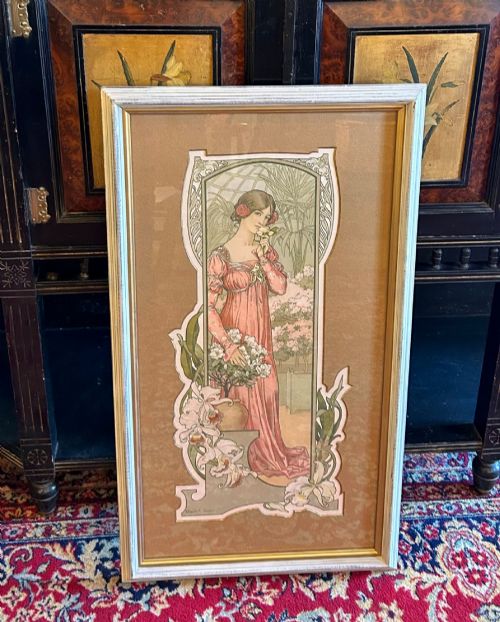
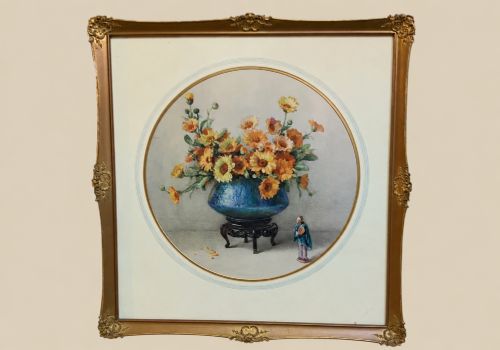
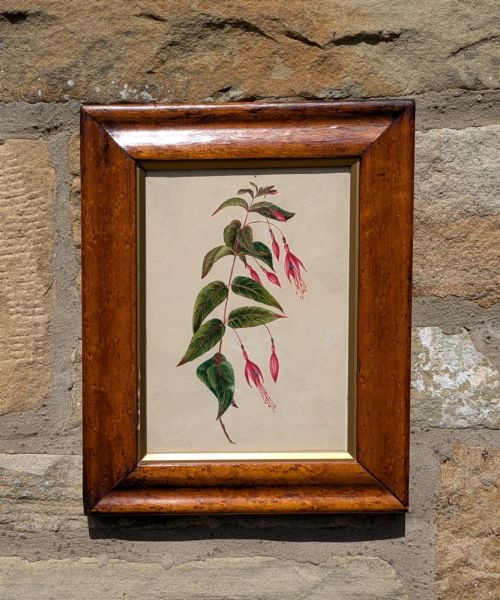
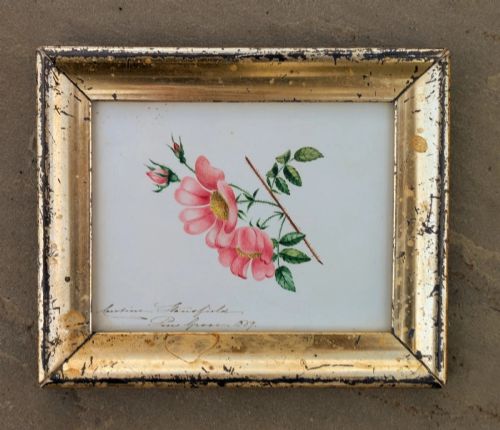
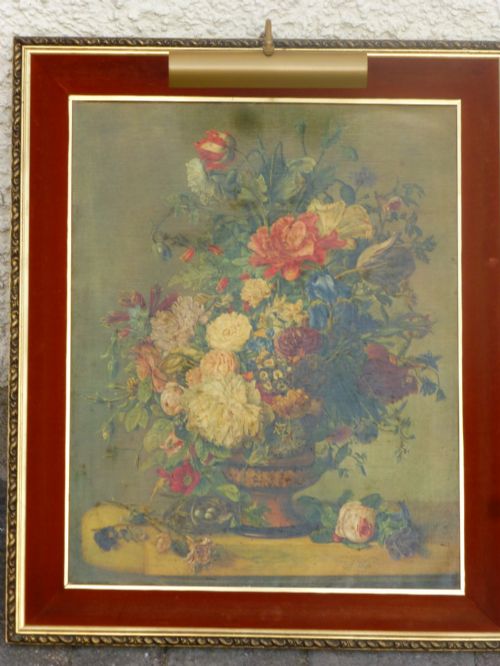
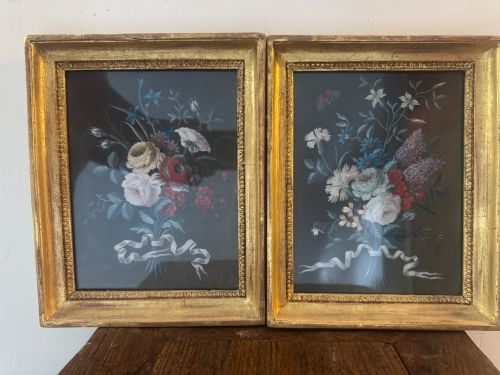
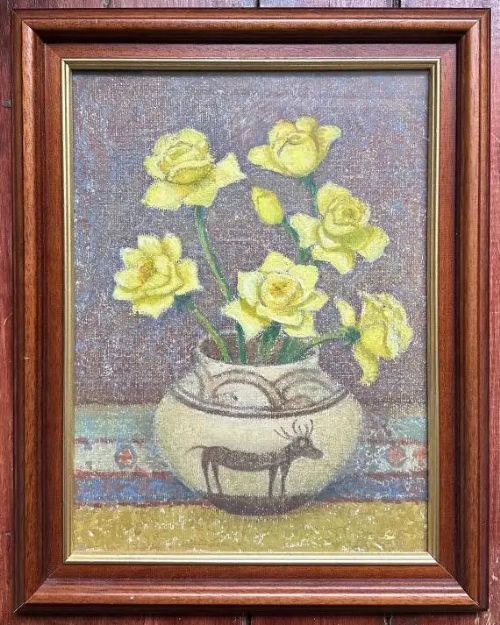
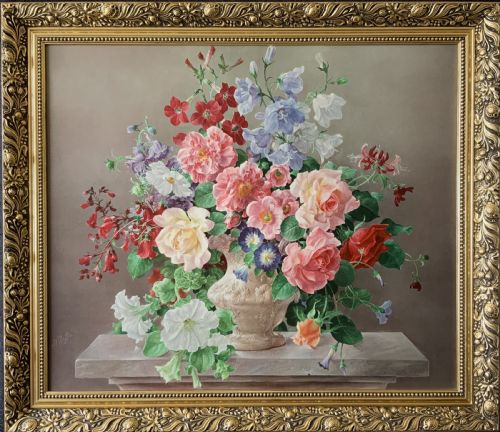



Framed Floral Art Print
When you search for a framed floral art print, you are looking at centuries of botanical observation captured in paper, wood, and glass.
Framed Floral Art Print
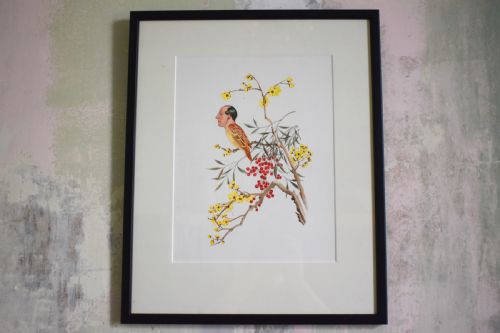
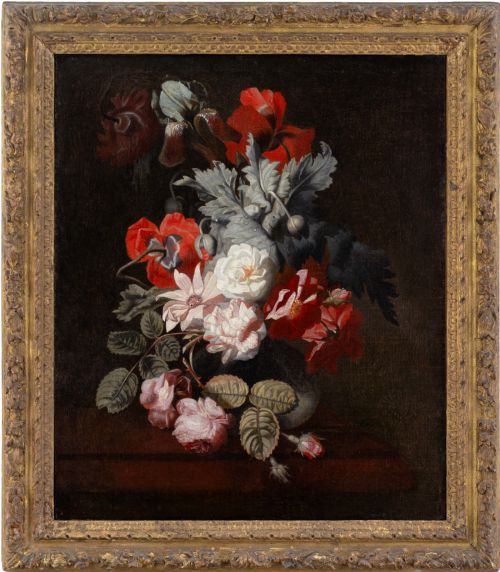
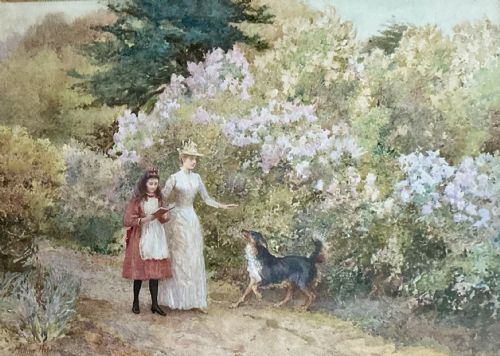
A framed floral art print encompasses works created across the eighteenth, nineteenth, and twentieth centuries, uniting wall art, paintings, watercolours, and botanical engravings. The selection on this page relies heavily on nineteenth-century watercolours and botanical studies alongside earlier engravings.
The subjects range from scientific botanical records featuring insects and plants to decorative still life arrangements of roses, wallflowers, and spring blossoms in vases. These pieces appear in various configurations, including individual sheets, framed pairs, and sets spanning multiple plates.
Origins stretch across English, Dutch, and Italian schools, encompassing styles from the Victorian botanical movement to Neoclassical and Art Nouveau aesthetics. Buyers meet everything from detailed lithographs and gouache studies to oil paintings on canvas and board.
How they were made
The works utilise a foundation of paper, canvas, or wood panels, employing media such as watercolour, gouache, oil, and pencil. Many botanical examples combine hand-colouring with engraving techniques to render precise floral details.
Frames play a crucial role in the presentation, incorporating materials like wood, gilt wood, and gold leaf alongside carved pine picture frames and glass covers to protect the delicate surfaces within.
Many botanical plates preserve tiny, unexpected insects hiding among the painted petals.
What varies in quality
Quality rests in the precision of the botanical draftsmanship and the retention of pigment vibrancy across the paper or canvas over time. Hand-coloured engravings and original watercolours display distinct brushwork and line clarity that separate accomplished studies from mass-produced prints.
The integrity of the surrounding frame, whether period gilt wood or carved pine, contributes substantially to the overall character of the piece. Surviving sets with uniform patination and intact glass command stronger visual coherence than isolated fragments.
Elisabeth Sonrel·Anton Weiss·Emma Fordyce MacRae·Harold Clayton·Simon Pietersz Verelst·Arthur Hopkins·Charles Burton Barber·Terence Loudon·Pancrace Bessa·Charlotte Isa James·John Curtis·Georg Wolfgang Knorr·Jane Utley·John Sherrin·M.K Rhodes·Lilian Stannard·Amy Reeve-Fowkes·Helen Cordelia Angell·Owen Bowen·George Dionysius Ehret
The Framed Floral Art Print Glossary
- Lithograph
- A print produced by drawing on limestone or a metal plate with a greasy substance so that ink sticks only to the design. This technique allowed artists to reproduce subtle tonal gradations in floral illustrations.
- Gouache
- An opaque water-based paint mixed with a fine white pigment to create heavier, solid colour surfaces. It provides stronger coverage than traditional watercolour in botanical studies.
- Oleograph
- A type of chromolithographic print textured to imitate an oil painting on canvas. These appeared widely in the nineteenth and twentieth centuries to simulate original fine art.
- Engraving
- An intaglio printmaking process where an artist cuts a design into a metal plate with a burin. Ink is held in the grooves and transferred under pressure to paper.
- Botanical
- Artworks created with scientific accuracy to document the structure of plants, flowers, and leaves. These often include diagnostic details of roots, stems, and seed pods alongside the main bloom.
Framed Floral Art Print: Frequently Asked Questions
What is a botanical engraving?
A botanical engraving is a printed image derived from an engraved metal plate, often hand-coloured to show plant anatomy with scientific precision. These plates served as illustrations for natural history books and serials.
Created primarily during the eighteenth and nineteenth centuries, they combine rigorous observational drawing with decorative appeal. Collectors often find them arranged in uniform sets depicting specific flora and fauna.
How should I hang these prints?
These works require placement away from direct sunlight to protect watercolours and tinted papers from fading over time. Maintaining stable indoor humidity levels also preserves the wood and gilt frames.
Pairing matching sets or displaying single watercolours on neutral walls allows the intricate floral details to remain the focal point. Glass fronts protect the delicate painted surfaces from dust and environmental moisture.
What is an oleograph?
An oleograph is a mechanical print created using chromolithography on canvas or textured paper to replicate the appearance of an oil painting. Manufacturers applied varnishes to mimic the surface sheen of traditional brushwork.
Popular in the Victorian and vintage eras, these reproductions offered accessible wall art for domestic interiors. They bridge the gap between printed ephemera and painted canvas.
How do I identify the period?
Period identification relies on examining the framing materials, the paper watermark or texture, and the style of the botanical rendering. Nineteenth-century works frequently feature softer watercolours and distinct Victorian framing styles.
Earlier eighteenth-century pieces often display hand-coloured copperplate engravings with specific plate marks and typography typical of early botanical folios. Comparing the paper type and pigment usage provides further clues to the decade of creation.