


Botanical Floral Watercolour
When you search for a botanical floral watercolour, you are looking at delicate studies of garden life preserved on paper through centuries of changing British taste.
Botanical Floral Watercolour
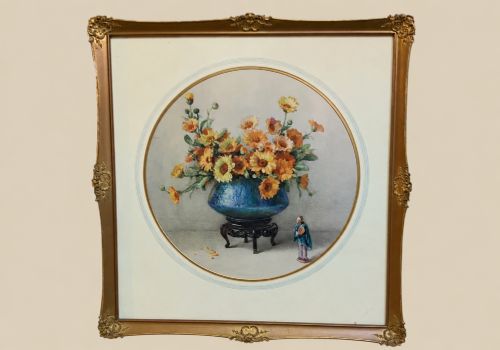
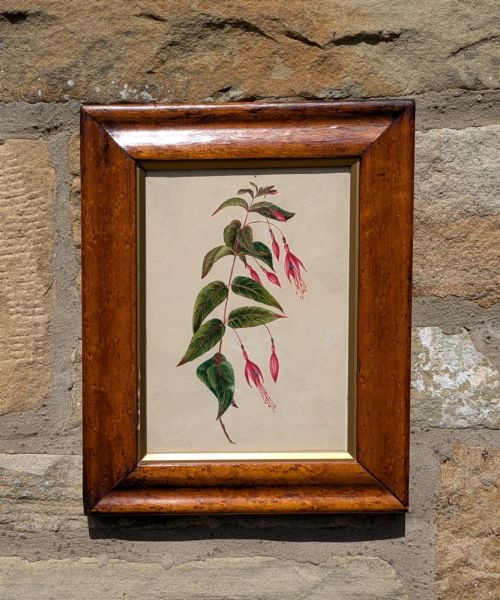
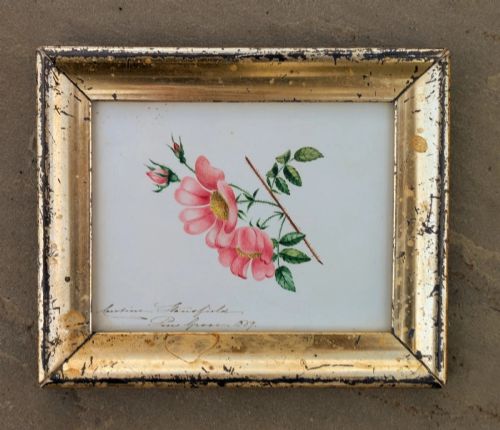
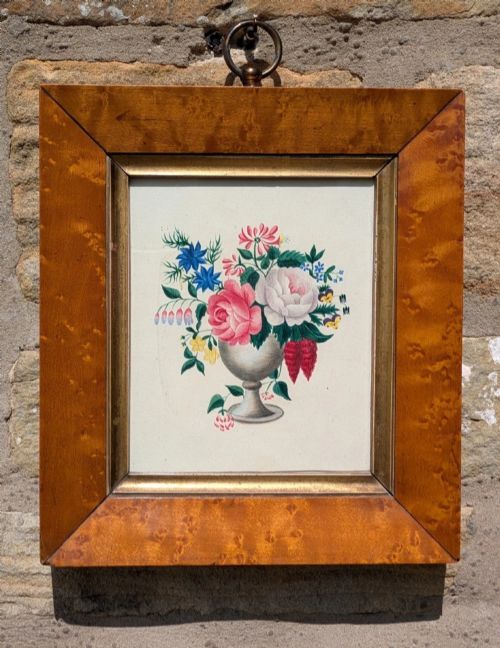
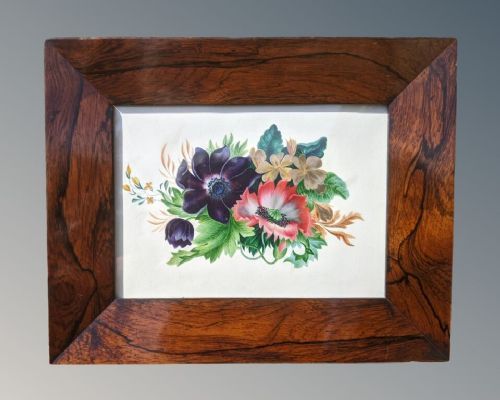
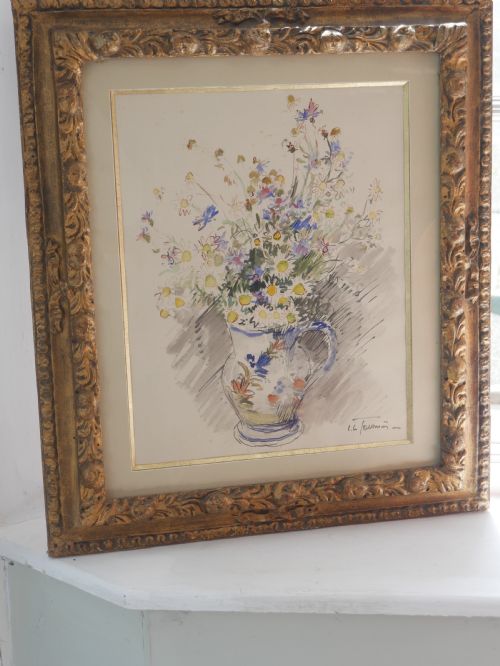
A botanical floral watercolour represents plant studies and still life arrangements captured by artists across the nineteenth and twentieth centuries. These works range from precise scientific depictions of wild roses and fuschias to looser artistic compositions of garden flowers in jugs.
The selections available here lean heavily towards Victorian botanical studies, Edwardian garden scenes, and mid-century still life paintings. Pieces often arrive framed in glass and wood, maintaining the original aesthetic context of the period in which they were created.
How they were made
Artists painted these works primarily using watercolour pigment and gouache applied to paper supports. Pencil underdrawings frequently underpin the paint layers, mapping the precise contours of petals and leaves before pigment application.
Framing materials commonly incorporate glass, wood, and gilt wood, occasionally paired with decorative metal mounts such as French pewter frames. These housings protect the fragile paper works from environmental moisture and light degradation over time.
Listings feature works spanning the nineteenth century through the 1950s, executed in watercolour, gouache, and pencil on paper.
What varies in quality
The division between standard illustrative work and superior artistic output lies in the control of pigment density and tonal subtlety. Skilled hands manage translucency and opacity to give petals a genuine three-dimensional weight.
Compositional confidence separates casual sketches from accomplished cabinet pieces. The integration of supporting elements like Chinese objects, pottery jugs, or mossy banks dictates the visual balance of the finished sheet.
James Tower·Harry Wanless·Henrietta Creswell·William Edward Fox·Lester Sutcliffe·Lilian Stannard·William Hough·Edith Barrow·Rowland Henry Hill·Grace Hastie·Margaret Laing·Phyllis I Hibbert·Marian Chase·Alfred W. Parsons·Jabez Bligh·Owen Bowen·Charlotte Isa James·Alice Macallan Swan·Marion Broom·Annie Mary Youngman·Edith Alice Andrews·John Sherrin·George Frederick Nicholls·Beatrice Parsons·M.K Rhodes
The Botanical Floral Watercolour Glossary
- Watercolour
- A paint consisting of a pigment suspended in a water-soluble vehicle. It provides transparent washes that allow the white of the paper to illuminate the colour.
- Gouche
- An opaque watercolour paint containing pigment mixed with a water-binding agent and an inert white pigment. It creates solid, matte areas of colour distinct from transparent washes.
- Botanical study
- A rigorous visual record of plant morphology. These works balance artistic merit with scientific observation of leaf structures and floral anatomy.
- Aesthetic movement
- A late nineteenth-century design philosophy prioritising visual beauty over narrative or moral message. It influenced framing choices and interior display styles.
- Still life
- A painting featuring inanimate subject matter, typically everyday objects or harvested natural items such as cut flowers in jugs and bowls of fruit.
Botanical Floral Watercolour: Frequently Asked Questions
How old are these watercolours?
The pieces span from the nineteenth century through the mid-twentieth century, capturing shifting artistic movements across decades of British and European production.
Specific dates or periods are typically recorded by the original maker or established through stylistic indicators within the painting itself.
Where should I hang them?
These works require placement away from direct sunlight to prevent the watercolour pigments from fading over time. Hanging them in private studies, drawing rooms, or hallways maintains a traditional domestic context.
Pairing framed paper pieces with period wooden furniture or complementary wall art enhances their historical aesthetic.
How do I care for paper art?
Conservation framing with acid-free mounts protects the delicate paper and pigment from chemical degradation. Maintaining stable indoor humidity prevents warping of the paper support and damage to the surrounding wood or gilt frame.
Glass fronts should be cleaned with care to avoid moisture seeping beneath the glazing.
What subjects are most common?
Floral subjects dominate these listings, featuring roses, azaleas, pansies, and garden landscapes. Artists frequently arranged these blooms in pottery jugs, baskets, or natural settings like mossy banks.
Occasional still life arrangements incorporate contrasting elements such as Chinese objects and bowls of fruit alongside the primary flowers.