


Watercolour Bird Picture
A watercolour bird picture brings the quiet detail of the natural world onto your wall through delicate pigment applied to paper.
Watercolour Bird Picture
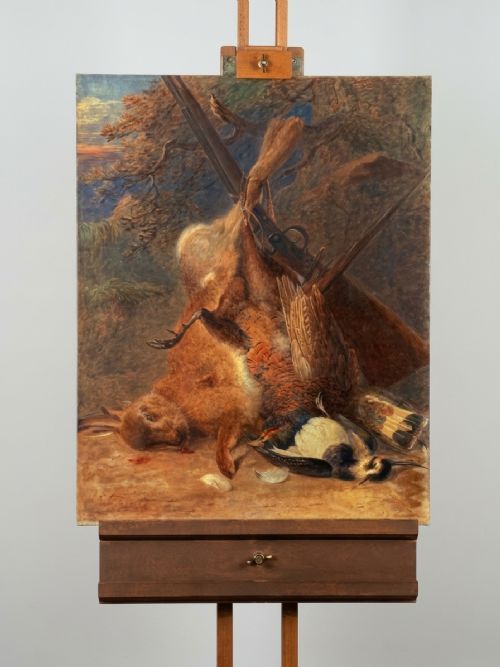
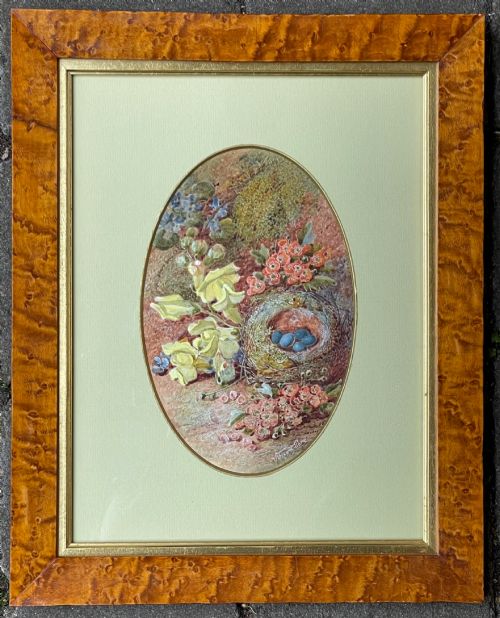
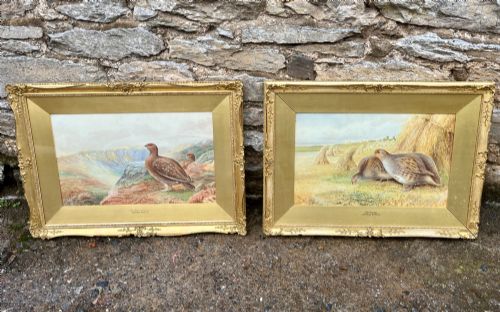
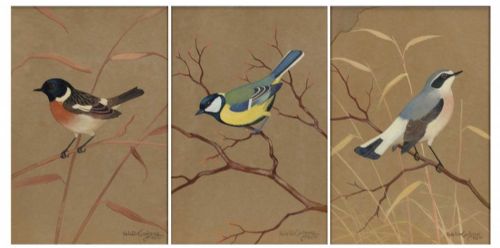
A watercolour bird picture captures avian subjects across the nineteenth and twentieth centuries, spanning periods from the Regency era through to mid-century British art.
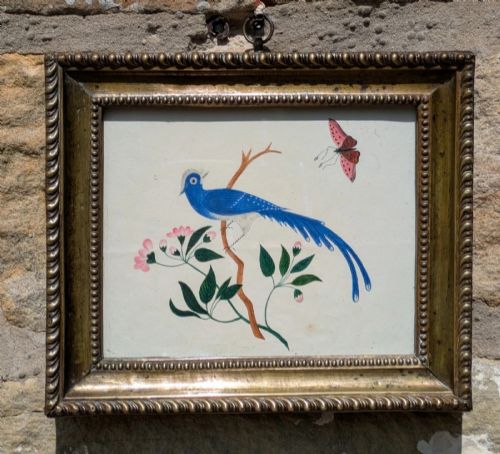
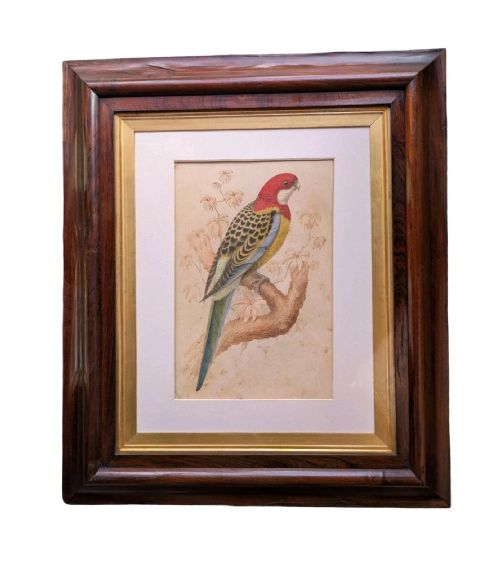
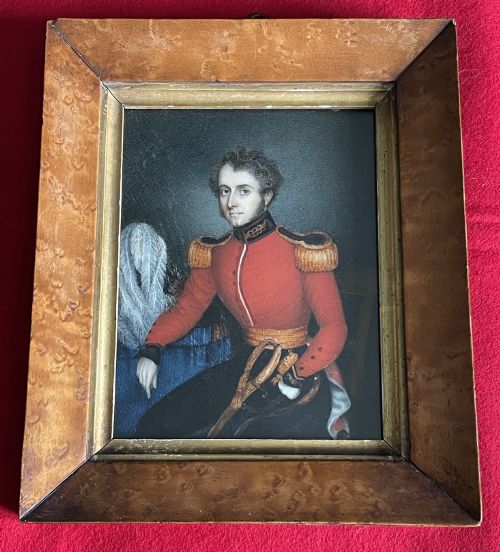
These works appear in various forms, including framed paintings, wall art, and portrait miniatures, depicting species from garden birds and game birds to exotic parrots and finches.
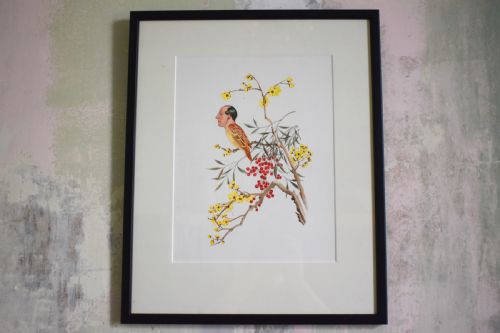
The selection ranges from traditional British natural history studies and works by named artists to traditional Chinese paintings on silk, offering diverse expressions of the form.
How they were made
Artists executed these works primarily using watercolour pigment and gouache, often referred to as bodycolour, applied directly onto paper or silk.
Framing methods frequently incorporate glass, wood, ebonised frames, and deep giltwood mounts, while some pieces integrate gold leaf to accent the composition.
Represented artistic traditions span Victorian naturalism, mid-century British art, and traditional Chinese painting.
What varies in quality
Quality rests on the precision of the brushwork and the accuracy with which the artist captures the anatomy, plumage, and posture of the bird.
The sophistication of the secondary materials, such as original maple frames or deep giltwood mounts, distinguishes standard decorative works from finer artistic studies.
George Sydney Shepherd·R Hurst·George Rankin·Ralston Gudgeon·Charles F Tunnicliffe·Harry Bright·Eloise Harriet Stannard·R Lauritsch·Paul Louis Barruel·Donald Watson·Archibald Thorburn
The Watercolour Bird Picture Glossary
- Watercolour
- A painting method in which the pigments are suspended in a water-based solution, typically applied to paper.
- Gouache
- An opaque water-based paint, also known as bodycolour, that provides denser coverage and brighter highlights than standard watercolour.
- Mount
- A cardboard or paper border placed inside the frame to surround the picture and separate the paper from the glass.
- Ebonised
- Wood finished to resemble ebony, commonly used for nineteenth-century picture frames to create a dark, contrasting border.
Watercolour Bird Picture: Frequently Asked Questions
What periods do these paintings come from?
The selections span the Regency and Victorian eras, alongside Edwardian pieces and mid-century twentieth-century works.
Dates range from the nineteenth century through the 1950s, reflecting changing artistic approaches to natural history illustration.
How should I frame and hang my picture?
Many examples arrive in period frames, including ebonised wood or frames with deep giltwood mounts.
Keep works out of direct sunlight to protect the water-based pigments from fading over time.
Are these works signed by the artists?
Several pieces feature signatures, stamps, or attributions to specific painters and schools of art.
Others represent the work of competent regional or continental artists working within traditional naturalist styles.
What materials are used in these works?
The primary medium consists of watercolour pigment or gouache applied to paper, though some examples utilise silk.
Completions often involve protective glass and wooden framing, occasionally featuring gold leaf accents.