


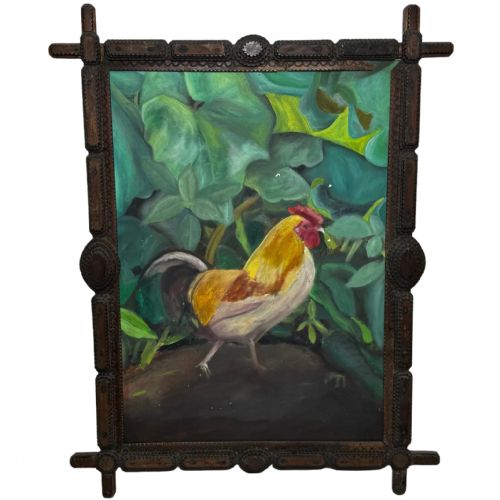

Vintage Farmyard Artwork
Vintage farmyard artwork captures rural life through oil and watercolour from the nineteenth and twentieth centuries.
Vintage Farmyard Artwork
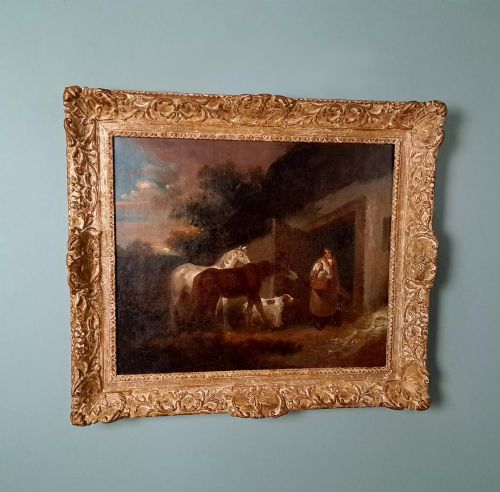
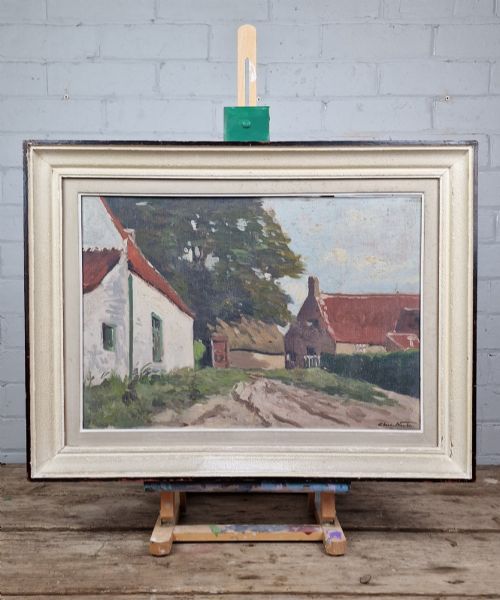
When you search for vintage farmyard artwork, you encounter pastoral scenes depicting agricultural life, farm buildings, and domestic animals across the nineteenth and twentieth centuries. These paintings record rural subjects such as horses, chickens, calves, and farm hands through the styles of British Realism, Impressionism, and Post-Impressionism.
The works on this page appear predominantly as oil paintings on canvas or board, alongside watercolours on paper. Artists from periods including the Victorian era, Edwardian years, and the decades up to the mid-twentieth century framed these agricultural scenes in wood and giltwood.
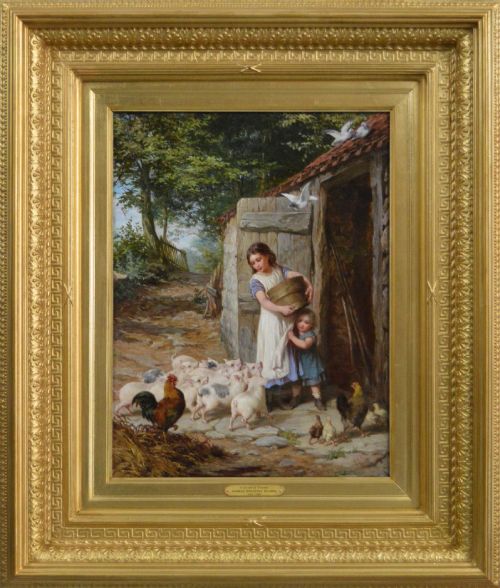
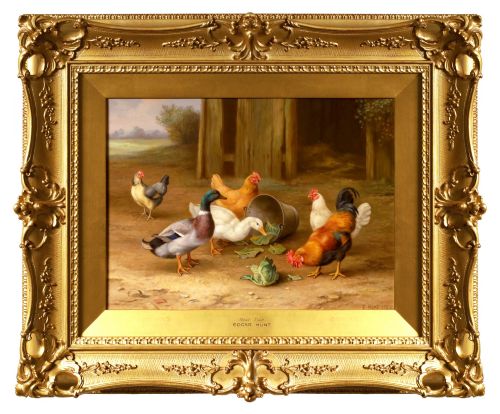
The subjects range from quiet farmyards and cart sheds to detailed animal studies of roosters, hens, and pigs. These pieces document the working countryside of Britain and Europe through the hands of named painters and regional artists.
How they were made
The primary technique relies on oil paint applied to canvas, board, or wood panels, building up layers of pigment to depict rural textures and livestock. Watercolours on paper offer a lighter medium for landscapes and farmyard studies, often finished with detailed brushwork.
Artists utilised traditional framing methods, enclosing canvases and watercolours in wood and giltwood frames that protect the edges and complement the pastoral subject matter.
Roosters and poultry claim centre stage in several works, supervising farm life from the dunghill.
What varies in quality
Quality in these pastoral works rests upon the precision of the draughtsmanship and the artist's handling of light and animal anatomy. Works by established painters demonstrate a superior command of composition, capturing the textures of feathers, fur, and weathered timber with greater conviction.
The preservation of the paint surface and the originality of the mounting also separate works. Paintings that retain their stable oil layers on original canvas or board without extensive later restoration hold higher standing among collectors.
William Joseph Shayer Senior·Charles Houben·George Augustus Holmes·Edgar Hunt·Herbert Royle·John Frederick Herring Jnr·John Atkinson·Claude Cardon·Robert Russell MacNee·Owen Bowen·J L Van Leemputten·John R K Duff·Ernest Higgins Rigg·Fred C Jones·Thomas Blinks·Fred Lawson·James William Booth·Kershaw Schofield
The Vintage Farmyard Artwork Glossary
- Oil on Canvas
- Pigment mixed with drying oil applied to a stretched woven fabric support. This method allows for rich colour blending and textured brushwork.
- Watercolour
- Paint consisting of water-soluble pigments applied to paper. It provides transparent washes and fine detail.
- Giltwood
- Wood carved and coated with gold leaf or a gold-coloured finish. This material is common in traditional picture frames.
- British Animalier
- An artistic focus on the realistic portrayal of animals. Painters in this tradition specialise in livestock and poultry within rural settings.
- Post-Impressionism
- An art movement extending beyond Impressionism towards bolder colours and distinct forms. It appears in European interpretations of rural scenes.
Vintage Farmyard Artwork: Frequently Asked Questions
What periods do these farmyard paintings date from?
The works span from the nineteenth century through the Edwardian period and into the nineteen thirties. They reflect the artistic styles of their respective decades.
Victorian and Edwardian examples sit alongside later twentieth-century interpretations of rural life.
What surfaces were used for these artworks?
Artists painted on canvas, wood panels, oil boards, and paper. Oil paint and watercolour are the primary mediums recorded.
Supports vary from stretched canvas to solid wood boards suited to the painter's studio practice.
How do I identify the artist of a piece?
Many works feature signatures, studio sale provenance, or inscriptions on the front or reverse. Researching the named painter links the piece to recorded exhibitions and working periods.
Catalogues and regional records help verify the attribution of nineteenth and twentieth-century pastoral scenes.
What subjects appear most frequently in the scenes?
Common subjects include farmyards, barns, cart sheds, and agricultural landscapes with figures. Domestic animals such as horses, cows, pigs, and poultry feature prominently.
Compositions range from quiet rural corners to detailed studies of farm animals during feeding times.
How should I care for a vintage oil painting?
Keep the artwork away from direct sunlight and dramatic fluctuations in temperature or humidity. Avoid using water or chemical cleaners on the painted surface.
Consult a professional conservator if the canvas requires cleaning or the wooden frame needs structural repair.