


Multicolour Oil Painting
A multicolour oil painting brings vibrant brushwork and rich pigment into a room, capturing light across domestic scenes, florals and figures.
Multicolour Oil Painting
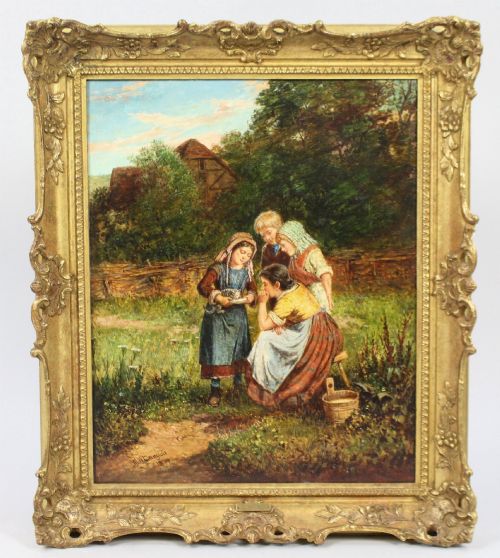
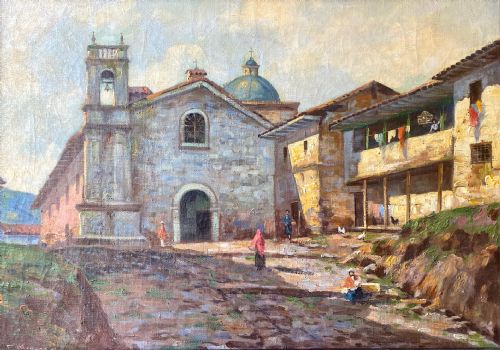
A multicolour oil painting encompasses fine art works executed in oil paint upon canvas, spanning from the nineteenth century through the mid-twentieth century. The selection ranges from Victorian narrative canvases to mid-century abstract still lifes, impressionist street scenes and botanical studies.
Buyers frequently encounter works categorised within specific movements such as British Impressionism, Expressionism and Traditional Still Life. The subjects shift from sunlit Latin American plazas to vases of spring flowers and interior character studies.
Origins vary across British and international hands, demonstrating how artists utilised pigment to render texture and illumination. Each painting bears the physical marks of its period, from nineteenth-century academic framing to mid-century canvas stretching.
How they were made
These works rely upon oil paint applied directly to woven canvas supports, allowing artists to build up thick layers of pigment known as impasto. The medium permits subtle colour blending and deliberate brush marks that retain their texture over decades.
Many canvases are housed within traditional wood frames, frequently enhanced with gesso moulding and gilded surfaces. The combination of timber and plaster creates a solid border that protects the painted edges while framing the composition.
Materials documented across the works include oil on canvas, gilded wood, gesso and traditional paint.
What varies in quality
The distinction between standard works and finer examples lies in the confidence of the brushwork and the management of light within the composition. Masterful handling of pigment creates a luminous depth that weaker paintings fail to achieve.
Compositional balance and the preservation of the original paint surface dictate the standing of a piece. Works that retain their original gesso and gilded wood frames maintain greater historical integrity than those altered later.
Mark William Langlois·Terence Loudon·Pinchus Krémègne·Harold Edward Conway·Herbert Davis Richter·Kershaw Schofield
The Multicolour Oil Painting Glossary
- Impasto
- Paint applied thickly to a canvas, standing out in relief from the surface. This technique allows brush strokes to catch the light and add physical depth to the subject.
- Gesso
- A white paint mixture consisting of a binder mixed with chalk, gypsum or pigment. It is applied to wood frames to create a smooth surface ready for gilding.
- Impressionism
- A nineteenth-century art movement characterised by relatively small, thin yet visible brush strokes and an emphasis on accurate depiction of light. Painters often worked outdoors to capture fleeting atmospheric effects.
- Expressionism
- A modernist movement where artists sought to express emotional experience rather than physical reality. Works in this style often use distorted forms and intense, non-naturalistic colours.
- Canvas
- Closely woven fabric used as a surface for oil painting. It is typically stretched tightly over a wooden frame before work begins.
Multicolour Oil Painting: Frequently Asked Questions
How do I care for an oil painting?
Keep the canvas away from direct sunlight and damp environments to protect the pigments and wooden stretcher bars. Dust the surface very gently with a soft, dry brush without applying pressure.
Avoid using any liquid cleaners or chemical solutions on the paint layer. Professional conservators should handle any deeper cleaning or canvas repairs.
What is the difference between still life and impressionism?
A still life focuses on inanimate subject matter, such as vases of flowers or domestic objects arranged in a controlled space. It highlights texture, form and light upon stationary items.
Impressionism is an approach to painting that prioritises the visual impression of a moment, particularly shifting light and colour. It can apply to landscapes, street scenes or figures rather than strictly arranged objects.
How do I date an antique oil painting?
Examine the canvas weave, the type of stretcher frame and the composition of the wood behind the painting. Older stretchers often feature handmade wedges and square-cut nails.
Signatures, artist registry records and the style of the gilded gesso frame provide further chronological clues. Pigment analysis can also confirm the era in which specific colours were manufactured.
Can I hang oil paintings in bright rooms?
Intense direct sunlight will eventually fade delicate oil pigments and discolour traditional varnishes over many years. Position these artworks away from south-facing windows or spot lighting that generates heat.
Stable room temperatures prevent the canvas and wood frame from expanding and contracting. This stability stops the paint layer from cracking or flaking off the support.