






Antique Rooster Painting
These antique rooster painting works capture farmyard life on canvas and board, offering charm for any country interior.
Antique Rooster Painting
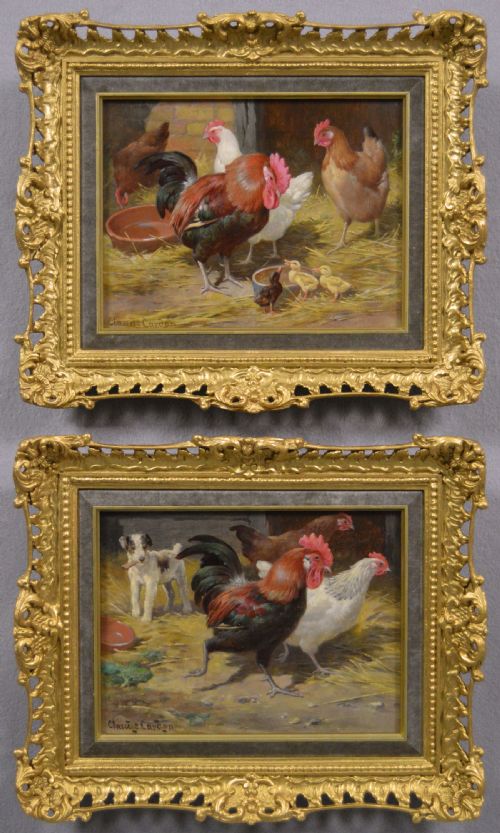
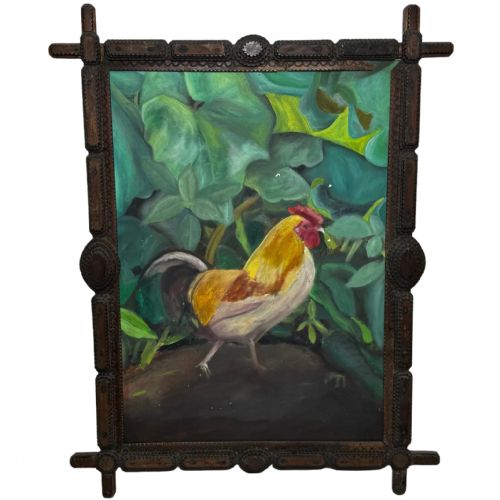
An antique rooster painting depicts poultry and farmyard scenes across canvas and board, originating mainly from the nineteenth and early twentieth centuries. These works range from detailed Victorian realism to simpler folk art expressions.
Buyers encounter oil paintings and watercolours depicting cockerels and hens, often attributed to named artists or associated with English, French, and Catalan traditions.
How they were made
Artists utilise oil paint and watercolour applied to prepared canvas, board, or paper surfaces. Pigments capture the varied plumage and textures of the birds.
Frames commonly consist of wood and giltwood, sometimes retaining original paint or gold leaf finishes applied during the period of creation.
Surviving artworks utilise oil paint, watercolour, canvas, board, wood, and giltwood.
What varies in quality
The skill of the brushwork and the anatomical accuracy of the bird separate standard decorative works from accomplished artistic representations. Fine shading in the feathers and expressive rendering of the subject distinguish superior examples.
The condition of the surface paint and the integrity of the original backing materials influence the overall character of each surviving piece.
Edgar Hunt·Claude Cardon·Franz Bergman·Percival Glenfern·J L VAN Leemputten·R Lauritsch VI·Emile Lecomte
The Antique Rooster Painting Glossary
- Oil on Canvas
- Pigment mixed with drying oil applied to stretched fabric. This traditional support allows for subtle blending of colours.
- Oil on Board
- Pigment applied to a rigid wooden or composition panel. This surface offers a firm foundation often utilised for smaller rural scenes.
- Victorian Realism
- A nineteenth-century artistic approach focusing on accurate depiction of everyday subjects. Paintings in this style portray farmyard animals with photographic detail.
- Folk Art
- Artistic creations produced by self-taught or provincial makers outside academic traditions. These pieces prioritise expressive charm over strict anatomical precision.
Antique Rooster Painting: Frequently Asked Questions
Where were these paintings displayed?
These works typically hung in domestic dining rooms, country houses, and farmhouses to celebrate rural life and agriculture.
Today, they suit kitchens, hallways, and living spaces seeking a traditional country aesthetic.
How do I identify the period?
Periods are identified through the style of brushwork, the stretcher construction of canvas supports, and framing materials.
Nineteenth-century works often show detailed realism, while early twentieth-century pieces adopt looser folk art styles.
What frames are original?
Original frames usually show period construction methods, such as mitred wooden corners and aged giltwood or painted finishes.
Matching patina between the painting and its frame often indicates a long association.