






Warm Brown Marquetry Table
A warm brown marquetry table brings rich timber tones and intricate patterned veneers into a room, offering both a surface and a decorative focal point.
Warm Brown Marquetry Table
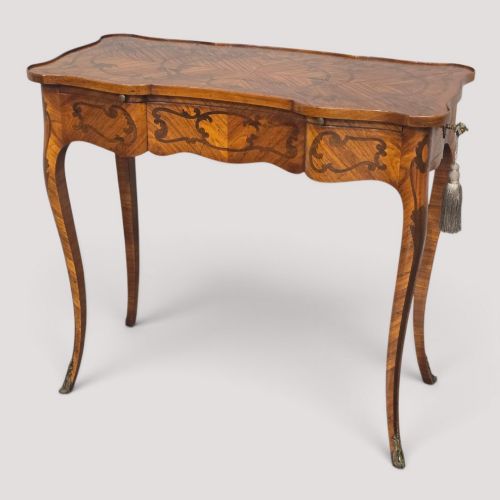
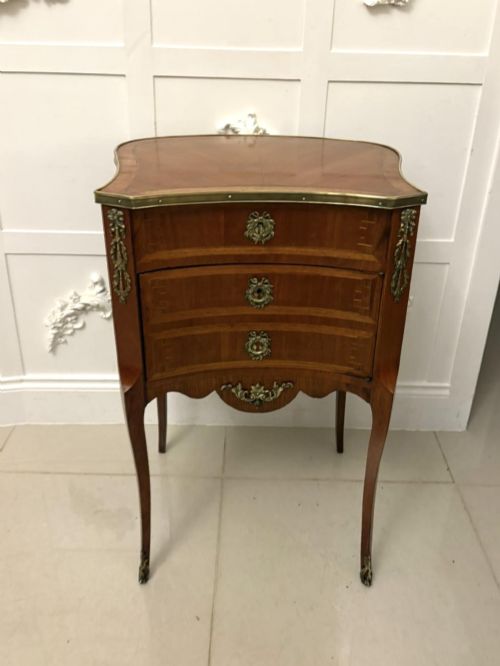
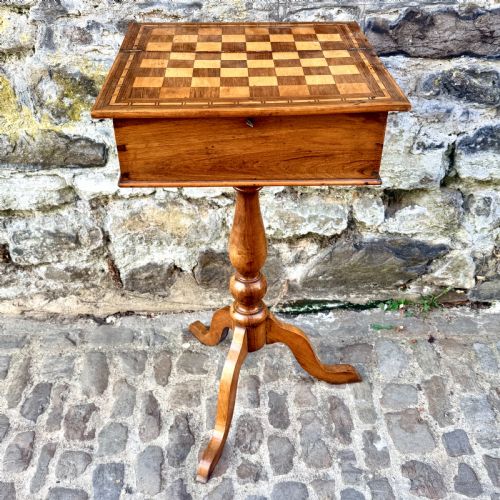
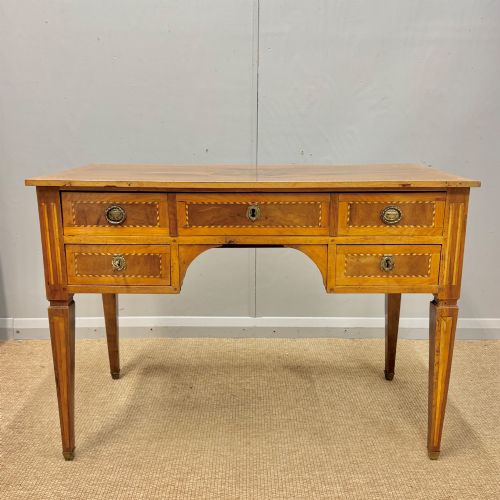
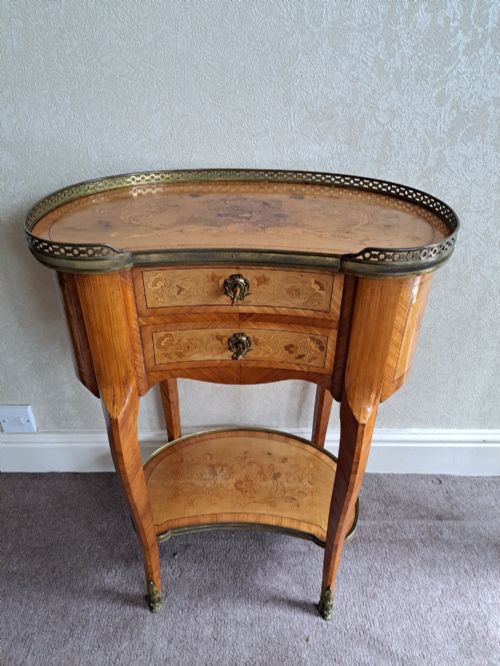
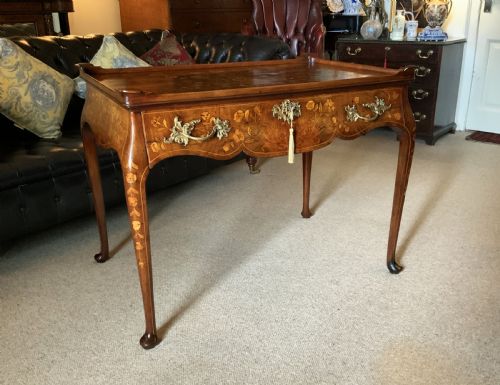
A warm brown marquetry table spans several distinct forms, including writing desks, centre tables, occasional tables, and bedside cabinets. When searching for a warm brown marquetry table, buyers encounter pieces originating from Victorian, Edwardian, and nineteenth-century periods, alongside continental European workshops.
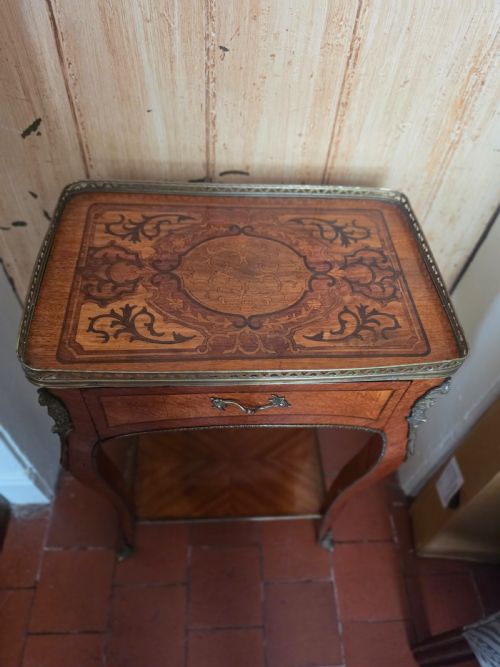
Makers utilised various timbers to achieve rich colour contrasts, shaping side tables, card tables, and bureau platts that showcase floral and pictorial veneer work. The survival of these tables demonstrates the enduring appeal of patterned wood surfaces in period domestic interiors.
Materials and Technique
Cabinet makers constructed these tables using a carcase of secondary timber overlaid with fine veneers of walnut, kingwood, satinwood, mahogany, and rosewood. Sections of fruitwood, harewood, and tulipwood provided contrasting lighter tones for floral and geometric marquetry motifs.
Craftsmen cut thin slices of differing timbers and fitted them together like puzzles into paper patterns before gluing them onto the furniture surface. Metal mounts in ormolu and gilt-metal, along with brass handles and gallery rails, often edged the tables to accent the warm timber hues.
Warm Brown Marquetry Table Retail Price Guide 2026
Typical asking prices for warm brown marquetry table among the pieces listed under this phrase on Sellingantiques today, from the lower quarter to the upper quarter. They describe what is for sale here now, not the wider market.
The selection includes tables from the eighteenth, nineteenth, and early twentieth centuries, featuring walnut, mahogany, satinwood, and kingwood veneers.
Quality and Execution
The distinction between standard production and top-tier execution lies in the precision of the veneer cutting and the complexity of the timber selection. Finer examples display meticulous grain matching and varied natural wood colours that create depth within floral or pictorial marquetry panels.
Secondary construction details, such as the neatness of dovetails within drawers and the crispness of cast ormolu mounts, separate ordinary pieces from exhibition quality works. Tables bearing the signatures of established makers or displaying highly inventive geometry show a higher level of workshop skill.
Pietro Ferrario·Maison Pretot Paris
The Warm Brown Marquetry Table Glossary
- Marquetry
- The art of forming decorative patterns on a wooden carcase by applying small pieces of veneer in contrasting timbers. It differs from inlay by assembling the entire design before fixing it to the surface.
- Ormolu
- Gilded bronze mounts applied to furniture edges, feet, and keyholes. This technique was widely employed on French tables during the nineteenth century to highlight structural contours.
- Kingwood
- A dense, heavily figured Brazilian timber with dark violet-brown streaks used extensively for high-end veneering. Cabinet makers valued it for its rich contrast against lighter fruitwoods.
- Bureau Platt
- A flat-topped writing table fitted with drawers beneath the surface, often standing on cabriole legs. These desks originated in France and frequently feature elaborate marquetry tops.
- Satinwood
- A lustrous, yellow-hued timber utilised during the Georgian and Edwardian periods for banded borders and light-toned field panels. It provides a bright contrast to darker surrounding veneers.
Warm Brown Marquetry Table: Frequently Asked Questions
Where should I place a marquetry table?
These tables suit principal reception rooms, hallways, or studies where their decorative tops remain visible. Placing them out of direct sunlight preserves the natural colours of the varied wood veneers.
They function well as centre tables in open spaces or as side tables against panelled walls. Their compact forms also allow them to serve effectively as writing desks or bedside surfaces.
How do I clean a veneered surface?
Dust the surface regularly with a soft, dry cloth to prevent particulate accumulation within the grain. Avoid chemical sprays or excessive moisture which can damage old polish and lift delicate veneers.
Application of traditional beeswax helps nourish the timber and maintains a soft sheen over the marquetry work. Polishing should occur sparingly to avoid wax buildup around intricate veneer joints.
What distinguishes Edwardian from Victorian tables?
Victorian tables often feature heavier proportions, darker burr walnut or mahogany timbers, and robust turnings or pedestal bases. Marquetry from this era frequently incorporates dense floral clusters and heavy borders.
Edwardian pieces tend to display lighter satinwood or mahogany frames with refined Sheraton revival influences. The lines are generally slenderer, reflecting a shift towards brighter, more delicate interior furnishings.
Can these tables be used for writing?
Many examples on this page were specifically designed as writing desks, featuring fitted drawers and appropriate working heights. However, antique leather or wood surfaces benefit from a protective blotter if used for daily correspondence.
Occasional tables and card tables offer functional surfaces for brief writing tasks or board games. Care should be taken with delicate marquetry panels when placing heavy writing instruments upon them.