
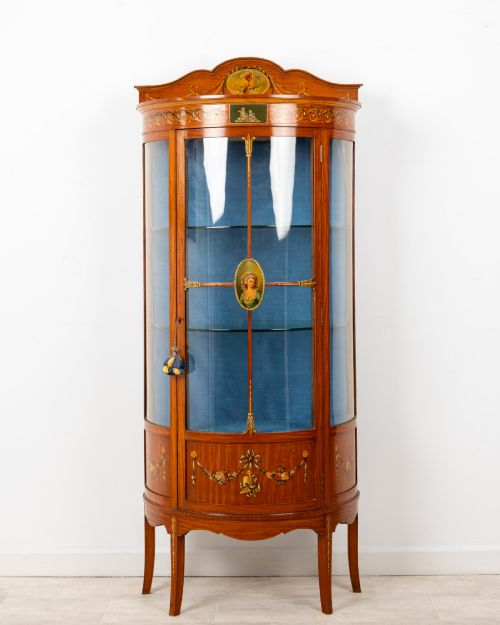
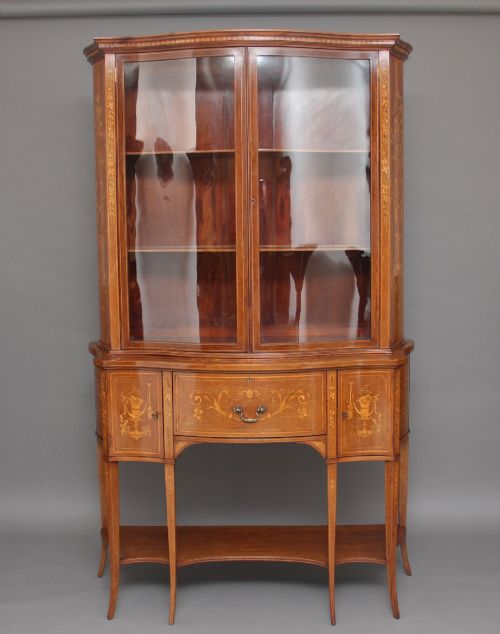
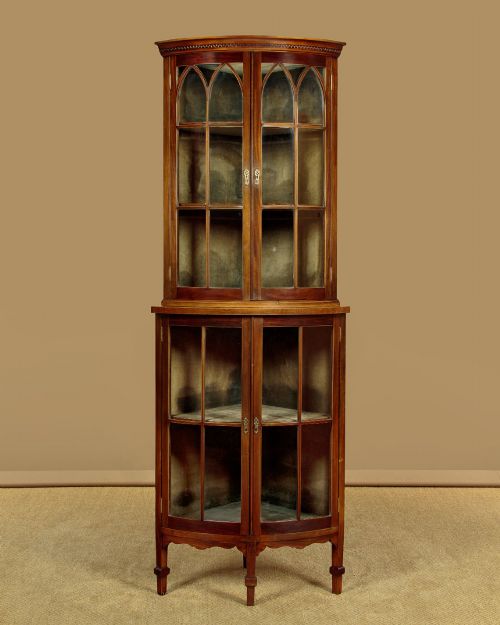


Warm Brown China Cabinet
A warm brown china cabinet brings together rich timbers and clear glass to show off pottery while keeping dust at bay.
Warm Brown China Cabinet
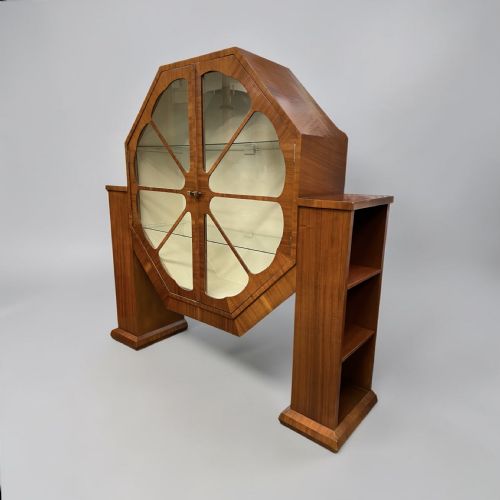
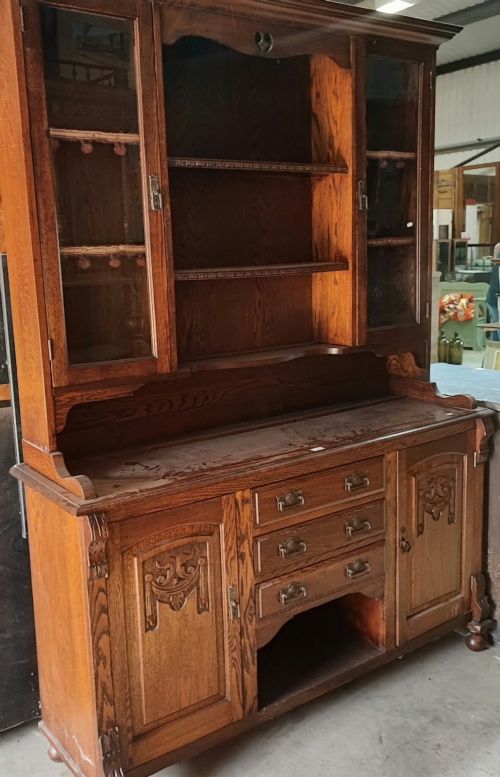
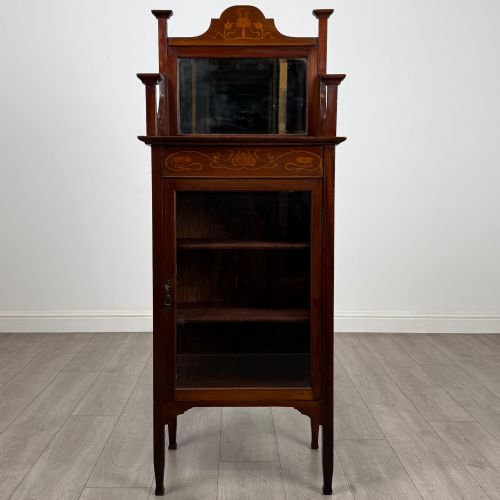
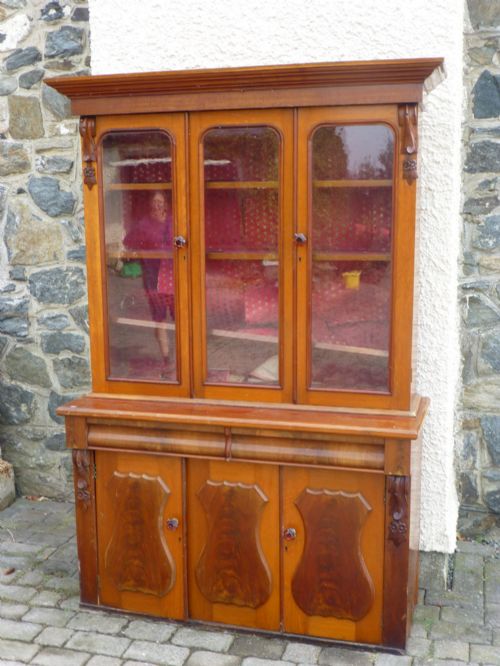
A warm brown china cabinet serves as a dedicated piece of furniture for housing and displaying ceramic collections behind glass doors. When exploring a warm brown china cabinet, buyers encounter timber frames spanning the eighteenth, nineteenth, and twentieth centuries.
The selections here range from compact Edwardian satinwood pieces and Art Deco walnut designs to substantial nineteenth century mahogany breakfronts and Welsh dressers. Vernacular pieces in oak and cherrywood sit alongside refined revival styles inspired by Sheraton and Louis XVI.
Most examples rely on glazed upper sections paired with enclosed cupboards or drawers below, offering both display space and practical storage. These structures utilise rich tones of mahogany, walnut, oak, and satinwood to bring warmth into dining rooms and living spaces.
How they were made
Cabinet makers constructed these pieces using solid hardwoods and decorative veneers laid over stable secondary timbers. Mahogany, walnut, and oak form the primary structures, often enhanced with contrasting satinwood or kingwood inlay and marquetry.
Glazing bars hold individual panes of glass within door frames, while brass hinges, locks, and escutcheons secure the openings. Surface finishes applied by hand highlight the natural grain patterns and warm colour of the wood.
Listings feature woods like mahogany, walnut, oak, satinwood, kingwood, and cherrywood, spanning the eighteenth to twentieth centuries.
What varies in quality
Quality shows in the selection of timber figures and the precision of inlaid details such as satinwood banding or marquetry panels. Finer cabinets display careful grain matching across door fronts and cornices rather than random timber cuts.
Construction methods also separate standard production from superior workshops, visible in dovetailed drawer boxes, tightly joined glazing bars, and original brass hardware. The fluidity of carved ornamentation and the crispness of applied mouldings reflect the skill invested by the maker.
Edwards and Roberts·Epstein·Francois Linke
The Warm Brown China Cabinet Glossary
- Vitrine
- A glass-fronted cabinet or display case designed specifically for showing porcelain and small decorative objects. These often feature glazed sides to let light reach the contents from multiple angles.
- Breakfront
- A large cabinet design where the central section projects forward from the flanking wings. This architectural arrangement creates depth and breaks up the linear mass of wide bookcases and display units.
- Marquetry
- Decorative patterns formed by fitting together thin veneers of various coloured woods, shells, or ivory. Craftsmen glue these intricate designs onto the primary carcase surface.
- Cwpwrdd Gwydr
- A traditional Welsh term for a glazed cupboard or cabinet. These regional pieces often combine sturdy local oak with practical shelving for domestic pottery.
- Vernis Martin
- A simulated Japanese lacquer technique developed in France, using translucent varnishes over metallic leaf or painted scenes. It appears on finer continental cabinets and vitrines.
Warm Brown China Cabinet: Frequently Asked Questions
How do I clean the glass?
Use a soft cloth and mild glass cleaner, applying the liquid to the cloth rather than spraying directly onto the wood or antique glazing bars.
Keep moisture away from vintage timber frames and dry the glass thoroughly to prevent streaks.
Are the shelves adjustable?
Many larger breakfronts and bookcase cabinets include adjustable wooden shelves supported on traditional metal pins or rack systems. Smaller single-door vitrines often feature fixed wooden or glass shelves.
Check individual listings to confirm how the interior space is configured.
How do I secure the doors?
Most cabinets utilise working brass locks operated with a matching key to keep the glazed doors securely shut. Some taller or double-door formats also incorporate internal bolts at the top or bottom edge.
Ensure the cabinet sits level on the floor so the doors align properly with the latches.
What fits inside these cabinets?
The interior depth and shelf height determine whether pieces hold dinner services, glassware, or decorative ceramic figures. Shallow Edwardian vitrines suit small figurines and plates, while triple door breakfronts accommodate larger collections.
Review the dimensions in each listing before planning your display.