



Walnut Whatnot Stand
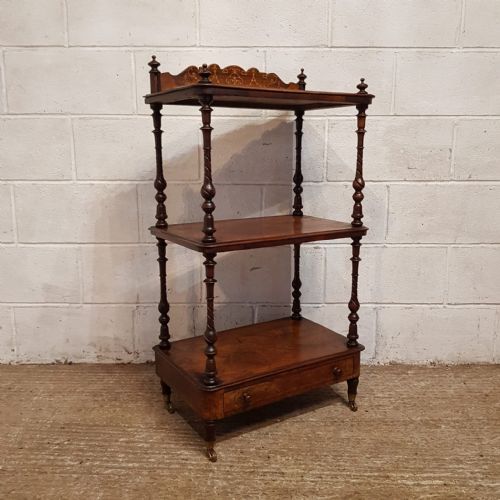
A walnut whatnot stand is a tiered display piece designed to hold ornaments and books, bringing vertical elegance to a Victorian drawing room.
Walnut Whatnot Stand
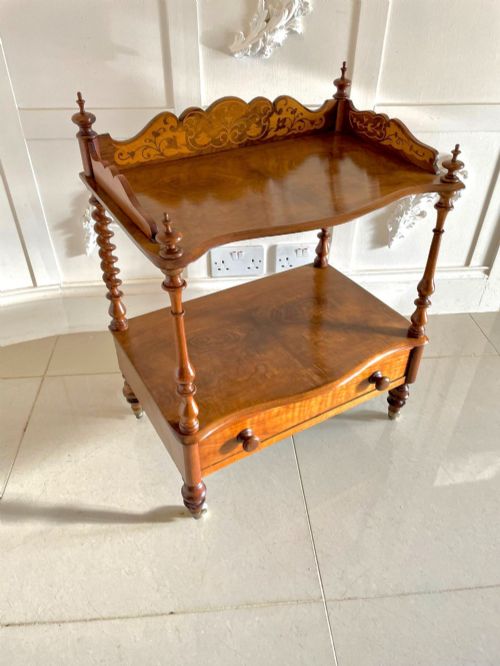
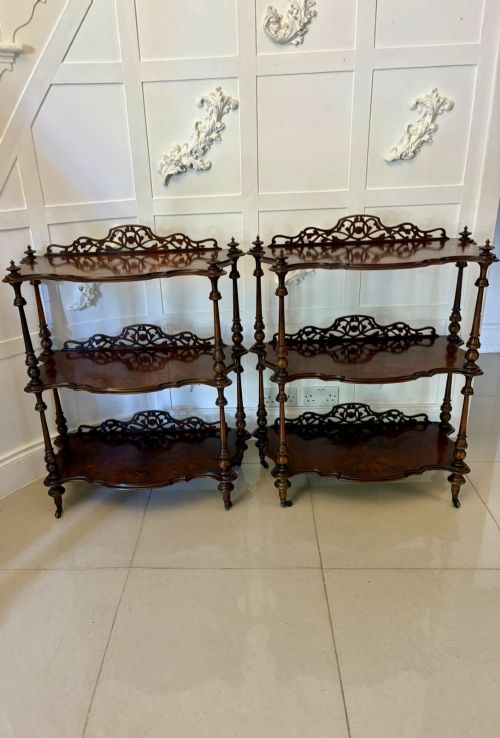
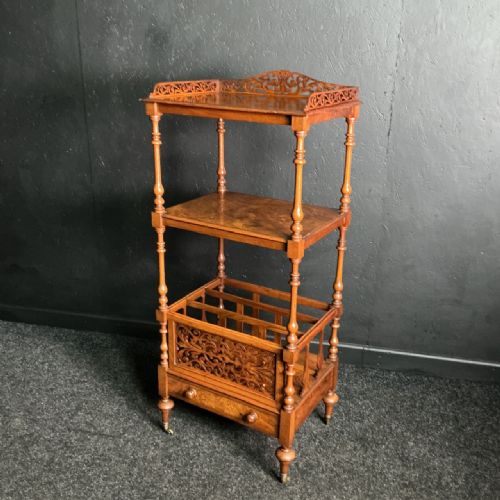
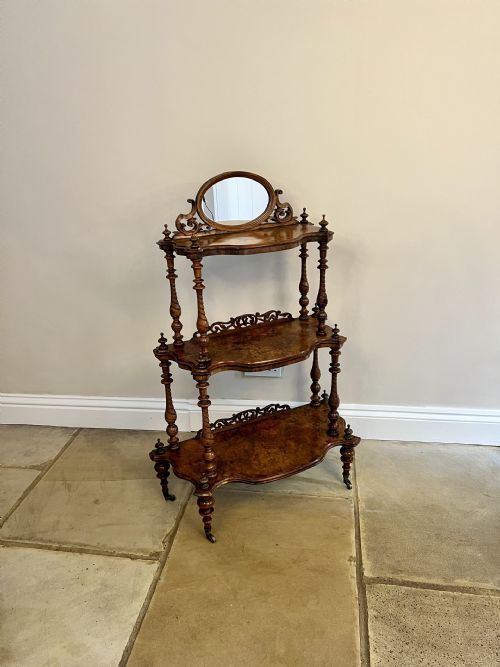
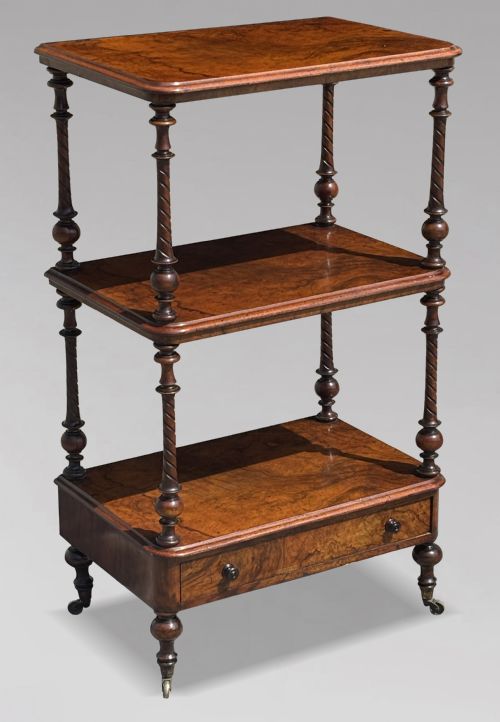
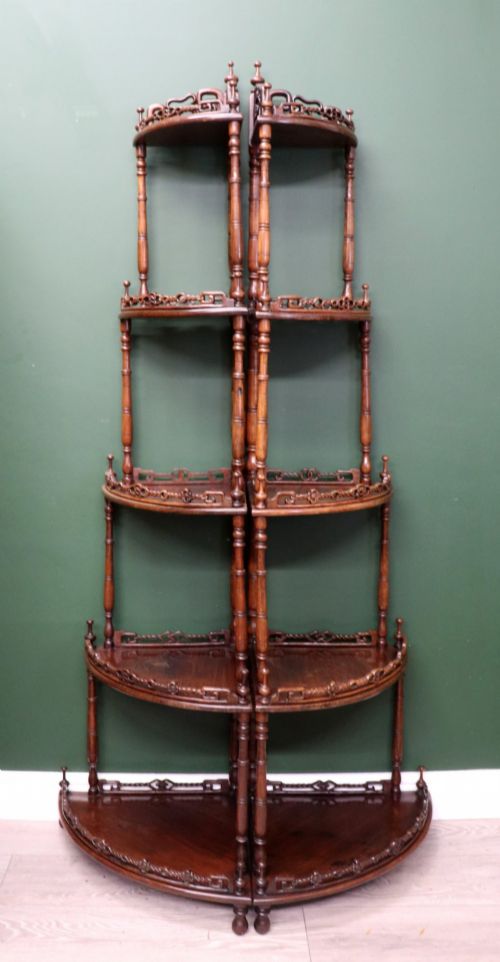
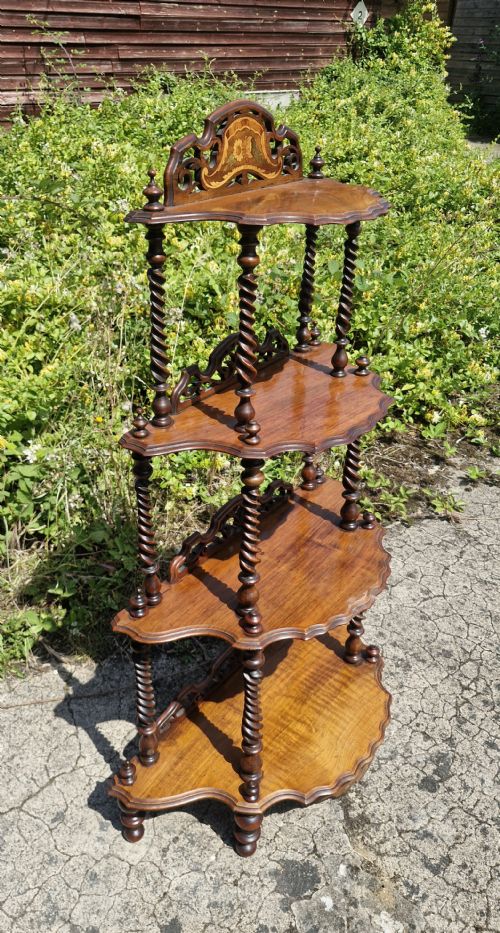
A walnut whatnot stand is primarily a multi-tiered display item originating from the Victorian period, appearing frequently in three-tier and four-tier formats. These pieces often incorporate open shelving, corner designs, or integrated compartments such as music racks and drawers.
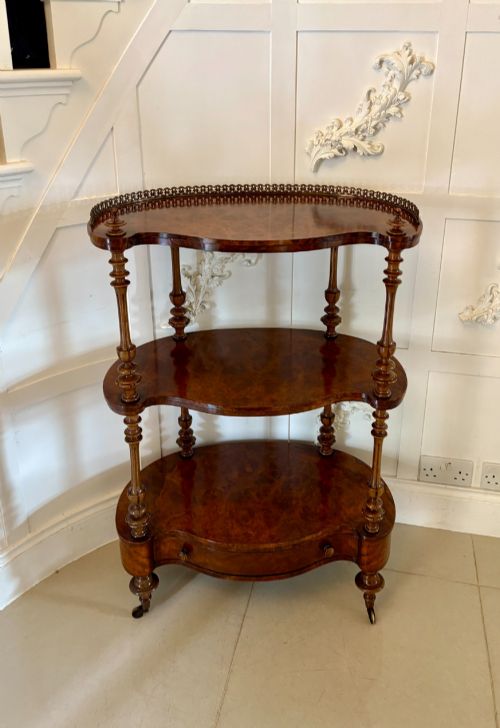
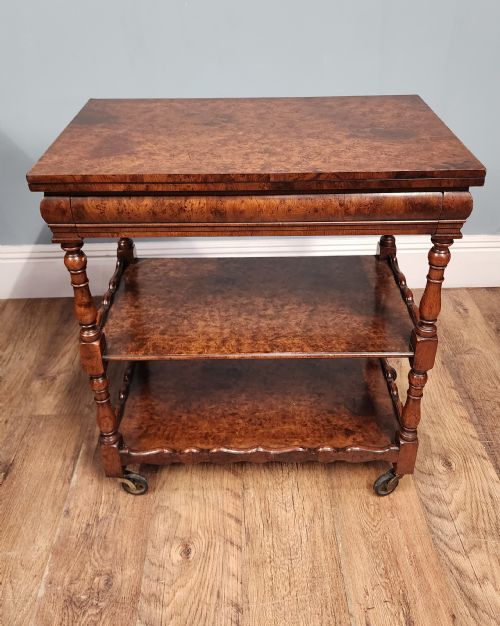
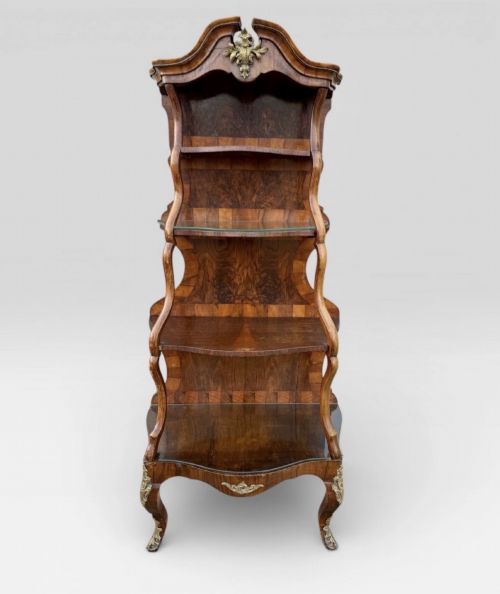
Buyers encounter freestanding rectangular models alongside corner stands and diminutive étagères, often featuring serpentine shaping or demilune consoles. Many examples combine display shelves with lower sections functioning as a Canterbury or lamp table.
Dating chiefly from the mid to late nineteenth century into the Edwardian era, these items reflect domestic tastes for tiered surface space. The form serves as both a practical tidy and a decorative focal point for displaying ceramics and small objects.
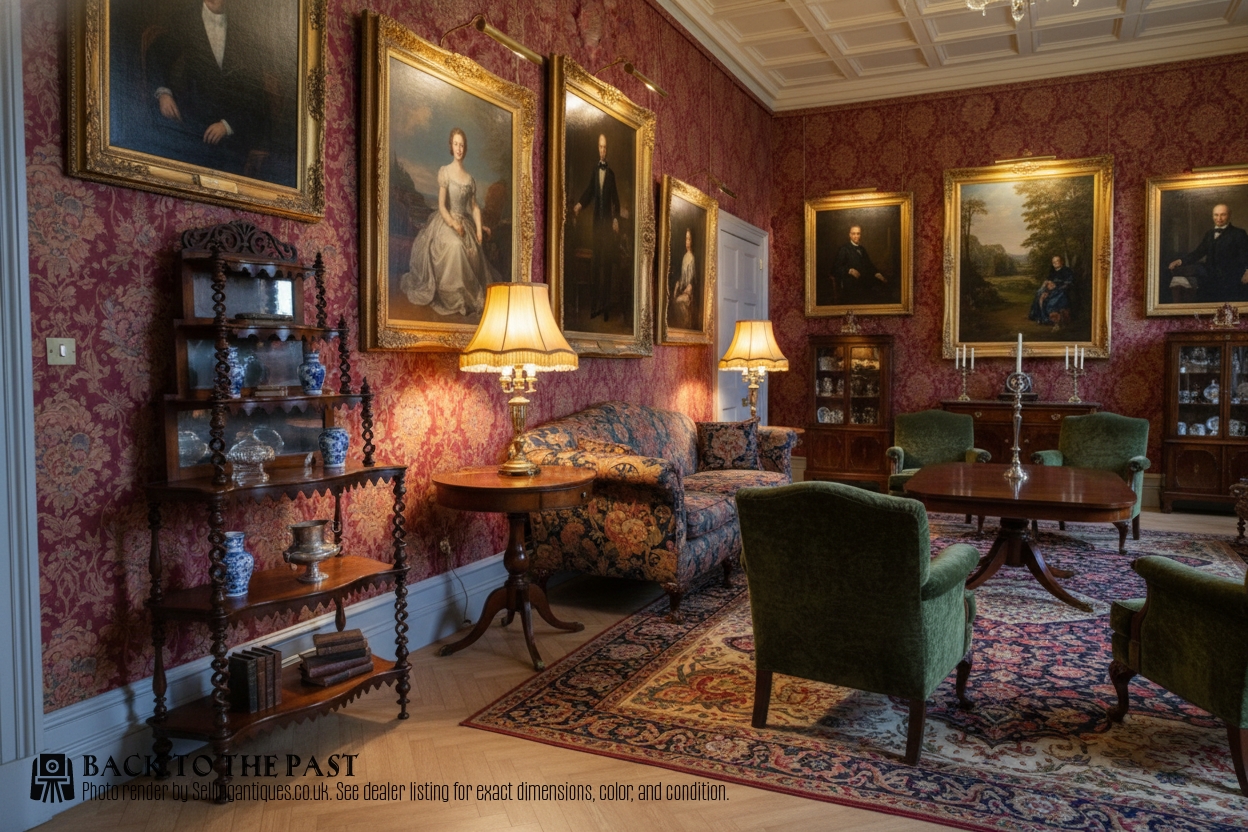
Woods and mounts
Cabinetmakers utilised solid walnut and decorative burr walnut veneers, frequently enhancing the timber with intricate marquetry inlay. Surfaces were carefully polished to highlight the natural grain patterns of the wood.
Structural elements incorporated turned supports, carved columns, and brass or gilt metal mounts. Certain French and English examples featured ormolu detailing and ceramic components to finish the tier uprights.
Listings feature walnut, burr walnut, and ebonised wood across Victorian, Edwardian, and Regency periods.
Timbers and construction
The choice of timber creates a distinct separation in the tier range, with heavily figured burr walnut veneers and crisp marquetry inlay marking superior examples. Plain walnut or simpler ebonised wood finishes represent more utilitarian productions.
Joinery and structural ambition dictate overall excellence, distinguishing standard multi-tier shelves from exhibition quality pieces with serpentine fronts, carved columns, and integrated drawers or music stands.
Gillows
The Walnut Whatnot Stand Glossary
- Étagère
- A French term for a piece of furniture consisting of a set of open shelves for displaying small objects or ornaments. These often share characteristics with standard English whatnots.
- Canterbury
- A low stand featuring partitioned sections for holding sheet music, newspapers, or books. Many Victorian walnut examples combine this function with upper display tiers.
- Burr walnut
- A specialised wood veneer taken from the growth excrescences on walnut trees, prized for its swirling grain patterns. Cabinetmakers applied it to the primary display surfaces of high-status furniture.
- Marquetry inlay
- Decorative patterns created by fitting contrasting wood veneers into pre-cut cavities on a surface. This technique appears frequently on nineteenth-century tabletop and shelf borders.
Walnut Whatnot Stand: Frequently Asked Questions
What is a walnut whatnot stand?
A walnut whatnot stand is a tiered piece of furniture featuring multiple open shelves held by turned supports. It was created in the nineteenth century to display ornaments and small household items in principal rooms.
These pieces range from freestanding rectangular units to corner shelves and combined music stands. The integration of display space with practical compartments makes them versatile items for modern interiors.
How were these stands used originally?
Victorian households utilised these stands to display ceramics, small books, and decorative objects on prominent open tiers. Variants incorporating lower divisions served as tidy units for sheet music and newspapers.
Their open construction allowed decorative items to be viewed from multiple angles within a drawing room or parlour. They functioned primarily as decorative furniture rather than heavy storage cabinets.
How do I style a whatnot in a modern home?
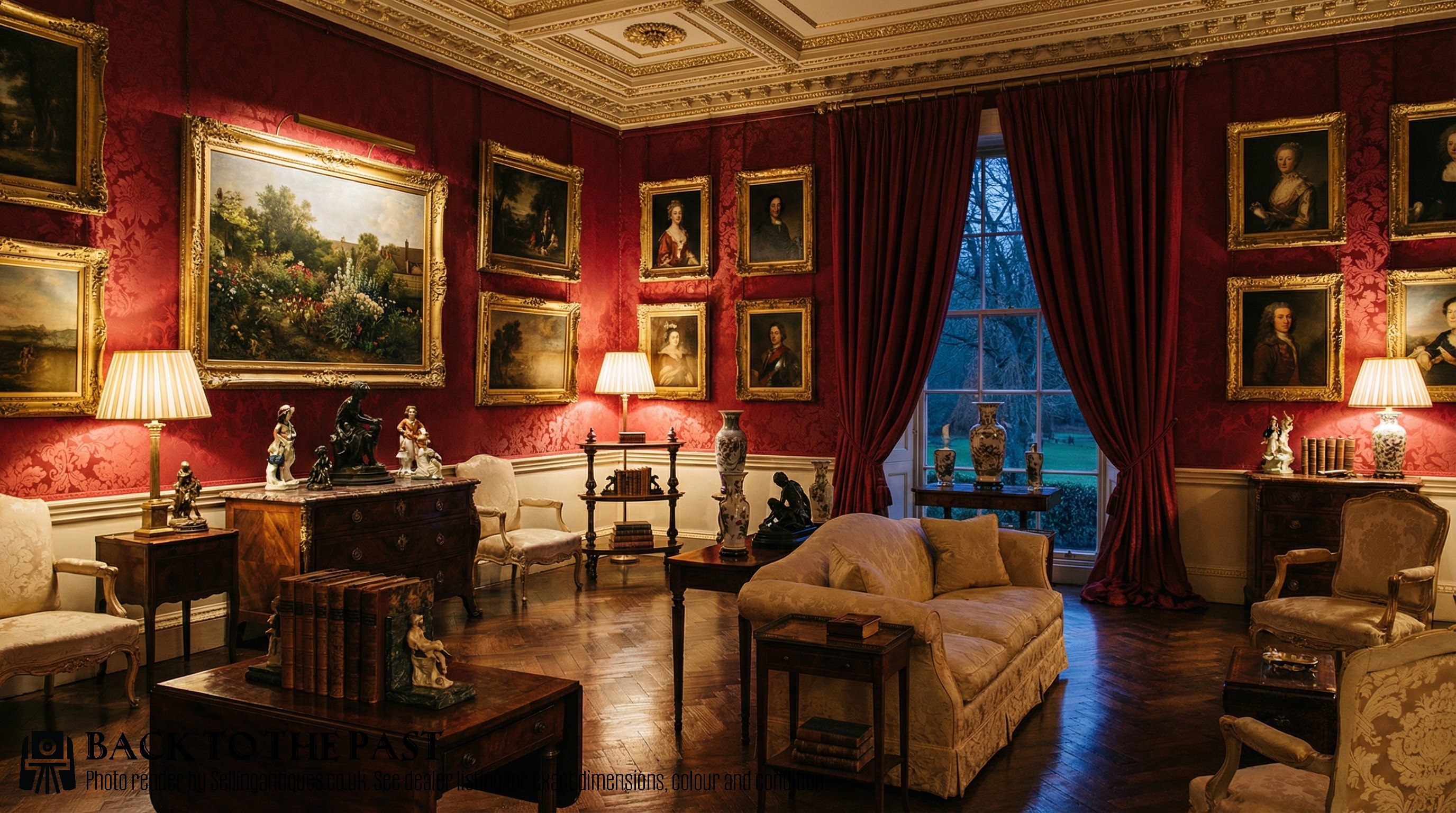
Placing a walnut whatnot in a living room or hallway provides vertical display space without dominating the floor area. The open shelves suit collections of ceramics, glassware, and small framed pictures.
Matching the timber tones of the Victorian walnut with existing furniture helps the piece integrate naturally. Corner versions fit neatly into unused room angles while adding period character.
How can I tell Victorian pieces apart?
Victorian walnut whatnots display distinct characteristics such as figured burr veneers, turned column supports, and occasional marquetry inlay. Dating relies on stylistic shifts from mid-century serpentine forms to later aesthetic movement details.
Construction methods, including hand-cut joints and timber thickness, help differentiate nineteenth-century examples from later revival pieces. Examining the turning on the uprights and the quality of the brass mounts also provides clues to the date of manufacture.