






Walnut What Not Table
A walnut what not table combines display space and storage with the rich warmth of figured timber.
Walnut What Not Table
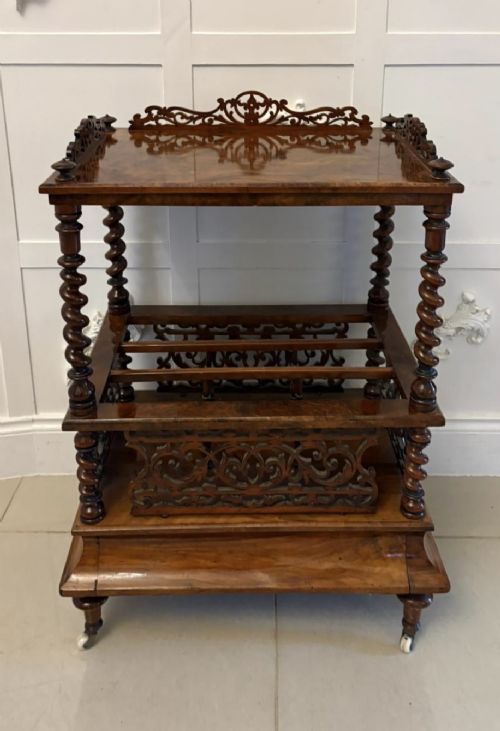
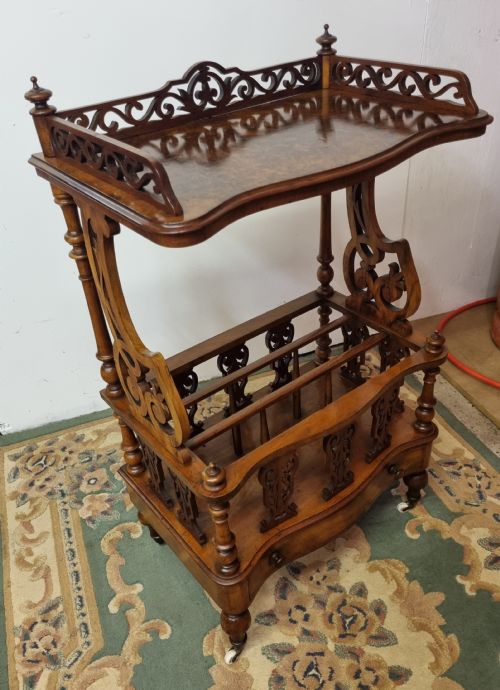
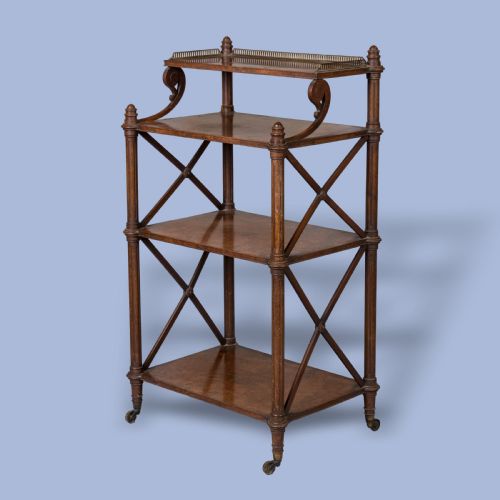
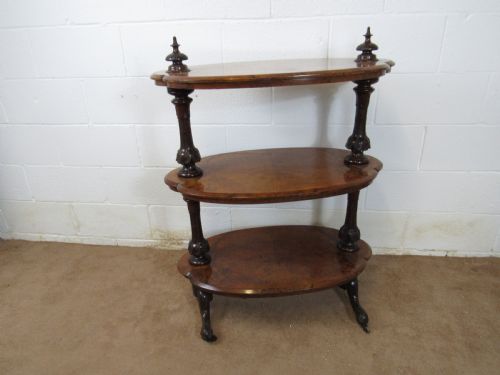
A walnut what not table brings together tiered display surfaces and multi-functional storage, often taking the form of a canterbury or étagère. When searching for a walnut what not table, buyers encounter nineteenth-century Victorian and French Napoleon III designs that serve as lamp tables or music stands.
The pieces on this page span the mid to late nineteenth century, predominantly featuring burr walnut veneers and serpentine or oval outlines. Many incorporate compartments for magazines or sheet music alongside open tiers for ornaments.
Origins range from English Victorian workshops to French makers influenced by the Louis XV style, offering both diminutive and grand proportions. These items function as versatile side tables while providing distinct architectural character to a room.
Materials and construction methods
Cabinet makers utilised solid walnut and decorative burr walnut veneers to achieve rich grain patterns across the tiers and table tops. Marquetry inlay, brass accents and ormolu mounts frequently adorn the surfaces of French and English examples.
Structural elements occasionally incorporate ebonised wood to contrast with the warm tones of the walnut. Ceramic or porcelain components and fitted work tops appear on specific nineteenth-century canterbury variations.
Turning and delicate fretwork define the upright supports and partitions, balancing structural strength with visual lightness across multiple tiers.
Some nineteenth-century tables double as sewing stations, hiding work tops and storage compartments beneath their elegant display tiers.
Distinctions in quality and execution
The choice of timber grain sets superior examples apart, with highly figured burr walnut commanding attention for its visual depth and symmetry. Finer pieces display meticulous marquetry inlay and crisp moulding work rather than plain surfaces.
Attribution to documented workshops, such as Gillows or Holland and Sons, elevates an item through superior structural joinery and refined proportions. The integration of functional elements, like smoothly partitioned canterbury sections or fitted work tops, reflects higher standards of cabinet making.
Gillows·Holland and Sons
The Walnut What Not Table Glossary
- Canterbury
- A low multi-tiered stand originally designed for sheet music or books, frequently fitted with slatted partitions.
- Étagère
- A piece of furniture consisting of a set of open shelves for displaying ornaments, popular during the nineteenth century.
- Burr walnut
- A prized veneer taken from the warted growths of walnut trees, displaying complex and swirling grain patterns.
- Marquetry
- The art of applying pieces of veneer to a structure to form decorative patterns and pictures.
- Ormolu
- Gilded bronze used for decorative mounts and furniture embellishments during the eighteenth and nineteenth centuries.
Walnut What Not Table: Frequently Asked Questions
What is a walnut what not table used for?
These pieces serve primarily as decorative side tables or lamp tables, offering open tiers to display small objects and ornaments.
Many variations include integrated racks or compartments designed originally to hold sheet music, periodicals or books.
How do I identify a Victorian walnut what not?
Victorian examples typically date from the mid to late nineteenth century and showcase rich walnut timbers, turned supports and serpentine or oval tiers.
They often combine display shelves with lower sections intended for storage, reflecting the domestic requirements of the period.
Are these tables English or French?
The selection includes both English Victorian pieces and French designs influenced by the Louis XV style, such as étagères.
French pieces frequently feature detailed marquetry inlay and ormolu mounts, while English versions often focus on burr walnut grain and practical canterbury compartments.
How should I care for burr walnut furniture?
Burr walnut benefits from being kept away from direct sunlight and steady temperature fluctuations to protect the delicate veneers.
Regular dusting with a dry cloth helps maintain the finish, avoiding harsh cleaning agents that might damage the polished timber.