



Antique What Not Shelf
An antique what not shelf provides tiered open display surfaces for books and ornaments, combining utility with distinct period elegance.
Antique What Not Shelf
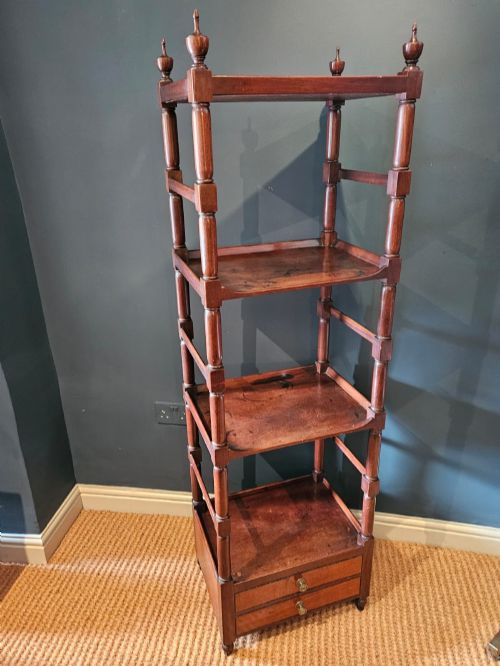
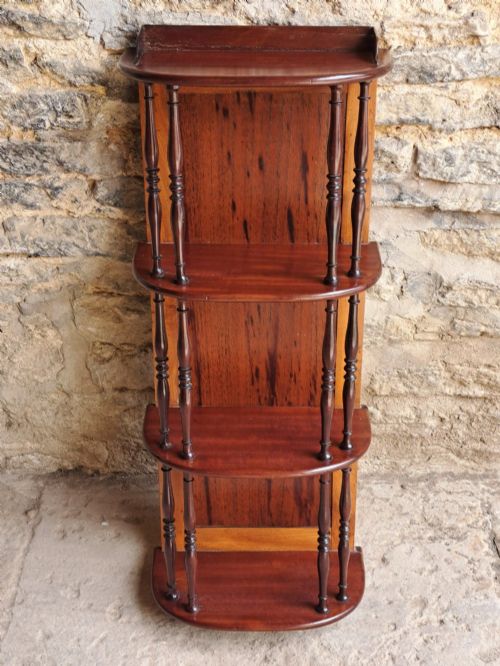
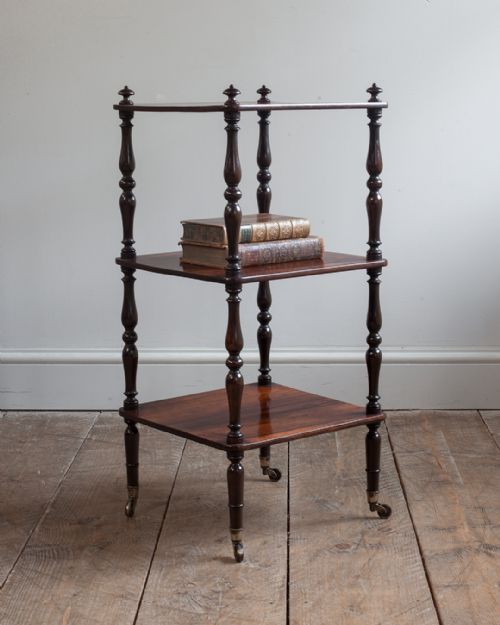
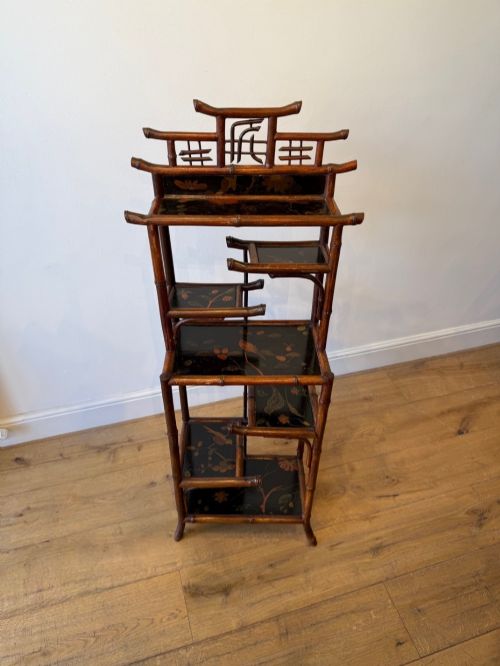
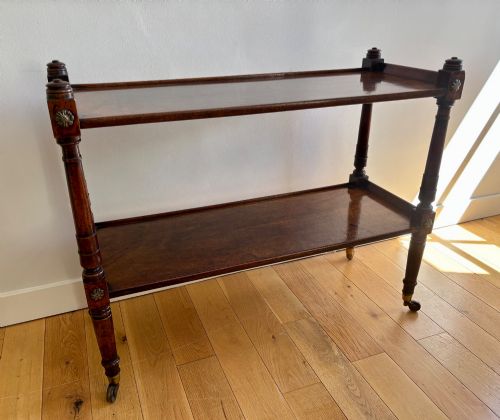
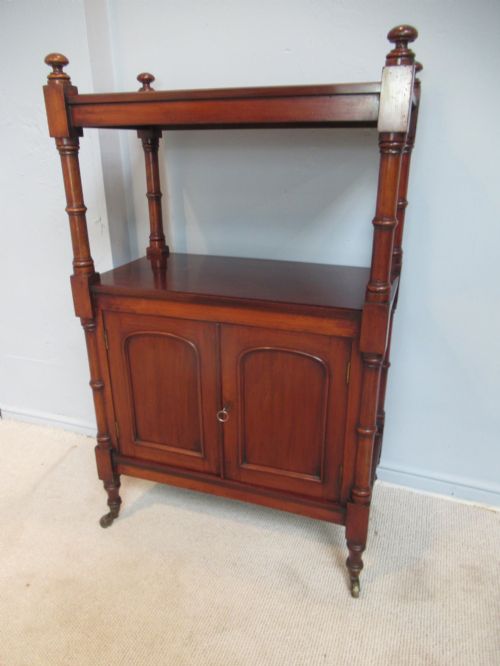
An antique what not shelf serves primarily as an open-tiered display stand for books, porcelain and decorative objects. The pieces recorded here span from the Georgian and Regency eras through the Victorian period, encompassing freestanding multi-tier models, corner units and wall-hanging shelves.
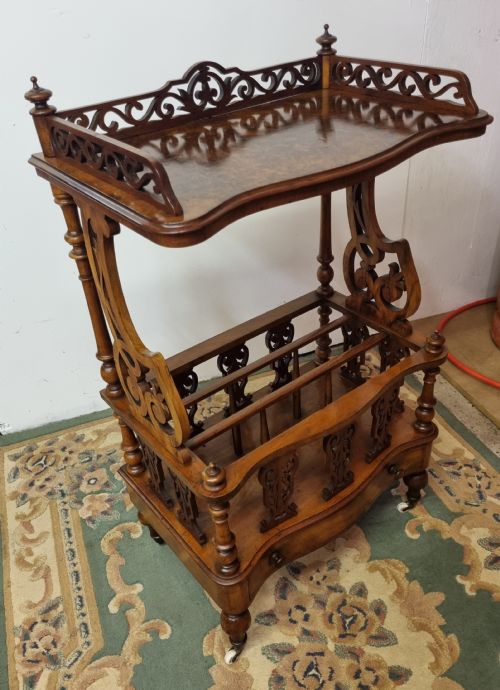
Mahogany and walnut predominate among the freestanding pieces, whilst rosewood and bamboo appear alongside specialised forms such as Canterbury compartments and music cabinets. Many examples feature slender turned supports or barley twist columns separating the graduated tiers.
Gradations of Quality
Quality rests upon the selection of timber figure, such as richly grained burr walnut or carefully matched mahogany veneers, alongside the crispness of turned columns and carved details. Pieces incorporating integrated drawers with dovetailed joints or brass-mounted galleries demonstrate superior craftsmanship.
Proportion and structural integrity define the higher tiers of surviving examples. Slender supports must bear the weight of multiple heavy shelves without perceptible sway or distortion.
The archive reveals frequent stylistic shifts from early Georgian simplicity towards ornate Victorian marquetry and bamboo.
Gillows·Holland & Sons
The Antique What Not Shelf Glossary
- Whatnot
- A piece of furniture consisting of a set of open shelves for displaying small objects. They developed in the late eighteenth century and remained popular throughout the Victorian era.
- Etagere
- A piece of furniture with a series of shelves for displaying ornaments. The term often applies interchangeably with a whatnot.
- Canterbury
- A low stand with partitioned sections for sheet music, books or portfolios. These are frequently incorporated into the lower section of a whatnot.
- Marquetry
- Decorative veneer work forming pictures or patterns by using thin slices of wood, shell or ivory. This technique ornamented the surfaces of high-status Victorian cabinets.
- Ormolu
- Gilded bronze mounts applied to furniture. They provided decorative contrast against dark rosewood or mahogany surfaces.
Antique What Not Shelf: Frequently Asked Questions
What is an antique what not shelf used for?
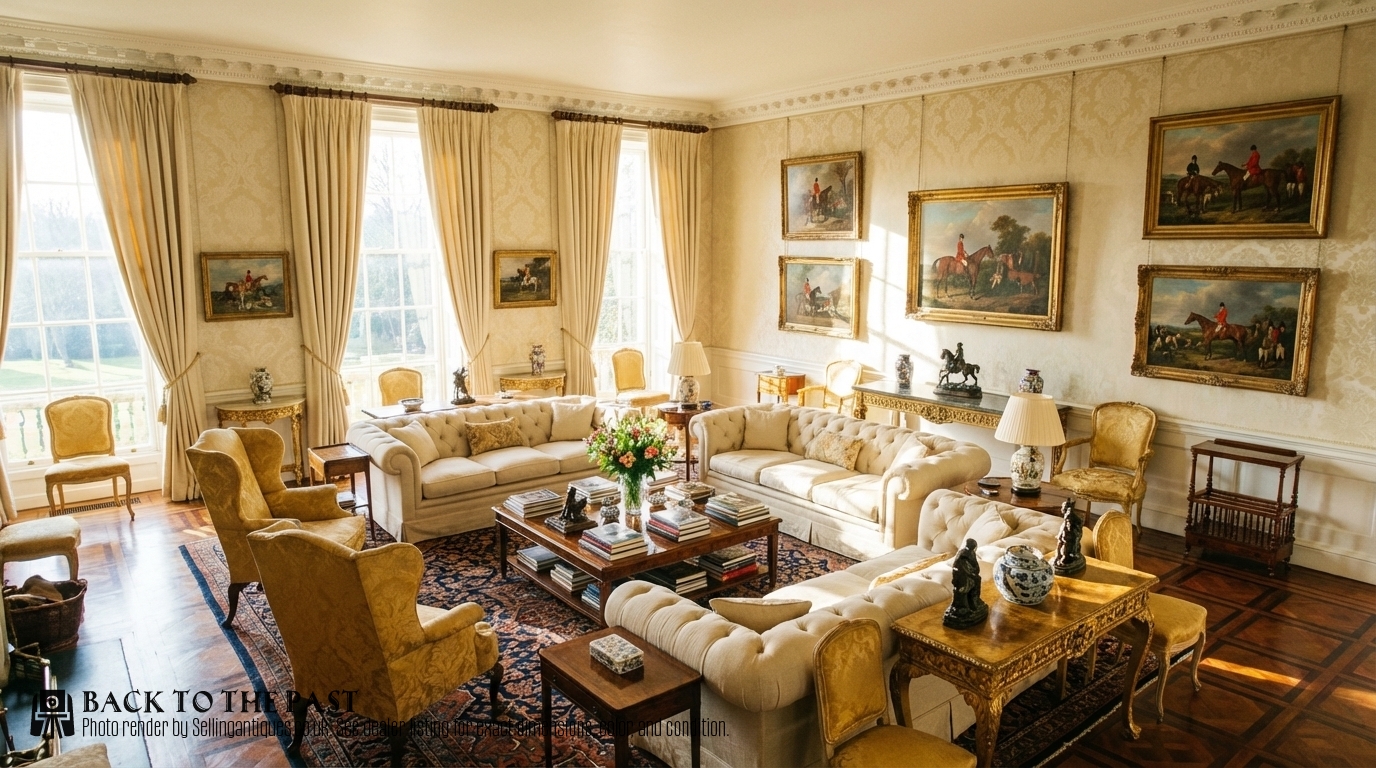
These tiered pieces were designed to hold books, ceramics and decorative ornaments in principal rooms. Their open shelves allowed owners to exhibit collections of small household items.
Today they function effectively in domestic interiors as display stands or bedside surfaces. Their compact vertical footprint makes them suitable for corners and narrower wall spaces.
How do I date a 19th century whatnot?
Dating relies on timber selection, turning styles and overall joinery construction. Regency and early nineteenth-century examples often feature cleaner classical lines in mahogany, whilst Victorian pieces frequently employ burr walnut and heavier carved supports.
Later nineteenth-century iterations introduced alternative materials like bamboo or incorporated multifunctional elements such as music cabinets and mirrored backs.
Are all étagères freestanding?
Many examples stand independently on four legs, frequently fitted with small brass castors for mobility. These multi-tier floor models form the majority of surviving stock.
Other variations are built specifically for wall hanging or corner placement. These lighter variants often lack floor supports and rely on secure wall brackets.
What woods were commonly used?
Mahogany remained the dominant timber throughout the Georgian and early Victorian periods due to its strength and rich grain. Walnut and rosewood gained substantial favour as veneer choices during the mid-Victorian era.
Specialist pieces also utilised burr walnut for highly figured decorative surfaces. Late nineteenth-century versions occasionally departed from traditional hardwoods to employ bamboo and lacquer.