
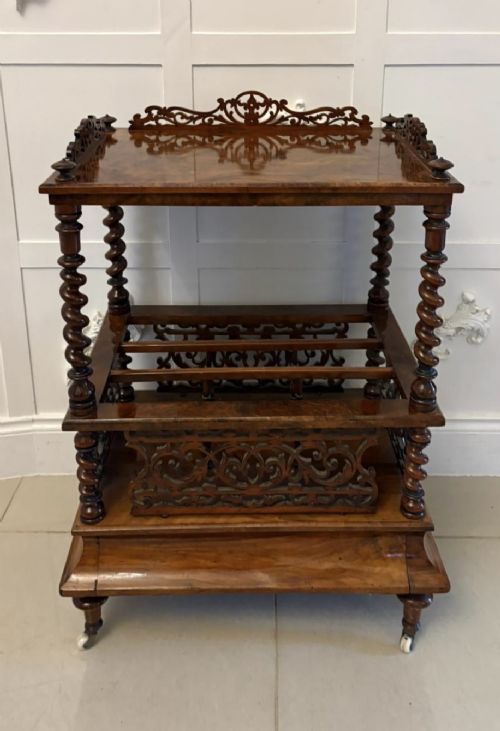
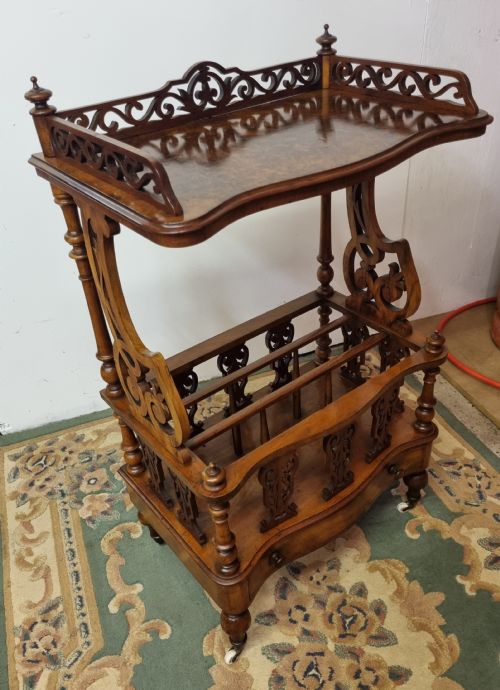


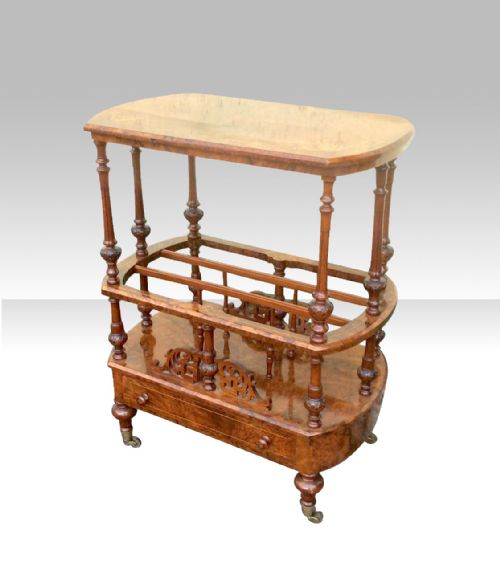

Victorian What Not Canterbury
A Victorian what not canterbury brings together open shelving and slotted compartments for sheet music and periodicals in a single piece of nineteenth-century furniture.
Victorian What Not Canterbury
A Victorian what not canterbury combines tiered display shelves with the distinctive vertical partitions of a music stand or magazine rack. These hybrid pieces emerge from the nineteenth century in forms designed for the parlour and the drawing room.
The version most commonly encountered on this page pairs a burr walnut or rosewood construction with low castor feet, combining open display tiers above a partitioned base section. Walnut and mahogany variants frequently incorporate inlaid decoration or serpentine front profiles.
Many examples function simultaneously as side tables, music cabinets or occasional tables alongside their primary role as a magazine or newspaper rack. The evidence shows these multipurpose items dating from around eighteen-sixty through to the late Victorian period.
Assessing quality in cabinetwork
Quality rests upon the selection of timber veneers, particularly the figuring of the burr walnut or rosewood surfaces. Finely executed inlay work and the crisp turning of supporting spindles distinguish the better examples from standard production.
Structural integrity depends on the stability of the tiered shelves and the joinery of the vertical dividers. Original brass castors and well-preserved turning add considerably to the integrity of the piece.
Listings for this phrase feature pieces primarily from the nineteenth century, spanning from early Victorian rosewood examples to late Victorian ebonised mahogany designs.
T Wilson of London
The Victorian What Not Canterbury Glossary
- Canterbury
- A low piece of furniture fitted with upright partitions designed for holding sheet music, folios or periodicals. This form dates from the late eighteenth century and remained popular throughout the Victorian era.
- What-not
- A set of open shelves for displaying ornaments, books or small objects, arranged in tiers supported by slender pillars. The name derives from its utility for holding whatever required a surface.
- Burr walnut
- A prized timber veneer taken from the knotted growth of a walnut tree, yielding complex, swirling grain patterns. Cabinetmakers utilised this material on the principal surfaces of high-status Victorian furniture.
- Serpentine
- A curved shape characterised by a concave centre flanked by convex outer sections, frequently seen along the front edge of table tops and cabinet bases.
- Ebonised
- Timber treated with a dark stain or finish to imitate the appearance of ebony, often applied to mahogany framework in Victorian cabinetwork.
Victorian What Not Canterbury: Frequently Asked Questions
What was a canterbury used for?
A canterbury served as a receptacle for sheet music, newspapers and periodicals in the Victorian parlour. The vertical partitions kept unbound papers upright and accessible near a piano or seating area.
Over time, makers combined this lower rack with tiered shelving above, turning a simple music stand into a multifunctional piece for display and storage.
How do I date a Victorian what not canterbury?
Dating relies on stylistic shifts and timber choices recorded across the nineteenth century. Early examples often utilise rosewood with simpler lines, while pieces from around eighteen-sixty frequently feature burr walnut and serpentine shapes.
Later Victorian variants incorporate ebonised finishes, aesthetic movement details or multi-functional side cabinet designs pointing towards the eighteen-eighties and nineties.
Where should I place one in a modern room?
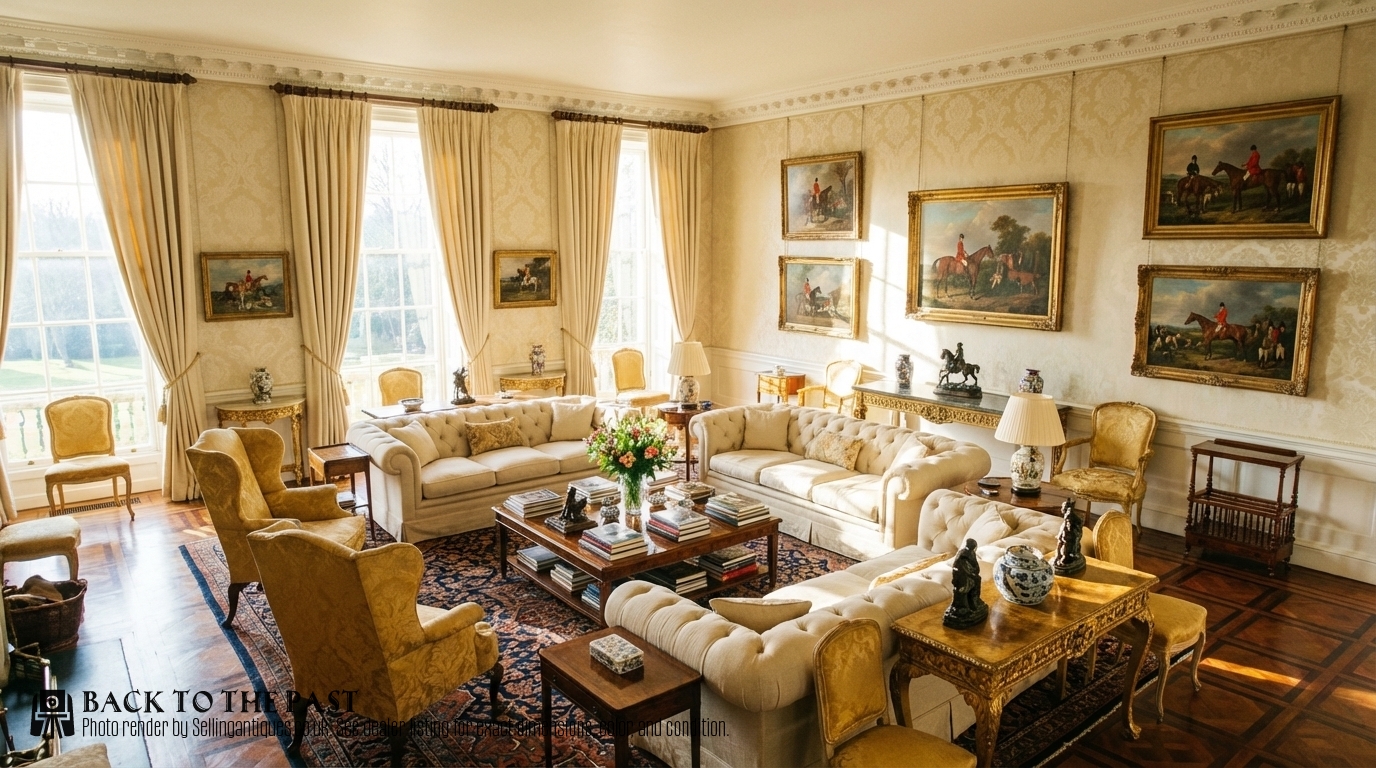
These pieces work effectively as occasional tables beside a sofa or as freestanding display units against a wall. The open shelves accommodate books and small objects, while the lower compartments hold magazines.
Because they are finished on all sides or designed to stand away from walls, they sit comfortably within living spaces without dominating the floor plan.
What is the difference between a what-not and a canterbury?
A what-not consists entirely of open display shelves tiered one above another for ornaments and decorative items. A canterbury is specifically designed with partitions for holding books or music.
When combined into a single piece, the upper tiers serve as a what-not while the partitioned base retains the function of the canterbury.