
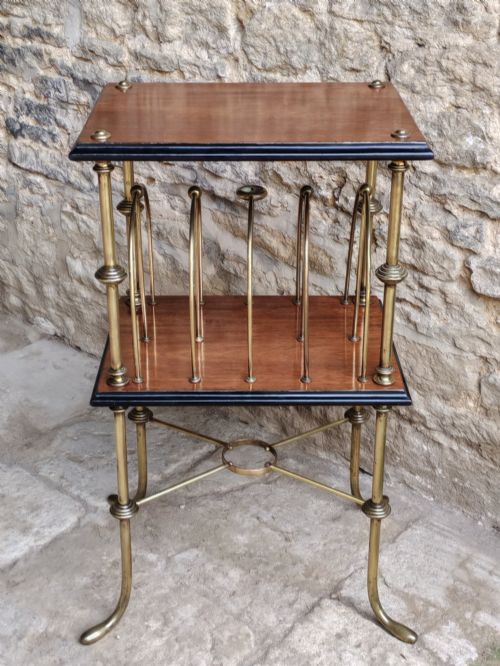
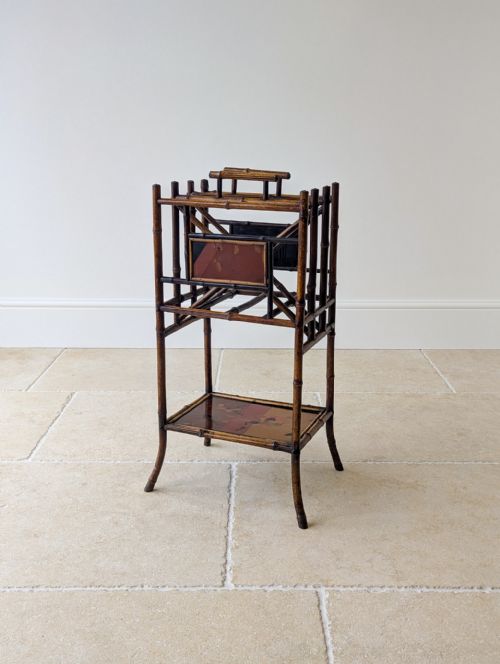
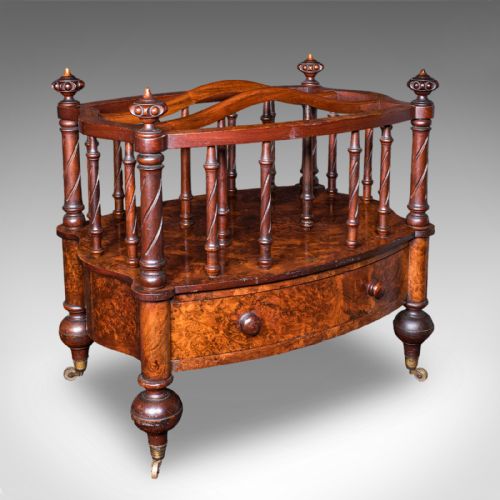
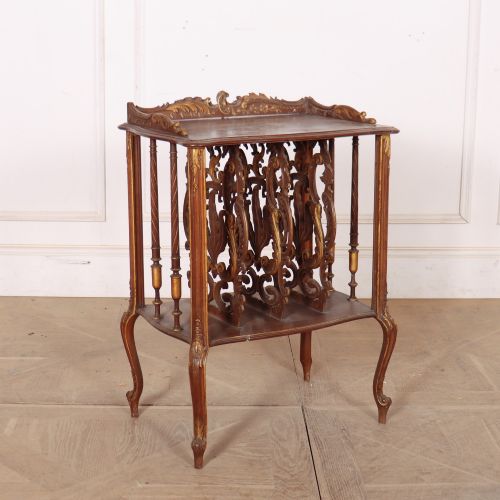


Antique Music Rack Side Table
An antique music rack side table unites the utility of a Canterbury with the surface of an occasional table.
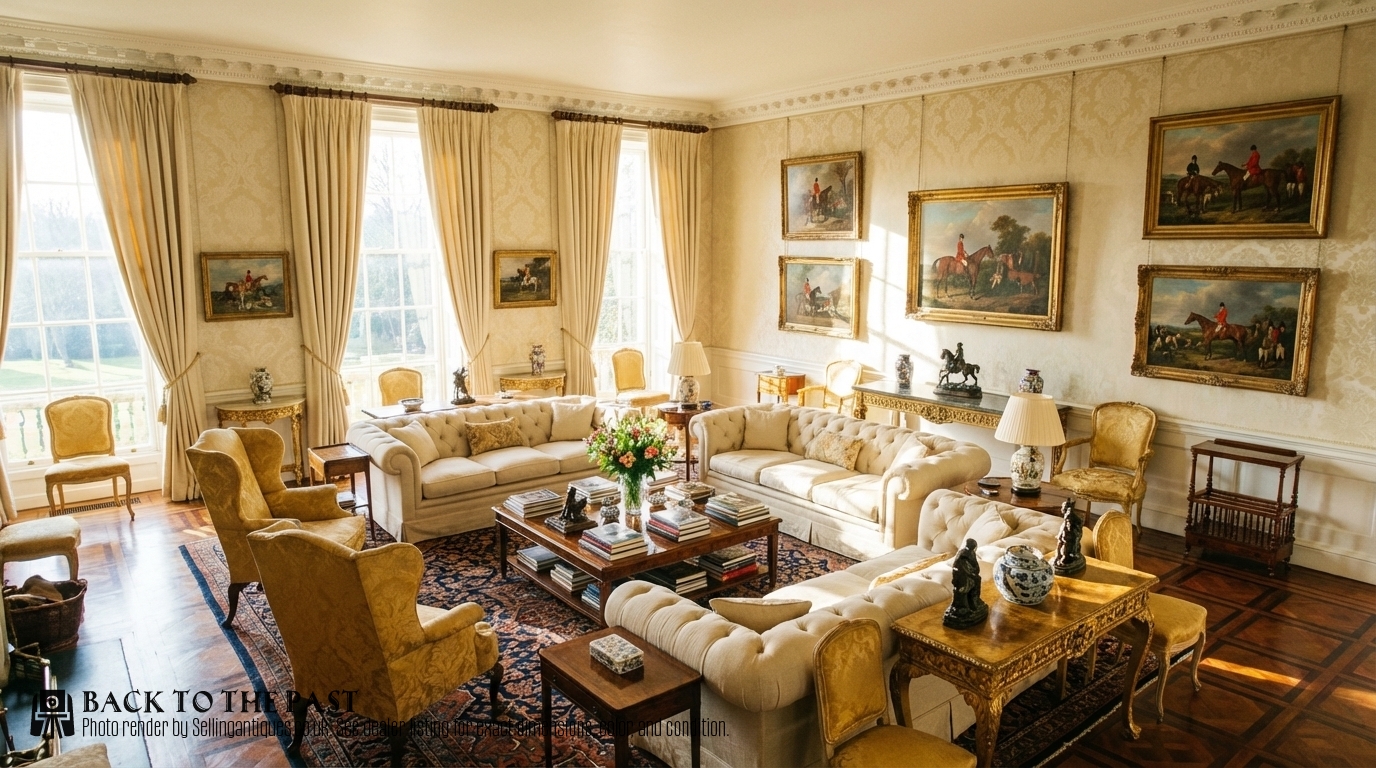
Antique Music Rack Side Table
When you search for an antique music rack side table, you are examining a dual-purpose piece designed to hold sheets, magazines, or newspapers beneath a flat display top. The listings on this page span the Victorian and Regency periods, alongside 19th Century and Georgian examples.
The forms you will most frequently encounter include canterburys, music canterburys, occasional tables, lamp tables, and whatnot stands. These pieces often feature divided lower sections for paper storage paired with drawers, shelves, or oval surfaces above.
Materials and construction
Timbers dictate the visual weight of these stands, with burr walnut, mahogany, and rosewood appearing prominently alongside ebonised mahogany and bamboo. Cabinetmakers utilised decorative techniques such as inlay and boxwood stringing to embellish the surfaces.
Hardware details involve brass, particularly in castors, mounts, and magazine rack supports. The combination of structural timber frames with open fretwork partitions or spindle rails defines the physical construction.
Distinctions in quality
The choice of timber veneer sets the baseline for visual appeal, with richly figured burr walnut and carefully selected rosewood occupying the upper tier of execution. Cabinetmaking finesse is visible in the precision of the inlay work and the integration of lower drawers.
Proportion and structural complexity separate standard tables from more elaborate forms like the Canterbury whatnot. Pieces that combine tiered shelving, turned supports, and integrated compartments demonstrate greater ambition from the workshop.
The Antique Music Rack Side Table Glossary
- Canterbury
- A low stand featuring upright partitions designed for holding sheet music, newspapers, or periodicals. It frequently includes a drawer at the base and feet fitted with castors.
- Whatnot
- A piece of furniture consisting of open shelves for displaying ornaments or books. In this collection, it often combines with a Canterbury base.
- Stringing
- A narrow inlay of contrasting timber used to outline panels, drawers, or table tops. Boxwood is commonly employed for this linear decoration.
- Ebonised
- Wood treated with a dark stain or finish to imitate ebony. This technique appears on Victorian mahogany frameworks.
- Aesthetic Movement
- A late 19th-century design style that valued artistic expression over strict historical revival. Pieces from this movement often incorporate bamboo and simplified structural lines.
Antique Music Rack Side Table: Frequently Asked Questions
What is a music Canterbury?
A music Canterbury is a low stand featuring slatted or divided partitions designed specifically to hold sheet music and folios. Many examples incorporate a flat top surface or a drawer beneath.
These pieces were intended for placement beside a piano or seating area for easy access during musical performances.
How do I use a Canterbury today?
You can utilise the lower partitions for storing magazines, newspapers, or modern vinyl records while using the upper surface as a lamp table or side table.
Their compact proportions make them practical for positioning beside armchairs or sofas in contemporary living spaces.
How do I date a Victorian burr walnut piece?
Victorian burr walnut items frequently feature rich veneer patterns combined with boxwood inlay, ebony stringing, and turned supports. The period spans from the mid to late 19th century.
Examination of the secondary woods, drawer construction, and castors helps confirm the production era within the 19th century.