
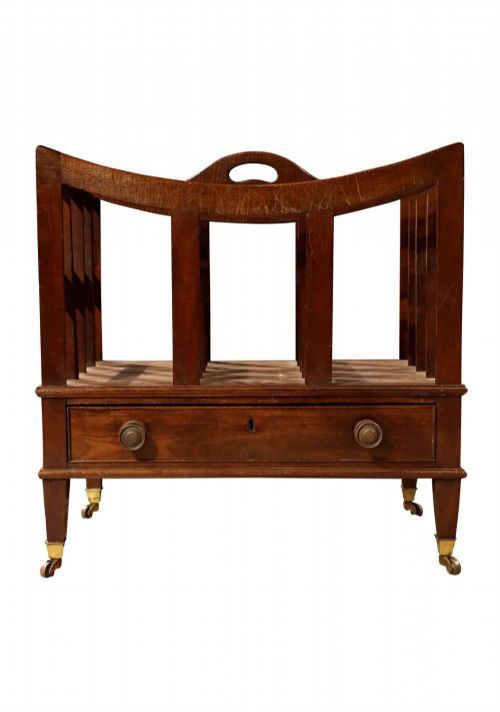


Edwardian Canterbury Music Rack
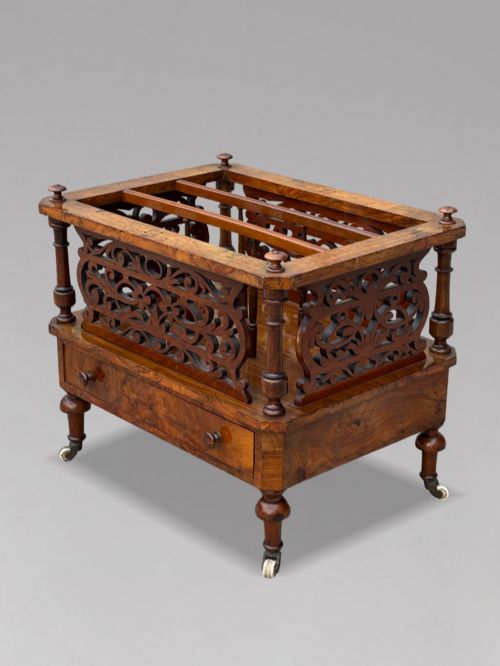
An Edwardian canterbury music rack brings refined compartmentalised storage for scores and periodicals into a sitting room.
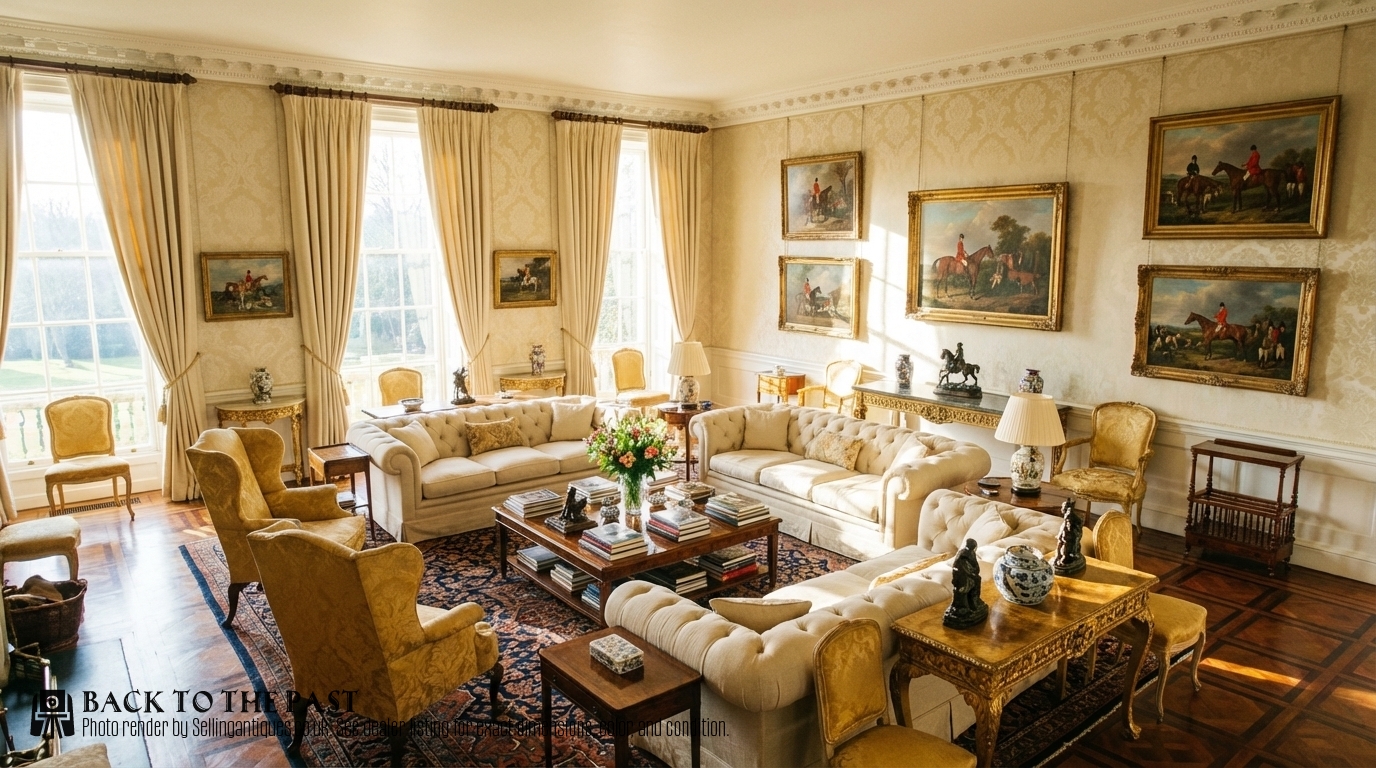
Edwardian Canterbury Music Rack
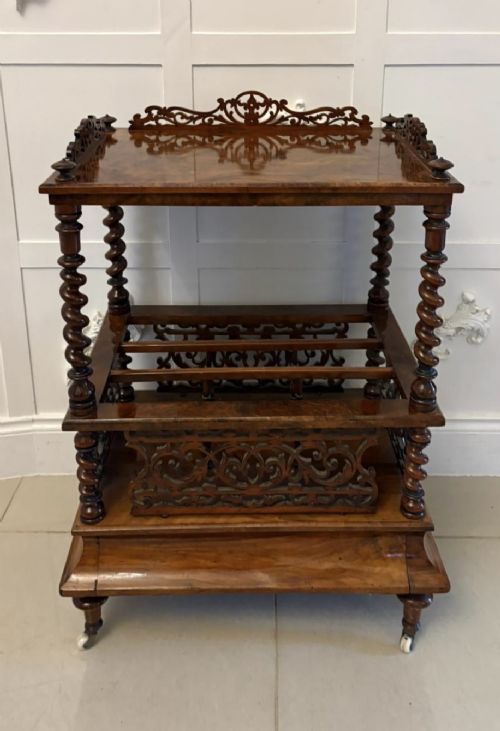
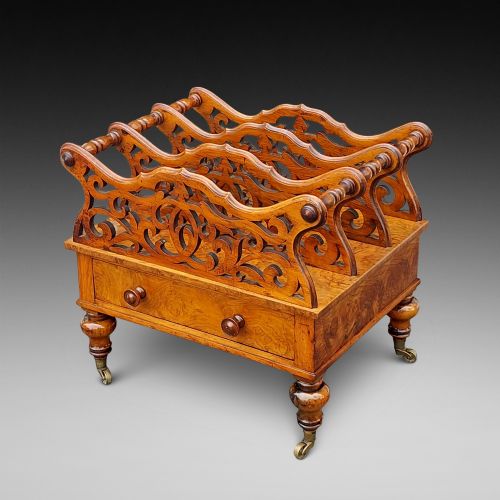
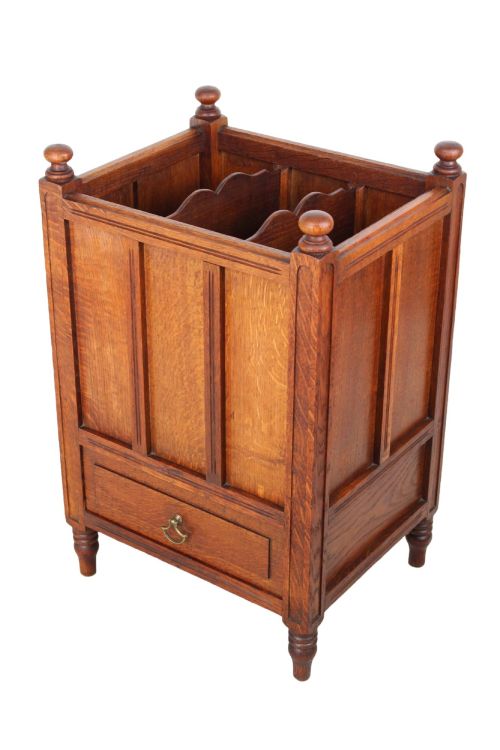
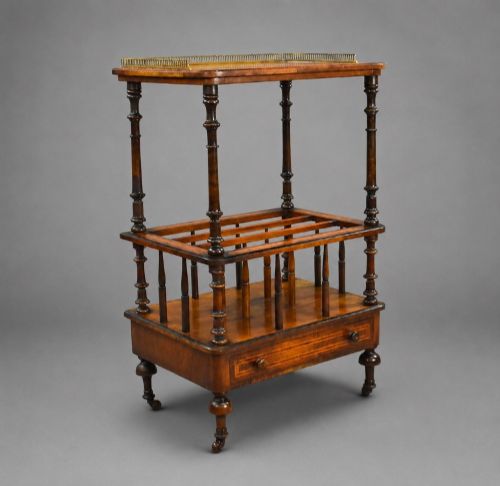
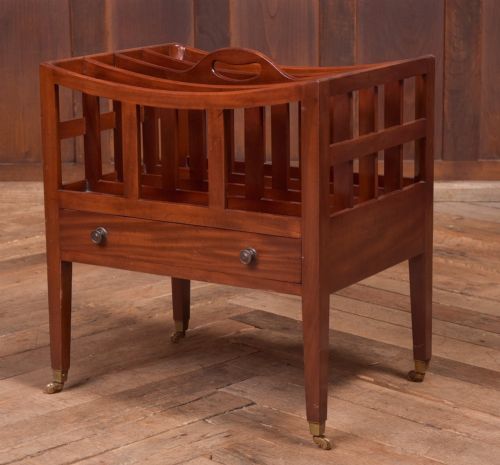
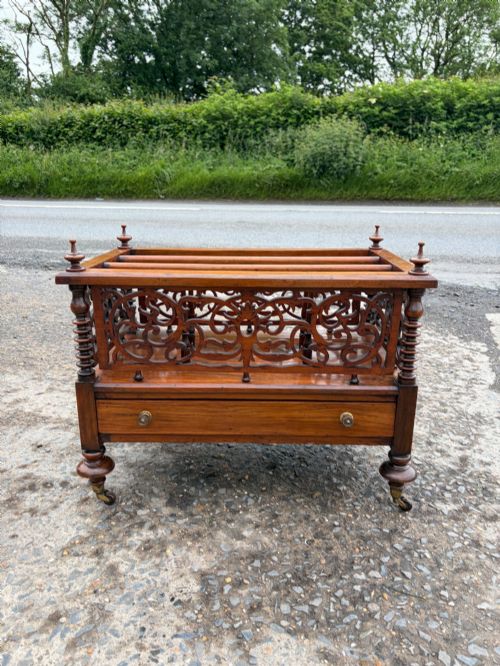
The form typically incorporates vertical slatted partitions to keep upright sheet music organised, frequently complemented by a low drawer beneath and supported on turned legs with castors. Beyond dedicated music storage, these items function equally well as magazine racks and occasional tables beside seating.
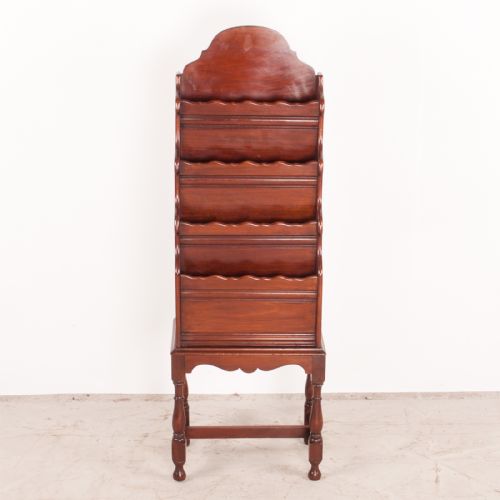
Pieces range from simple oak or mahogany constructions to highly decorative inlaid designs combining marquetry with brass fittings. The selection also embraces hybrid forms including whatnots and music cabinets, offering multiple tiers for display alongside the signature partitioned rack.
Assessing quality and execution
Quality rests upon the choice of timber veneer and the precision of the marquetry inlay. Highly figured burr walnut and richly grained rosewood elevate an example above standard mahogany or oak.
Structural refinement distinguishes standard utility pieces from finer salon furniture. Look for well-turned legs, original brass castors, integrated dovetailed drawers and crisply executed slatted dividers rather than plain replacement components.
For unexpected versatility, makers occasionally mounted these music stands on bamboo frames instead of traditional turned timber.
Howard and Sons of London
The Edwardian Canterbury Music Rack Glossary
- Whatnot
- A piece of freestanding furniture consisting of several open shelves used for displaying ornaments or books. Examples frequently combine this tiered shelving with a lower canterbury section.
- Marquetry
- Decorative veneer work forming pictures or geometric patterns by fitting together contrasting pieces of wood. Cabinet makers used this technique to embellish table tops and drawer fronts.
- Stringing
- A narrow inlay of contrasting wood used to outline panels, drawer edges and tabletops. This subtle linear detail is characteristic of refined cabinet making.
Edwardian Canterbury Music Rack: Frequently Asked Questions
What is an edwardian canterbury music rack used for?
These pieces were originally built to hold folio volumes of sheet music near a piano or music stand in the drawing room.
Today they serve equally well as elegant magazine racks or slim side tables beside a sofa.
How do I tell an edwardian piece from a victorian one?
Edwardian examples tend to feature lighter mahogany frames with delicate inlaid satinwood or boxwood stringing.
Victorian pieces often rely on darker walnut or burr walnut timbers, frequently built with heavier proportions and richer figure.
Can I use a music rack for modern magazines?
The vertical slatted partitions are well proportioned for contemporary periodicals, newspapers and large books.
They keep reading material upright and tidy while maintaining a clear view of the covers.
What woods were commonly used for these racks?
Mahogany and walnut form the vast majority of surviving examples, with burr walnut chosen for finer decorative effect.
Rosewood, oak and bamboo appear less frequently across specific stylistic periods.