

Walnut Veneered Chest
A walnut veneered chest offers rich grain patterns and warm tones that anchor a room with centuries of refined craftsmanship.

Walnut Veneered Chest
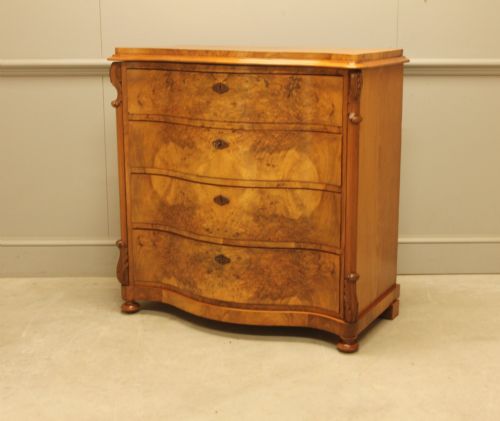
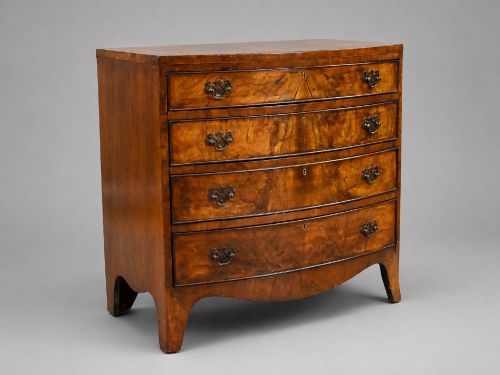
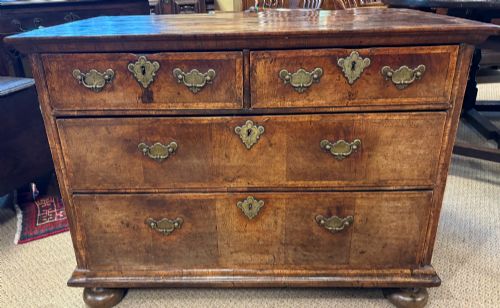
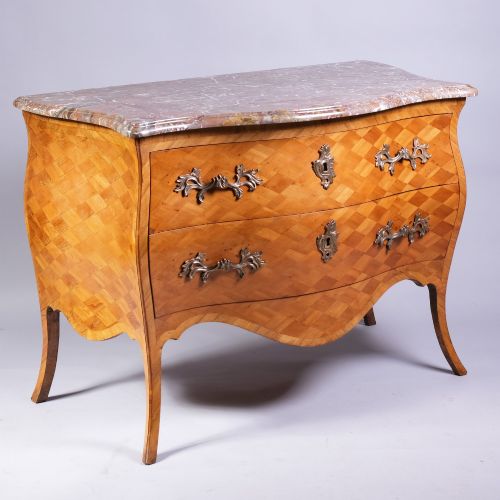
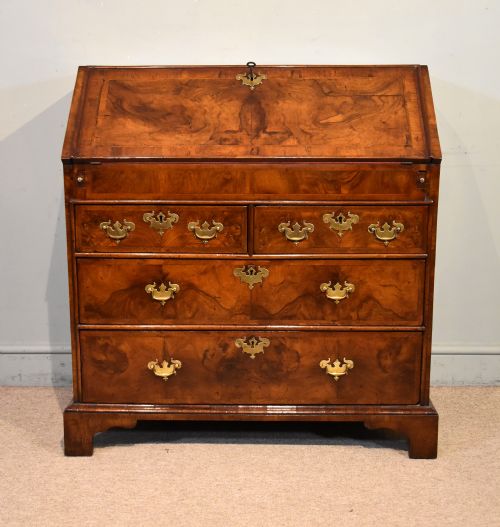
A walnut veneered chest brings together domestic storage and decorative timber work across multiple centuries of design. You will encounter forms ranging from 17th-century William and Mary pieces and early 18th-century George I examples to later Art Deco and Biedermeier interpretations.
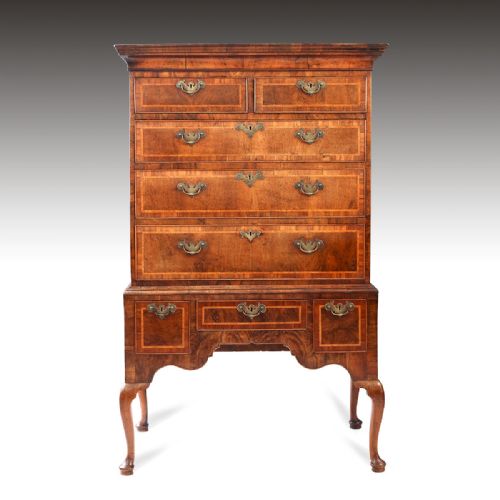
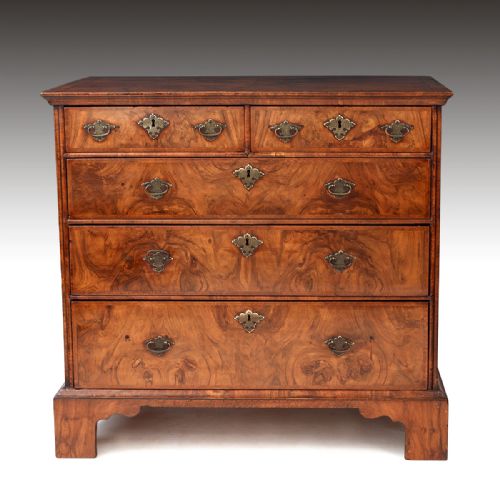
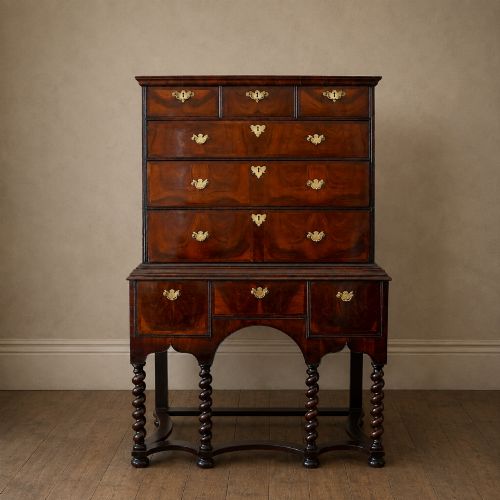
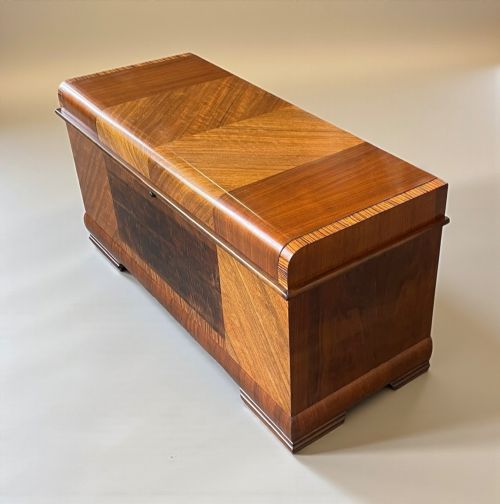
The selections span standard chests of drawers, elevated chests on stands, and tallboys, alongside related forms such as bedside cabinets and blanket boxes. Early pieces often feature substantial drawer configurations designed for linens and valuables, while later iterations adapt the walnut surface to more streamlined proportions.
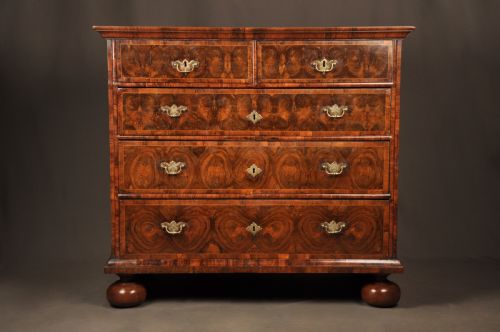
The prevailing varieties on this page lean heavily toward the 17th and 18th centuries, where oyster cutting and figured veneers dominate the aesthetic. Later 19th-century and Art Deco offerings provide alternative interpretations through contrasting bandings and blonde finishes.
How they were made
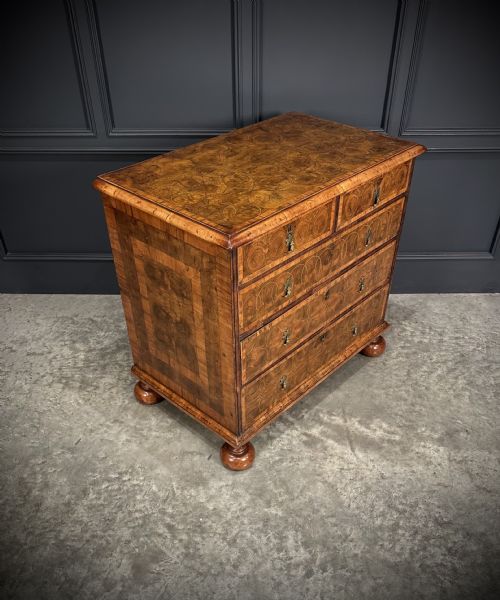
Cabinet makers applied thin slices of walnut, burr walnut, or olivewood onto secondary carcase timbers such as oak, securing the decorative surfaces with animal glue. Crossbanding in boxwood or other contrasting woods framed these panels to protect the edges and define the drawer fronts.
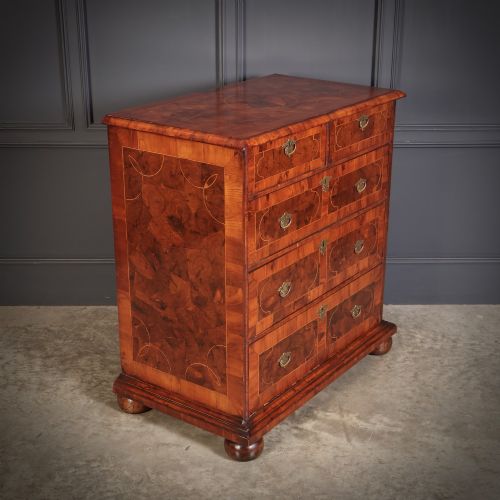
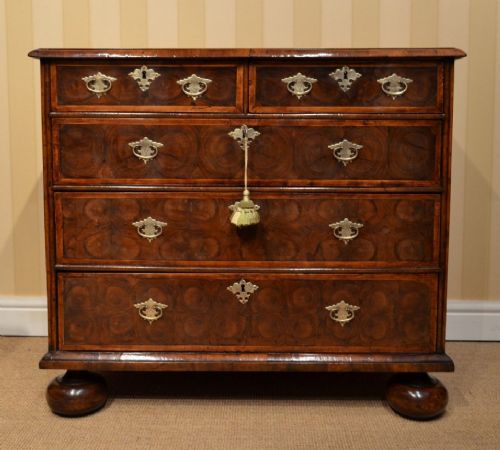
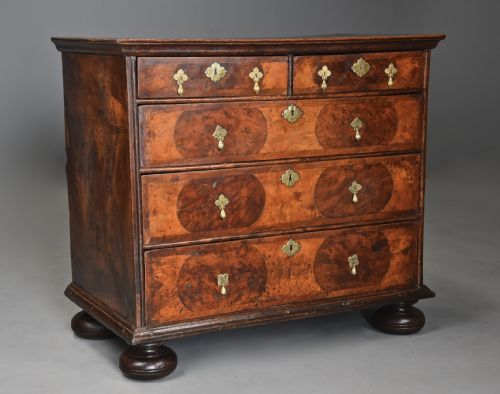
Specialised cutting techniques yielded distinct visual textures, most notably the concentric rings of oyster veneer sliced diagonally from small branches. Marquetry and parquetry techniques further embellished select surfaces with intricate floral or geometric patterns.
Early cabinet makers even sliced humble laburnum branches into oyster patterns when walnut supplies ran short.
What varies in quality
The hierarchy of these chests rests upon the selection and matching of the timber figures, from plain grain to highly prized burr walnut and symmetrical quarter-veneered tops. Cohesion in the layout of the veneer across multiple drawers indicates a higher degree of planning by the original maker.
Survival of original surface treatments and brass hardware, such as drop handles and escutcheons, elevates the standing of a piece. The crispness of the inlay work and the subtlety of the crossbanding further separate standard workshop output from exceptional cabinet making.
The Walnut Veneered Chest Glossary
- Oyster veneer
- Slices of small branches or roots cut transversely to display circular or oval growth rings resembling oyster shells. This technique was prevalent during the late 17th century.
- Crossbanding
- A narrow strip of veneer laid perpendicular to the surrounding grain along the borders of a drawer front or top. It provides a neat visual frame to the primary panel.
- Burr walnut
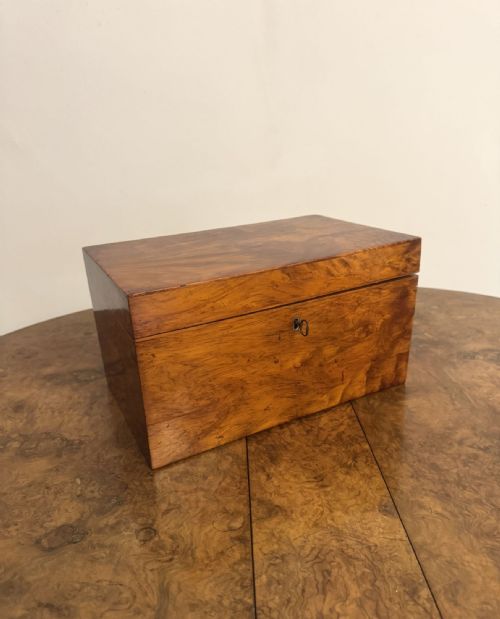
- Wood taken from a tree growth or excrescence, yielding a swirling, highly mottled grain pattern. It was frequently utilised on high-status furniture surfaces.
- Chest on stand
- A two-part form consisting of a main drawer section elevated on a separate framework with legs. This configuration was common in the William and Mary and Queen Anne periods.
- Banding
- Inlaid strips of contrasting timber used to decorate and define the edges of panels and drawer fronts. It enhances the geometric structure of the piece.
Walnut Veneered Chest: Frequently Asked Questions
How do I care for a walnut veneered chest?
Keep the timber away from direct sunlight and extreme temperature shifts to protect the delicate veneer and underlying glue from drying out. Dust regularly with a soft, dry cloth and apply occasional specialist wax to nourish the finish.
Avoid placing damp items or heavy liquid containers directly on the wooden surface. Proper placement ensures the antique timber retains its natural lustre and structural integrity over decades.
How can I tell an early 18th-century chest from a later revival piece?
Early pieces typically employ oak as a secondary timber inside the carcase and drawer linings, accompanied by hand-cut dovetails and period hardware fixing methods. The patination on the timber develops naturally through centuries of handling and oxidation.
Revival pieces from later periods often feature machine-sawn elements, different secondary woods, or standardised modern fixings beneath the surface. Examining the interior construction reveals the true age of the cabinetwork.
Where were these chests placed in a historic home?
Historic walnut chests primarily served in private bedchambers and dressing rooms to store fine garments, linens, and personal valuables. Their decorative veneered surfaces also made them suitable for reception rooms and hallways to display objects.
Today, these versatile proportions allow them to function effectively as living room storage or hallway commodes. Their classic forms integrate easily into contemporary domestic interiors.