




Walnut Vanity Table Mirror
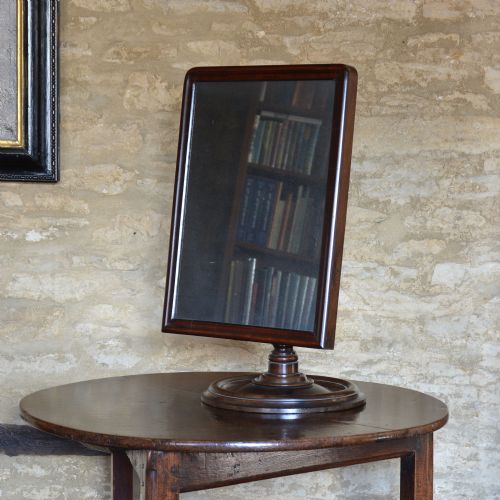
A walnut vanity table mirror sits on a chest or dressing surface to tilt and catch the morning light.
Walnut Vanity Table Mirror
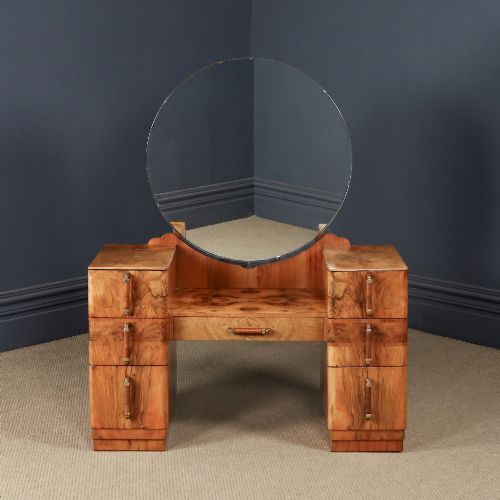
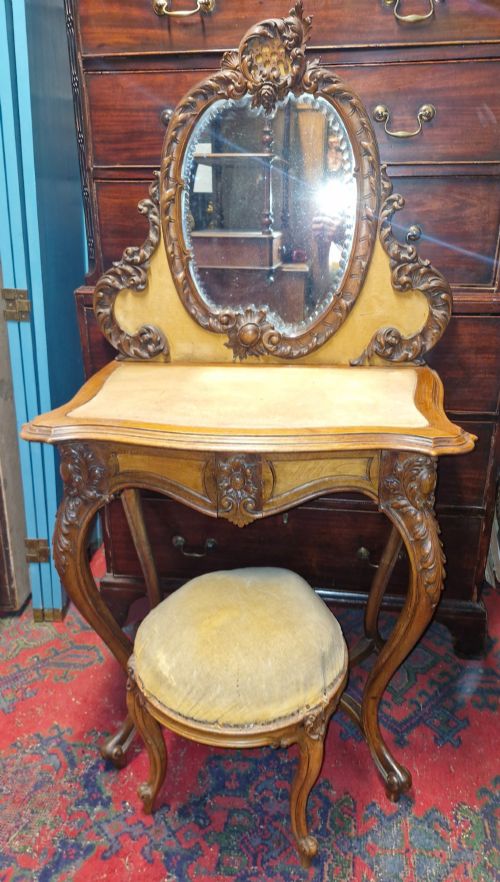
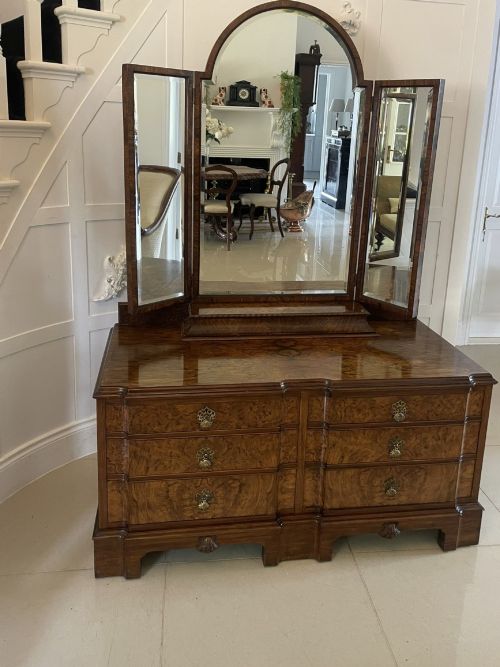
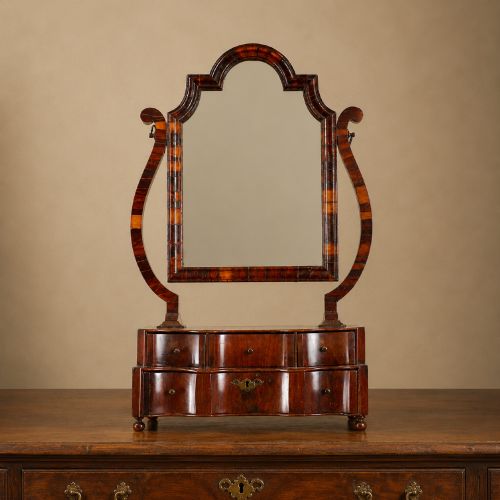
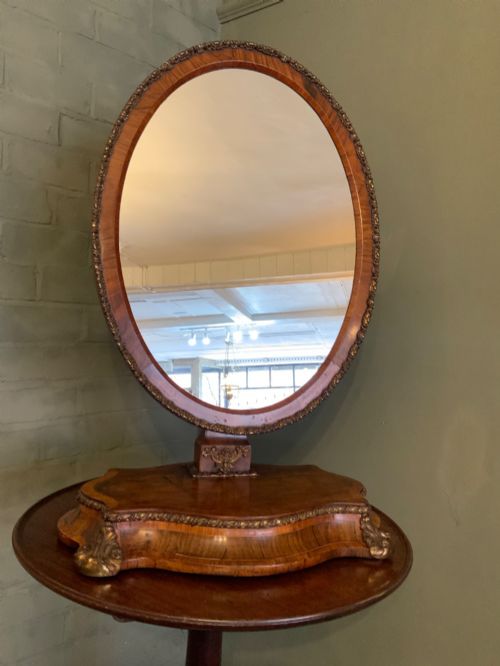
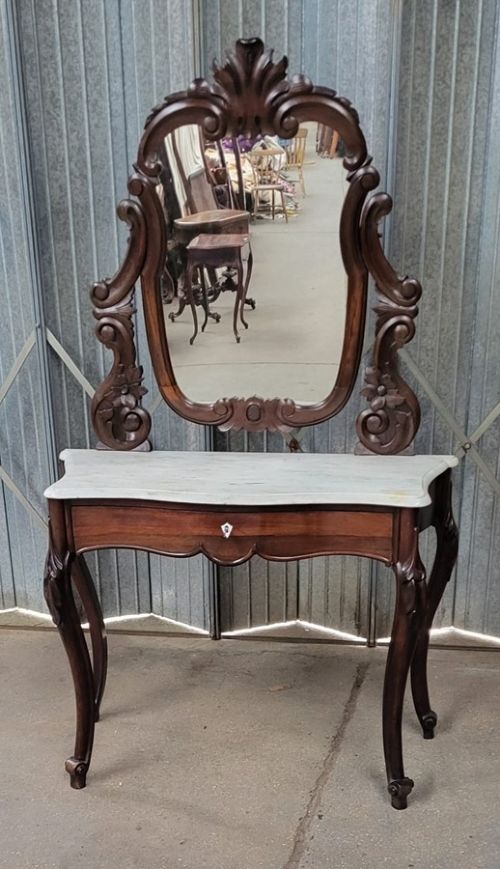
A walnut vanity table mirror brings polished warmth to a bedroom or dressing room, serving as both a practical glass and a decorative object. When you search for a walnut vanity table mirror, you encounter forms ranging from compact 18th-century toilet glasses with drawer bases to large Art Deco pedestal pieces and Victorian swing mirrors.
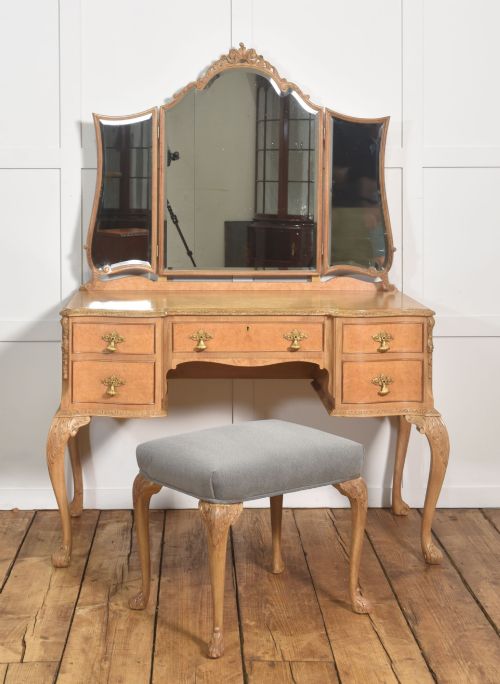
The selection on this page draws heavily from Georgian, Victorian, Edwardian, and Art Deco periods, alongside revival styles like Queen Anne. You find simple upright toilet mirrors alongside complex dressing chests with triple mirrors and fitted compartments.
Origin and period dictate the silhouette, from the slender bracket feet of early Georgian examples to the sweeping geometric curves of 1930s designs. Many pieces incorporate boxwood stringing, laburnum accents, or marquetry, while others rely entirely on the striking grain of burr walnut.
Judging quality
Quality rests in the selection of the veneer and the crispness of the cabinetwork. The finest pieces display book-matched burr walnut grain across the drawer fronts and mirror frame, with hand-cut dovetails joining the interior box sections.
Proportion and stability separate standard production from superior work. A well-made mirror frame holds its angle firmly on the original brass pivots without sagging, and the secondary woods beneath the veneer match the expected period of manufacture.
Several miniature dressing mirrors include hidden compartments inside the base drawers for secret notes and tiny trinkets.
Lamb of Manchester·Maurice Adams·Harry and Lou Epstein
The Walnut Vanity Table Mirror Glossary
- Toilet mirror
- A small table mirror designed for personal grooming, typically mounted on a base containing one or more small drawers.
- Burr walnut
- A prized timber harvested from the gnarled growth knots of the walnut tree, yielding dense, swirling grain patterns used for decorative veneer.
- Cheval mirror
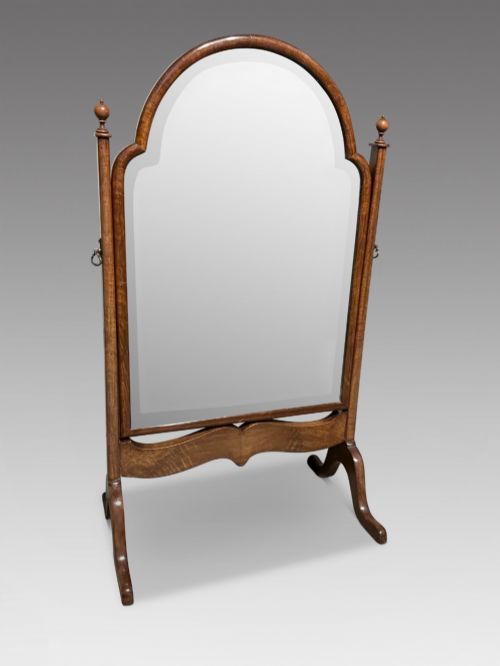
- A full-length freestanding or table-top mirror hung on a central pivot between two upright posts, allowing the glass to tilt fully.
- Marquetry
- The art of applying pieces of veneer in various woods to form decorative patterns and pictorial designs on a surface.
- Dovetail
- A traditional interlocking woodworking joint used to construct drawer boxes securely without relying on metal fasteners.
Walnut Vanity Table Mirror: Frequently Asked Questions
What is the difference between a toilet mirror and a vanity mirror?
A toilet mirror historically refers to a smaller table-top glass with a drawer base used during the 18th and 19th centuries. A vanity mirror often forms part of a larger dressing table suite or pedestal dressing chest.
Both terms describe mirrors intended for personal grooming, though toilet mirrors are typically movable pieces designed to sit on top of an existing chest of drawers.
How do I date an antique walnut mirror?
Dating relies on examining the construction methods, hardware, and secondary woods used in the base. Early 18th-century pieces feature hand-cut dovetails and subtle boxwood stringing, while Victorian and Edwardian examples often use heavier burr veneers and machine-sawn elements.
Art Deco mirrors from the 1930s introduce streamlined geometric forms, occasional ormolu mounts, and distinct pedestal configurations.
Are the mirror glasses original?
Many older pieces retain their original mercury or early silvered glass, which often exhibits light foxing and dark spots. Replacement glass is common in pieces that have seen active use over centuries.
Examining the bevel and thickness of the glass helps determine whether the mirror plate dates to the same period as the walnut frame.
How do I care for walnut veneer?
Protect antique walnut by keeping it away from direct sunlight and sudden changes in humidity, which can cause veneer to lift or crack. Dust regularly with a dry cloth and apply a quality wax polish sparingly to maintain the sheen.
Avoid using modern liquid sprays containing silicone, as they can penetrate through historic finishes and damage the wood.