


Walnut Vanity Table Desk
A walnut vanity table desk brings figured timber and practical surface space together for daily writing and grooming.
Walnut Vanity Table Desk
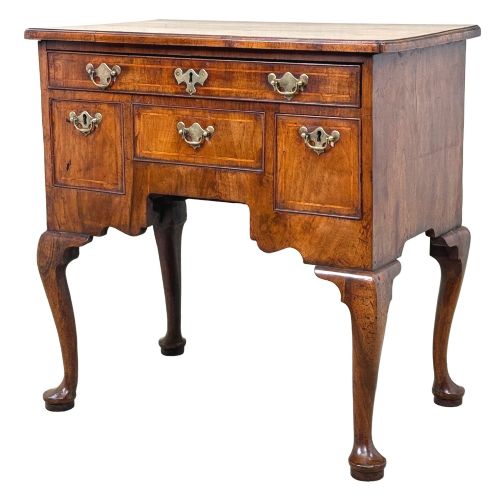
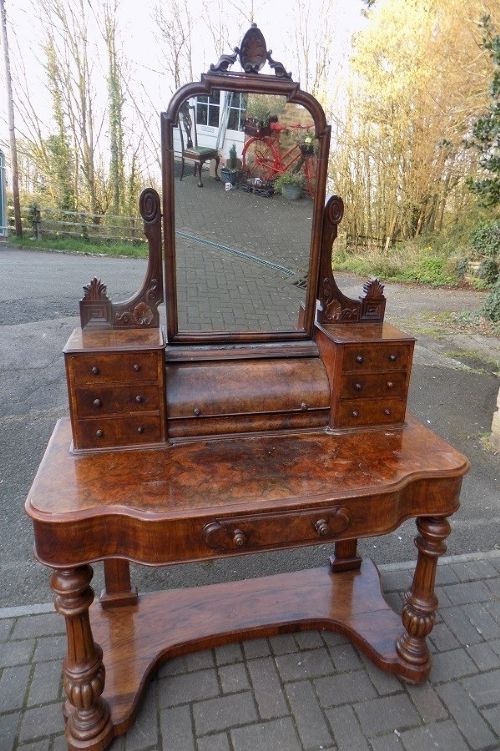
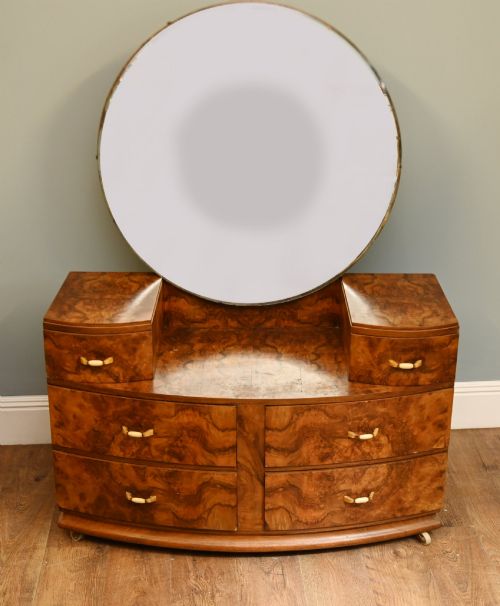
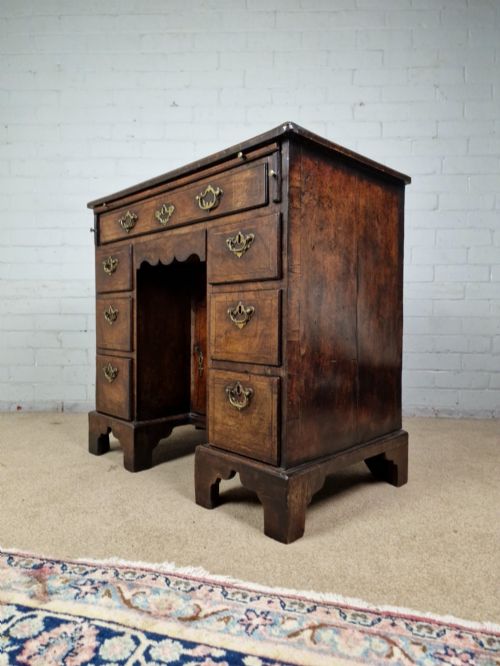
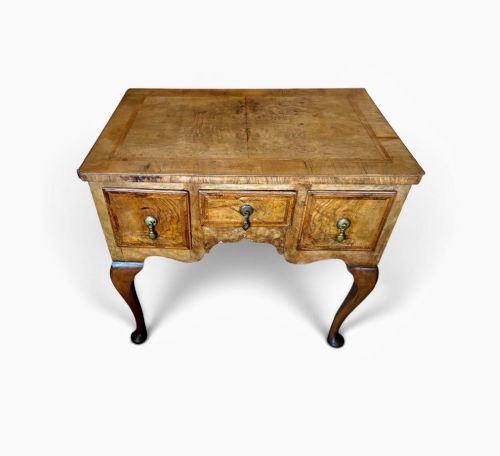
A walnut vanity table desk combines the functions of a writing surface and a dressing table into one coordinated piece of furniture. These items range from Georgian and Victorian periods through to Art Deco designs, drawing on traditional forms like lowboys and kneehole desks.
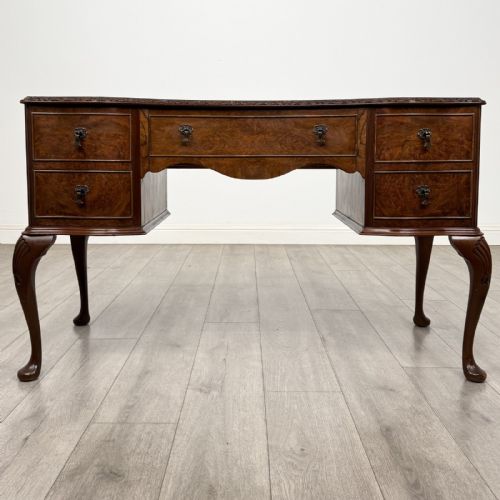
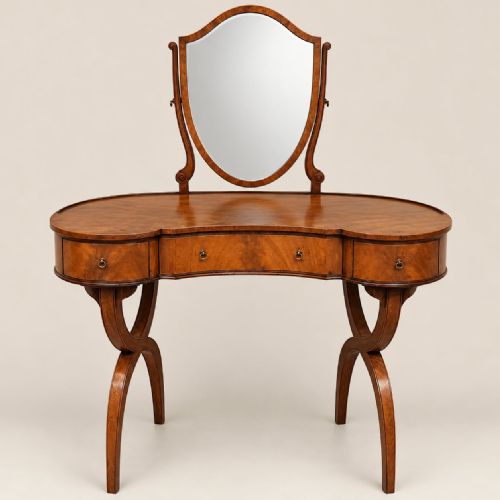
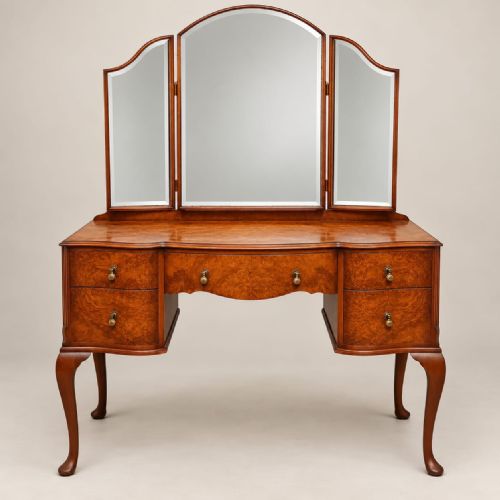
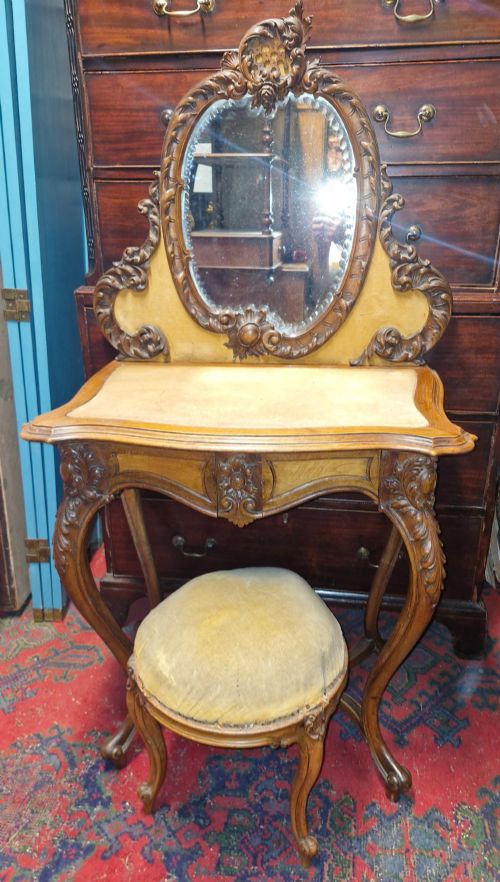
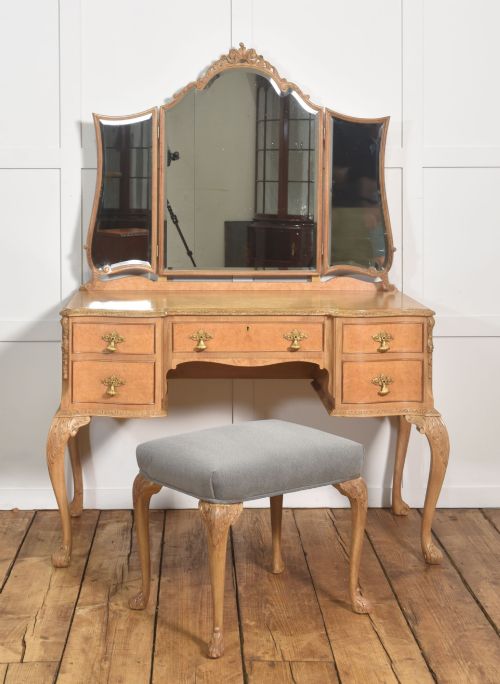
The versions most commonly found here feature figured or burr walnut veneers, often accompanied by matching mirrors, leather writing inserts, and fitted drawers. They serve equally well as bedroom dressing stations or compact library desks.
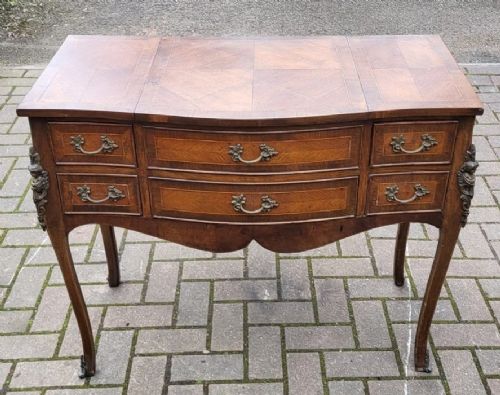
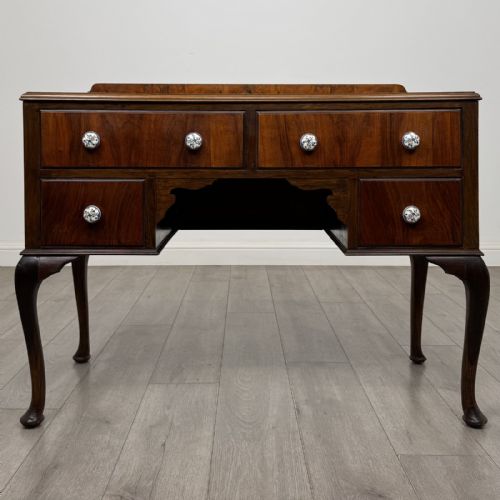
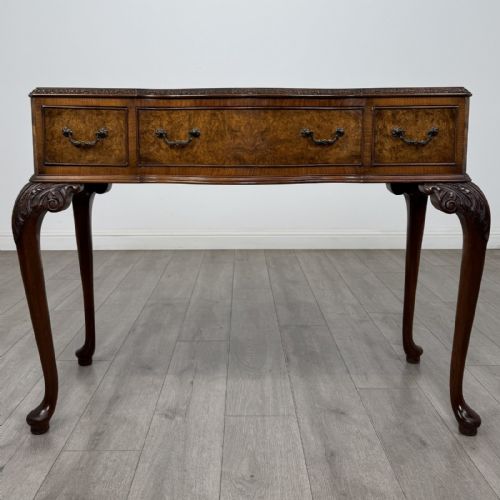
Makers working across the eighteenth, nineteenth, and twentieth centuries adapted these dual-purpose tables to suit changing domestic habits. Buyers encounter everything from serpentine-fronted pedestals to Queen Anne revival styles resting on cabriole legs.
Materials and Construction
Cabinet makers utilised solid walnut alongside finely figured burr walnut veneers applied over secondary timbers to create rich, patterned surfaces. Boxwood stringing, brass handles, and leather or glass top inserts complete the primary construction.
Joinery methods varied according to the period, employing traditional dovetailing for drawer construction and sturdy framing for kneehole and pedestal formats. Carved details and cabriole legs appear on revival pieces, whilst clean geometric lines define the Art Deco examples.
Walnut Vanity Table Desk Retail Price Guide 2026
Typical asking prices for walnut vanity table desk among the pieces listed under this phrase on Sellingantiques today, from the lower quarter to the upper quarter. They describe what is for sale here now, not the wider market.
Secret bureau fitments hide inside certain nineteenth-century table mirrors, ready for clandestine correspondence.
Assessing Quality
The distinction between standard pieces and the finest examples lies in the selection and matching of the walnut veneer. Superior specimens display symmetrical burr patterns across all drawer fronts and top surfaces, showing careful attention by the cabinet maker.
Hardware integrity and internal drawer construction also determine worth. Hand-cut dovetailing, original brass furniture, and intact secondary woods indicate higher grade production, whereas clumsy repairs or mismatched replacement handles alter the historical integrity.
Wylie & Lochhead Glasgow·Maples of London
The Walnut Vanity Table Desk Glossary
- Burr walnut
- A prized wood harvested from the abnormal growths of walnut trees, yielding intricate, swirling grain patterns. Cabinet makers prized this timber for high-status cabinet work.
- Lowboy
- A small oak or walnut table with drawers, resembling the lower section of a tallboy chest. These low tables often served as writing desks or dressing tables during the eighteenth century.
- Kneehole desk
- A desk or dressing table featuring a central recess for the user's legs, flanked by pedestals of small drawers. This form became popular during the Georgian period.
- Poudreuse
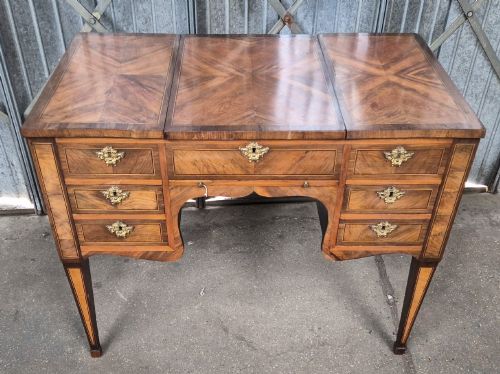
- A French dressing table equipped with folding lids and built-in compartments for cosmetics. These pieces often incorporate mirror glass and hidden surfaces.
- Cabriole leg
- A furniture leg that curves out and then in, commonly ending in a pad or claw foot. This design feature defines many Queen Anne and revival style pieces.
Walnut Vanity Table Desk: Frequently Asked Questions
What is the difference between a desk and a vanity table?
Desks focus on writing surfaces and document storage, whereas vanity tables incorporate mirrors and compartments for grooming items. Many walnut examples combine both functions through integrated mirrors and leather writing inserts.
Historical pieces often blurred these boundaries, serving multiple domestic roles within the bedroom or boudoir. Buyers should examine the interior drawer layout and mirror fittings to understand the primary intended use.
How do I identify a Queen Anne style walnut desk?
Queen Anne style walnut desks typically feature distinctive cabriole legs, pad feet, and graceful curved lines. They often utilise figured burr walnut veneers on the top and drawer fronts.
Many pieces seen today date from later revival periods rather than the original eighteenth-century reign. Examining the construction methods and secondary timbers helps determine the true age.
Were these tables used for writing or grooming?
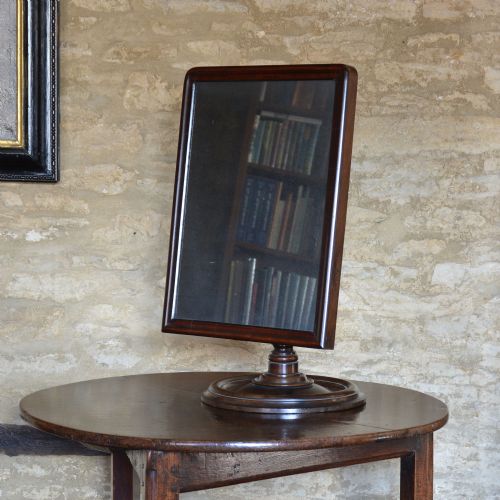
They were designed to accommodate both activities depending on the specific room and daily requirements. Ladies' writing desks often doubled as dressing tables, particularly when fitted with adjustable table mirrors.
Kneehole and pedestal versions provided stable surfaces for correspondence alongside concealed storage for personal items. This versatility explains their enduring popularity in period and modern interiors alike.
How should I care for burr walnut veneer?
Burr walnut veneer requires protection from direct sunlight and excessive humidity to prevent fading and splitting. Regular dusting with a soft, dry cloth maintains the polished finish without damaging the grain.
Avoid placing modern silicone-based polishes on antique timber surfaces. Traditional beeswax applied sparingly preserves the natural lustre of the wood.