

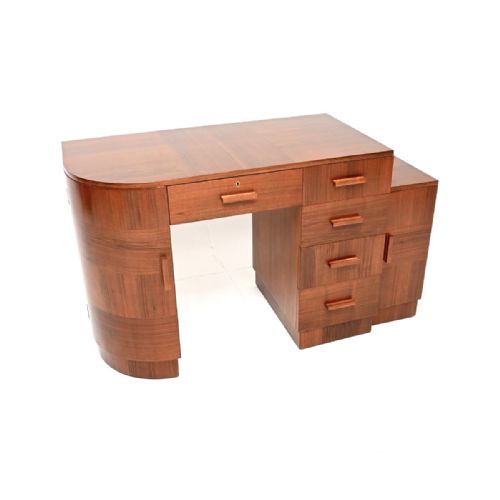


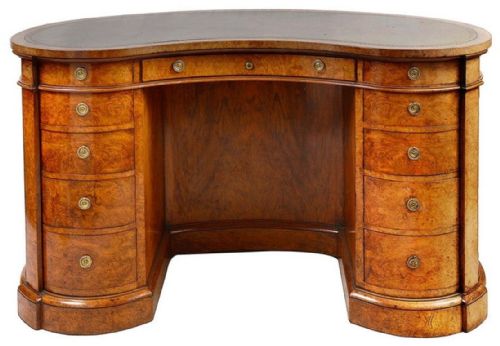


Curved Walnut Writing Desk
These curved walnut writing desk pieces bring together rich timber grain and graceful lines, offering a practical workspace with distinct period character.
Curved Walnut Writing Desk
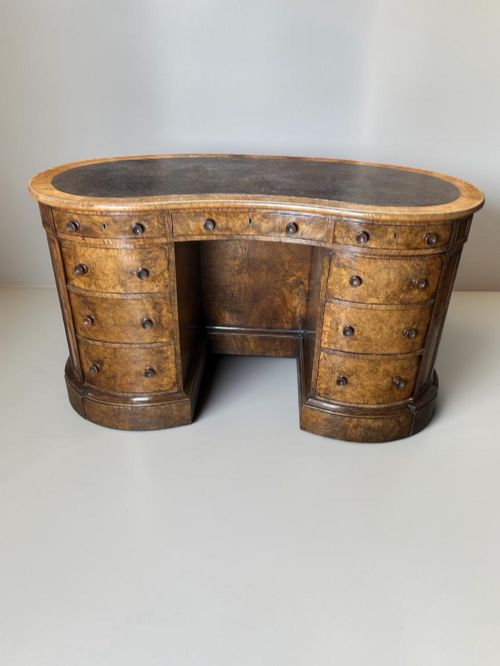
A curved walnut writing desk is a distinctive workspace combining flowing serpentine or kidney-shaped forms with the rich warmth of walnut timber. Buyers examining this page will encounter pieces spanning the nineteenth century through the Art Deco era of the nineteen-thirties.
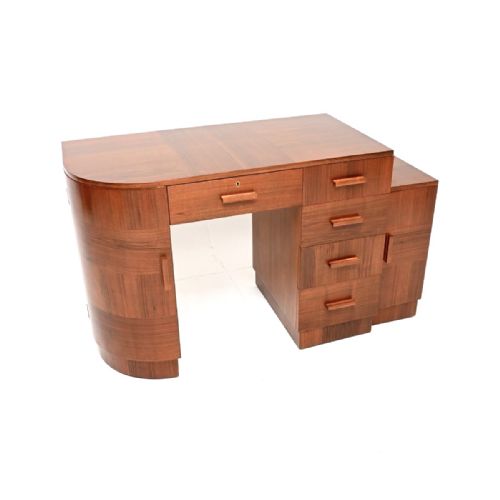
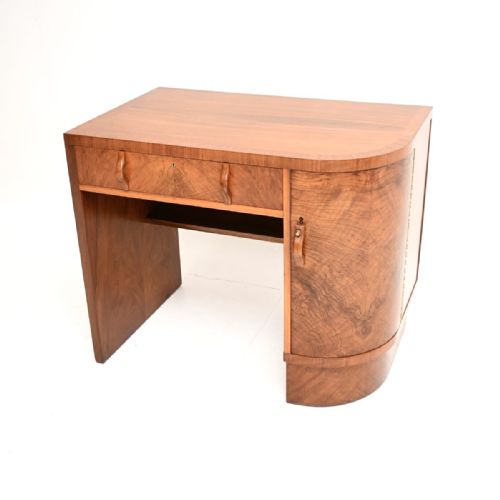
The selection ranges from Victorian library tables and console formats to streamline Art Deco designs. Most examples encountered here lean towards the shaped and figured walnut variants, often incorporating leather writing surfaces.
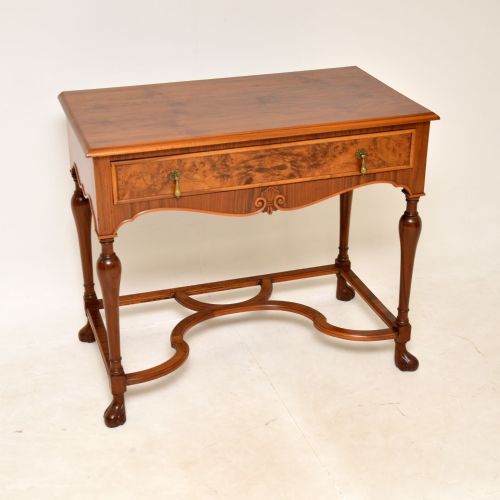
Origins represented in these items include classic English cabinet-making traditions alongside specific revival styles such as Louis XV and Queen Anne. The form balances decorative presence with practical surface area for daily use.
How they were made
Construction relies upon solid walnut and decorative veneers such as burr walnut applied over secondary timbers to achieve striking grain patterns. Cabinet-makers utilised marquetry inlay and brass mounts to embellish the primary surfaces of these desks.
Curved forms, particularly the kidney shape, required precise timber bending and shaping techniques by skilled artisans. Leather inserts were traditionally set into the top surface to provide a durable writing plane, often bordered by subtle tooling.
Curved Walnut Writing Desk Retail Price Guide 2026
Typical asking prices for curved walnut writing desk among the pieces listed under this phrase on Sellingantiques today, from the lower quarter to the upper quarter. They describe what is for sale here now, not the wider market.
Kidney-shaped desks were thoughtfully curved so nineteenth-century writers could reach every corner without standing up.
What varies in quality
Quality in these desks is defined by the selection of the timber veneer, where highly figured burr walnut or matched grain patterns distinguish superior pieces from plain surfaces. The fluidity of the curved outline and the precision of the joinery also indicate the maker's skill.
Hardware details, including original brass handles, mounts, and decorative ormolu, separate standard production items from finer workshop pieces. The integration of traditional materials like tooled leather tops further marks the distinction between ordinary and exceptional examples.
Maurice Adams·Gillows
The Curved Walnut Writing Desk Glossary
- Burr walnut
- A prized wood harvested from walnut tree growths, featuring swirling, knotted grain patterns that create decorative surfaces on furniture.
- Kidney shaped
- A curved furniture form resembling a kidney bean, popular in nineteenth-century library tables and twentieth-century desks for ergonomic access.
- Marquetry inlay
- Decorative patterns created by fitting thin pieces of wood veneer and other materials into a structured background.
- Ormolu
- Gilt bronze ornamentation applied to furniture and decorative objects during the eighteenth and nineteenth centuries.
- Louis XV Revival
- A nineteenth-century style imitating the ornate, curved forms and naturalistic motifs of the French Rococo period.
Curved Walnut Writing Desk: Frequently Asked Questions
What periods do these desks cover?
The pieces span from the mid-nineteenth century through the Victorian era and into the Art Deco period of the nineteen-thirties.
This range allows buyers to choose between ornate revival designs and streamlined modernist shapes.
How do I maintain the leather top?
Leather writing surfaces benefit from occasional cleaning with a damp cloth and conditioning with specialist wax or leather balm.
Avoid harsh chemical cleaners to preserve any original tooling and colour.
Are these desks suitable for daily work?
Many examples offer adequate surface area and comfortable knee clearance for contemporary laptop or writing use.
Checking the specific height and depth dimensions of each piece ensures it fits your workspace requirements.
How do I identify burr walnut?
Burr walnut is characterised by dense, swirling grain clusters and small knot formations that create a highly decorative finish.
This distinct timber was frequently selected for the primary display surfaces of finer desks.