
Walnut Upholstered Stool
A walnut upholstered stool brings tactile warmth and period form to an interior, functioning as a fireside footrest, piano seat or dressing table perch.
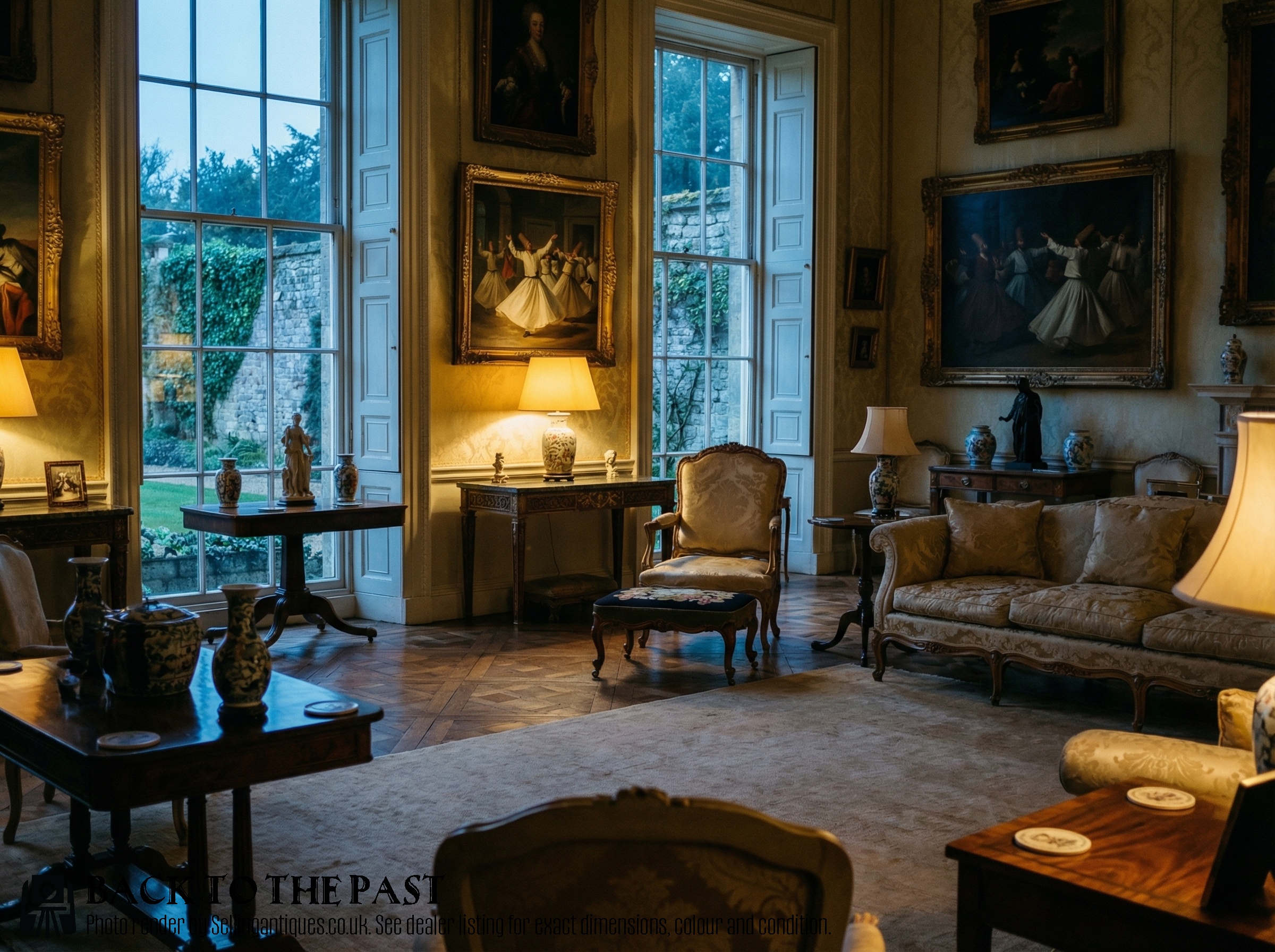
Walnut Upholstered Stool
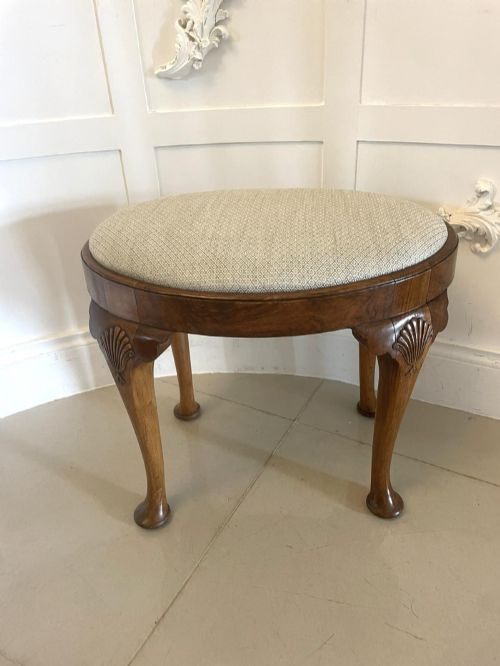
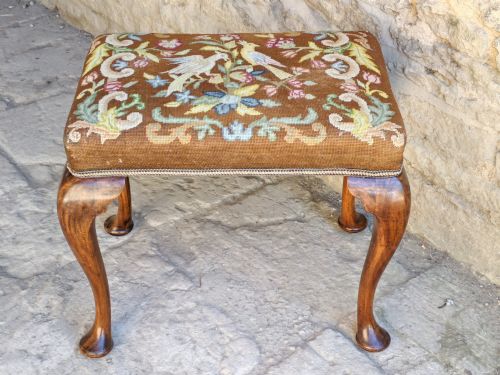
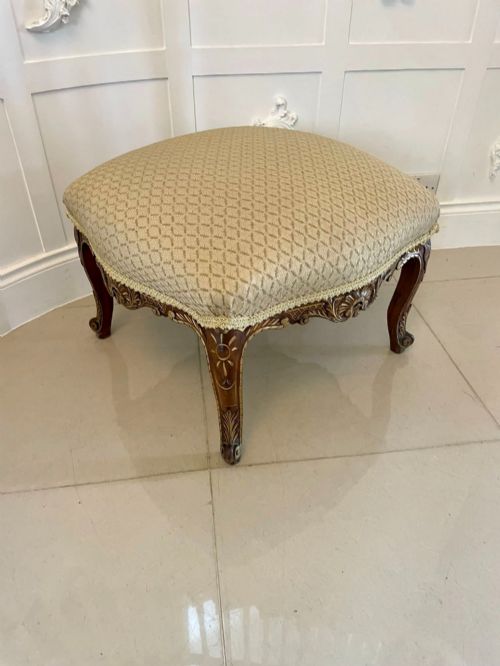
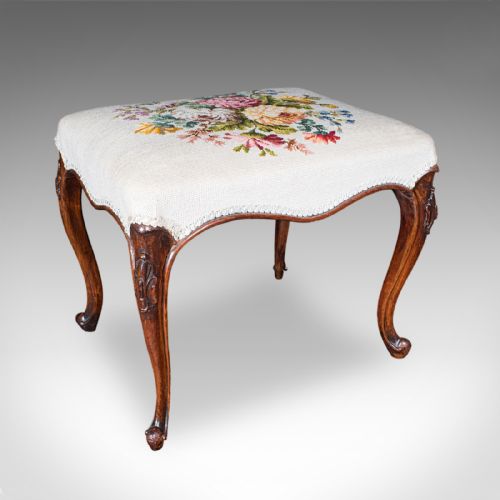
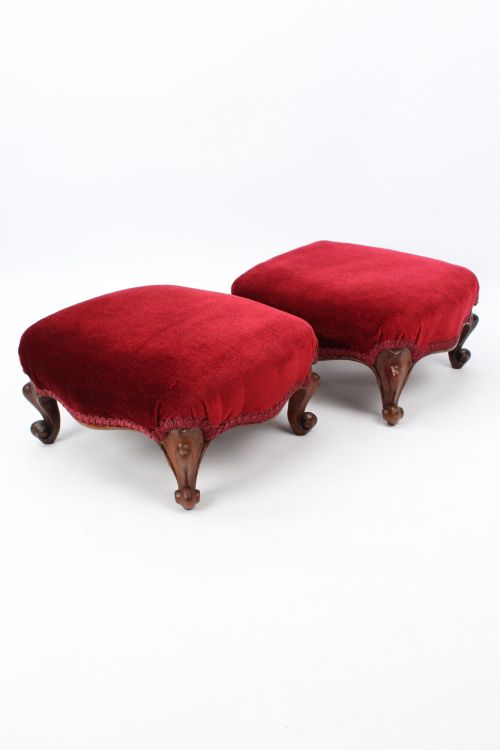
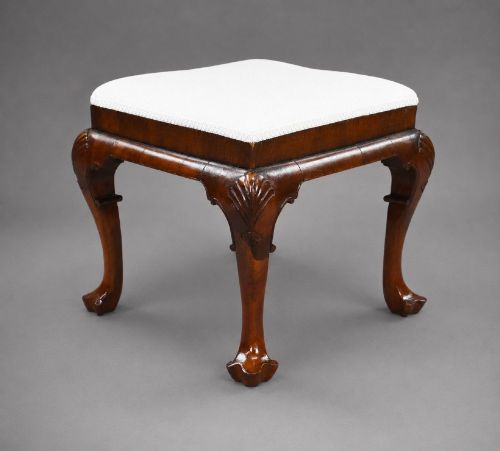
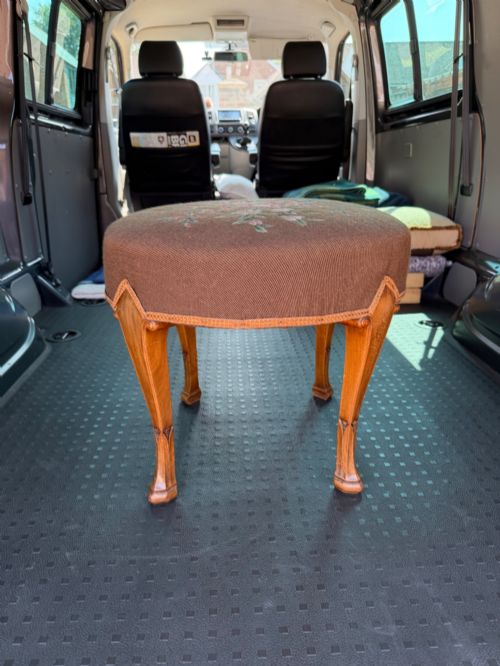
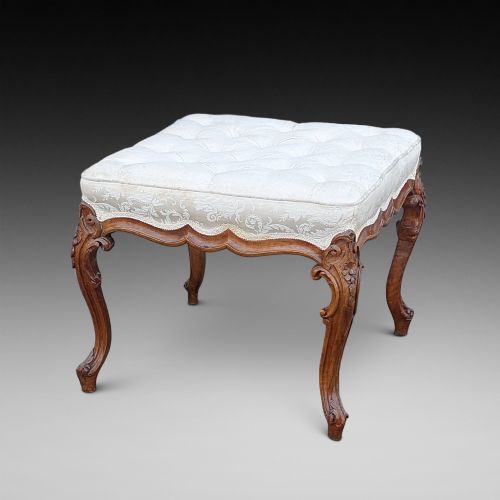
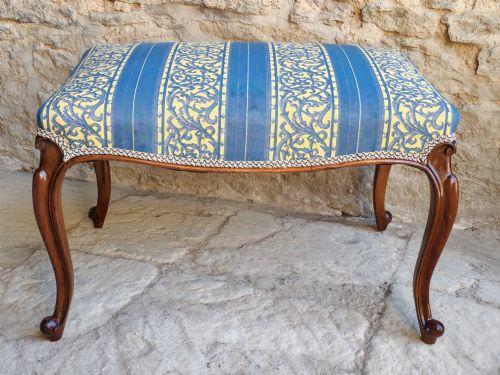
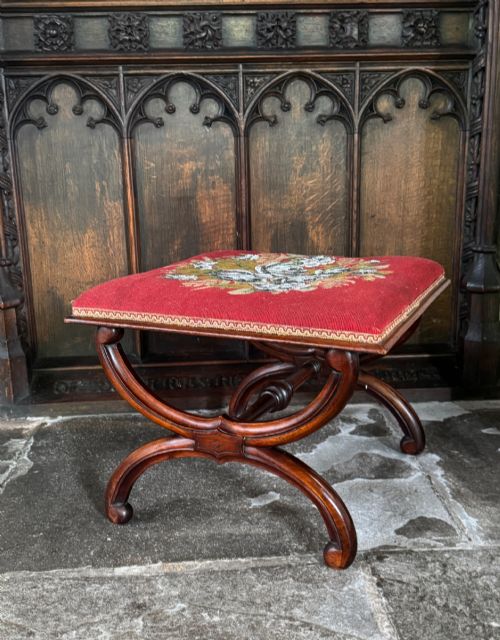
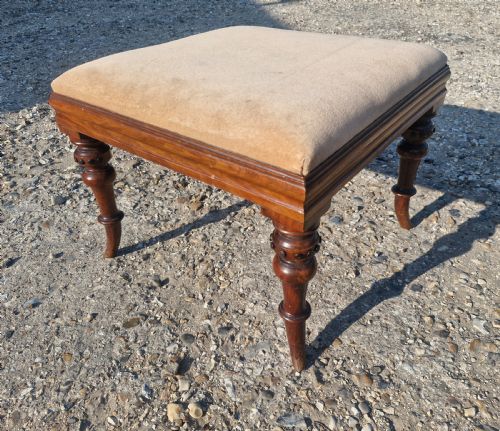
A walnut upholstered stool combines a dense timber frame with a soft seat, appearing in forms ranging from small Victorian footstools to long hearth benches and Art Deco dressing seats. Buyers searching this phrase meet nineteenth-century Victorian examples most frequently, often featuring carved cabriole legs and needlepoint or velvet upholstery.
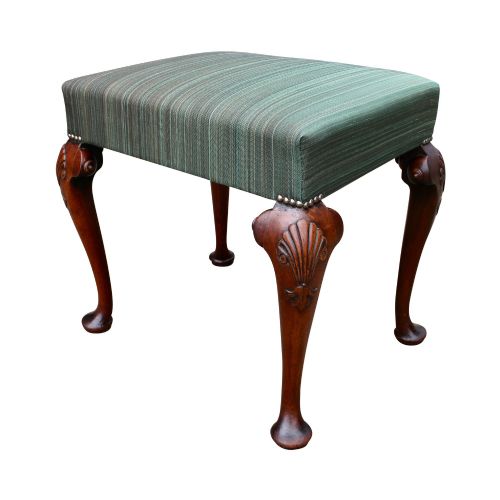
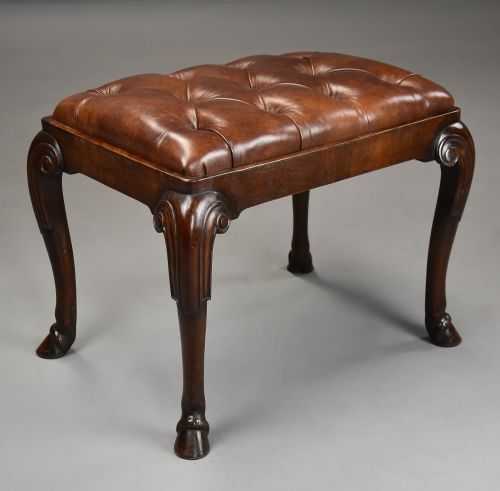
The selection also spans earlier revivals and later twentieth-century designs, including piano stools with adjustable mechanisms and window seats designed for extended seating. Frames range from restrained plain timber to ornate carved baroque or Queen Anne Revival styles with ball and claw feet.
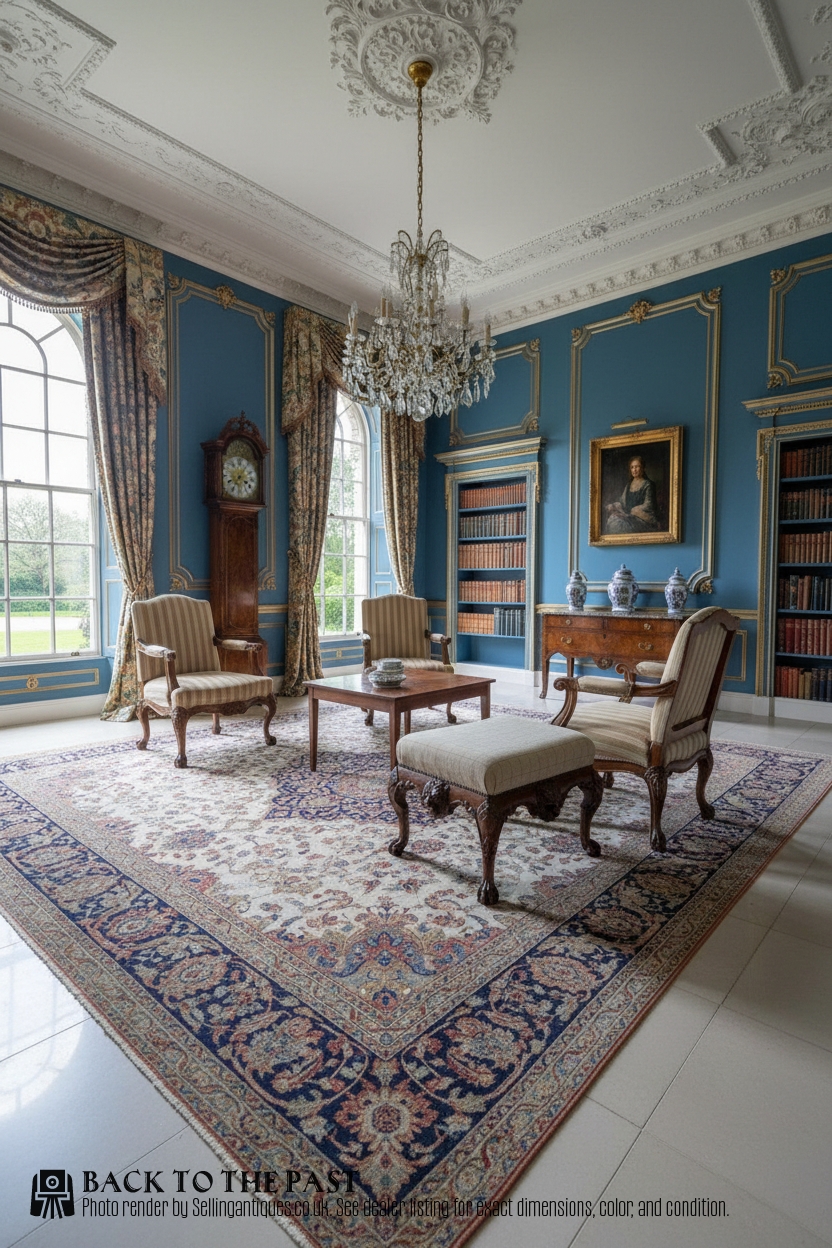
Materials and construction methods
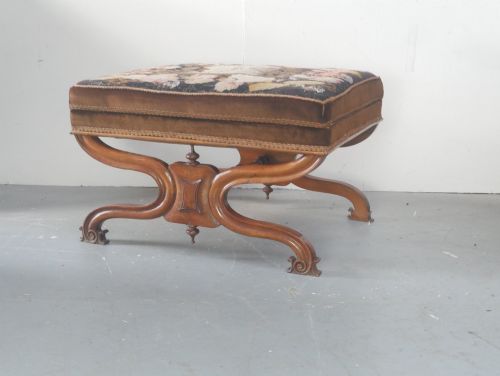
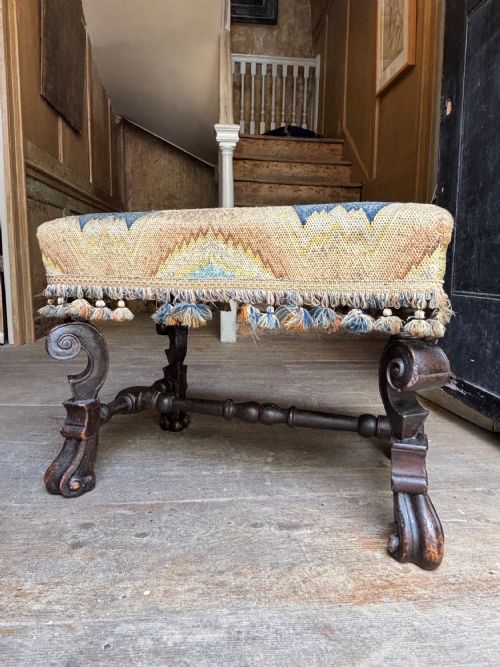
Makers utilised solid walnut and burr walnut veneers for the structural frames, often shaping the timber into cabriole legs, barley-sugar twists or X-frame supports. Joinery relied on traditional tenon and mortise methods, supplemented by intricate hand-carving on Victorian and revival pieces.
Seating portions incorporate traditional textile coverings such as tapestry, needlepoint, leather, kelim and wool velvet stretched over internal padding. Metal elements like brass castors, swivel adjustment screws and pearl inlay appear on specific piano, revolving and decorative examples.
Walnut Upholstered Stool Retail Price Guide 2026
Typical asking prices for walnut upholstered stool among the pieces listed under this phrase on Sellingantiques today, from the lower quarter to the upper quarter. They describe what is for sale here now, not the wider market.
Listings feature walnut timber combined with fabric, leather, velvet, tapestry, and brass across periods from the seventeenth century to nineteen-thirty.
Factors determining the grade of a piece
Quality rests upon the crispness of the timber carving and the selection of the walnut grain, where highly figured burr timber or dense solid walnut elevates a piece above plain stock. The integrity of the frame construction and the proportion of the legs dictate the visual balance.
The standard of upholstery materials, whether period-correct needlepoint or specialist contemporary textiles like Robert Kime fabrics, marks the distinction between ordinary utility items and fine salon furniture. Original hardware, such as functioning adjustment mechanisms or maker-stamped castors, further distinguishes superior examples.
Harry & Lou Epstein·Warings·Copes & Collinson
The Walnut Upholstered Stool Glossary
- Cabriole leg
- A furniture leg that curves outward at the knee and tapers inward toward the foot, commonly seen on Victorian and Queen Anne style walnut pieces.
- Barley-sugar twist
- A spiral-turned wooden leg or stretcher resembling a twist of confectionery, popular in seventeenth-century and revival furniture.
- Needlepoint
- A form of canvas work embroidery utilised historically for durable and decorative seat covers on footstools and fireside benches.
- Burr walnut
- A prized timber cut from walnut tree growths, yielding a swirling, highly decorative grain pattern used on tabletops and stool frames.
- X-frame
- A structural furniture base formed by intersecting diagonal wooden members, providing stable support for upholstered seats.
Walnut Upholstered Stool: Frequently Asked Questions
What is a walnut upholstered stool used for?
These pieces serve multiple domestic functions, operating primarily as footrests by the fireside, low seats at dressing tables, or piano benches for musicians.
Larger versions function as window seats or hallway benches, providing compact surface seating combined with upholstered comfort.
How do I identify a Victorian walnut stool?
Victorian examples frequently display rich walnut frames with cabriole legs, scroll feet, or needlepoint and beadwork upholstery. They often date from the mid to late nineteenth century and reflect revival aesthetics.
Construction details typically include hand-carved wooden frames and traditional stuffing materials beneath the top textile layer.
What distinguishes Art Deco walnut stools?
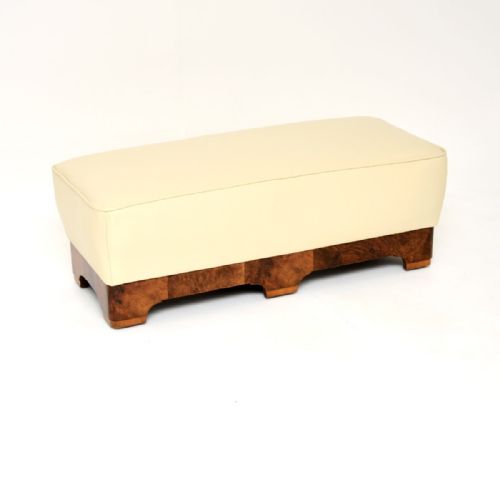
Art Deco pieces from the nineteen-thirties showcase figured burr walnut surfaces combined with smooth leather or cream upholstery. Their forms are more streamlined and geometric than ornate Victorian equivalents.
These dressing and piano stools often incorporate practical storage compartments within their clean architectural silhouettes.
Are piano stools adjustable?
Certain Victorian piano stools feature central column screws or revolving mechanisms that allow the user to alter the seating height. Other variants utilise fixed frames with padded velvet or leather tops.
Adjustment mechanisms add mechanical utility to the decorative wooden and upholstered design.