




Dark Walnut Footstool
A dark walnut footstool brings rich timber tones and period upholstery together into a compact, highly tactile seat.
Dark Walnut Footstool
When you search for a dark walnut footstool, you are looking at small seating forms spanning several centuries of British and continental design. The examples recorded here range from austere seventeenth-century Carolean frames to ornate Victorian and Edwardian revivals.
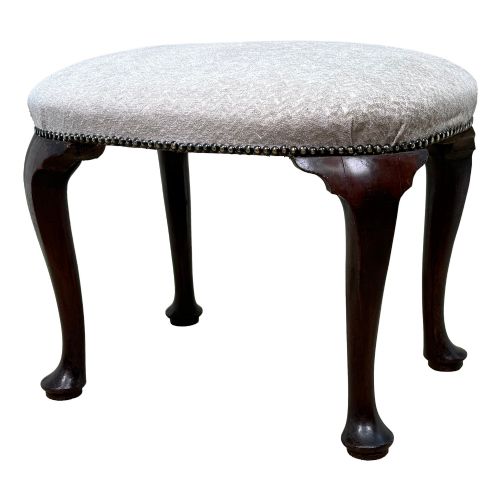
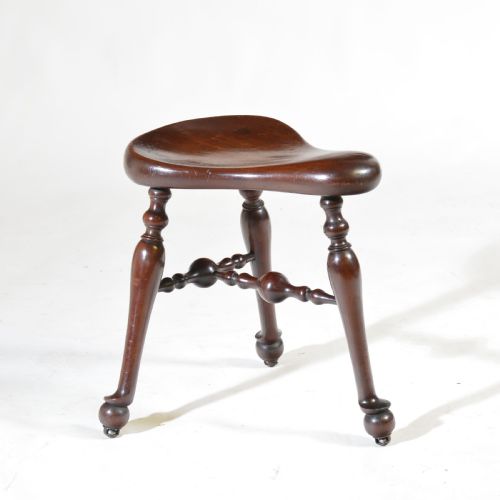
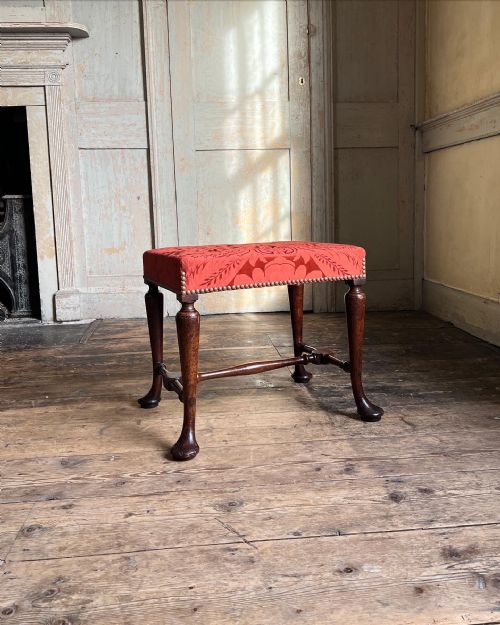
You are most likely to meet nineteenth-century interpretations built in earlier styles, alongside genuine eighteenth-century pieces featuring cabriole legs or turned supports. These items function equally as low hall seats, dressing table stools, and piano stools.
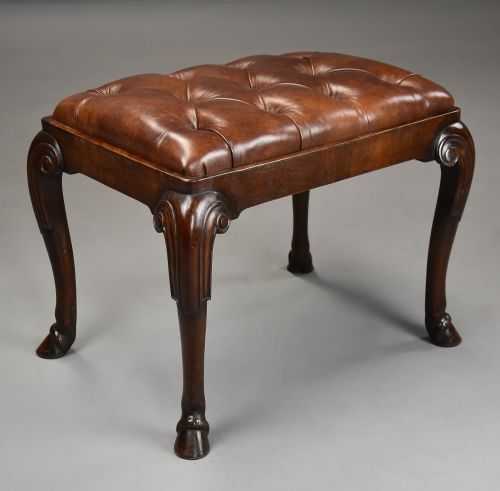
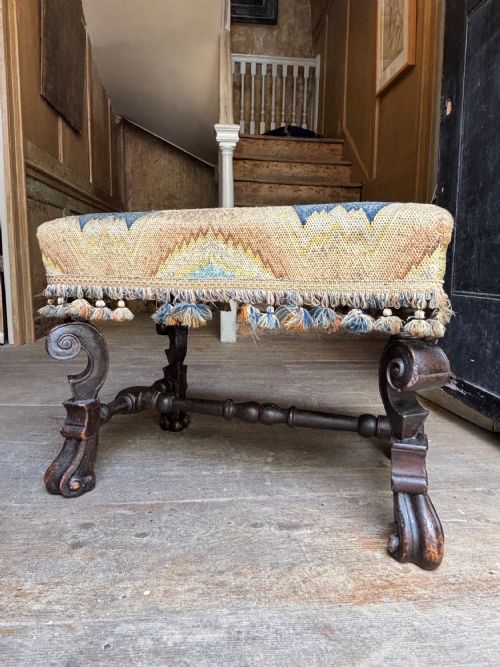
The primary timber across these listings is walnut, often paired with elaborate textile coverings including tapestry, needlework, and leather. Their physical presence relies on deep brown tones, dense grain figures, and robust joint construction.
How they were made
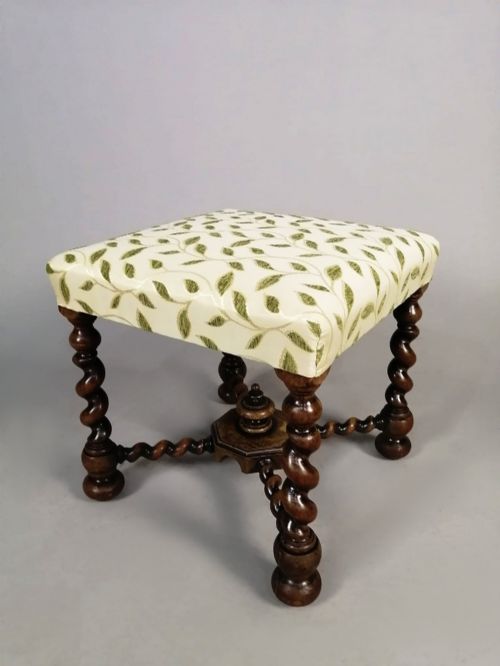
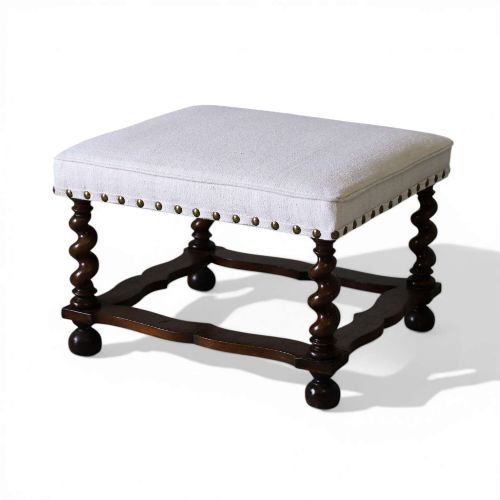
Makers constructed these frames predominantly from solid walnut or utilised walnut veneers applied to secondary woods like mahogany. Detail was achieved through carved ornamentation, oyster-veneered stretchers, and barley-sugar turning on the uprights.
Upholstery methods varied by period, securing textiles, linen, and tapestry over supportive stuffing directly to the wooden frame. Brass fittings occasionally appear as mechanical elements on later revolving piano stools and adjustable seats.
Several examples feature barley-sugar legs that resemble twisted confection.
What varies in quality
The distinction between ordinary and exceptional pieces rests upon the crispness of the wood carving and the proportional harmony of the frame. Early examples show vigorous hand-carving on cabriole legs, whereas lesser items rely on simpler, flatter profiles.
The integrity of the walnut timber itself dictates value, with figured grain patterns and well-preserved surface patination elevating a piece. Furthermore, the retention of period-appropriate textiles or skilled needlework upholstery contributes significantly to the overall character.
James Shoolbred
The Dark Walnut Footstool Glossary
- Carolean
- A seventeenth-century style spanning the reigns of Charles I and Charles II, characterised by exuberant baroque carving and barley-sugar turned legs. Pieces from this era often display rich ornamentation.
- Cabriole leg
- A furniture leg that curves out and then in, mimicking animal limbs with a knee and a foot. This form became dominant during the early eighteenth century.
- Oyster veneer
- Circular veneer slices cut obliquely from small branches or boughs of walnut, creating an oyster-shell pattern across flat surfaces. It appears frequently on seventeenth and eighteenth-century stretchers.
- Barley-sugar twist
- A spiral turning technique applied to wooden legs and stretchers, resembling the twist of confectionery. It adds vertical movement and visual depth to seventeenth-century and revival frames.
- Needlework
- Hand-stitched textile work utilising wool or silk yarn on canvas mesh, commonly employed to upholster stool tops from the eighteenth century onwards. It provides a durable and decorative surface.
Dark Walnut Footstool: Frequently Asked Questions
What is a cock-fighting stool?
A cock-fighting stool is a specialised low seat designed with a padded chest-rest or sloping top, originally intended for spectators at sporting events.
Today, these robust walnut pieces function well as compact occasional seats or low footstools in a study or hallway.
How do I care for walnut wood?
Walnut benefits from occasional application of microcrystalline wax to nourish the grain and protect the surface from dry indoor air. Avoid placing antique timber furniture near direct heat sources or in strong sunlight.
Gentle dusting with a soft, dry cloth is sufficient for routine maintenance.
Are piano stools adjustable?
Many Victorian piano stools feature revolving mechanisms that allow the seat height to be adjusted by turning the top. These examples often incorporate brass screw threads concealed within the wooden column.
Fixed-height variants also exist for both dressing tables and pianos.
How do I distinguish revival styles from original pieces?
Revival pieces, such as those from the Edwardian period or late nineteenth century, often display machine-tooled elements and standardised construction methods. Original seventeenth and eighteenth-century items reveal hand-cut joinery marks and authentic period wear.
Examining the secondary woods and interior framing provides further clues to a piece's true age.