
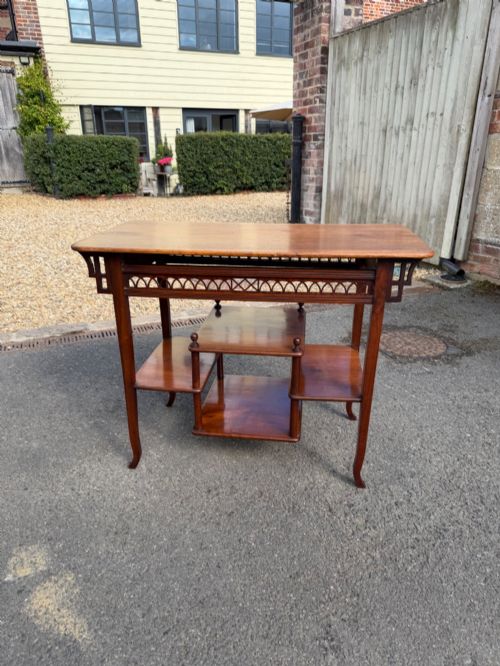
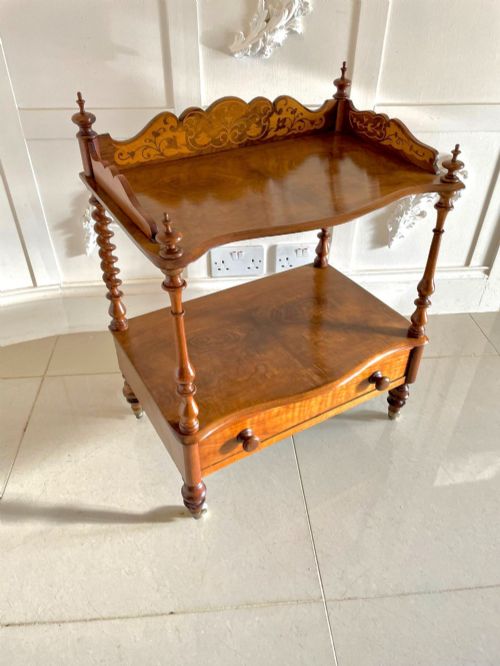
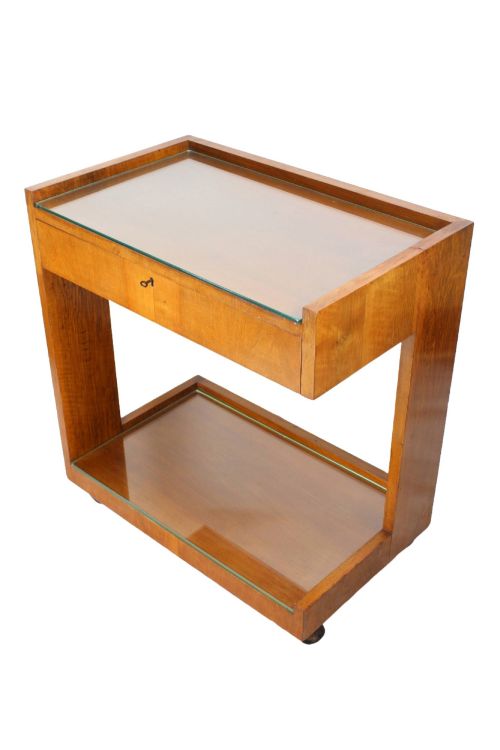
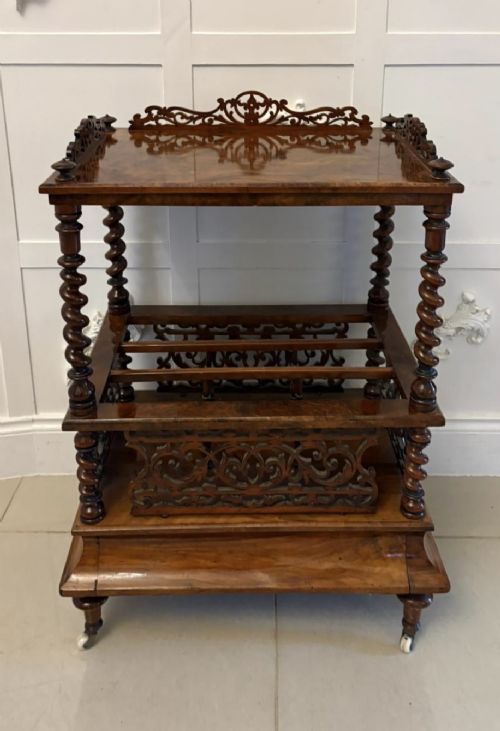
Walnut Tiered Table
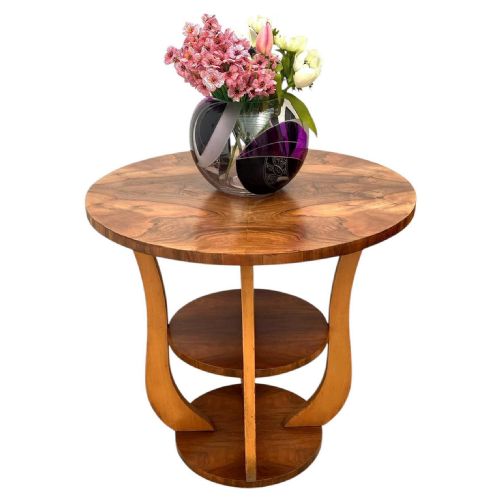
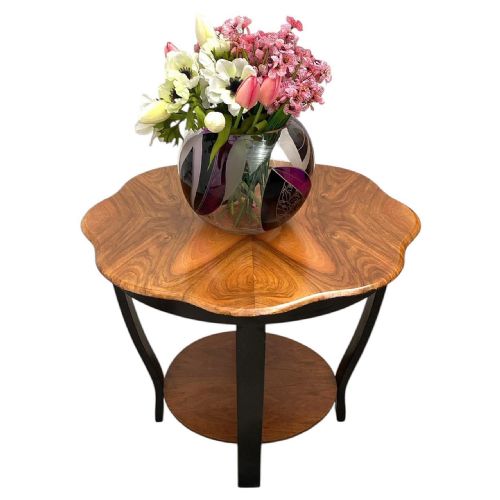
A walnut tiered table brings multiple surfaces of figured timber into a room, serving as an occasional table, trolley, or whatnot from the Victorian era up to the Art Deco period.
Walnut Tiered Table
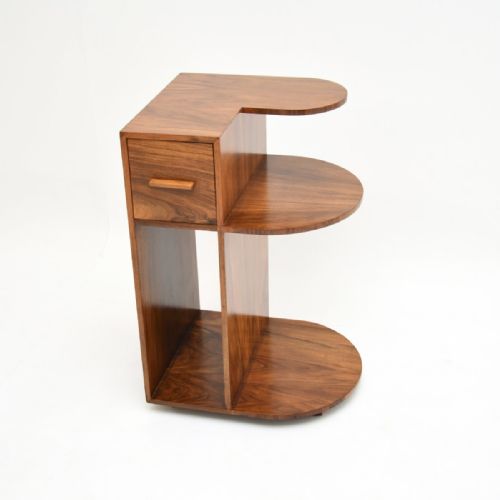
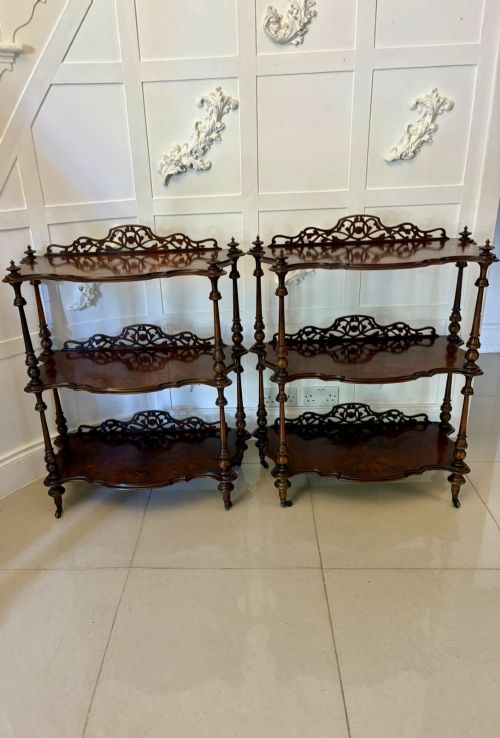
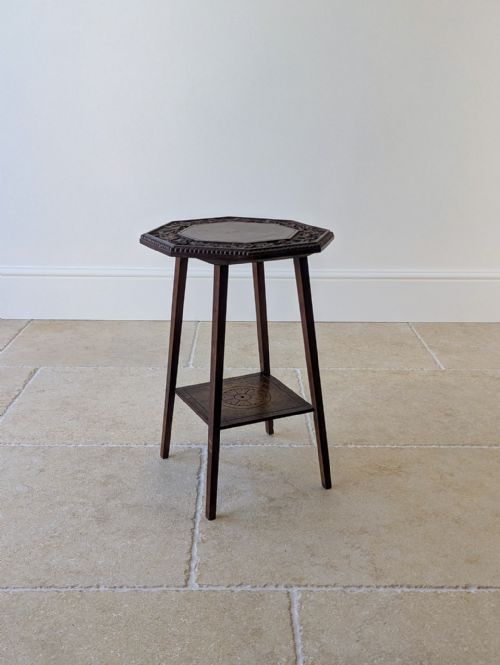
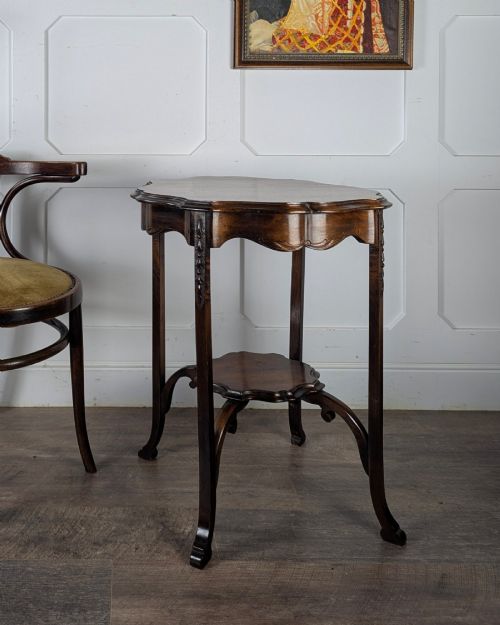
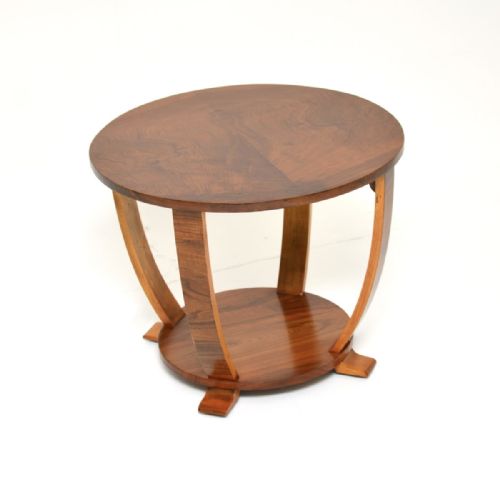
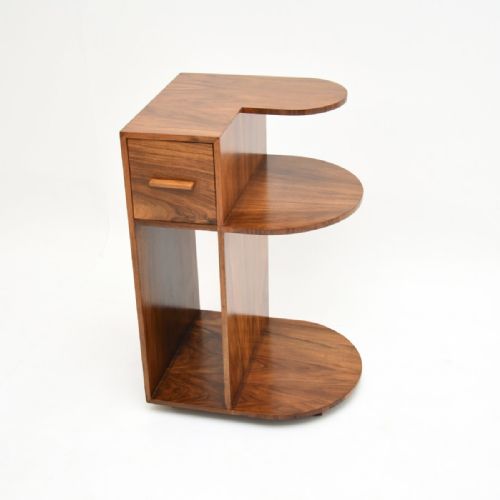
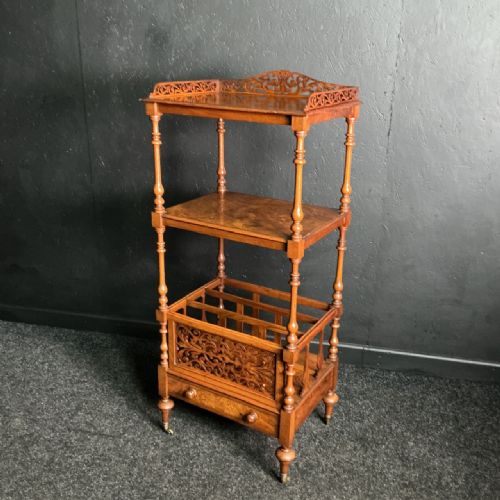
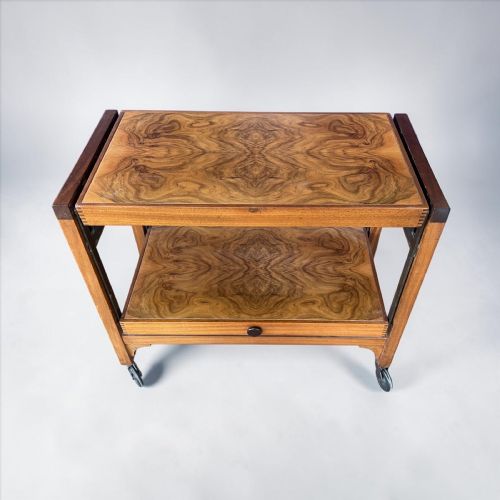
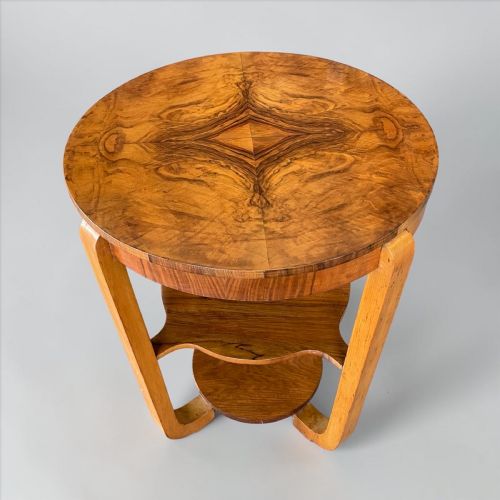
A walnut tiered table takes many forms across the nineteenth and twentieth centuries, appearing as a Victorian whatnot, an Edwardian occasional table, or an Art Deco coffee table with multiple levels. These pieces function as side tables, lamp tables, and serving trolleys, utilising graduated tiers to display objects or hold books.
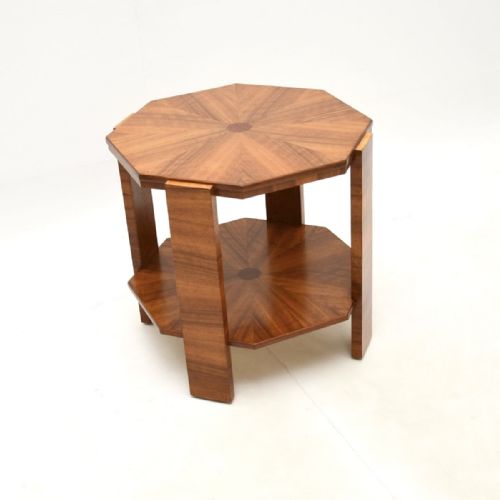
The Victorian examples lean towards burr walnut and serpentine shapes, often incorporating magazine racks or pivoting mechanisms. Later twentieth-century iterations favor the clean lines of Art Deco design, utilising figured walnut veneer across two or three distinct horizontal planes.
How they were made
Cabinetmakers constructed these pieces using solid walnut alongside walnut veneer and burr walnut, frequently applying polished surfaces to highlight the swirling grain patterns. Structural elements incorporate mahogany and ebonised wood for contrast, while brass mounts, ormolu, and turned legs provide support and ornamentation.
Inlaid marquetry details appear across Edwardian and French examples, whereas later Art Deco models rely on the natural figure of the wood itself. Tiered configurations require stable vertical supports, whether through simple turned wooden legs, slender uprights on trolleys, or elaborate framework on etageres.
Some tables include hidden wheels to chase the afternoon tea around the drawing room.
What varies in quality
Quality rests primarily in the selection of the timber and the depth of the figuring in the veneer. Burr walnut and carefully matched figured veneers distinguish superior pieces from plain timber surfaces, while the crispness of turned details and inlay work elevates the overall manufacture.
Structural integrity separates functional items from decorative ones, particularly in tiered designs and trolleys where multiple levels require rigid joinery. The quality of secondary woods, brass fittings, and the smoothness of any moving parts, such as castors or drop leaves, further define the tier of craftsmanship.
Liberty of London·William Birch
The Walnut Tiered Table Glossary
- Burr walnut
- A prized veneer taken from the knotted growth of a walnut tree, yielding complex, swirling patterns. Cabinetmakers utilised this timber for decorative table tops and drawer fronts.
- Whatnot
- An open piece of furniture featuring multiple shelves supported by slender pillars, designed for displaying ornaments. These tiered stands date from the Victorian period onward.
- Etagere
- A French tiered piece of furniture intended for display or serving. These structures provide multiple open shelves on legs.
- Canterbury
- A low piece of furniture featuring partitioned sections for holding sheet music, books, or magazines. Some variations combine this storage compartment with a tiered occasional table top.
Walnut Tiered Table: Frequently Asked Questions
What periods do these tables cover?
The pieces span from the mid-nineteenth century through the Victorian and Edwardian eras, extending into the Art Deco period of the 1920s and 1930s. Styles shift from ornate Victorian burr walnut and Aesthetic Movement designs to clean geometric lines in later decades.
Materials and construction methods evolve accordingly, moving from solid timber and heavy turned supports to figured veneers and lighter tiered frameworks.
How were tiered tables used historically?
These pieces served practical roles in nineteenth and twentieth-century interiors as occasional surfaces, lamp tables, and serving trolleys. Multiple tiers allowed households to hold drinks, display decorative objects, or store reading material within easy reach.
Specialised forms like canterburys and dumbwaiters incorporated compartments for books and serving dishes, functioning as versatile items in drawing rooms and parlours.
How do I care for a walnut tiered table?
Keep the wood away from direct sunlight and excessive heat sources to prevent the veneer from drying out or lifting. Dust regularly with a soft, dry cloth and apply occasional specialist wax to maintain the polished finish.
Avoid placing damp items directly onto the tiers without coasters to protect the polished surface from water rings.