



Walnut Three Seat Sofa
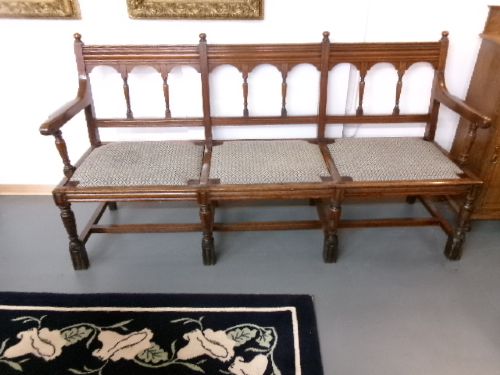
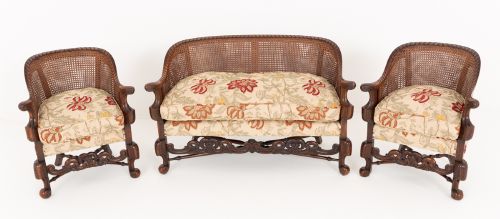
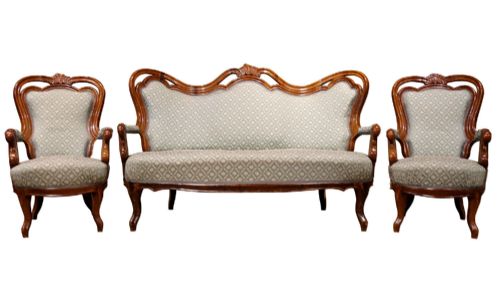
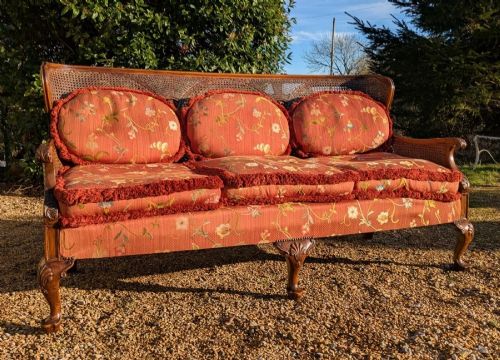
These walnut three seat sofa pieces combine generous seating with rich timber frames, offering a striking centrepiece for a period drawing room.
Walnut Three Seat Sofa
When you search for a walnut three seat sofa, you enter a diverse field of seating spanning multiple revival styles and decades. These pieces serve as substantial lounge furniture, frequently appearing as part of larger salon suites or as standalone couches.
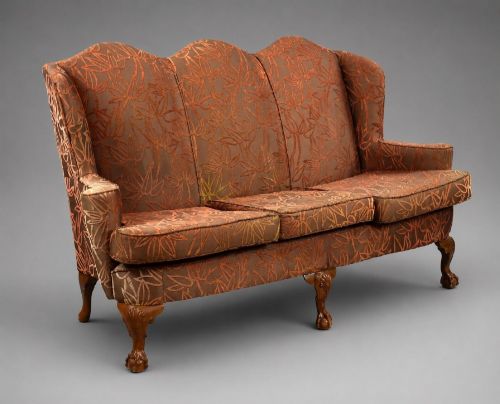
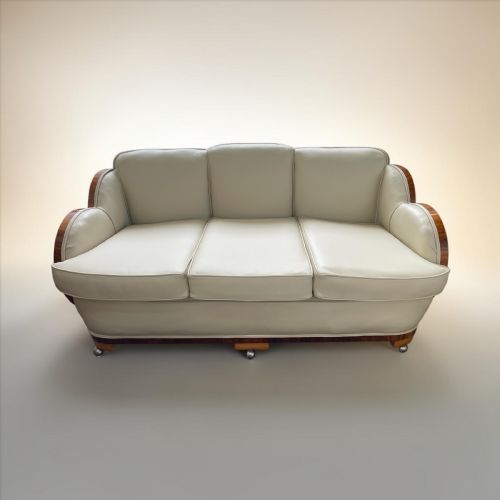
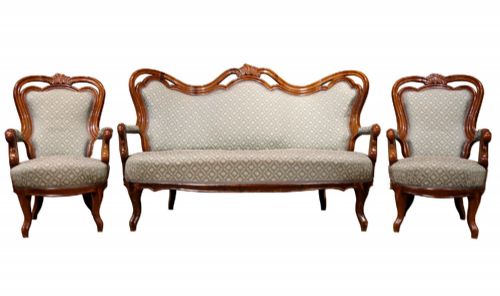
You are most likely to meet twentieth century interpretations, particularly Queen Anne style and Art Deco pieces from the nineteen thirties. Victorian examples and nineteenth century French designs also populate the selection, often featuring carved woodwork and upholstered frames.
The form ranges from country house button back settees to cloud shape leather sofas and continental bergere suites. Origins span English workshops and French ateliers, offering distinct regional interpretations of timber framing and upholstery.
What varies in quality
The standard of a walnut three seat sofa depends upon the crispness of the timber carving and the selection of figured veneer. Superior examples display balanced proportions in the frame and careful timber matching across the visible woodwork.
Upholstery execution dictates the comfort and longevity of the piece, distinguishing master workshop production from standard commercial output. Original upholstery and intact cane work elevate the standing of antique seating.
Walnut Three Seat Sofa Retail Price Guide 2026
Typical asking prices for walnut three seat sofa among the pieces listed under this phrase on Sellingantiques today, from the lower quarter to the upper quarter. They describe what is for sale here now, not the wider market.
Some sofas arrive with matching armchairs, ensuring your nineteenth century salon maintains absolute aesthetic harmony.
Harry and Lou Epstein
The Walnut Three Seat Sofa Glossary
- Bergere
- An enclosed upholstered armchair or sofa with wooden frames, frequently featuring cane work to the sides and back. This French seating form gained popularity in various revival periods.
- Cabriole leg
- A furniture leg that curves out and then in, resembling the leg of an animal. It typically terminates in a pad, claw, or scroll foot.
- Cane
- Strips of rattan woven into an open mesh pattern for seat backs and panels. It provides a lightweight yet durable backing for wooden furniture frames.
- Salon suite
- A matching set of seating furniture designed for a formal drawing room, usually comprising a sofa and multiple armchairs. These suites share uniform wood framing and textile upholstery.
- Veneer
- A thin layer of superior timber applied to a secondary wood base to provide a decorative surface. Walnut veneer allows makers to display striking grain patterns.
Walnut Three Seat Sofa: Frequently Asked Questions
What is a walnut three seat sofa?
A walnut three seat sofa is a large upholstered couch built around a wooden frame of walnut timber. These pieces range from nineteenth century revival designs to twentieth century lounge seating.
They function as primary seating arrangements in living spaces, combining timber craftsmanship with textile or leather upholstery.
How do I identify the period?
Period identification relies upon stylistic details such as cabriole legs, carved crests, and upholstery forms. Nineteenth century examples often draw on French monarchical styles, while twentieth century pieces reflect Art Deco geometry.
Material combinations and framing techniques further assist in dating the furniture to specific eras.
Are these sofas comfortable for daily use?
Comfort levels depend on the internal padding, cushion filling, and spring construction utilised by the maker. Many antique sofas feature feather cushions or sprung seats designed for relaxation.
Modern buyers often use these pieces in everyday living rooms, pairing historical aesthetics with domestic seating needs.
What styles are common?
Common styles include Queen Anne revival, Art Deco, and various continental Louis styles. Carolean and Regency influences also appear among the listed timber frames.
Each style brings distinct decorative elements, from carved woodwork to streamlined leather shapes.