


Walnut Tabletop Swing Mirror
These walnut tabletop swing mirror pieces combine practical grooming utility with rich timber grain, offering a focal point for any dressing surface.
Walnut Tabletop Swing Mirror
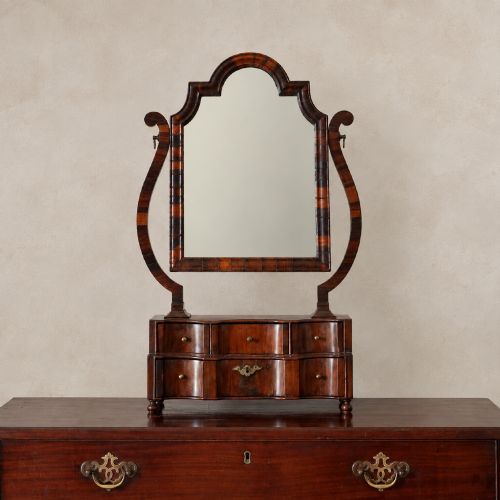
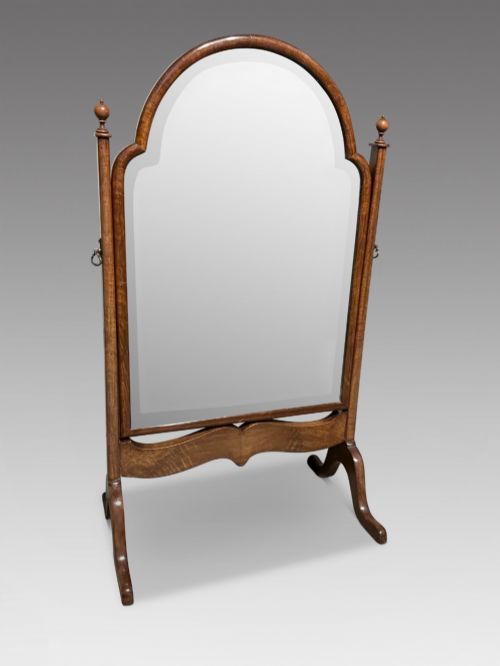
A walnut tabletop swing mirror sits upon chests, dressing tables, or bureaus, providing a pivoting glass panel supported by upright arms and a base. These objects function as personal grooming accessories and ornamental furnishings within domestic chambers.
The selection ranges from early eighteenth-century Queen Anne and George II forms to nineteenth-century Victorian, Edwardian, and Dutch marquetry iterations. Eighteenth-century examples frequently feature box bases with small drawers, whilst later versions adopt diverse proportions and decorative inlay.
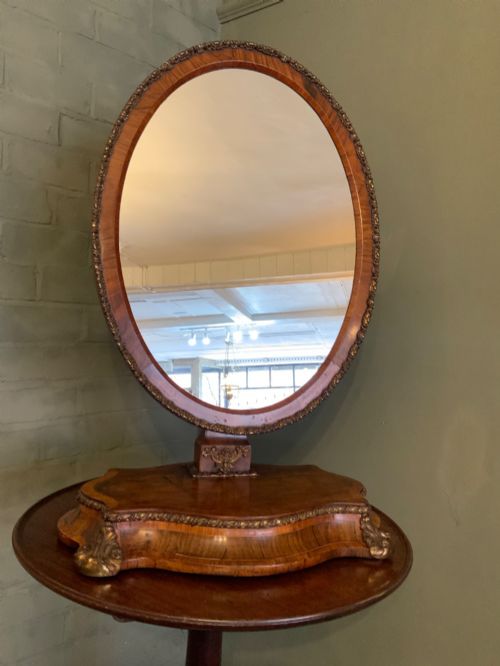
Makers constructed these pieces using varied terminologies, including toilet mirrors, dressing glasses, and box mirrors. Buyers encounter both rectangular and oval glass plates housed in adjustable frames.
Materials and construction techniques
Craftsmen utilised solid walnut, burr walnut veneers, and contrasting timber stringing such as laburnum, mounting the swinging glass plate within pivoting wooden frames. Brass or ormolu hardware secures the moving parts, permitting the mirror plate to tilt at desired angles.
Base units often incorporate small drawers constructed with traditional joinery, occasionally concealing fitted compartments or bureau fitments. Marquetry decoration appears on specific continental examples, embedding floral or geometric patterns into the wooden surfaces.
Several examples cleverly combine grooming reflection with miniature pigeonholes, creating a portable secretary desk for storing tiny secrets.
Evaluating quality and execution
Quality reveals itself through the depth and figure of the walnut timber, particularly where burr veneers or detailed marquetry are employed. Finer pieces demonstrate precise alignment of grain across drawer fronts and carcass components.
The sophistication of the brass pivoting mechanism and the integrity of the original mirror glass distinguish superior examples. Subtly moulded edges, well-proportioned box bases, and intact secondary woods indicate careful period manufacture.
The Walnut Tabletop Swing Mirror Glossary
- Toilet mirror
- A small mirror designed for placement on a dressing table or chest of drawers. These items typically include a pivoting glass plate set above a small box base.
- Burr walnut
- Timber obtained from walnut tree growths, producing swirling and mottled grain patterns. Cabinet makers prized this material for decorative veneer panels.
- Ormolu
- Gilded bronze applied as decorative mounts and hardware. This material frequently embellishes the upright supports and frames of nineteenth-century pieces.
- Marquetry
- Inlaid woodwork forming decorative patterns using various coloured veneers. Dutch examples often display floral designs executed in this technique.
- Bureau fitment
- A small desk interior integrated into the base of a mirror stand. This arrangement provides pigeonholes and small compartments beneath the swing glass.
Walnut Tabletop Swing Mirror: Frequently Asked Questions
How do I date a walnut tabletop swing mirror?
Dating relies upon observing the timber selection, construction methods, and hardware styles. Early eighteenth-century examples often display Queen Anne proportions with simple box bases.
Later nineteenth-century versions introduce burr walnut veneers, oval glass plates, or Dutch marquetry inlay. Comparing the mirror plate bevelling and internal drawer construction aids in period identification.
Where should I place a mirror in a room?
These mirrors suit placement on top of low chests, dressing tables, or sideboards. Their compact footprints allow them to occupy surface areas without requiring wall mounting.
Positioning them near natural light sources enhances their reflective function. They also complement antique writing desks and bureau fitments.
Did these mirrors serve purposes other than grooming?
Many examples incorporate box bases containing small drawers for storing jewellery and personal items. Bureau variations even provide small writing compartments.
This combination of storage and reflection made them versatile furnishings for bedrooms and dressing rooms. The inclusion of trinket drawers added practical utility to their decorative design.