

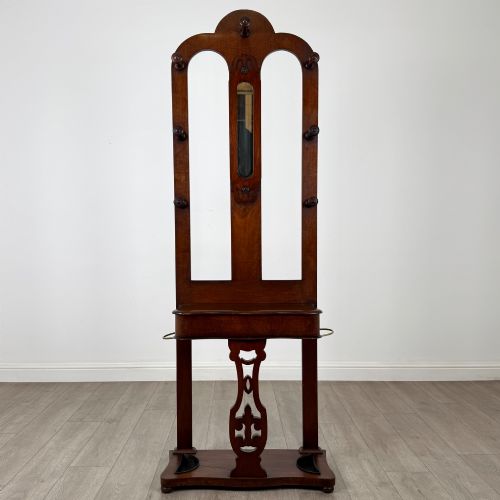
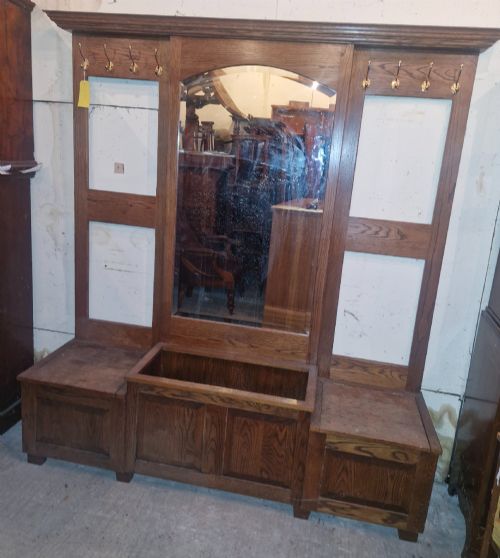
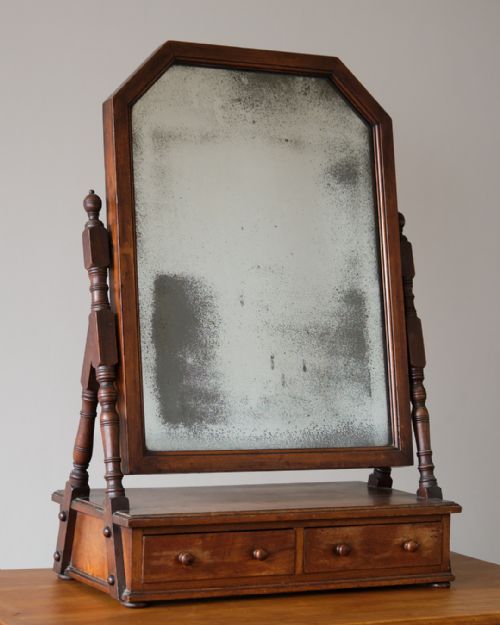
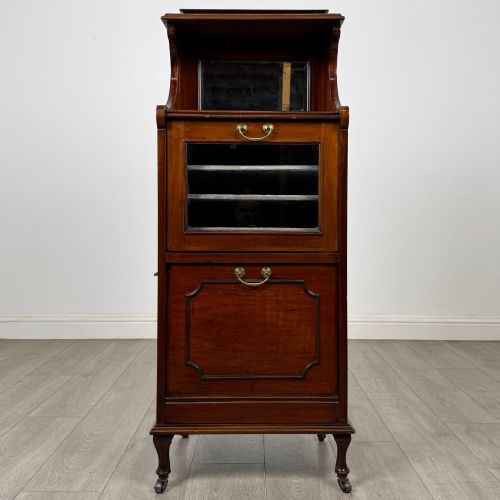
Edwardian Wooden Mirror Stand
An edwardian wooden mirror stand brings practical charm and polished timber into an entrance hall or bedroom.
Edwardian Wooden Mirror Stand
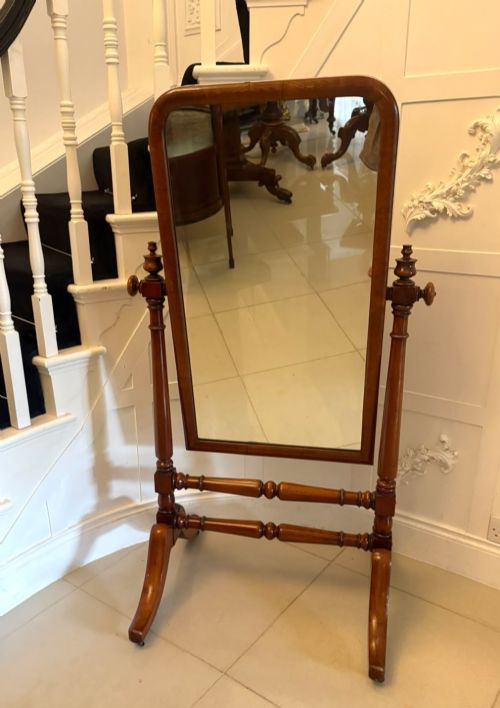
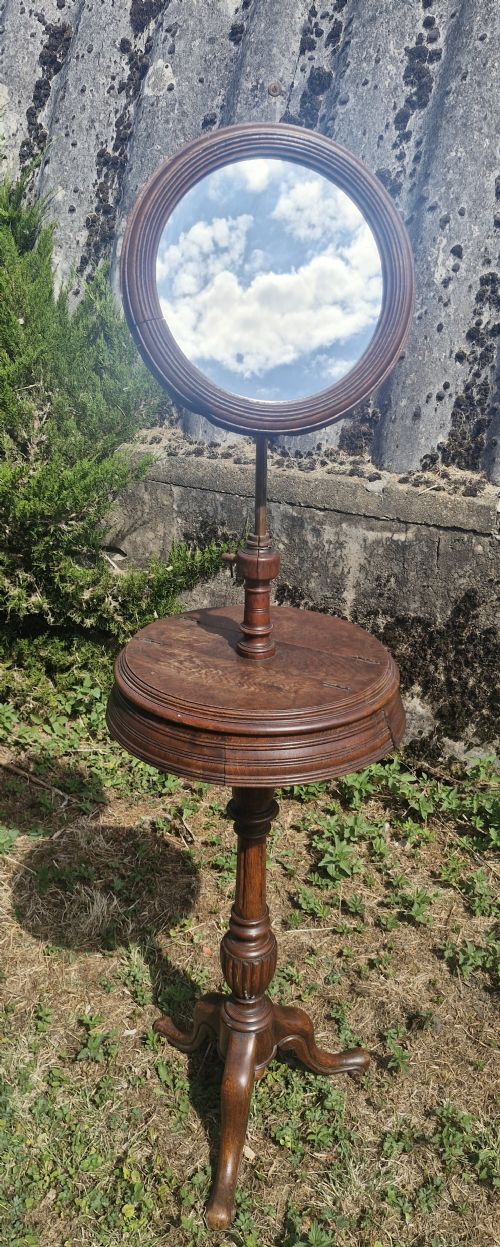
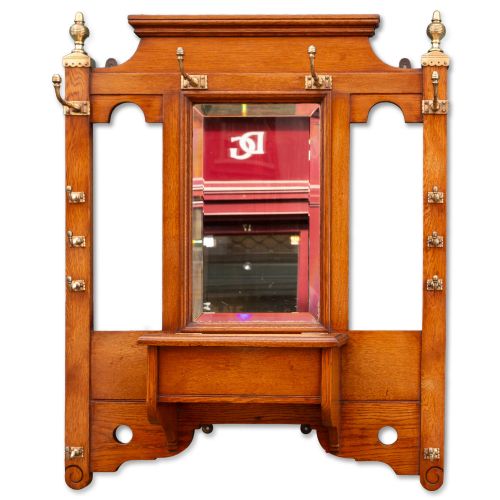
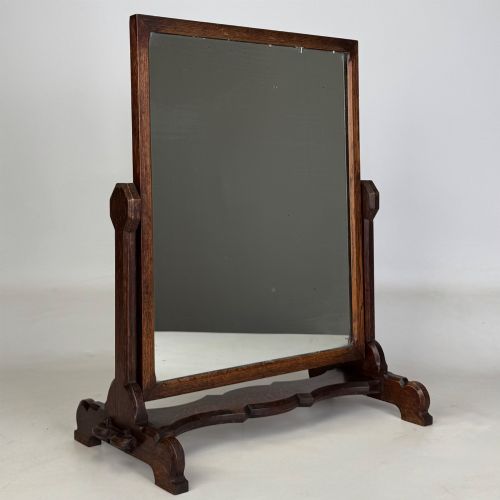
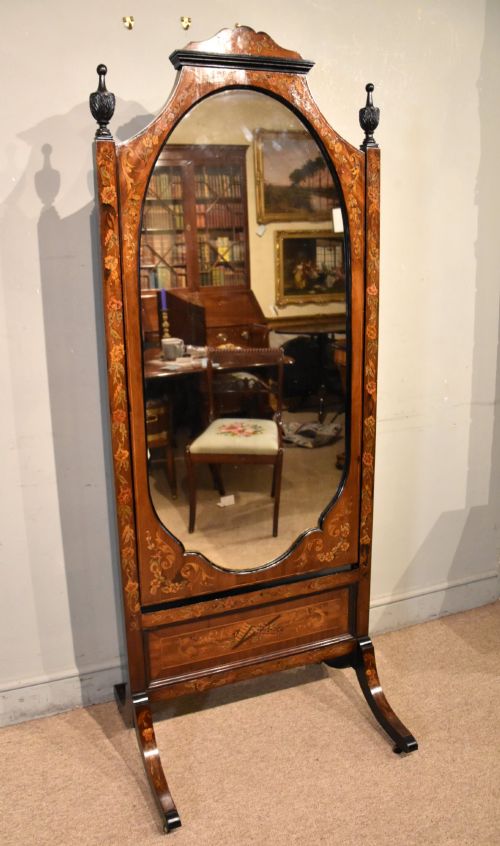
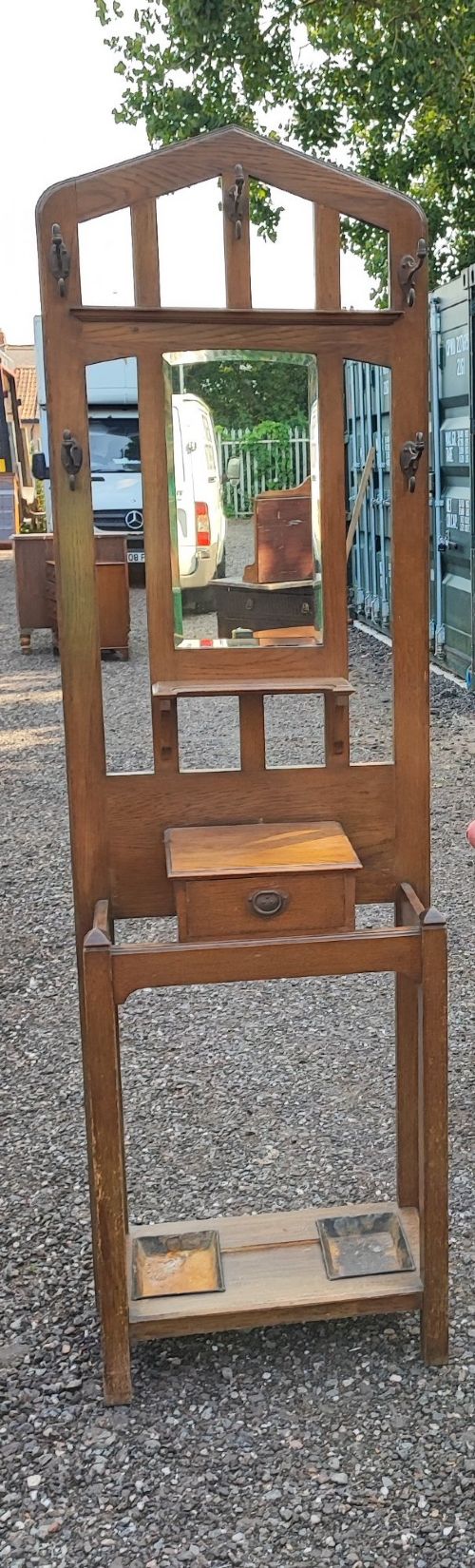
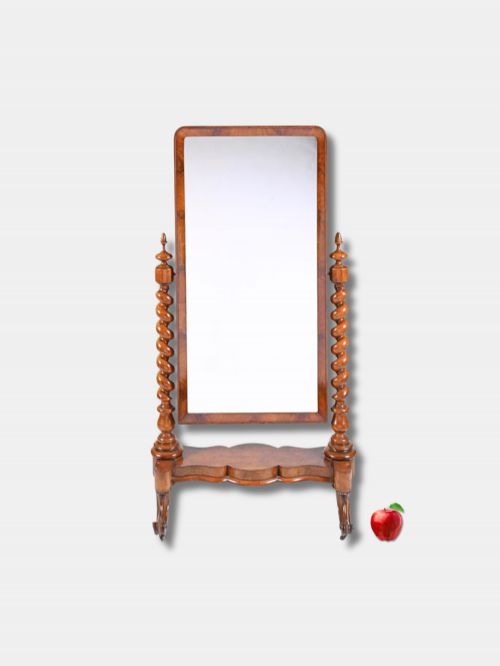
An edwardian wooden mirror stand combines a vertical glass surface with sturdy timber frames designed for domestic spaces like hallways and bedrooms. These items frequently appear alongside related hall furniture and freestanding dressing mirrors from the same era.
The pieces on this page span several decades around the turn of the twentieth century, bringing together Edwardian craftsmanship with earlier Victorian designs. Buyers encounter everything from tall floor-standing cheval glasses to compact table mirrors and multi-purpose hall furniture.
How they were made
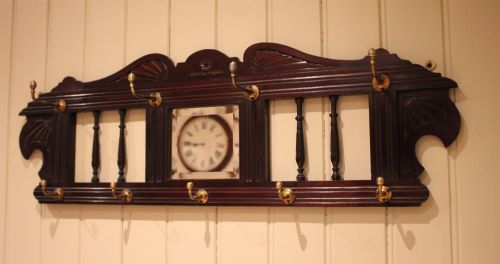
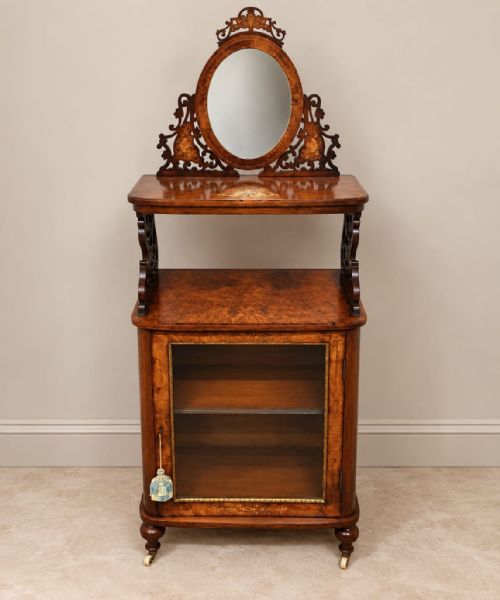
Cabinet makers utilised dense hardwoods such as mahogany, oak, and walnut, often selecting burr veneers to add rich grain patterns to the surface. Frames frequently incorporated brass hooks, bevelled glass plates, and occasionally marble inserts for added durability in daily use.
Joinery techniques relied on solid timber construction, detailed carving, and marquetry stringing to define the decorative styles of the period. Metal hardware such as adjustable brass brackets and iron fittings secured the pivoting mirrors and coat hooks firmly to the wooden frames.
What varies in quality
The calibre of a piece rests largely on the selection of timber, where richly figured burr walnut or carefully matched oak distinguish superior examples from plain utility items. Finer workshops invested greater labour in deep bevelling on the mirror glass and precise hand-carving on the structural woodwork.
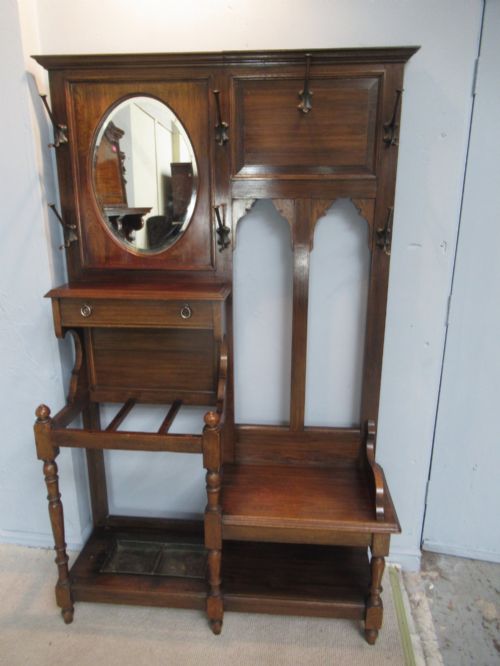
Proportion and architectural balance set the better designs apart, particularly in complex pieces that combine seating, storage, and mirrors into a single frame. The integration of quality brass fittings and solid backing timbers indicates higher standards of construction.
Heal & Sons·James Shoolbred
The Edwardian Wooden Mirror Stand Glossary
- Cheval mirror
- A freestanding full-length dressing mirror suspended on a vertical swivelling frame between two upright pillars. This form allows the glass to tilt to various angles.
- Arts and Crafts
- A design movement prioritising traditional craftsmanship, visible construction, and simple forms. Pieces in this style often feature plain oak and minimal, honest ornamentation.
- Burr walnut
- A highly prized wood grain harvested from the wart-like growths on walnut trees. It yields intricate, swirling patterns used for decorative veneer panels.
- Bevelled plate
- Mirror glass with edges cut and polished at an oblique angle. This traditional technique creates a prismatic framing effect around the reflection.
- Marquetry stringing
- Inlaid strips of contrasting wood fitted into shallow channels on the furniture surface. It forms delicate linear patterns to frame panels and drawers.
Edwardian Wooden Mirror Stand: Frequently Asked Questions
Where should I place an edwardian wooden mirror stand?
These pieces fit naturally in entrance hallways where a mirror and coat hooks serve practical daily routines.
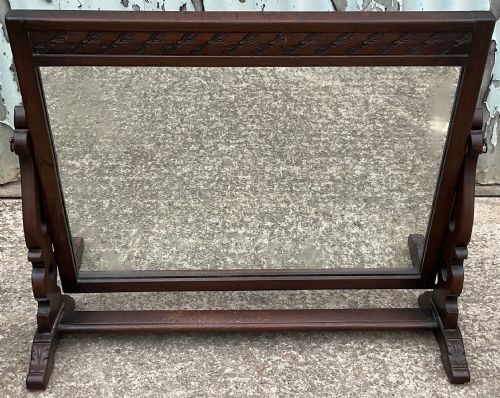
Smaller dressing variants suit bedroom surfaces or dressing tables for personal grooming.
How do I identify an Edwardian piece?
Edwardian items typically feature lighter oak or walnut timbers compared to darker Victorian furniture.
Design influences often lean towards simpler Arts and Crafts lines or refined revival styles.
Can the mirror angle be adjusted?
Many cheval and dressing mirrors use pivoting side screws or brass trunnions to alter the tilt.
This mechanism allows the user to adjust the reflection angle as needed.
What materials are most common?
Oak and mahogany appear frequently across the selection, accompanied by brass hardware and glass.
Some grander examples incorporate burr walnut veneers, marble tops, and iron hooks.