




Walnut Stationery Desk
A walnut stationery desk organises correspondence with fitted compartments and sloping lids, bringing Victorian craftsmanship to the modern study.
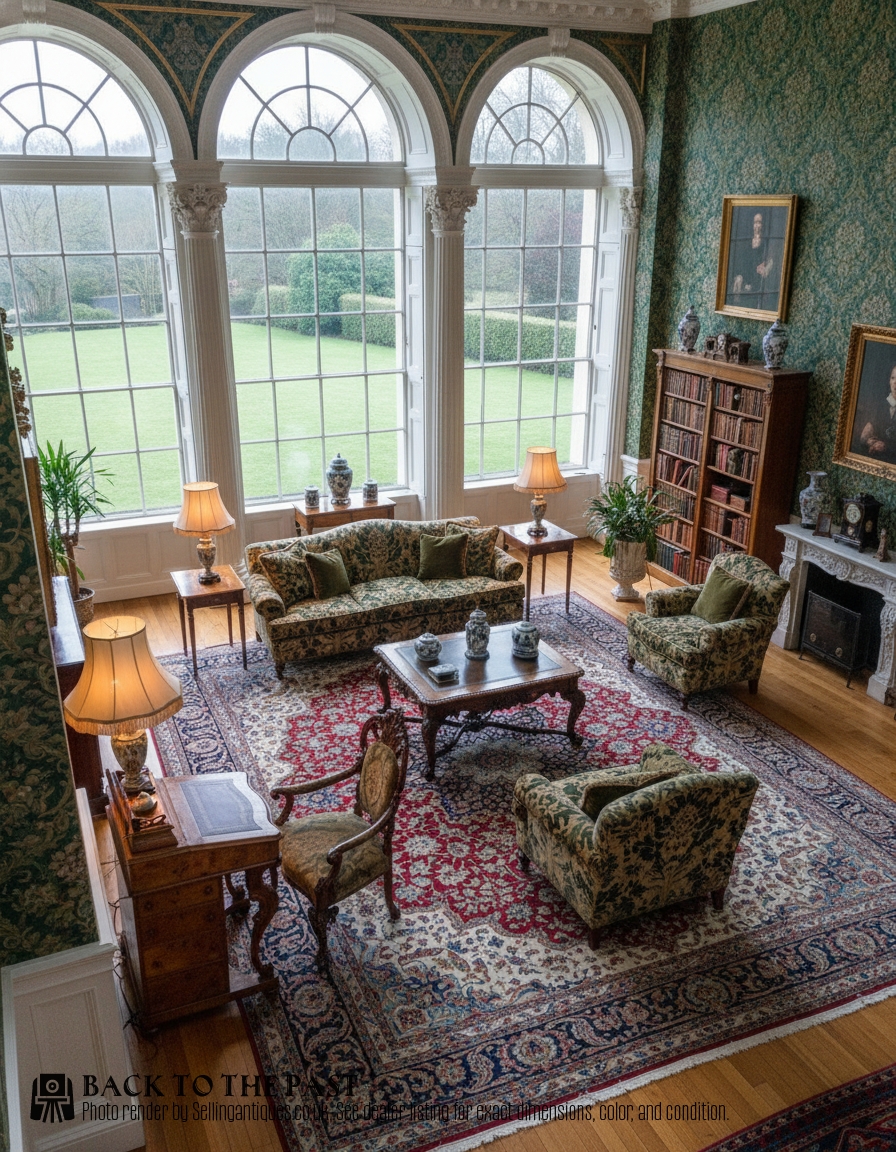
Walnut Stationery Desk
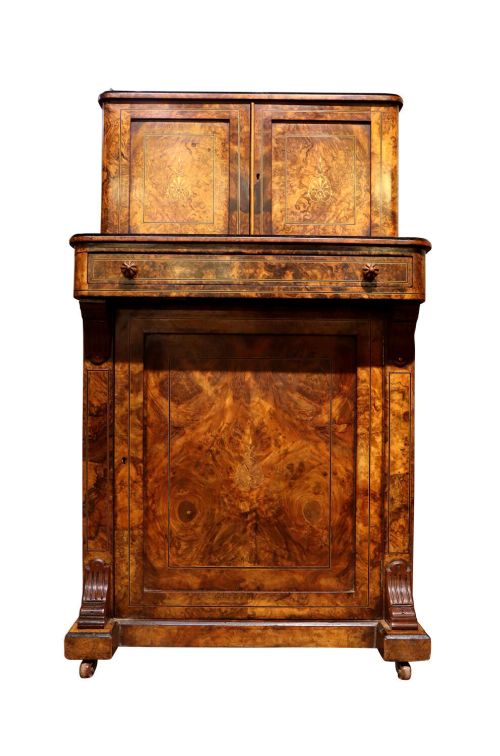
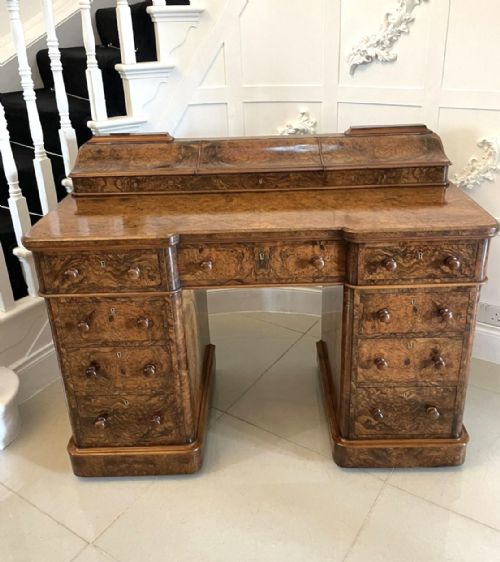
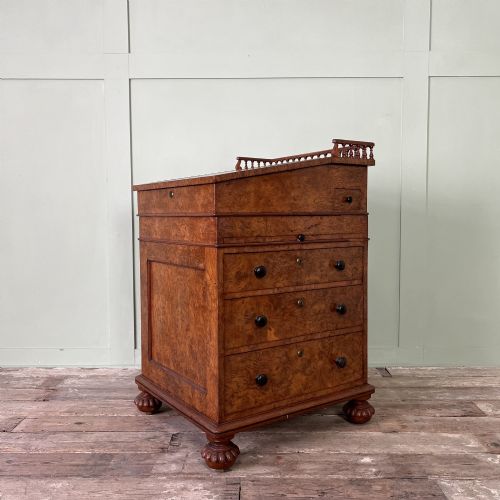
A walnut stationery desk encompasses desktop cabinets, slope-front boxes, and compact Davenport writing tables. These pieces originate predominantly from the Victorian and Edwardian eras, spanning the mid-nineteenth century onward.
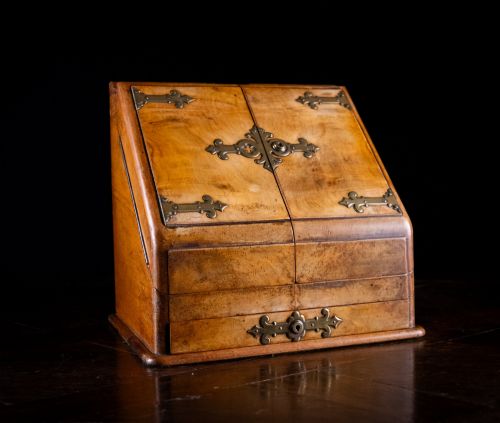
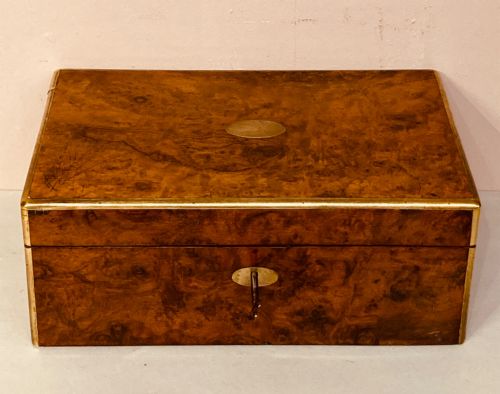
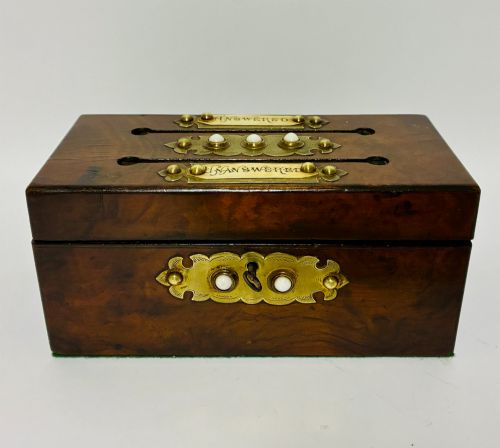
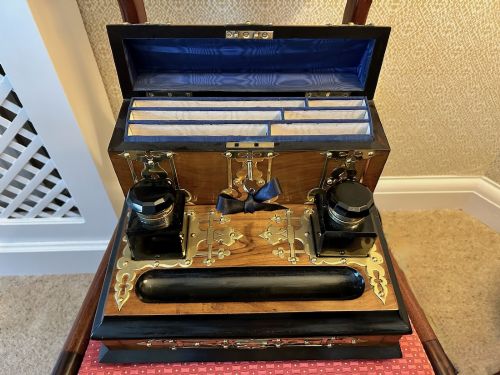
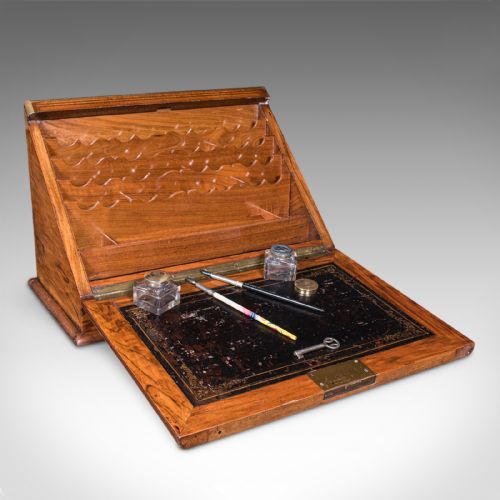
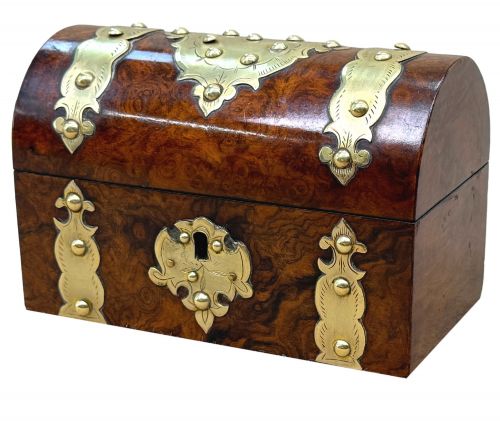
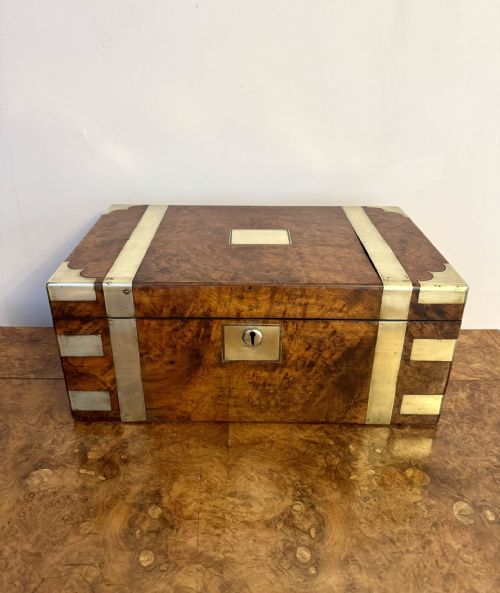
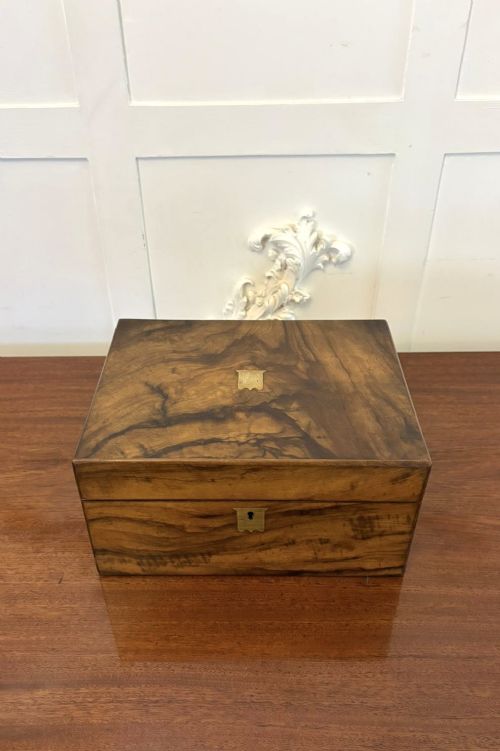
Buyers most frequently encounter desktop stationery boxes and slope-front writing desks fashioned from figured timbers. These objects range from portable lap boxes to substantial freestanding furniture designed for domestic studies.
Materials and Technique
Cabinetmakers utilised walnut and burr walnut veneers over solid secondary timbers to achieve rich, figured surfaces. Brass mounts, corner brackets, and banding reinforce the edges while adding structural contrast.
Interiors often integrate boxwood inlay, leather writing surfaces, and concealed secret drawers secured by quality locks such as Bramah mechanisms. Tunbridge ware and marquetry inlay provide decorative ornamentation across panels and lids.
Secret drawers tucked behind dummy pigeonholes kept secret correspondence safe from prying Victorian eyes.
Judging the Standard
Quality rests in the selection of the burr walnut veneer and the precision of the mitred joints and brass mounts. Superior examples exhibit matched grain patterns across every surface and robust internal fittings.
The sophistication of the mechanism distinguishes finer pieces, particularly in pop-up Davenport desks or metamorphic tables with smooth actions. Maker attribution and original fitted interiors further separate standard production from exceptional works.
Maple & Co·Gillow & Co·Edmund Nye·Asprey
The Walnut Stationery Desk Glossary
- Burr Walnut
- Timber taken from the growth excrescence of a walnut tree, yielding highly figured and swirling grain patterns. It was favoured by Victorian cabinetmakers for decorative veneering.
- Davenport
- A compact writing desk featuring a sloping top above a pedestal of drawers. The form gained immense popularity throughout the nineteenth century.
- Writing Slope
- A portable box with an angled lid that folds down to form a writing surface. Inside compartments store stationery, inkwells, and pens.
- Tunbridge Ware
- Small wooden items decorated with intricate mosaics made from thousands of tiny dyed wood blocks. It originates from the spa town of Tunbridge Wells.
- Secretaire
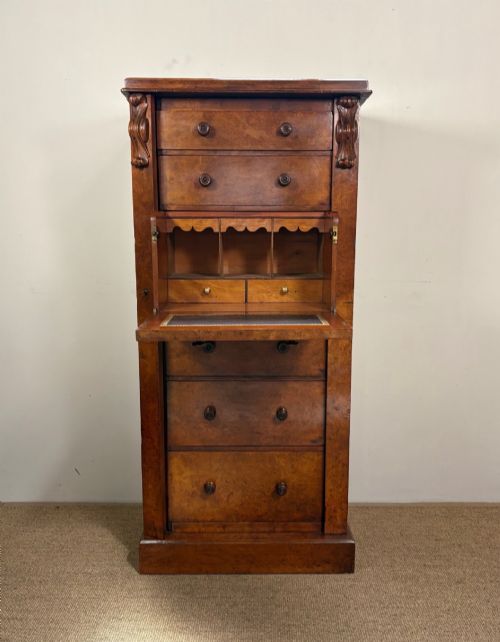
- A desk or cabinet containing a pull-down writing flap that conceals pigeonholes and small drawers. It combines storage with a dedicated writing space.
Walnut Stationery Desk: Frequently Asked Questions
How do I date a walnut stationery box?
Dating relies on observing construction methods, timber choices, and hardware styles. Victorian examples often incorporate brass banding, Bramah locks, and figured burr walnut veneers.
Later Edwardian pieces tend to show lighter satin walnut timbers and simpler decorative schemes. Maker marks or patent stamps also help narrow the chronology.
How were slope desks used historically?
Writing slopes and stationery desks provided a portable or dedicated station for composing letters before the widespread use of flat-topped partner desks. Users stored parchment, sealing wax, and inkwells within the fitted compartments.
The angled lid offered an ergonomic surface for handwriting in an era before built-in household studies became standard.
Where should I place one at home?
These compact desks suit living rooms, studies, or hallways as display surfaces with practical storage. Desktop stationery boxes sit comfortably on modern sideboards or writing tables.
Freestanding Davenport desks function well in smaller home offices where floor space is limited. Their finished backs allow placement away from walls.
What is a pop-up Davenport?
A pop-up Davenport is an ingenious Victorian variation featuring an upper stationery compartment that rises automatically when the writing lid is opened. This mechanism maximises storage without increasing the footprint of the desk.
Makers concealed complex internal springs and levers within the walnut housing to achieve this space-saving motion.