



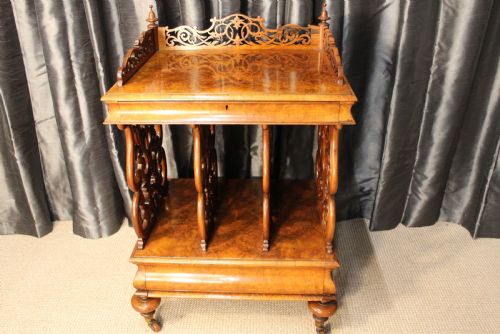
Walnut Sheet Music Storage
Walnut sheet music storage brings together timber and song, offering compact cabinets and canterburies designed to keep scores neat.
Walnut Sheet Music Storage
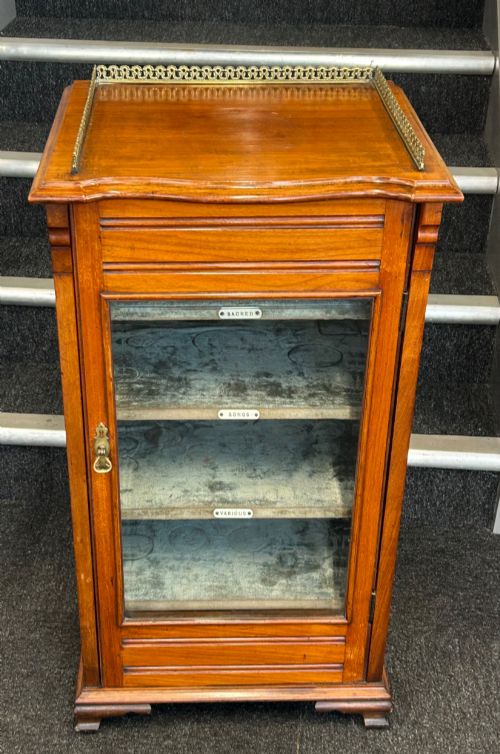
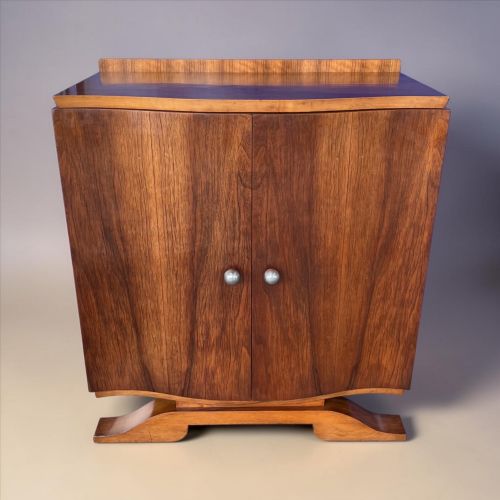
Walnut sheet music storage encompasses music cabinets, canterburies, magazine racks, and piano stools. These pieces originate primarily from the Victorian and Edwardian eras, alongside Regency and Art Deco examples.
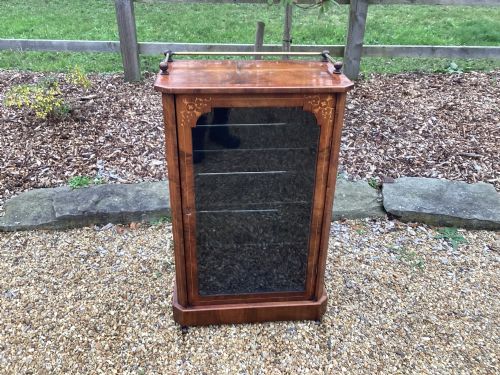
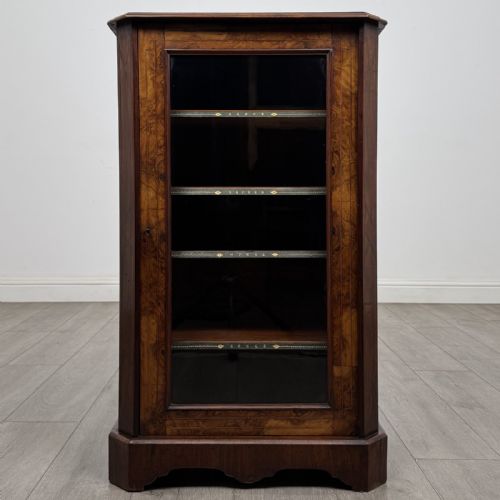
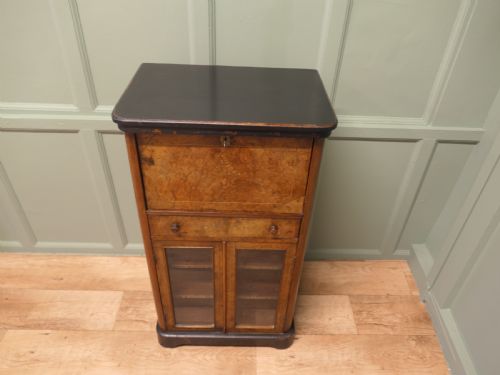
A buyer examining this selection encounters music cabinets and canterburies in standard walnut, burr walnut, and black walnut. Forms range from slim freestanding cabinets to glazed display cases and fall-front piano stools.
Materials and construction
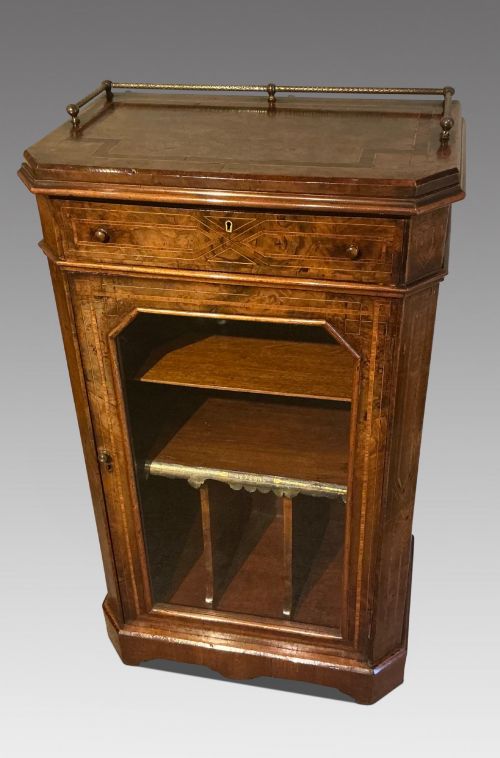
Construction relies heavily on walnut and burr walnut timbers, often complemented by secondary woods such as mahogany. Makers enhanced timber surfaces with decorative inlay.
Metal and glass components appear frequently in these pieces. Brass galleries, glass doors, and ceramic elements provide both structural detail and functional support.
Walnut Sheet Music Storage Retail Price Guide 2026
Typical asking prices for walnut sheet music storage among the pieces listed under this phrase on Sellingantiques today, from the lower quarter to the upper quarter. They describe what is for sale here now, not the wider market.
Materials recorded across the selection include solid wood, burr walnut veneers, brass, glass, ceramic, and fabric upholstery.
Defining quality
Quality rests on the selection of timber figures, particularly the grain variation found in burr walnut veneers. Finer pieces display careful book-matching and precise inlay work.
The integration of hardware and secondary materials distinguishes the standard of manufacture. Well-executed brass galleries, glazed panels, and fitted internal filing drawers elevate the construction.
The Walnut Sheet Music Storage Glossary
- Burr walnut
- A veneer taken from the warted growths on walnut trees, prized for its swirling, highly figured grain patterns.
- Canterbury
- A low stand featuring partitions, originally designed to hold sheet music or newspapers within easy reach.
- Fall-front
- A hinged panel that drops forward to reveal interior storage or a writing surface, common on specific music cabinets and piano stools.
- Brass gallery
- A delicate metal railing fitted to the top surface of a cabinet or table to prevent items from sliding off.
Walnut Sheet Music Storage: Frequently Asked Questions
What is a music cabinet?
A music cabinet is a specialised piece of furniture designed specifically to hold sheet music and scores. They often feature multiple shallow drawers or internal filing slots to keep fragile paper organised.
These pieces were standard in Victorian and Edwardian drawing rooms where home music-making was popular. Today, they serve equally well for storing modern sheet music or organising paperwork.
How do I spot a canterbury?
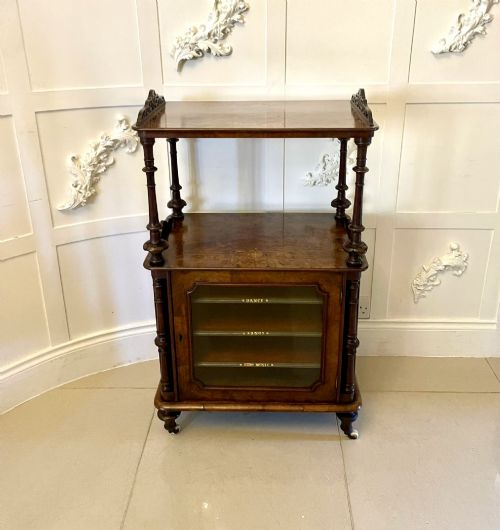
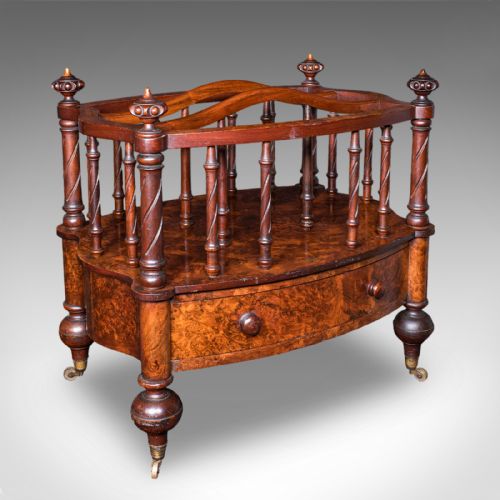
A canterbury is characterised by upright vertical divisions forming open compartments. These sections are intended for standing sheet music, folios, or magazines upright.
Many examples also incorporate a low drawer beneath the main compartments for smaller items. They sit on short legs or castors for easy movement around a room.
What is burr walnut?
Burr walnut is a specialised wood veneer derived from the knotty burls of walnut trees. It yields complex, swirling patterns that decorators valued for its ornamental appearance.
Cabinets utilising this wood often feature symmetrical veneer patterns on their primary doors. This material signals a more decorative approach to cabinet making.
Can these cabinets hold books?
Many music cabinets feature internal shelving or filing spaces suitable for slim volumes and folios. However, the shallow depth of standard music drawers may limit storage for larger books.
Glass-fronted Edwardian and Victorian variants offer visible display space similar to small bookcases. Assessing the internal height and depth of each compartment ensures proper fit for specific items.