
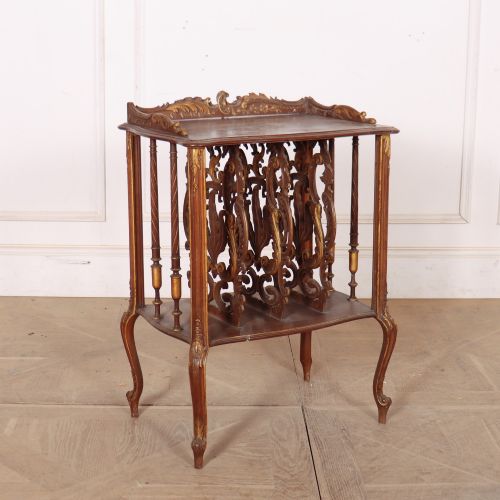


Walnut Sheet Music Canterbury
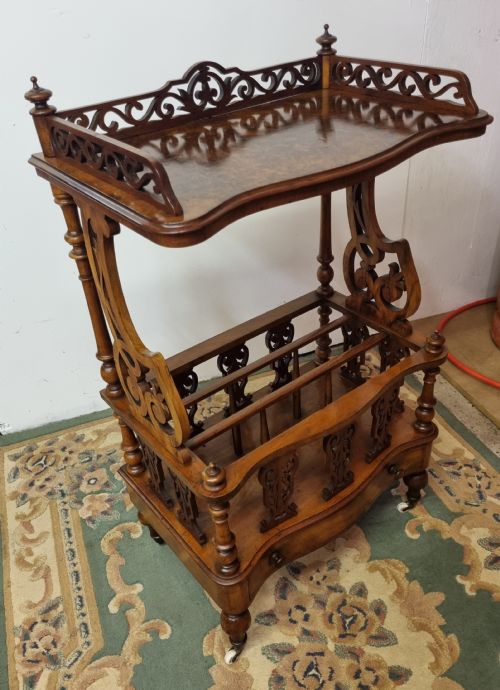
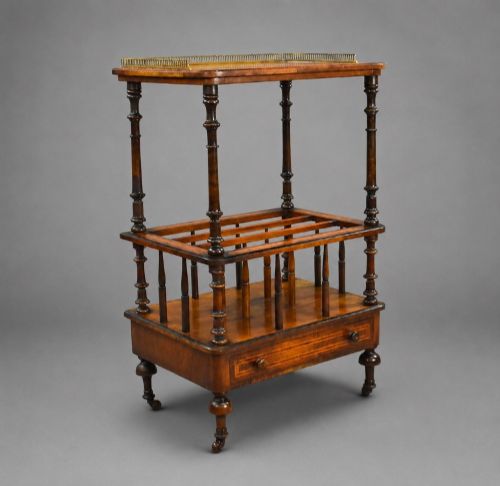
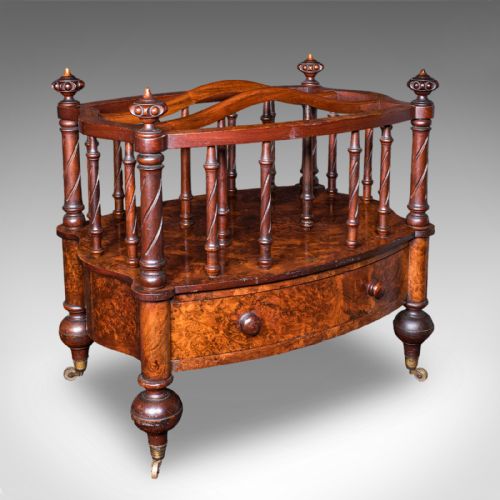
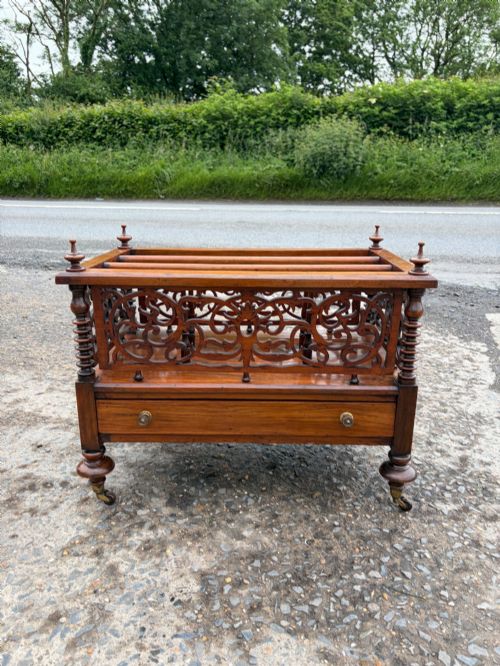
A walnut sheet music canterbury holds folios and scores off the floor while adding rich timber grain to a room.
Walnut Sheet Music Canterbury
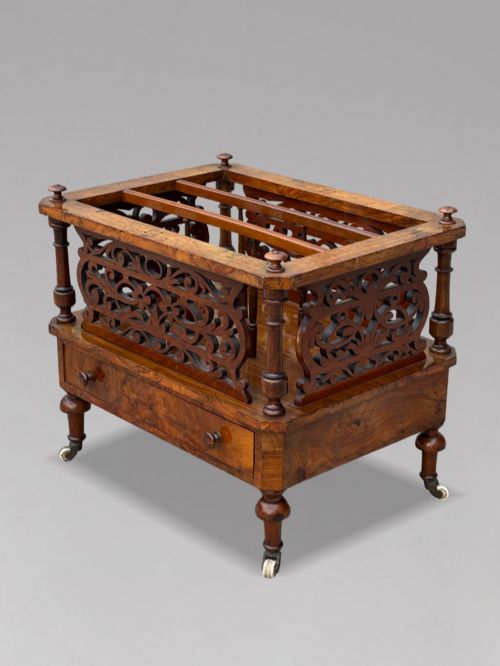
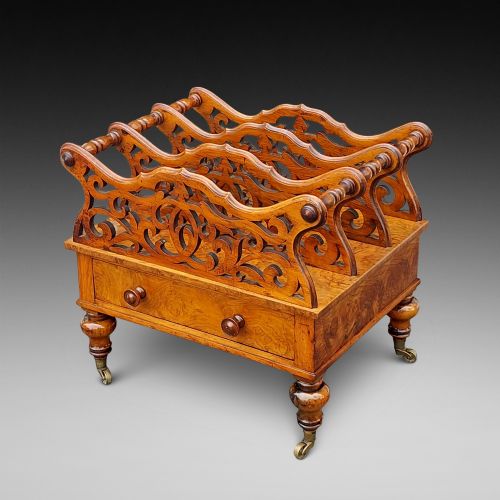
A walnut sheet music canterbury is a dedicated receptacle designed originally to hold scores, folios, and periodicals near a piano or within a sitting room. These pieces combine divided vertical partitions for sheet music with lower drawers and occasional tiers, serving both functional storage and display purposes.
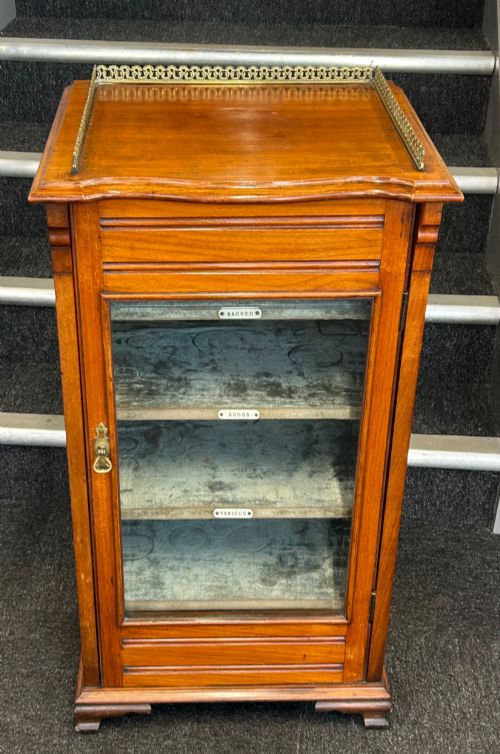
Victorian variants frequently showcase rich burr walnut veneers, serpentine front profiles, and intricate marquetry or wood inlay. Edwardian pieces often lean towards enclosed music cabinets and slimmer freestanding formats that suit more compact spaces while maintaining the primary walnut vocabulary.
What varies in quality
The distinction between standard examples and superior pieces rests largely in the choice and matching of the burr walnut veneer across the top and front panels. Finer constructions exhibit complex serpentine shaping, crisp marquetry, and delicate pierced fretwork rather than plain flat surfaces.
Hardware and secondary detailing further elevate a piece, seen in finely turned supports, original brass castors, and integrated dovetailed drawers with clean interior timbers. The overall proportion and architectural harmony of combined whatnots and tiered structures also dictate the standing of an individual item.
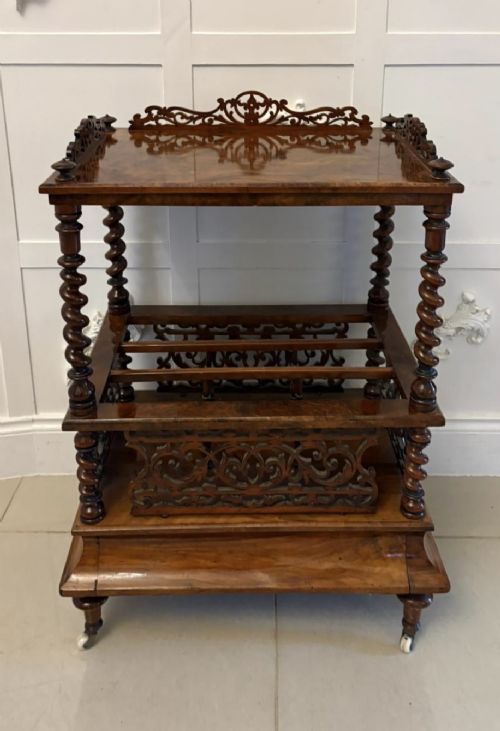
The furniture forms on this page range from open partitioned music racks and multi-tiered whatnots to enclosed glass-fronted cabinets.
Edwards and Roberts·Shoolbred
The Walnut Sheet Music Canterbury Glossary
- Canterbury
- A low freestanding stand fitted with upright partitions for holding sheet music, folios, or periodicals. Named after the Archbishop of Canterbury who reportedly commissioned the first such rack.
- Burr walnut
- A veneer sliced from the growth warts or burls of walnut trees, prized for its swirling, highly figured grain patterns. It provides a decorative surface on Victorian table tops and cabinet fronts.
- Whatnot
- An open set of multi-tiered shelving units designed for displaying small ornaments and books. These are frequently combined with canterbury bases in nineteenth-century furniture.
- Marquetry
- The art of applying small pieces of veneer to a structure to form decorative patterns and pictures. Makers used various contrasting woods to create floral or geometric motifs.
- Fretwork
- Ornamental woodwork pierced with patterns using a fret saw. This technique appears on the vertical dividers and galleries of many walnut stands.
Walnut Sheet Music Canterbury: Frequently Asked Questions
What is a walnut sheet music canterbury used for?
These pieces were originally built to store sheet music, folios, and song books neatly beside a piano or in a formal parlour. Today they function equally well as magazine racks or decorative occasional tables in living spaces.
The partitioned upright sections keep soft-cover publications upright and organised, while lower drawers provide extra storage for smaller items. Tiered versions also offer display space for decorative objects on top.
How do I tell Victorian from Edwardian pieces?
Victorian walnut canterburys tend to feature rich burr veneers, serpentine shaping, turned supports, and elaborate marquetry inlay. They often incorporate open partitioned racks and whatnot tiers designed for prominent display.
Edwardian pieces frequently take the form of enclosed music cabinets with glazed doors or slimmer profiles. Their construction often appears lighter and more restrained compared to the heavier proportions of mid-Victorian furniture.
Where should I place a canterbury at home?
A canterbury suits placement beside a piano, beside a reading chair, or against an empty wall in a study or sitting room. Their finished backs and freestanding nature allow them to sit away from walls if desired.
Care should be taken to keep walnut furniture away from direct sunlight and strong heat sources to protect the polished wood finish and delicate veneer from drying out.
What is a whatnot combination?
A whatnot combination integrates open display shelving above or beside the music storage compartments. This multi-tier design allows the furniture to serve as both a practical rack and a display stand for ornaments.
These combined forms are particularly characteristic of the Victorian period, where furniture was often expected to perform multiple decorative and utilitarian roles within a single room.