





Walnut Secretaire Cabinet
Walnut secretaire cabinets combine architectural cabinetry with hidden writing drawers, offering an ingenious surface for correspondence that folds away when not in use.
Walnut Secretaire Cabinet
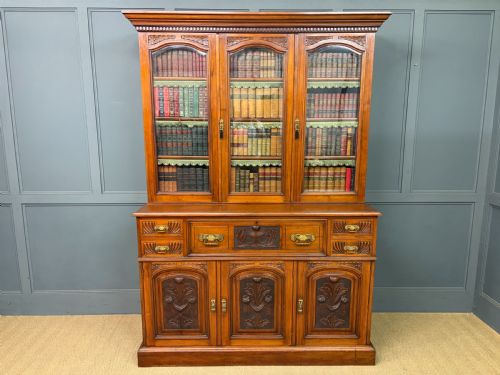
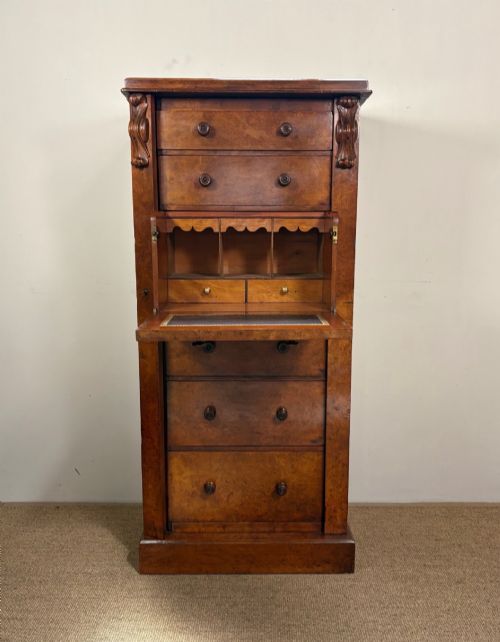
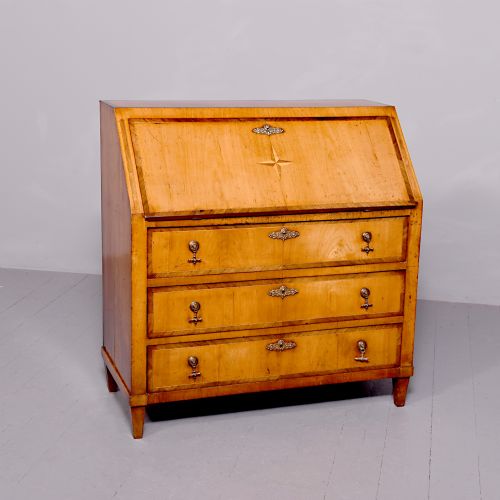
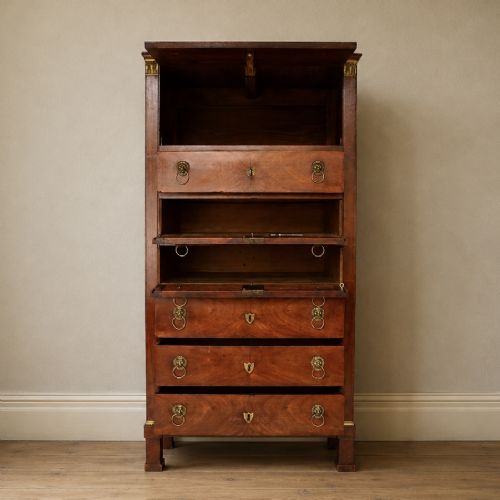
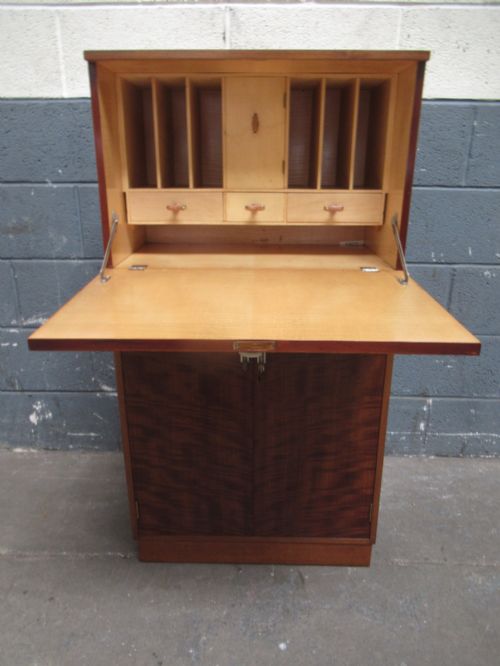
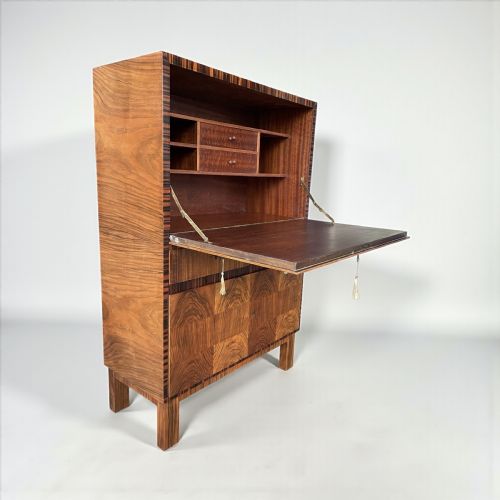
A walnut secretaire cabinet serves multiple functions, operating simultaneously as a substantial storage piece, a bookcase, and a fold-down or pull-out desk. These items span periods from the early eighteenth century through the Victorian era into Art Deco, each adapting the form to contemporary tastes in domestic furniture.
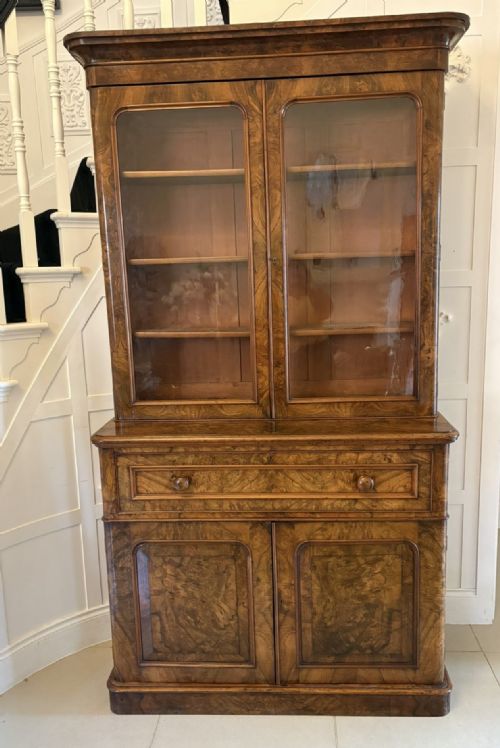
The most common examples on this page are eighteenth-century George I bureau bookcases and nineteenth-century Victorian or French secretaire chests and abattants. Pieces range from compact table models and tall chests to monumental cabinets topped by glazed shelving units.
Makers and workshops across Britain, France, Holland, and Germany utilised walnut for its rich grain, often pairing the primary timber with oak interiors, brass hardware, and specialised writing surfaces.
Materials and construction methods
Makers built the primary carcasses of these cabinets using solid oak or pine for internal structure, applying figured walnut, burr walnut, or marquetry veneers to the exterior surfaces. Cabinetmakers selected matching timber veneers for drawer fronts and fall-front writing panels to create symmetrical grain patterns.
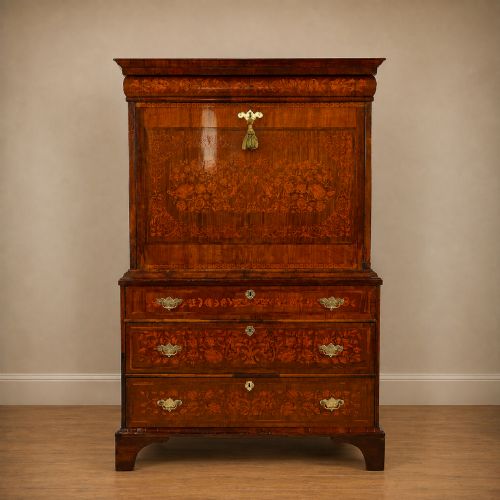
Interiors utilised secondary woods alongside leather writing inserts, brass locks, and glass panes for upper bookcase doors. Finer examples integrated intricate parquetry, satinwood stringing, ormolu mounts, and hand-cut pigeonholes within the secretaire drawer.
Joinery techniques included hand-cut dovetails for drawers and framed panel construction for doors and carcass backs, ensuring stability across large expanses of veneered timber.
Listings span multiple centuries, incorporating eighteenth-century George I designs, nineteenth-century Victorian and French Empire styles, and twentieth-century Art Deco forms.
Indicators of quality
Quality depends heavily on the selection and matching of the walnut veneers, with burr and figured grain patterns commanding higher craftsmanship standards than plain timber. The complexity of the internal fit-out, including hidden compartments, marquetry inlay, and carved details, separates standard production from exceptional commissions.
Structural integrity of the writing flap or drop-front mechanism indicates overall build quality, as does the condition of the original brass handles, locks, and internal leather inserts. Continental pieces may incorporate marble tops and gilt bronze mounts that reflect the specific regional cabinetmaking standards of their period.
Gillows·Adriano Brambilla·Gregory And Co
The Walnut Secretaire Cabinet Glossary
- Escritoire
- A writing cabinet or desk, often fitted with a drop-front panel enclosing small drawers and pigeonholes.
- Secrétaire à abattant
- A tall vertical cabinet with a hinged fall-front writing surface that conceals an internal compartment when closed.
- Marquetry
- Decorative patterns formed by inserting pieces of contrasting veneer into a wood foundation to create floral or geometric designs.
- Burr walnut
- Wood taken from a tree growth or burl, yielding swirling, highly figured grain patterns prized for decorative veneer panels.
- Bureau bookcase
- A dual-purpose furniture form combining a lower writing desk with an upper glazed shelving cabinet.
Walnut Secretaire Cabinet: Frequently Asked Questions
What is a secretaire cabinet?
A secretaire cabinet is a piece of furniture featuring a concealed writing desk surface, typically hidden behind a drop-front panel or a pull-out drawer.
These compartments open to reveal small drawers, compartments, and a leather or wood writing insert for correspondence.
How do I tell an 18th-century piece from a Victorian one?
Eighteenth-century examples, such as George I or Queen Anne pieces, often display figured walnut veneers, herringbone banding, and subtle proportions.
Victorian cabinets tend to be heavier, sometimes utilising burr walnut, ebonised details, or carved crests, while Art Deco versions show simplified geometric forms from the 1930s.
Were these used for writing letters?
Yes, these cabinets served as personal writing desks for managing correspondence, keeping accounts, and storing private documents.
The internal compartments held stationery, inkwells, and letters away from dust and public view when the flap was locked.
How should I care for walnut veneer?
Walnut veneer requires stable indoor humidity levels away from direct sunlight and heat sources to prevent the wood from drying or warping.
Occasional dusting with a soft, dry cloth and minimal treatment with appropriate furniture wax maintains the finish.