
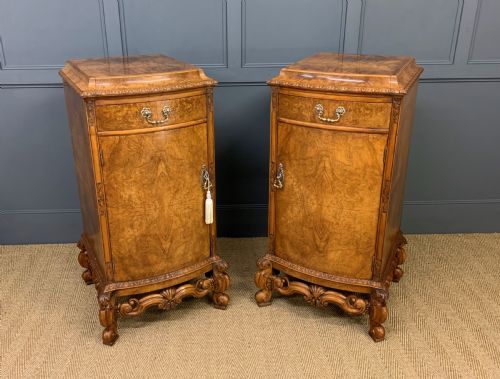

Walnut Pedestal Cupboards
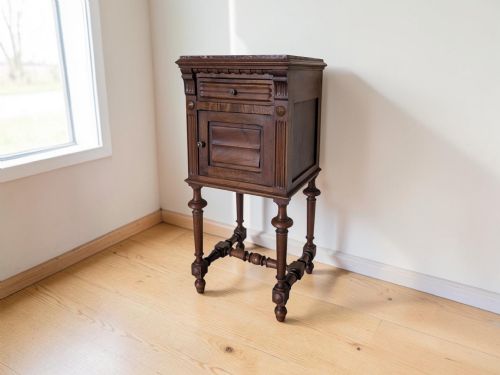
Walnut pedestal cupboards are solid timber storage units offering rich grain and compact proportions, ideal for bedside or salon use.
Walnut Pedestal Cupboards
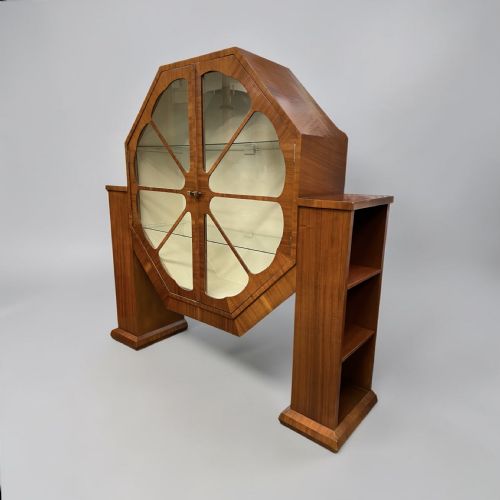
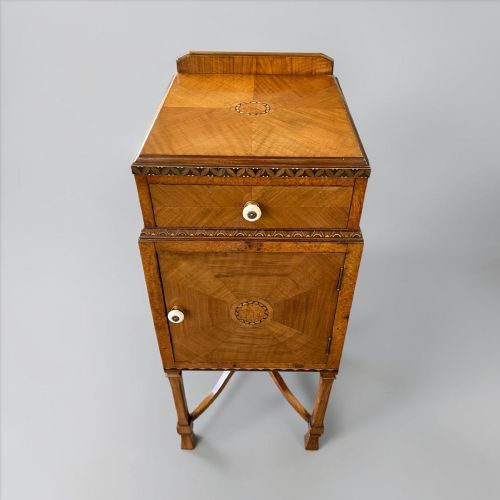
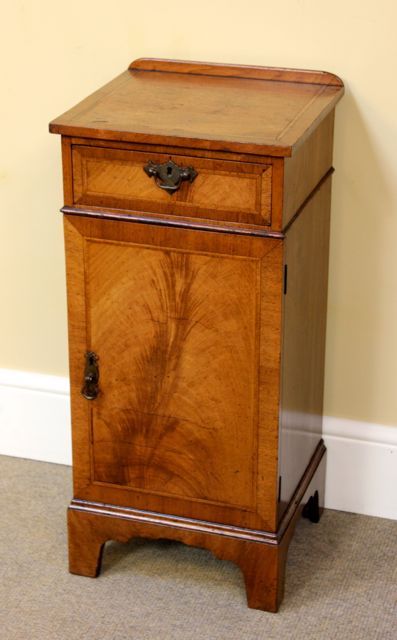
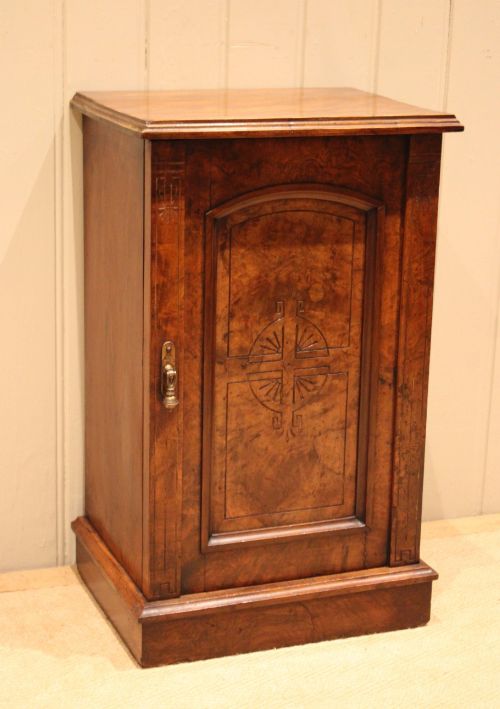
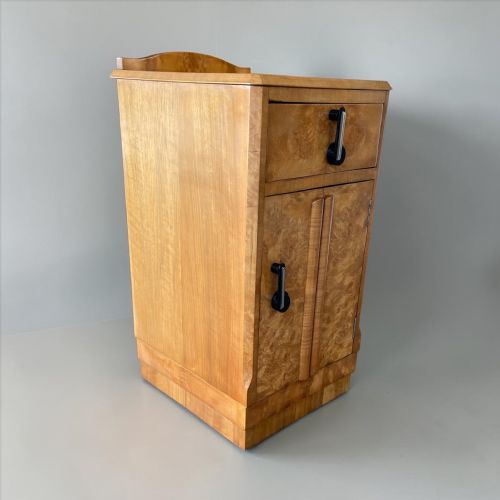
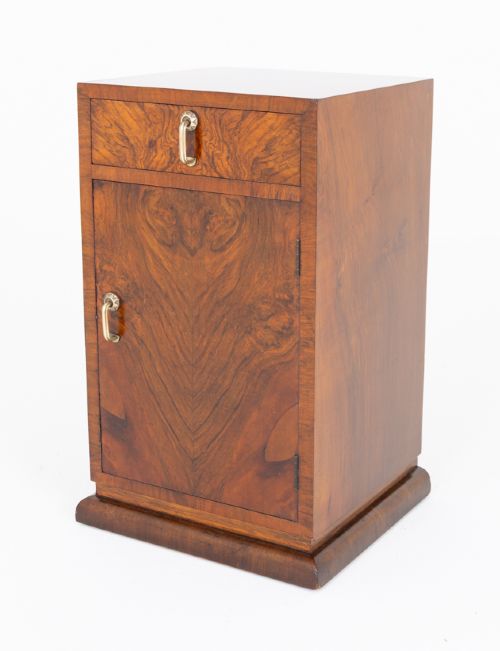
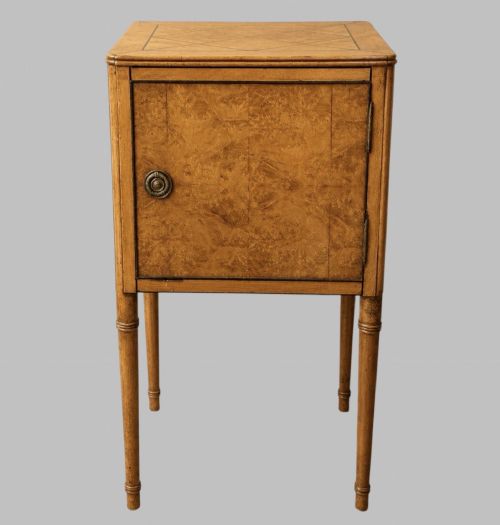
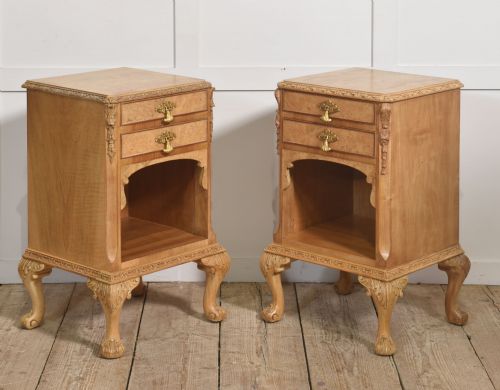
Walnut pedestal cupboards are compact standalone storage pieces designed primarily for domestic utility, frequently taking the form of bedside cabinets, night tables, and cylindrical lockers. The forms range from simple Victorian enclosures to elaborate Art Deco designs and revival pieces.
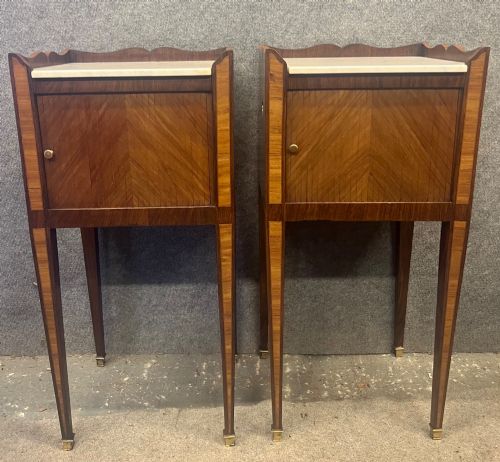
Most examples encountered here originate from the nineteenth and twentieth centuries, alongside occasional eighteenth-century Georgian and George I items. These pieces frequently appear in pairs, particularly within twentieth-century production.
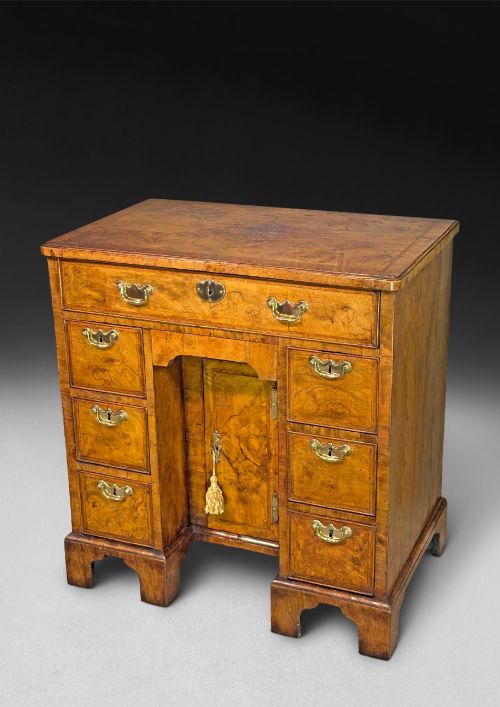
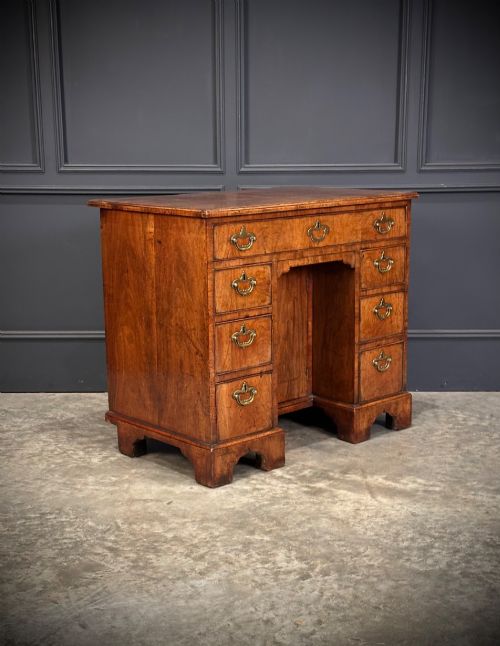
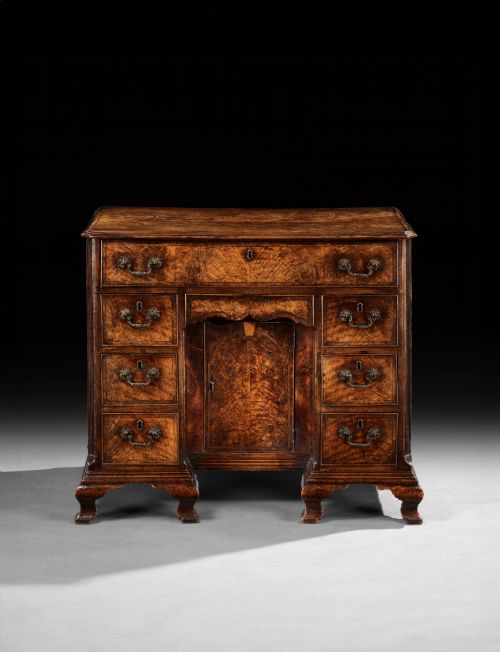
Beyond standard cupboards, the category encompasses related pedestal forms such as kneehole desks and display cabinets sharing the same timber vocabulary.
Materials and construction
Makers utilised walnut and burr walnut veneers applied over secondary timbers like oak, selecting figured sections to create striking patterns on door fronts and tops. Brass hardware, marble tops, and glass elements appear selectively across Victorian and continental pieces.
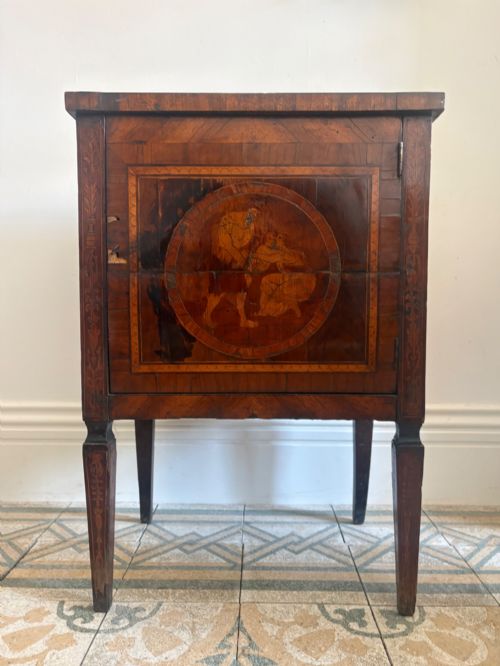
Construction techniques combine traditional joinery with curved veneering, particularly evident in cylindrical Victorian cabinets and streamlined Art Deco forms. Inlaid marquetry and contrasting satinwood accents further distinguish finer examples from standard production.
Listings span periods from the eighteenth century to the 1940s, featuring materials including marble, brass, and burr walnut.
Assessing quality and execution
Quality rests principally in the selection and matching of the timber veneer, where continuous burr patterns across doors elevate a piece significantly above plain or patched surfaces. The integrity of internal fittings and the crispness of carved or inlaid details also separate ordinary utility items from finer workshop output.
Proportion and structural balance dictate the appeal of these cupboards, with well-scaled pedestals maintaining visual harmony regardless of whether they follow Georgian revivalism or modernist Art Deco lines.
Walter Carter Harrods·Maurice Adams·Harry and Lou Epstein
The Walnut Pedestal Cupboards Glossary
- Burr walnut
- A figured timber obtained from the wart-like growths on walnut trees, prized for its swirling, highly decorative grain patterns. It is typically sliced into thin veneers for cabinet fronts.
- Kneehole desk
- A compact desk or dressing table featuring a central recess for the user's knees, flanked by pedestals of small drawers or cupboards. Georgian and eighteenth-century examples frequently utilise figured walnut.
- Marquetry
- The art of applying pieces of veneer to a structure to form decorative patterns and pictures. Italian and French pieces often employ this technique on cabinet doors.
- Pedestal cupboard
- A freestanding, column-like enclosed cabinet designed to stand beside a bed or desk. They provide compact vertical storage with a single door or banks of drawers.
- Cylindrical
- Having the form of a cylinder, describing bedside cabinets with curved, circular doors that enclose the interior space seamlessly. This shape is especially prevalent in Victorian designs.
Walnut Pedestal Cupboards: Frequently Asked Questions
What is a walnut pedestal cupboard?
A walnut pedestal cupboard is a small, enclosed freestanding cabinet made from walnut timber, designed to provide convenient storage beside a bed or in a corner.
These pieces typically feature a single door enclosing shelves or a small compartment, often complemented by a flat top surface for a lamp or decorative object.
How do I date a walnut cabinet?
Dating relies on observing construction methods, timber preparation, and stylistic markers such as Victorian turned legs or geometric Art Deco veneering.
Hardware styles, secondary woods, and secondary decorative details like marble inserts also provide reliable clues to the decade of manufacture.
Are these cupboards suitable for modern bedrooms?
Their compact dimensions make walnut pedestal cabinets exceptionally well-suited as bedside tables or small accent pieces in contemporary interiors.
They offer practical enclosed storage while introducing rich natural timber tones and historical character to a room.
What is the difference between burr walnut and plain walnut?
Burr walnut is cut from irregular tree growths that produce intricate, swirling grain patterns, whereas plain walnut displays a more uniform, straight grain.
Cabinets faced with burr walnut veneers were generally reserved for higher-status furniture due to the decorative impact of the timber.