


Walnut Open Shelf
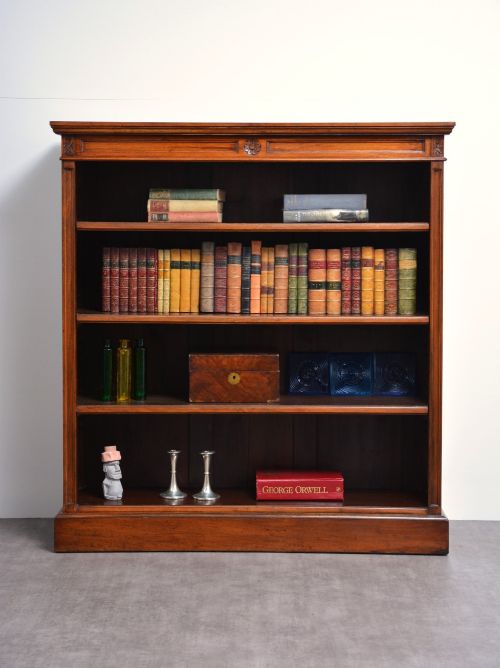
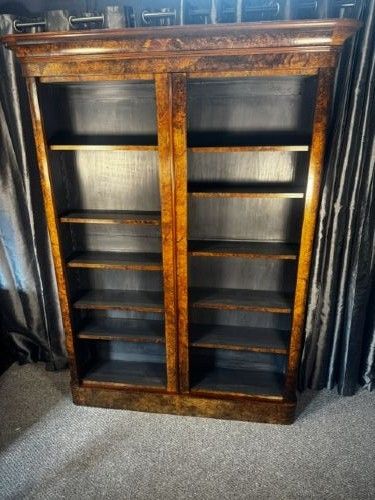
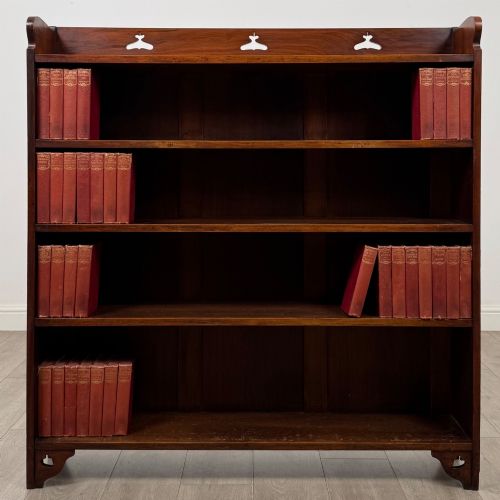
A walnut open shelf brings warmth and accessible storage to a room, offering a practical display for books and cherished objects.
Walnut Open Shelf
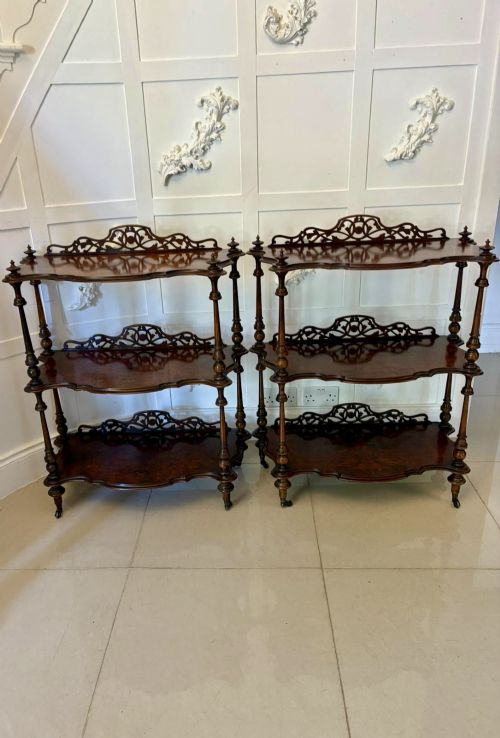
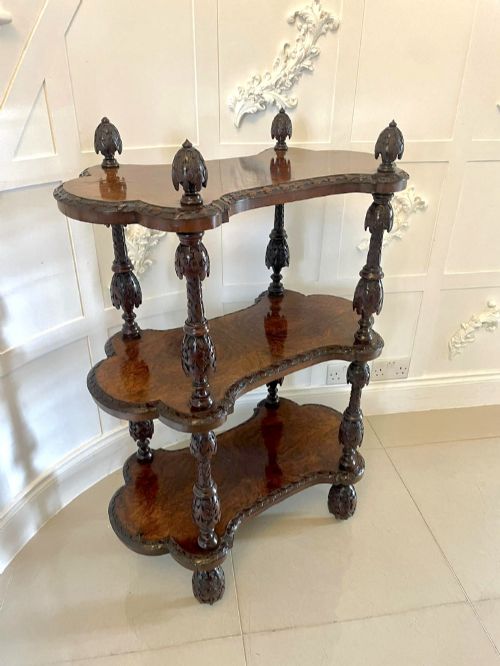
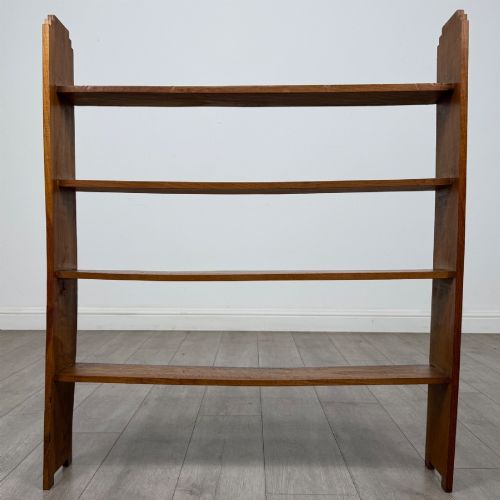
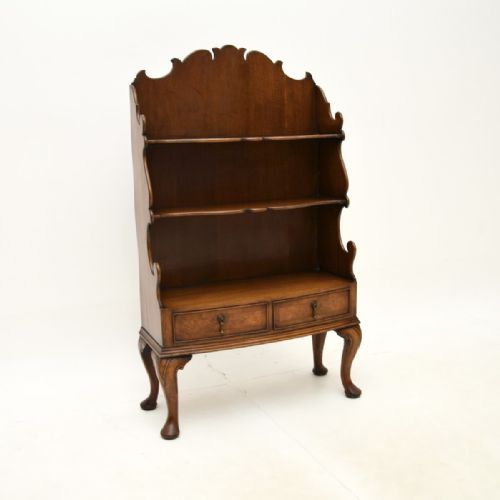
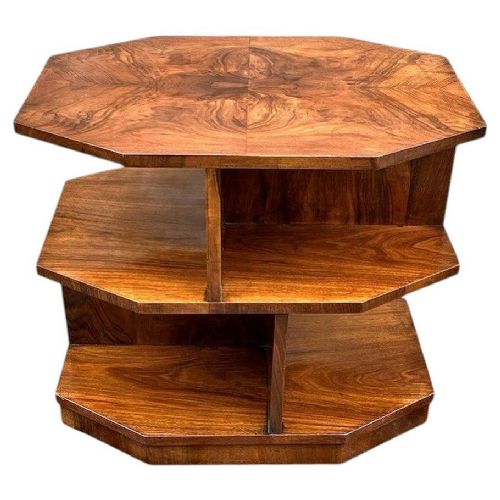
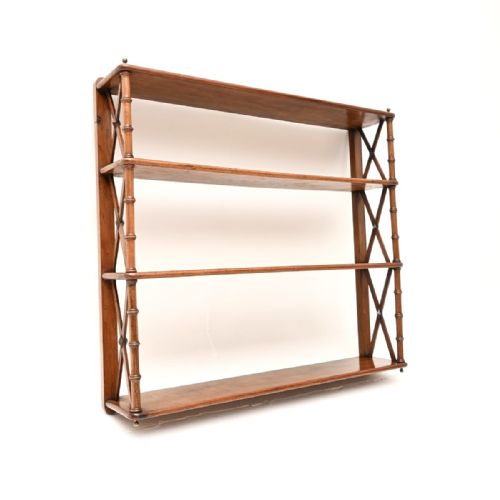
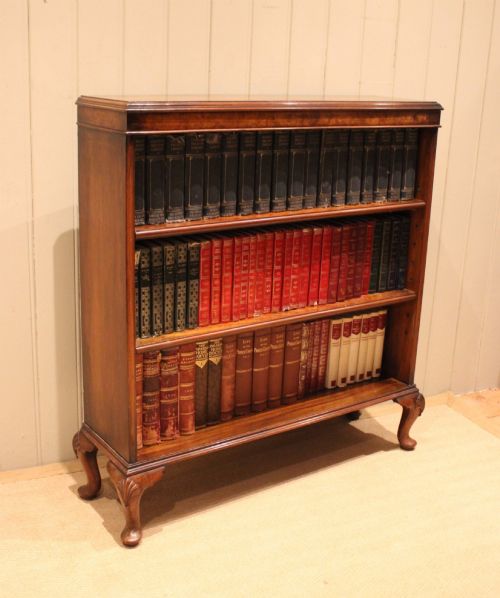
A walnut open shelf serves primarily as a bookcase, whatnot, etagere, or credenza, designed to hold books and display decorative items without restricting doors. These pieces emerge from the nineteenth and early twentieth centuries, spanning Victorian, Edwardian, and Art Deco periods.
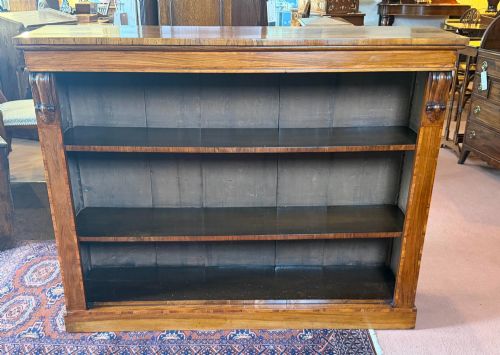
The most common formats met on this page are low open bookcases with adjustable shelves and multi-tiered whatnots or etageres. Makers from these eras constructed them to fit domestic libraries, drawing rooms, and studies.
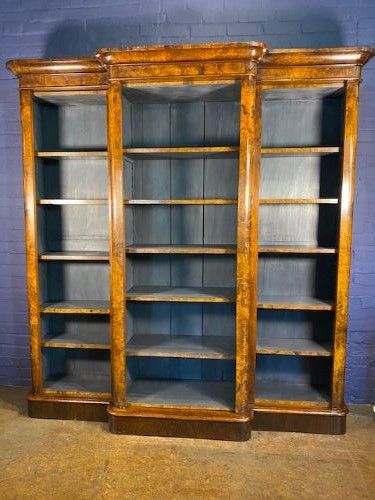
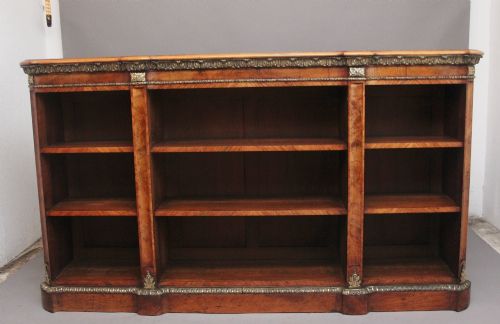
Styles range from straightforward Georgian and William IV proportions to elaborate French Provincial influences and Japonisme details. Buyers find both compact corner cabinets and large breakfront library sections tailored to varied interior layouts.
How they were made
Cabinet makers utilised solid timber such as pine for structural frames and secondary carcases, overlaid with figured walnut and burr walnut veneer to create striking grain patterns on visible surfaces. This technique maximised the visual impact of rich timber while maintaining structural stability.
Metal mounts in brass and ormolu, alongside glass panels and gilt metal, accented credenzas and etageres, particularly in pieces following French design manners. Turned legs, mirrored backs, and inlaid marquetry further distinguished the construction of finer examples.
Some nineteenth-century etageres were built light enough to be carried from parlour to music room by one industrious servant.
What varies in quality
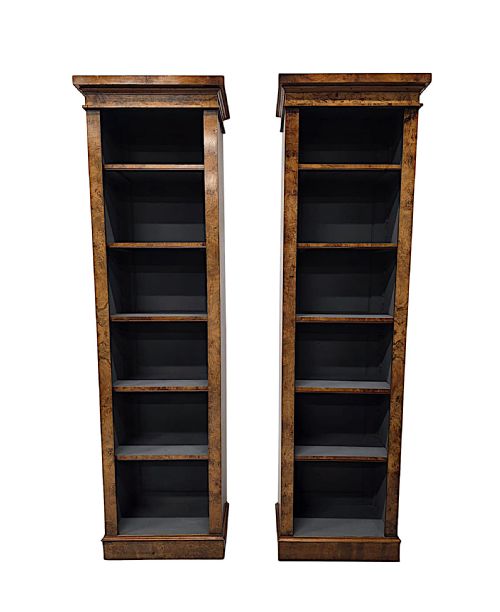
The choice of timber figure largely defines the grade of a walnut open shelf, with heavily figured burr walnut commanding greater attention than plain timber surfaces. Finely matched veneer panels across front sections indicate superior craftsmanship and careful material selection by the maker.
The integration of secondary decorative elements, such as cast ormolu mounts, intricate brass gallery rails, and adjustable shelf mechanisms, separates standard utility items from pieces destined for formal reception rooms. Structural proportions also matter, with slim, neat sizes or large breakfront configurations showing deliberate design ambition.
Johnstone and Jeanes·Gabriel Viardot·Gillows
The Walnut Open Shelf Glossary
- Burr walnut
- A figured wood grain derived from the wart-like growths on walnut trees, prized for its swirling, intricate patterns. Cabinet makers applied it as veneer on prominent surfaces.
- Etagere
- A set of open shelves for displaying small objects or ornaments, popular in nineteenth-century French and English interiors. They frequently feature tiered platforms supported by slender columns.
- Ormolu
- Gilded bronze ornamentation applied to furniture mounts and decorative accents, commonly seen on mid-nineteenth-century credenzas and cabinets. It added metallic contrast to the dark timber.
- Breakfront
- A piece of furniture whose central section projects forward from the flanking wings. This configuration created visual depth in large bookcases and sideboards.
- Whatnot
- A freestanding set of open shelves used for holding books, ornaments, or bric-a-brac, developed during the Victorian era. These multi-tiered units often occupied corners or parlour walls.
Walnut Open Shelf: Frequently Asked Questions
Where were walnut open shelves used?
These pieces found places in Victorian drawing rooms, libraries, and studies where owners required immediate access to books and decorative items. Their open construction made them ideal for everyday reference materials.
Smaller formats like corner shelves and bedside tables also suited tighter domestic spaces in townhouses and country residences.
How do I adjust the shelves?
Many nineteenth and twentieth-century bookcases utilise traditional wooden rackwork or metal pilasters with support studs. This allows owners to reposition shelves to accommodate varying book heights.
Care should be taken when sliding shelves along older runners to avoid scoring the interior walnut veneer.
How do I tell Victorian from Edwardian pieces?
Victorian examples often feature heavier proportions, dark burr walnut veneers, and ornate ormolu mounts or mirrored backs. They reflect an aesthetic of abundance and formal craftsmanship.
Edwardian and later pieces tend toward lighter constructions, simplified lines, and occasionally Arts and Crafts influences that favour functional utility over heavy ornamentation.
Can I place these shelves in direct sunlight?
Walnut timber and its delicate veneers react sensitively to strong ultraviolet light, which can bleach the rich brown tones over time. Positioning pieces away from direct sun exposure preserves the original colour and grain contrast.
Regular polishing with appropriate wax helps maintain the moisture balance in the timber surface.