




Serpentine Display Shelf
A serpentine display shelf brings fluid Victorian curves and rich burr walnut into a room, offering elegant tiered storage for cherished objects.
Serpentine Display Shelf
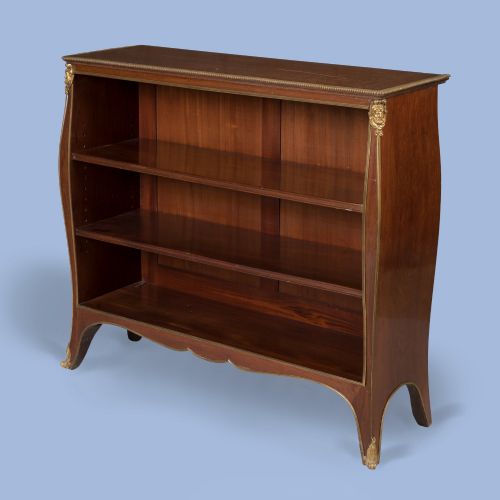
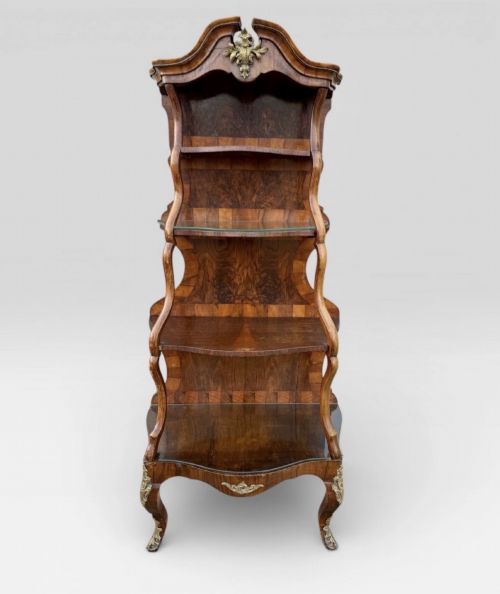
The serpentine display shelf encompasses tiered etageres, multi-tiered whatnots, and wall-hanging shelves dating from the nineteenth century. These pieces combine undulating fronts with open platforms designed for the display of ornaments and books.
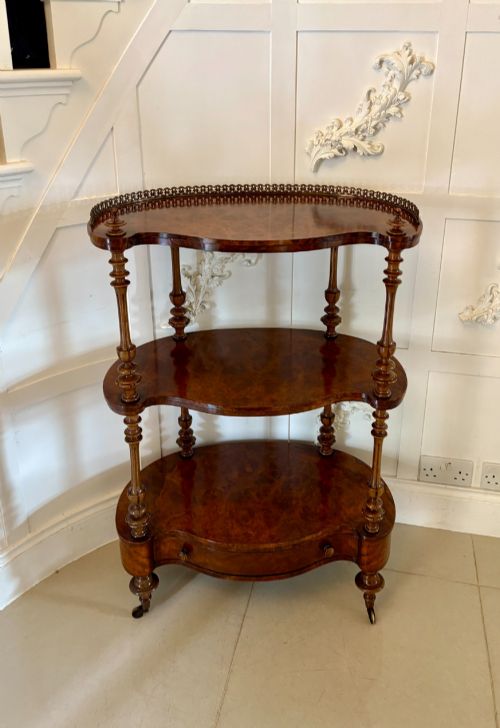
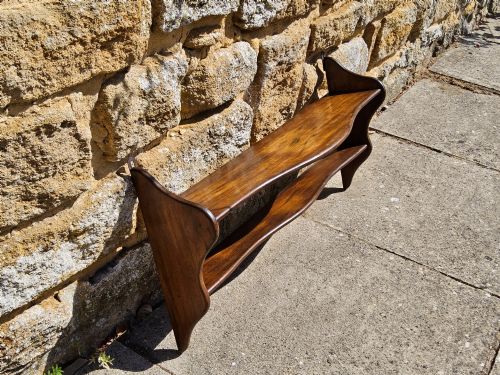
Burr walnut and mahogany dominate the forms seen here, often structured as multi-tiered freestanding whatnots or wall-mounted display units. The curved serpentine line softens the rigid corners typical of standard Victorian case furniture.
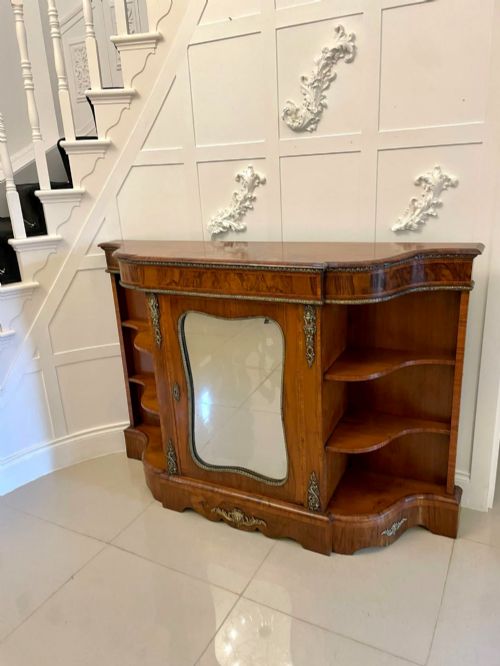
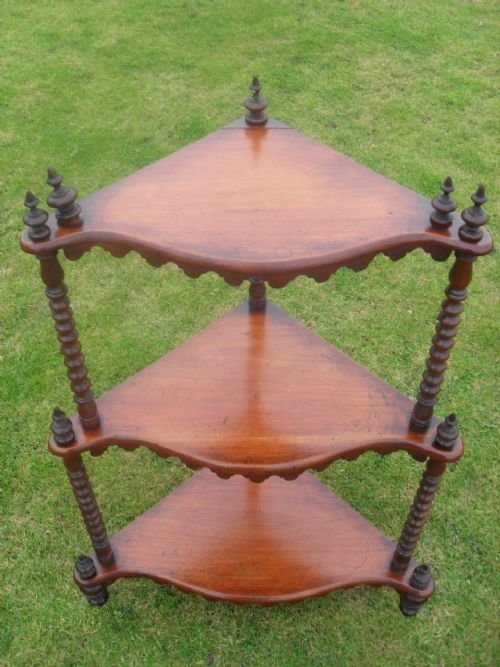
Makers utilised rich figured timbers alongside glass, brass, and ormolu mounts to elevate the visual appeal of these display pieces. Examples range from three-tier corner units to expansive credenzas and demi-lune display console whatnot tables.
Materials and construction
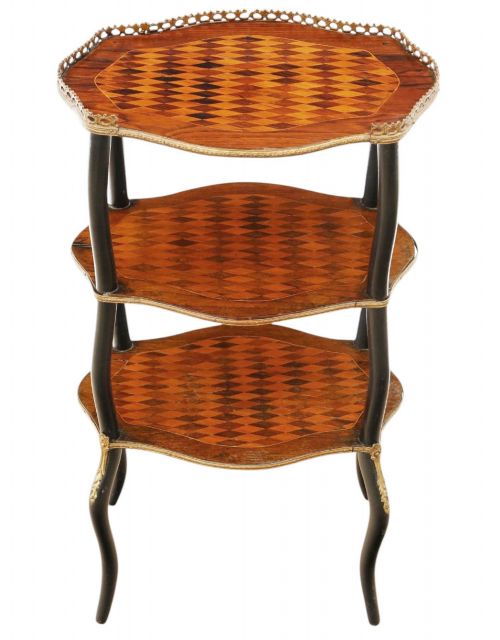
Cabinetmakers constructed these pieces primarily from solid and veneered walnut, burr walnut, and mahogany, frequently incorporating mixed timber parquetry. Figured grain patterns were carefully selected to create decorative surfaces across shelves and tabletops.
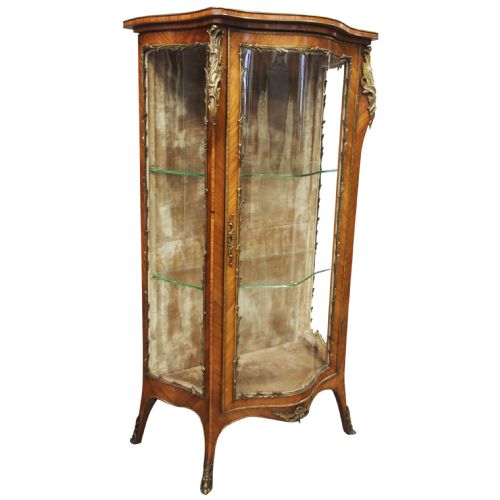
Metal enrichment played a central role, with brass, gilt metal, and ormolu mounts fitted to uprights and galleries. Glass panels and mirror backs also appear in select vitrines and credenzas, reflecting light through the tiered shelving.
Materials recorded across the inventory include walnut, burr walnut, mahogany, goncalo alves, rosewood, brass, glass, ormolu, and ebonised wood.
Factors of quality
Quality rests upon the selection of timber, particularly the density and movement of burr walnut veneer across the serpentine curves. Richly figured grain and precise parquetry distinguish finer examples from plain timber builds.
The integration of metal mounts, such as cast ormolu or chased brass, marks the difference between standard production and top-tier work. Superior pieces also maintain structural integrity in their slender uprights and tiered platforms without undue sagging.
Thomas Justice & Sons
The Serpentine Display Shelf Glossary
- Serpentine
- A curved shape resembling a snake, featuring a convex centre flanked by concave ends. This contour adds dynamic movement to the front of a shelf or cabinet.
- Whatnot
- A piece of furniture consisting of several open shelves for displaying small objects. It gained popularity during the Victorian period for parlour and drawing room use.
- Ormolu
- Gilded bronze applied to furniture mounts and decorative accents. It provides a bright metallic contrast against dark woods like walnut and mahogany.
- Parquetry
- Geometric wood inlay work forming mosaic patterns across a surface. It showcases the varied tones of mixed timbers.
- Credenza
- A sideboard or cabinet used for storage and display, often featuring glazed doors or mirrored backs. Victorian versions frequently incorporate burr walnut veneers and brass mounts.
Serpentine Display Shelf: Frequently Asked Questions
How were these shelves used?
Victorian households utilised these multi-tiered units in parlours and drawing rooms to display ceramics, small bronzes, and bound volumes. The open structure allowed guests to view collections from multiple angles.
Wall-hanging versions saved floor space while providing similar platforms for ornaments, whereas freestanding whatnots served as room centerpieces.
How do I identify Victorian pieces?
Victorian display furniture relies heavily on dense timbers like burr walnut, rosewood, and mahogany combined with cast brass or ormolu mounts. The presence of serpentine curves and multi-tiered construction points directly to mid to late nineteenth-century British and French revival aesthetics.
Construction details such as hand-cut joinery and natural timber veneers further confirm the nineteenth-century origin.
Where should I place a whatnot?
A whatnot suits corners, blank wall spaces, or positions flanking larger case pieces where its tiered shelves can hold collections. Freestanding versions work well away from direct sunlight to protect delicate wood veneers.
Wall-hanging models require secure fixing to support the weight of timber shelves and displayed items.