


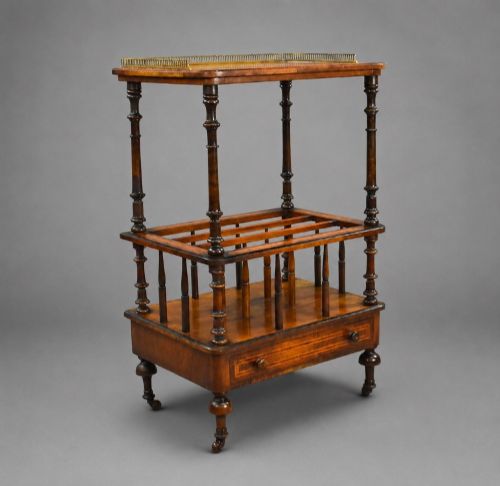
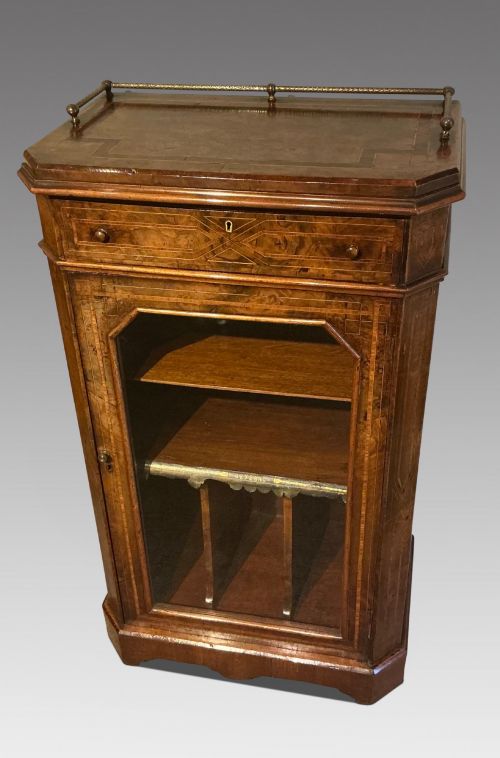
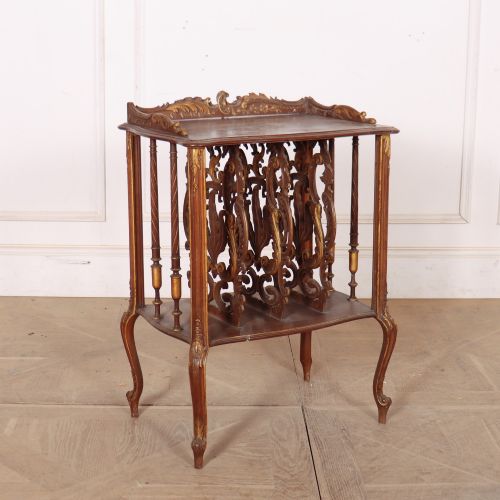


Walnut Music Stand Cabinet
These walnut music stand cabinet pieces combine upright storage with sheet music organisation, offering a practical yet decorative centrepiece for the traditional parlour.

Walnut Music Stand Cabinet
When you search for a walnut music stand cabinet, you encounter a specialised form designed to house scores, folios, and sheet music alongside display surfaces. The pieces here predominantly date from the Victorian and Edwardian eras, spanning the mid-nineteenth century through to the early twentieth century.
Forms on this page range from dedicated music cabinets and upright canterburys to hybrid whatnots and display stands. Many examples incorporate internal shelving or divided compartments specifically sized for paper documents.
Makers and craftsmen utilised the dense grain of walnut and burr walnut to create functional furniture that doubled as an occasional table or small bookcase.
Materials and construction methods
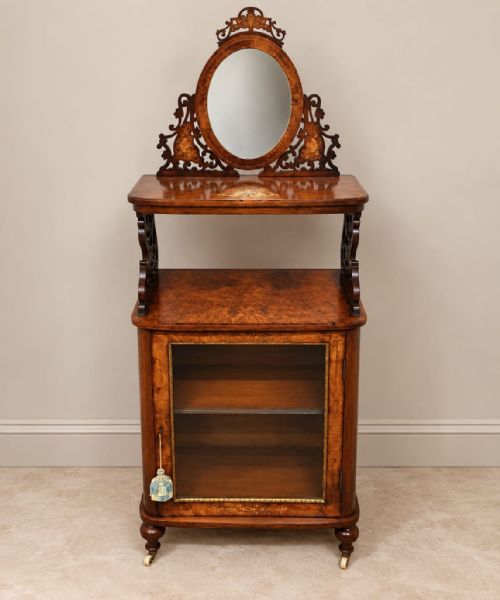
Makers relied heavily on walnut and burr walnut veneers, prized for their complex swirling grain patterns, applied over solid secondary timbers. Cabinetmakers enhanced these surfaces with marquetry and boxwood inlay, whilst brass and gilt bronze fittings provided structural support and decorative contrast.
Structural elements frequently incorporated glass panels for door displays, alongside ceramic castors or turned feet. Secondary woods and traditional joinery methods ensured the upright cabinets and open canterburys could bear the weight of stacked paper folios.
The inventory records piece forms ranging from music cabinets to canterburys and whatnot display stands.
Assessing quality and craftsmanship
The distinction between standard production items and superior pieces rests upon the selection of timber and the precision of the marquetry. Highly figured burr walnut veneers and intricate boxwood stringing separate ambitious designs from utilitarian storage boxes.
Joinery execution and the integration of secondary forms like drawers, adjustable stands, or carved galleries dictate the overall refinement of a piece. Better examples maintain crisp carving and unblemished veneer surfaces across all visible elevations.
Gabriel Viardot·Lochmanns
The Walnut Music Stand Cabinet Glossary
- Canterbury
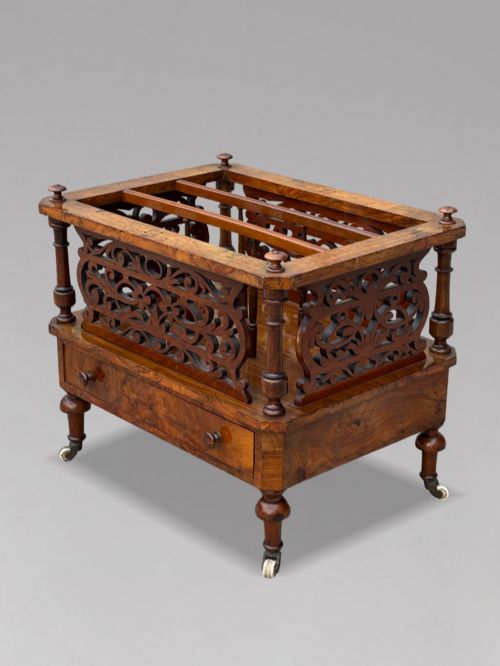
- A low stand or cabinet fitted with vertical partitions to hold sheet music, folios, or magazines, frequently mounted on castors. They often feature a single drawer beneath the main tier.
- Burr walnut
- Timber taken from a tree growth where the grain has grown in a deformed manner, producing intricate patterns. Cabinetmakers sliced this wood into thin veneers for decorative furniture faces.
- Whatnot
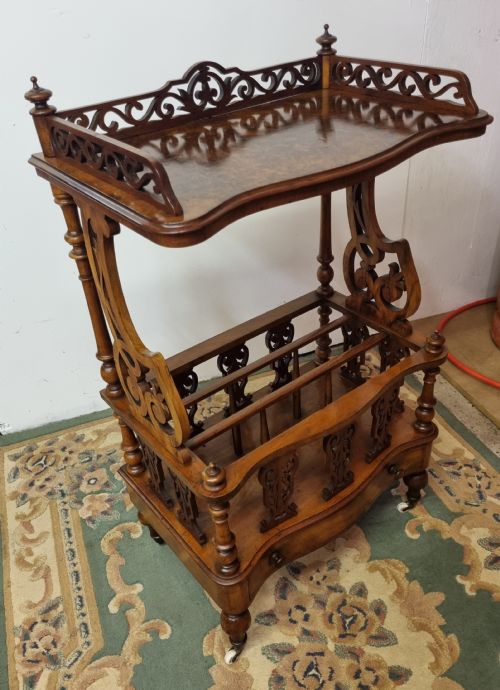
- An open set of multi-tiered shelves used for displaying ornaments, books, or small objects. In music furniture, they combine display space with dedicated sheet storage.
- Marquetry
- The art of applying pieces of veneer to a structure to form decorative patterns and pictures. Craftsmen used contrasting woods such as boxwood to create geometric or floral motifs.
- Japonisme
- A nineteenth-century style reflecting Japanese artistic influence on European decorative arts. Pieces showing this style incorporate asymmetric layouts and flora or fauna motifs.
Walnut Music Stand Cabinet: Frequently Asked Questions
What is a music cabinet?
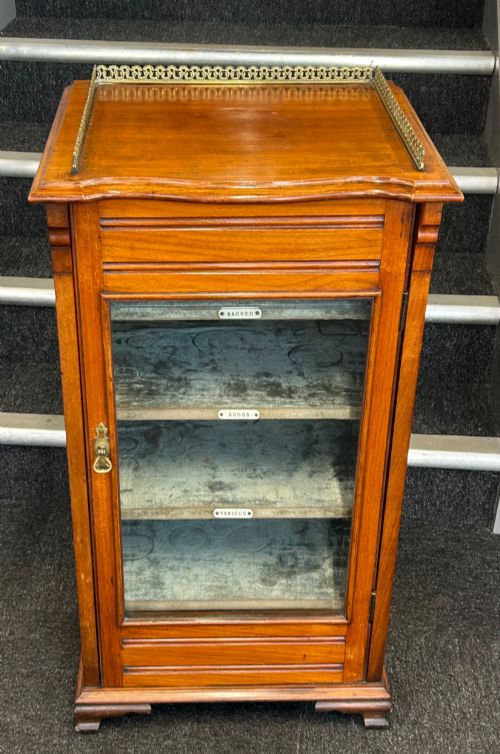
A music cabinet is a specialised piece of Victorian or Edwardian furniture designed to store sheet music, folios, and scores in an upright format. They often feature internal shelving, glass doors, or lift-up adjustable stands.
These pieces served a practical function in nineteenth-century parlours where playing piano or string instruments was a common domestic pastime. Their compact vertical footprint allowed households to keep substantial musical collections organised without dominating the room.
How do I date a walnut cabinet?
Dating relies on examining the timber selection, decorative styles, and construction techniques present on the piece. Victorian examples often feature heavy burr walnut veneers and elaborate boxwood inlay, whilst Edwardian versions tend to display lighter framing.
Secondary characteristics such as brass hardware, ceramic castors, and specific revival styles like French Rococo or Art Nouveau also point to specific manufacturing decades between the mid-nineteenth and early twentieth centuries.
Where were music cabinets used?
Music cabinets were primarily placed in drawing rooms, parlours, or music rooms where pianos and other instruments were kept. Their dual purpose as display surfaces and storage units made them suitable for high-traffic entertaining areas.
In modern interiors, collectors utilise these cabinets in living spaces or studies to store documents, art books, or smaller collections while functioning as occasional tables or display stands.
What is a music canterbury?
A music canterbury is a low, compartmentalized stand or cabinet designed specifically to hold sheet music vertically in separate wooden or wire sections. Many incorporate a small drawer underneath and rest on castors for mobility.
First popularized in the Regency period and continuing through the Victorian era, canterburys evolved to include enclosed cabinet doors, music stands, and whatnot shelving units to meet changing domestic needs.