
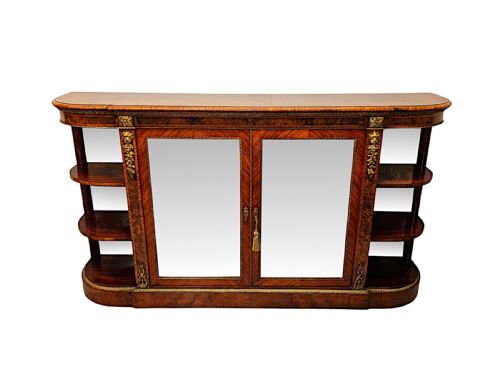
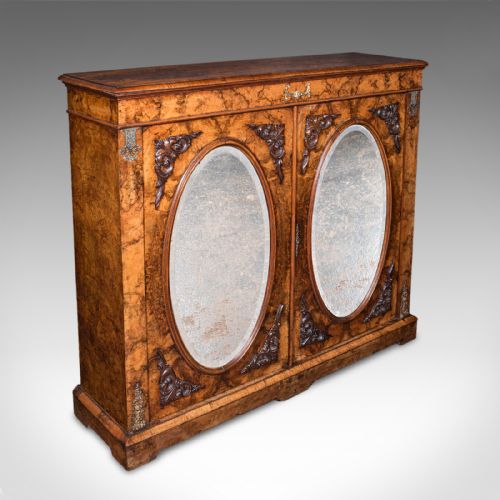

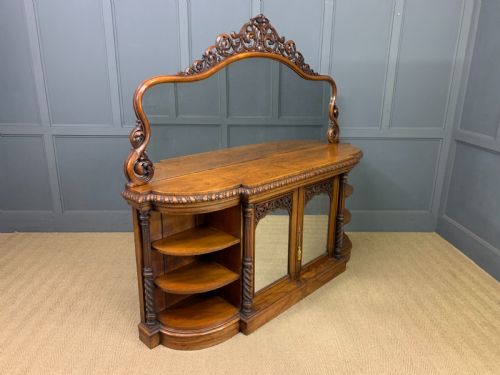


Walnut Mirrored Credenza
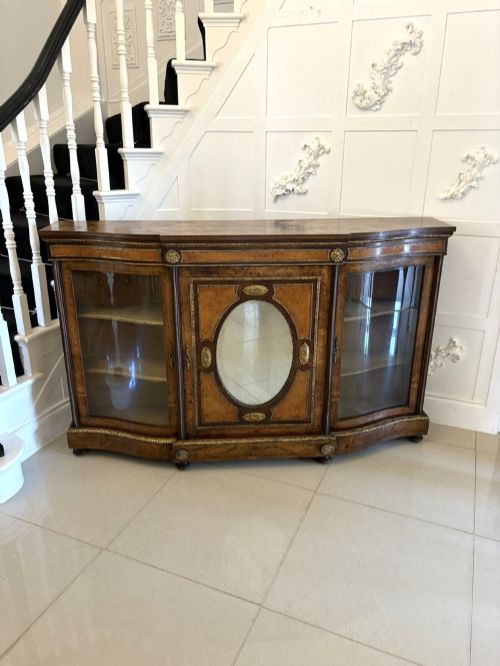
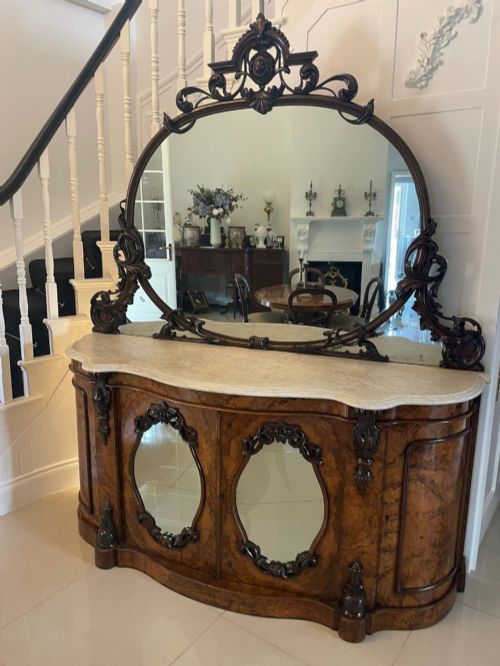
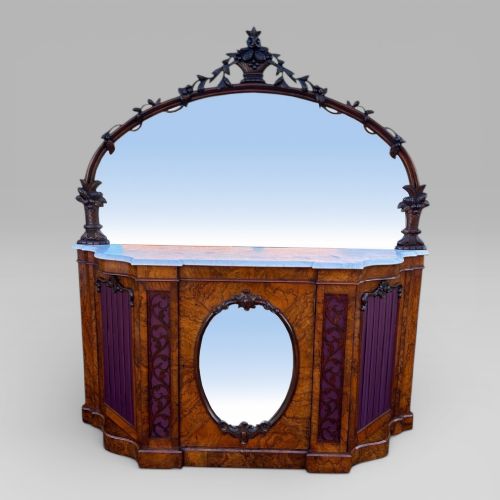
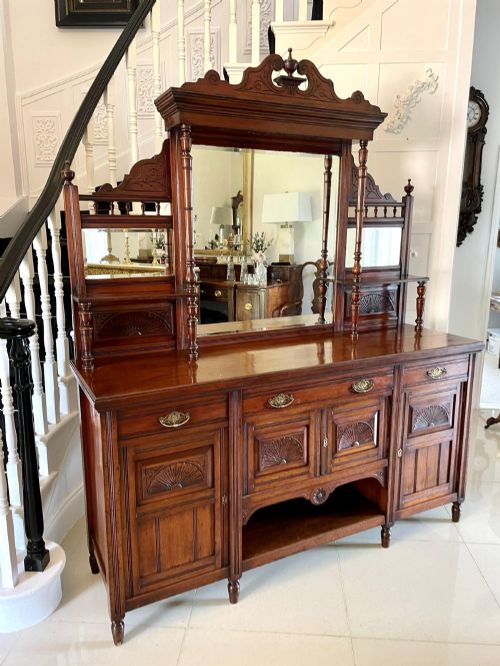
A walnut mirrored credenza brings rich timber grain and reflecting glass together for a formal room.
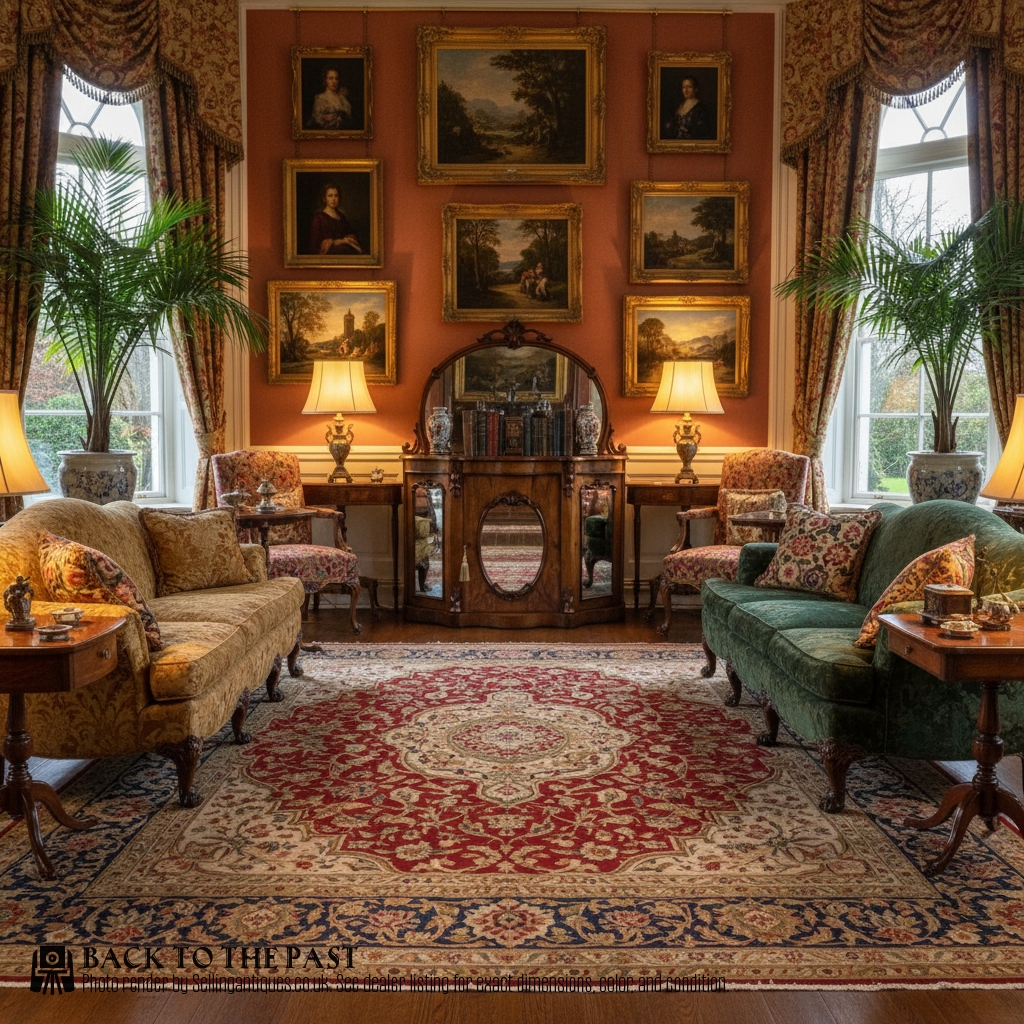
Walnut Mirrored Credenza
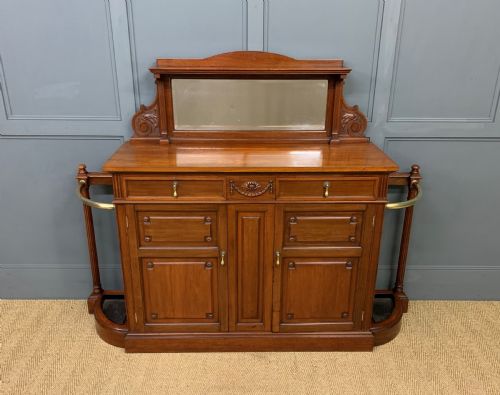
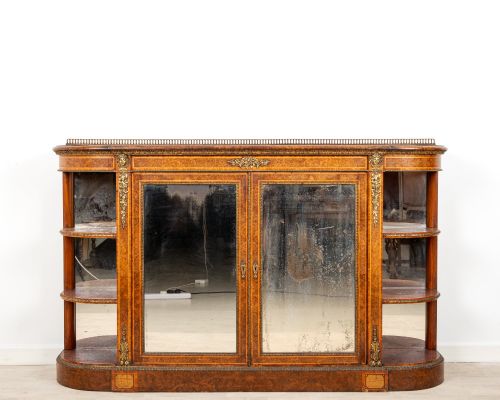
A walnut mirrored credenza is a low, substantial cabinet designed for display and storage, often incorporating glazed or mirrored doors and a mirrored back. These pieces appear primarily in Victorian and nineteenth-century forms, alongside later interpretations such as Art Deco cocktail cabinets.
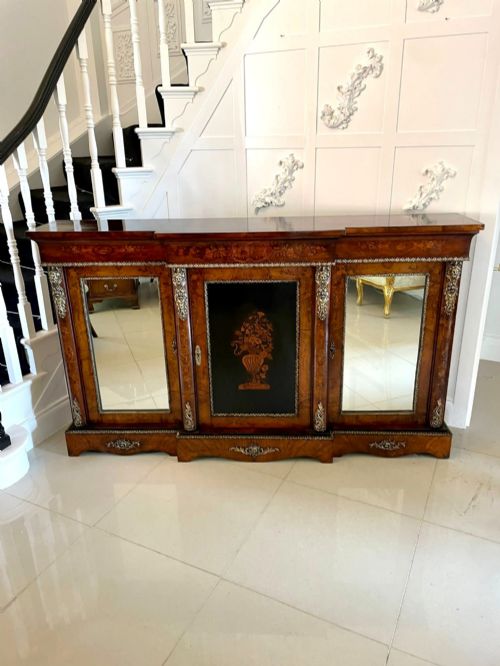
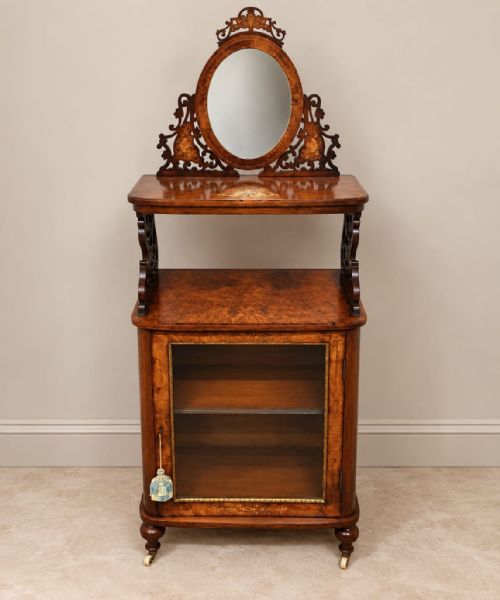
The most common versions on this page date from the Victorian era and utilise burr walnut veneer with figured grain patterns. They frequently combine architectural mirror backs, marble tops, and brass or ormolu mounts to create a commanding presence in a dining room or drawing room.
Materials and construction methods
Cabinetmakers used solid walnut and applied burr walnut veneers to carcase frames, often combining satinwood and amboyna for marquetry inlay. Ormolu mounts and brass hardware punctuate the timber surfaces.
Glass was utilised for shelving, doors, and large backing plates to reflect light within the room. Marble tops provide a heavy, durable horizontal surface above the cabinetry.
Several cabinets on this page double as cocktail bars, proving that Victorians and nineteen-thirties revellers shared identical priorities.
Differentiating quality across examples
The depth and consistency of the burr walnut grain determine much of the visual impact, alongside the precision of marquetry inlay and the weight of ormolu mounts. Finer examples display meticulous hand-carving on serpentine fronts and robust structural timber beneath the veneers.
The integration of the mirror back and the quality of the glass plate reflect the maker's ambition. Pieces stamped by notable makers demonstrate superior joinery and finishing compared to standard workshop output.
Shoolbred & Co.·Gillows·Harry and Lou Epstein
The Walnut Mirrored Credenza Glossary
- Burr walnut
- Timber taken from a growth or burl on the walnut tree, prized for its swirling, highly figured grain patterns. It is sliced into thin veneers for decorative cabinet surfaces.
- Ormolu
- Gilt bronze mounts applied to furniture for decorative accent. These cast metal details add contrast against dark timber.
- Marquetry
- Inlaid patterns formed by fitting pieces of various coloured woods into a veneer ground. It creates pictorial or geometric designs across cabinet doors.
- Serpentine
- A furniture front or top shaped with a double curve, convex in the centre and concave at the ends. This contour requires skilled carpentry.
- Credenza
- A low dining or drawing-room cabinet used for storage and display. It typically lacks the high upper superstructure of a traditional sideboard.
Walnut Mirrored Credenza: Frequently Asked Questions
Where were credenzas placed in nineteenth-century homes?
These low cabinets sat against principal walls in dining rooms and morning rooms, where they served both decorative and practical functions.
Their reflective glass backs helped brighten Victorian interiors by bouncing natural light around the space.
How do I distinguish a Victorian credenza from an Art Deco one?
Victorian examples rely heavily on burr walnut veneer, marquetry inlay, ormolu mounts, and serpentine forms derived from revival styles.
Art Deco pieces, by contrast, present streamlined surfaces, clean geometric lines, and specialised internal fittings for modern entertaining.
What is the purpose of the mirror on a credenza?
The mirrored back panel reflected porcelain, silver, and glassware displayed on shelves or on the top surface of the cabinet.
It also added a sense of depth and luminosity to dimly lit nineteenth-century reception rooms.
How should I care for marble-topped walnut furniture?
Keep the marble clean with mild, non-acidic solutions to protect the polished stone surface from staining.
Treat the walnut timber with appropriate wax polish to maintain the grain and prevent the veneer from drying out.