
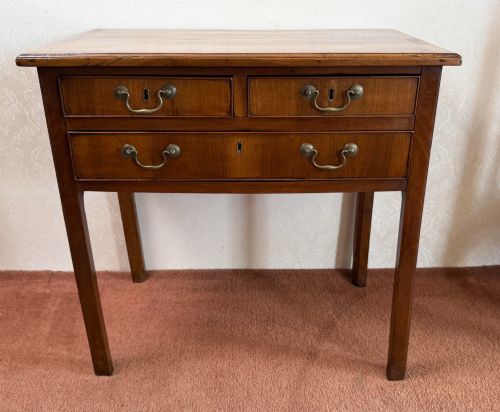
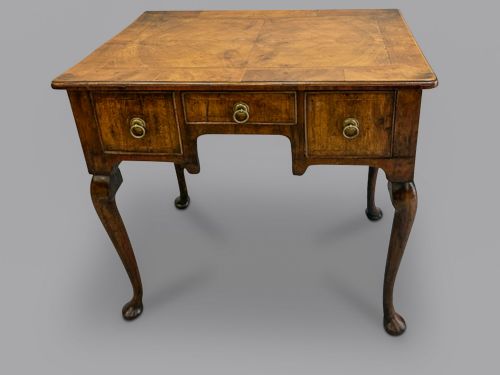
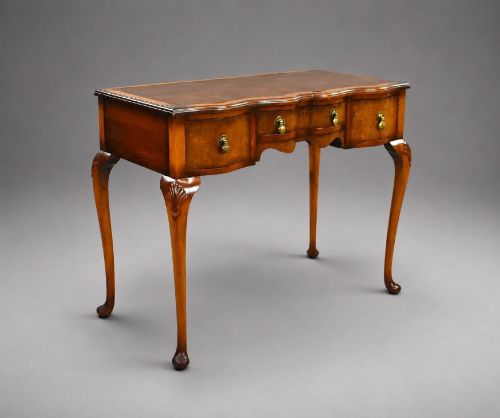
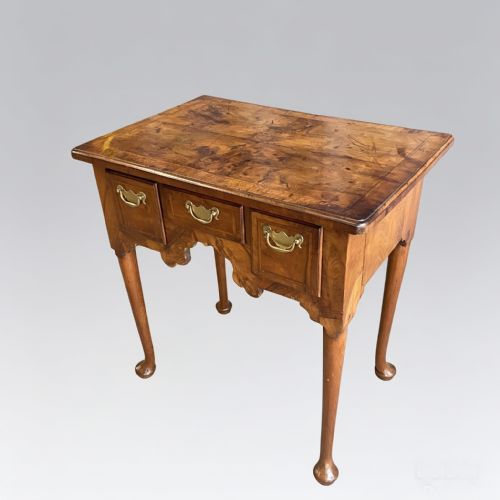


Walnut Lowboy Desk
A walnut lowboy desk brings compact elegance and fitted drawers to a room, serving as a versatile writing surface or dressing table.
Walnut Lowboy Desk
A walnut lowboy desk is a low, multi-drawer table originally designed for personal grooming or correspondence, combining the utility of a desk with the proportions of a side table. When searching this phrase, buyers encounter examples spanning from the early eighteenth century through the Georgian era, alongside later revival pieces from the twentieth century.
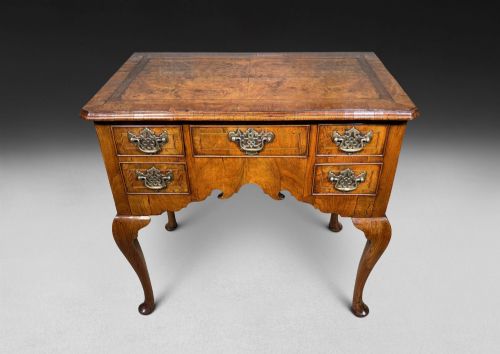
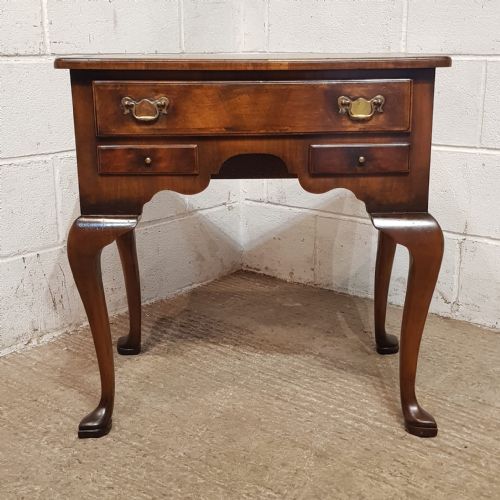
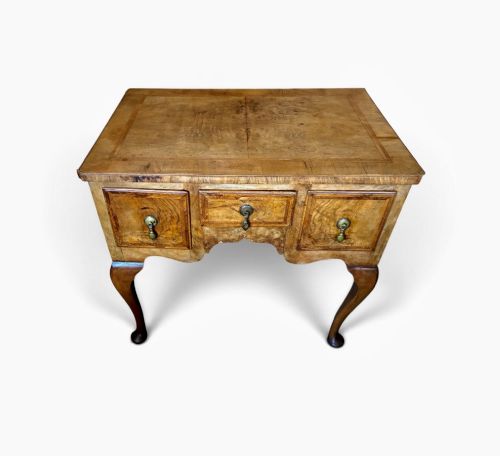
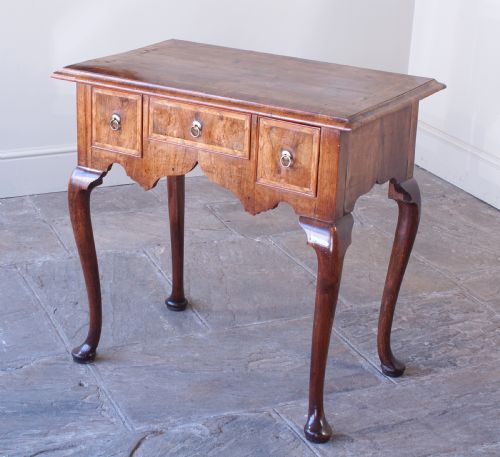
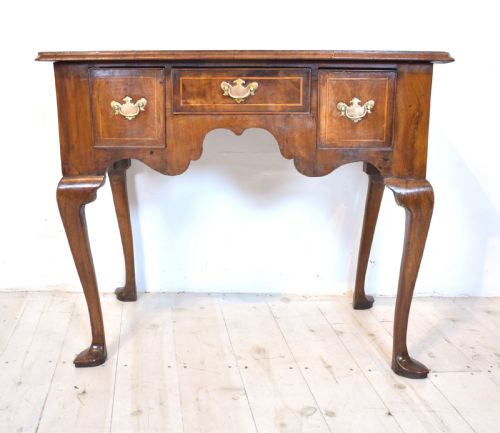
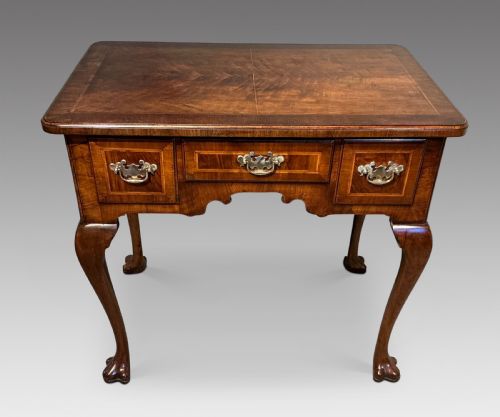
The most common versions met on this page feature a configuration of two or three drawers beneath a rectangular top, frequently raised on cabriole legs. These pieces bridge the gap between functional writing furniture and decorative side tables, adapting easily to modern studies, bedrooms, and hallways.
Materials and construction methods
Cabinet makers utilised solid walnut, burr walnut veneers, and fruitwood, often supported by secondary timbers such as oak for drawer linings and structural frames. Fine geometric feather banding or marquetry inlay frequently embellishes the drawer fronts and tops of eighteenth-century pieces.
Brass drop handles and escutcheons punctuate the polished timber surfaces, while structural joints rely on traditional dovetailing for the drawers and tenons for the leg framing. Later revival pieces from the twentieth century mirror these historic techniques while employing contemporary machining for veneer preparation.
Listings feature oak alongside walnut and burr walnut veneer across eighteenth-century and twentieth-century periods.
Judging the quality of execution
The distinction between standard examples and the finest pieces lies in the choice of timber and the dexterity of the cabinet work. Highly figured burr walnut veneer carefully matched across the drawer fronts signals superior workshop production compared to plain, unfigured boards.
Subtlety in the shaping of the cabriole legs, crispness in any carved shell motifs, and the preservation of original brass hardware elevate a piece. The depth of the timber's patina and the integrity of the drawer construction further define the upper tier of the range.
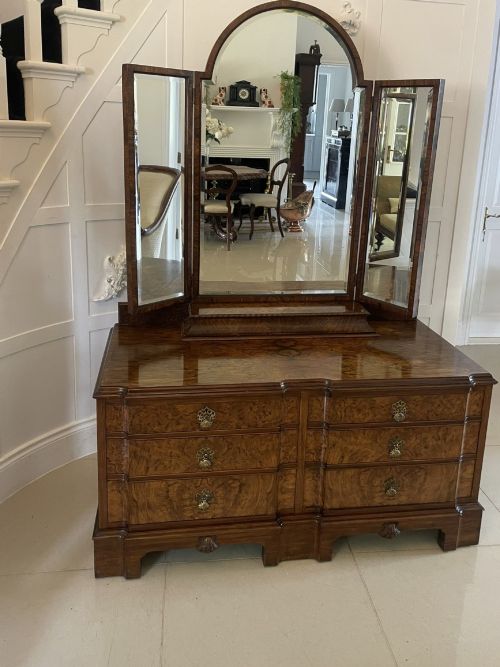
Shoolbred and Co·Maple's of London
The Walnut Lowboy Desk Glossary
- Lowboy
- A small dressing or writing table on relatively tall legs, typically equipped with one to three drawers.
- Burr walnut
- Timber taken from a tree growth or burl, yielding a highly swirled, decorative grain pattern prized for veneering.
- Feather banding
- Narrow strips of veneer laid in a herringbone or chevron pattern to create a decorative border around drawer edges.
- Cabriole leg
- A furniture leg that curves outward in a convex arc and tapers inward in a concave arc, ending in a pad or foot.
Walnut Lowboy Desk: Frequently Asked Questions
What is a walnut lowboy desk used for today?
These pieces function ideally as compact writing desks in smaller studies or as decorative console tables in hallways and living rooms.
Their shallow depth and fitted drawers also allow them to serve effectively as dressing tables or bedside surfaces in bedrooms.
How do I tell an 18th-century piece from a 1920s revival?
Eighteenth-century examples display hand-cut dovetails, timber shrinkage appropriate to age, and a deep, mellow wax patina acquired through centuries of use.
Twentieth-century revival lowboys often reveal more uniform machine processing, cleaner interior drawer timbers, and styles that lean heavily on Queen Anne or Georgian motifs.
Where should I place a lowboy in my home?
A lowboy suits placement against an entrance hall wall beneath a mirror, or positioned beside a sofa for lamp placement and storage.
Because of its finished back and modest footprint, it floats comfortably in a room without overwhelming the surrounding space.
Are walnut lowboys sturdy enough for daily writing?
Period lowboys were constructed for correspondence and personal grooming rather than heavy office equipment, so they handle laptops and notebooks with ease.
Their sturdy frame joints and cabriole legs provide stable support, provided the piece is placed on a level floor.