



Circular Mirror Dressing Table
A circular mirror dressing table brings practical grace to a room, offering clever pivoting glass alongside generous drawers for daily routines.
Circular Mirror Dressing Table
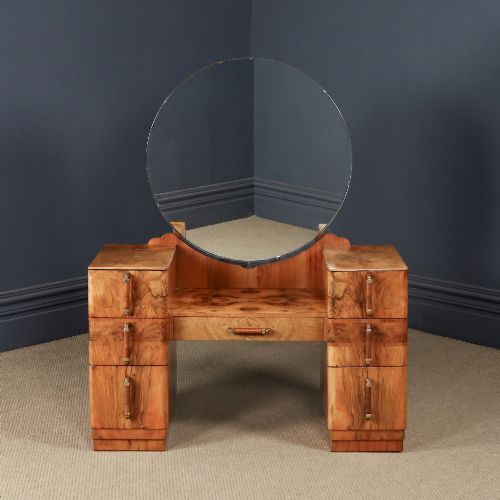
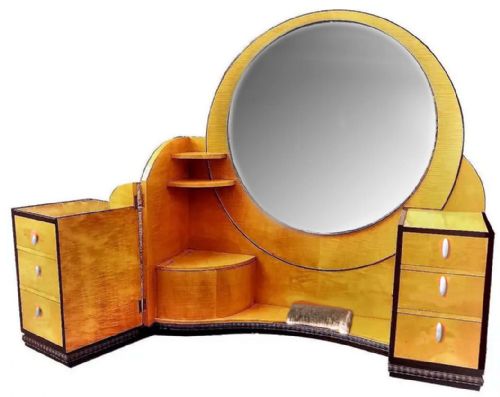
A circular mirror dressing table is a dedicated vanity piece designed for grooming, combining a central round glass with storage surfaces. You encounter these most frequently in twentieth-century Art Deco interpretations and nineteenth-century pedestal or tripod forms.
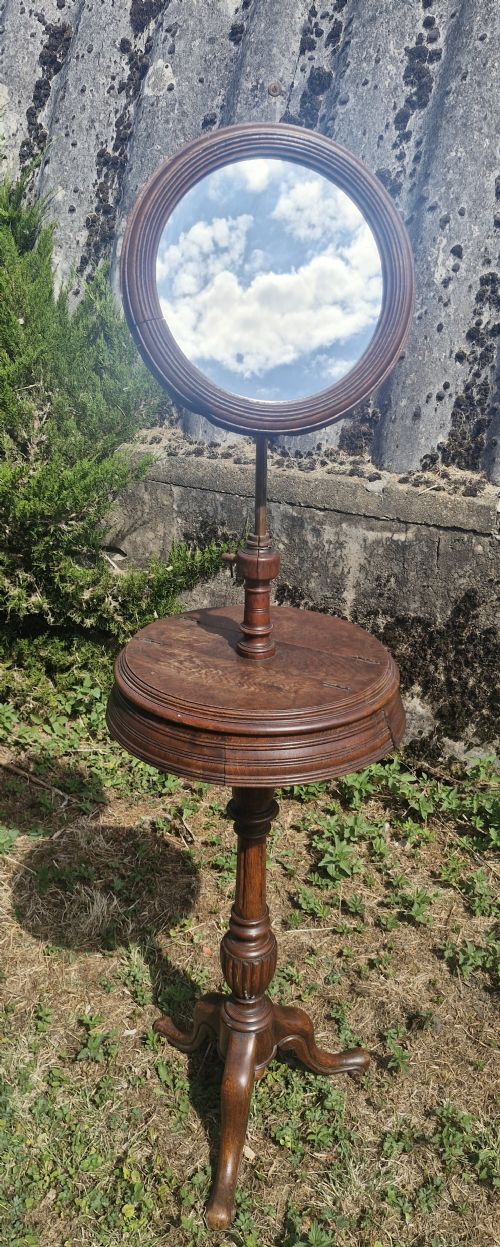
The selections span distinct historical eras, ranging from early nineteenth-century Regency stands and Victorian shaving furniture up to streamlined 1930s modernist vanity tables. Each period brings specific proportions and structural detailing, altering how the mirror integrates with the base.
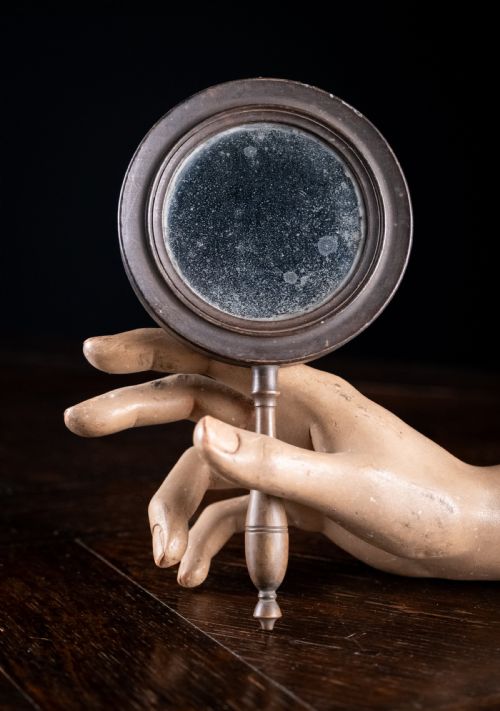
Beyond full-sized dressing tables, the category encompasses smaller dressing stands, adjustable shaving mirrors, and hand-held double-sided glasses. These smaller iterations share the characteristic circular framing while suiting more compact spaces.
Materials and construction
Cabinetmakers utilised rich cabinet timbers including walnut, burr walnut, mahogany, and oak to build the foundational structures and drawer carcases. These woods often feature prominent figuring to enhance the visual depth of the dressing surfaces.
Mirrors utilise standard glass and silvered mirror plate, frequently secured with brass or metal fittings that allow the glass to pivot or adjust. Shaving stands and dressing tables incorporate these adjustable mechanisms to alter the angle of reflection easily.
Listings span five distinct periods, from Regency and Victorian eras through to Art Deco pieces dated around 1930.
Distinguishing quality across pieces
Quality rests upon the selection of timber veneers and the crispness of the cabinetwork, where figured walnut or burr walnut demonstrates superior decorative ambition. Subtleties in edge moulding and the integration of the mirror support separate standard production from more accomplished studio work.
The integrity of the mirror plate and the smoothness of any adjustable brass or metal hardware indicate the original standard of manufacture. Retaining original mirror glass and functional pivoting mechanisms elevates the integrity of the piece.
Betty Joel
The Circular Mirror Dressing Table Glossary
- Burr walnut
- A figured wood veneer harvested from walnut tree growths, prized for its swirling, organic patterns. It frequently graces the drawer fronts of Art Deco dressing tables.
- Shaving stand
- A specialist piece of furniture featuring an adjustable mirror and a compact surface, designed for personal grooming. These often stand on slender tripod or pedestal bases.
- Ebonised
- Wood treated with a dark stain or finish to imitate ebony. This dark finish appears on Regency hand mirrors within the collection.
- Pedestal dressing table
- A vanity unit supported by one or more structural columns or banks of drawers. They provide a stable footprint for large circular mirrors.
- Tripod stand
- A three-legged support base commonly found on Victorian shaving mirrors. It provides stability on uneven floorboards.
Circular Mirror Dressing Table: Frequently Asked Questions
How do I date a circular mirror dressing table?
Dating relies upon identifying the prevailing style, construction methods, and timber choices visible in the piece. Art Deco examples from the 1930s typically display clean geometric lines and burr walnut veneers, whereas Victorian and Regency pieces employ heavier mahogany, oak, or ebonised finishes.
The design of the mirror mount also offers clues, as nineteenth-century stands frequently utilise brass pivoting screws and tripod legs, while twentieth-century vanities integrate the glass directly into the modernist carcase.
What is the difference between a dressing table and a shaving stand?
A dressing table is a larger vanity unit equipped with drawers and a surface for cosmetics, designed to be used while seated. A shaving stand is a taller, more compact piece intended for standing use, traditionally featuring a small adjustable mirror atop a pedestal or tripod.
While both share circular mirror elements, shaving stands focus purely on grooming tasks rather than cosmetic storage. They occupy less floor space and often appear in Victorian oak or mahogany.
Can the mirror be removed easily?
Most mirrors on these pieces are secured with pivot screws or drop into dedicated brackets on the table top. This allows the glass to be tilted for the user and removed when the furniture needs to be transported.
Care must be taken with older brass fittings and original mirror plates during any handling. The mounting brackets are usually designed to remain fixed to the frame while the glass itself detaches.
Are these dressing tables suitable for modern bedrooms?
Their compact proportions make them practical for contemporary interiors, providing useful surface space and storage drawers without dominating a room. Art Deco walnut models and simpler Victorian pieces pair well with both traditional and modern bedroom decor.
The inclusion of a circular mirror softens the rigid angles often found in contemporary bedroom architecture. They function effectively as standalone vanity desks.