



1930s Burr Walnut Vanity
These 1930s burr walnut vanity pieces bring striking Art Deco character and rich grain patterns directly into the modern bedroom.
1930s Burr Walnut Vanity
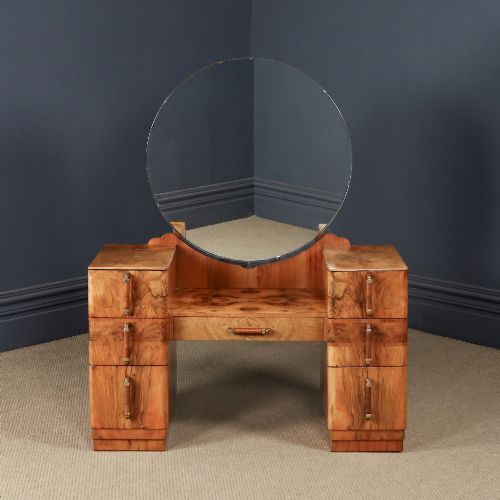
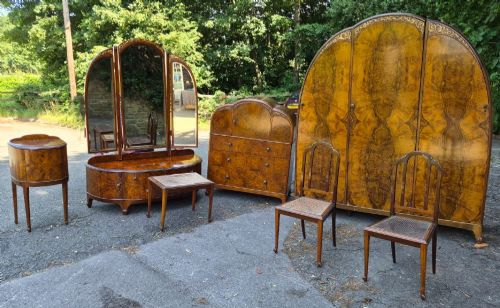
When searching for a 1930s burr walnut vanity, a buyer encounters dressing tables, pedestal desks, and coordinating stools from the Art Deco period. English makers of this era utilised figured walnut and burr veneers to create striking bedroom furniture sets and individual dressing chests.
The pieces on this page span the 1920 and 1930 periods, showing characteristic pedestal forms, integrated mirrors, and matching seating. Many examples combine rich wood grains with glass, mirror glass, metal, and leather detailing.
How they were made
Craftsmen applied figured and burr walnut veneers over solid wood carcases to create bold, decorative patterns across the curved and geometric surfaces typical of Art Deco design. These wooden structures were frequently paired with functional elements in glass, mirror glass, leather, brass, and metal.
Makers shaped structural timber and applied specialised veneers to produce pedestal dressing tables, matching stools, and writing desks. Surface finishes highlighted the natural figuring of the walnut grain without obscuring the material.
Several makers ensured your morning routine had dedicated architectural backing, right down to the matching stool.
What varies in quality
Quality rests in the selection and matching of the burr walnut veneer across large surfaces like pedestal drawers and dressing table tops. Pieces attributed to documented makers display superior harmony in grain patterns and more refined proportions.
The integration of secondary materials such as fitted mirror glass, leather writing surfaces, and brass or metal hardware distinguishes standard production pieces from finer studio outputs. Complete suites and matching stools show greater design cohesion than isolated items.
Harry and Lou Epstein·Frank Taylor & Co.·Maurice Adams·Whytock & Reid
The 1930s Burr Walnut Vanity Glossary
- Burr walnut
- A thin slice of wood veneer taken from the growth deformity of a walnut tree, prized for its swirling, intricate grain patterns. It forms the primary decorative surface on these Art Deco pieces.
- Art Deco
- A design style spanning the 1920s and 1930s characterised by sleek geometric forms, streamlined shapes, and modern materials. This aesthetic defines the architectural silhouette of these vanities and desks.
- Pedestal dressing table
- A vanity form featuring twin supporting columns or drawer stacks flanking a central kneehole space. Many incorporate tilting or fixed mirror glass attachments.
- Figured walnut
- Timber cut to reveal distinctive natural grain markings and light-reflecting properties. It appears alongside burr veneer on tabletops and drawer fronts.
1930s Burr Walnut Vanity: Frequently Asked Questions
What defines a 1930s burr walnut vanity?
These pieces are dressing tables and chests featuring swirling burr walnut veneers, pedestal designs, and characteristic Art Deco styling from the 1920 and 1930 periods.
They often incorporate matching mirrors, glass tops, or leather inserts, reflecting the functional luxury of interwar bedroom furniture.
How do I identify Art Deco vanity styles?
Look for symmetrical pedestal arrangements, clean geometric lines, and sweeping curves executed in rich walnut veneers. Integrated mirrors and streamlined hardware support the architectural look.
Maker attribution stamps or distinct construction methods can also help confirm the period and origin.
Are matching stools usually sold with them?
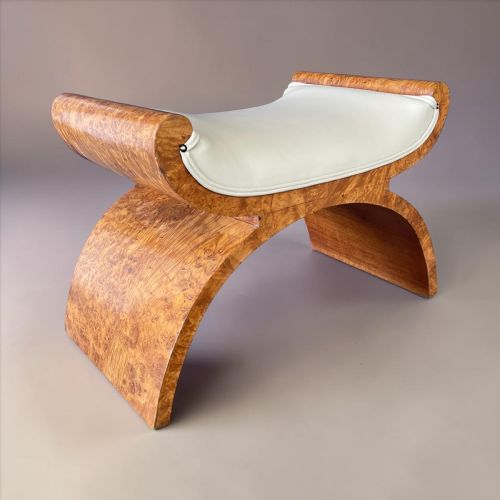
Some listings include matching Art Deco stools designed specifically to complement the pedestal dressing tables and desks. These stools frequently feature upholstered seats and wood frames matching the main furniture.
Complete suites sometimes group the dressing table, stool, and associated bedroom furniture together.
How should I care for burr walnut furniture?
Protect the veneered surfaces from direct sunlight and excessive moisture to prevent fading and veneer lifting. Regular dusting with a soft, dry cloth maintains the finish.
Avoid harsh chemical polishes and keep leather inserts or mirror glass clean using appropriate gentle cleaners.