
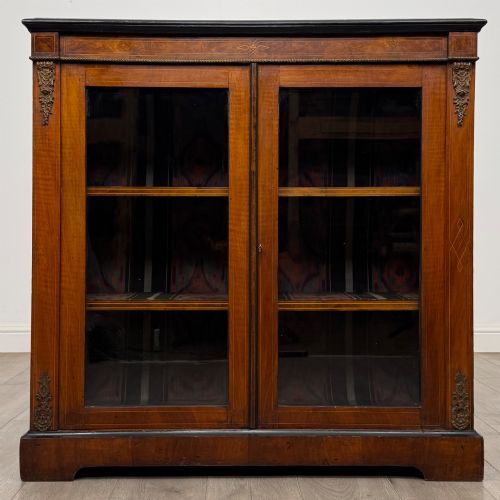
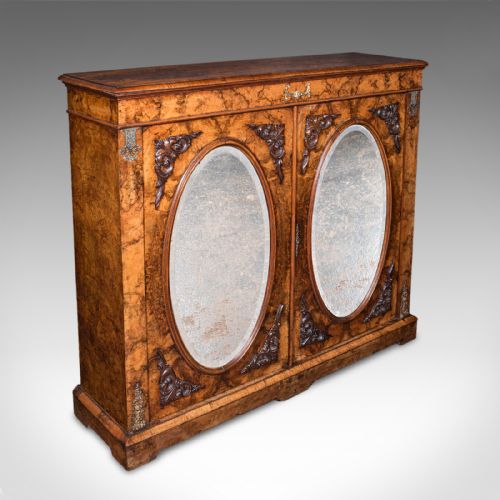
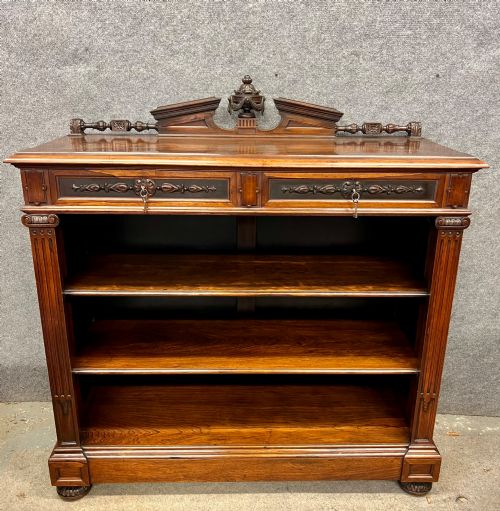
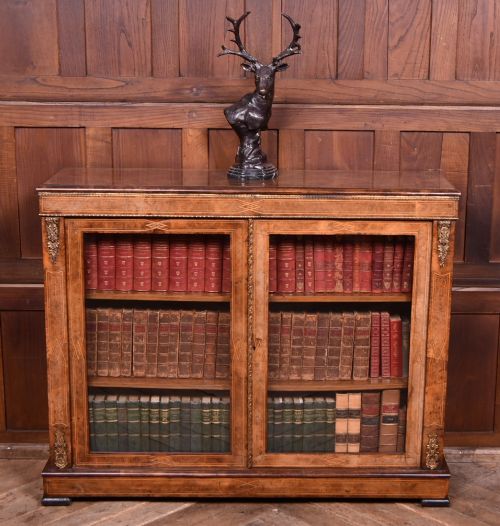


Walnut Low Credenza
A walnut low credenza brings warmth and architectural presence to a room, uniting rich timber grain with practical display space.
Walnut Low Credenza
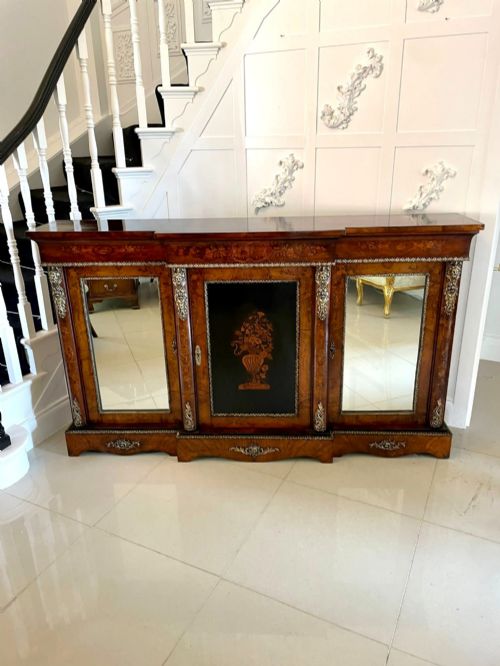
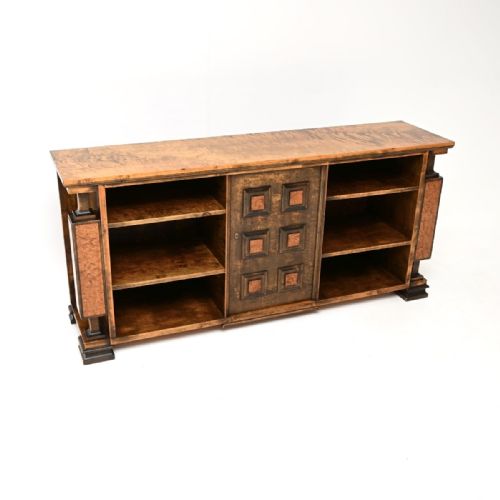
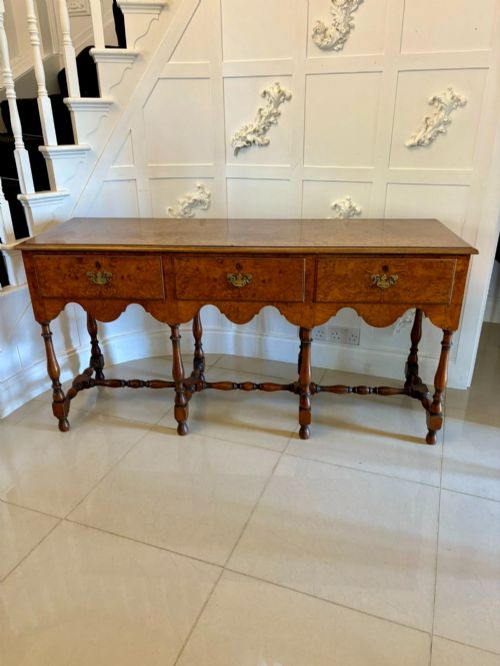
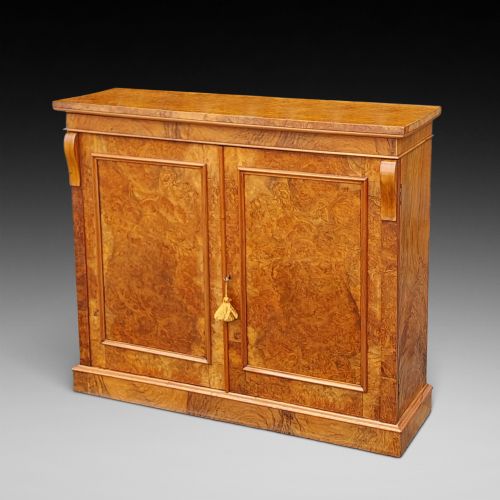
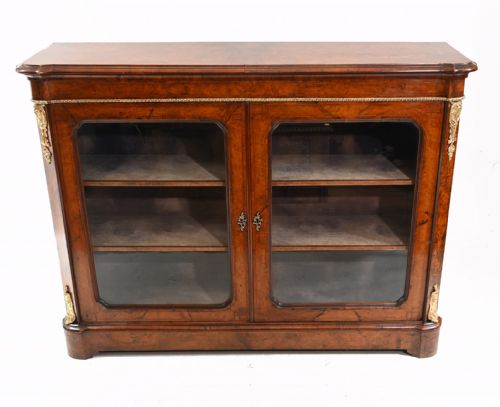
A walnut low credenza typically takes the form of a credenza, sideboard, pier cabinet, or low bookcase originating from periods such as the Victorian era, the nineteenth century, and the Art Deco movement. These low-profile pieces serve to anchor a room while providing enclosed storage or glazed display areas.
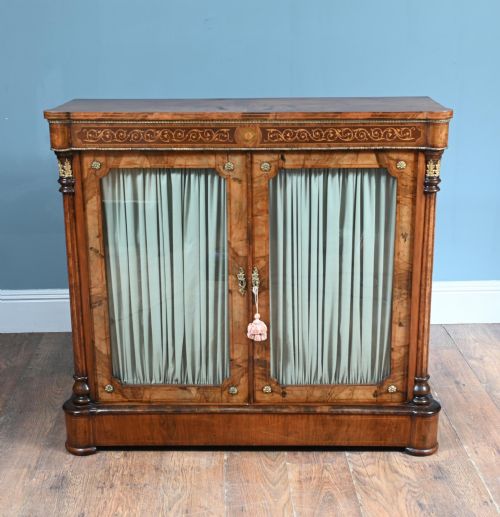
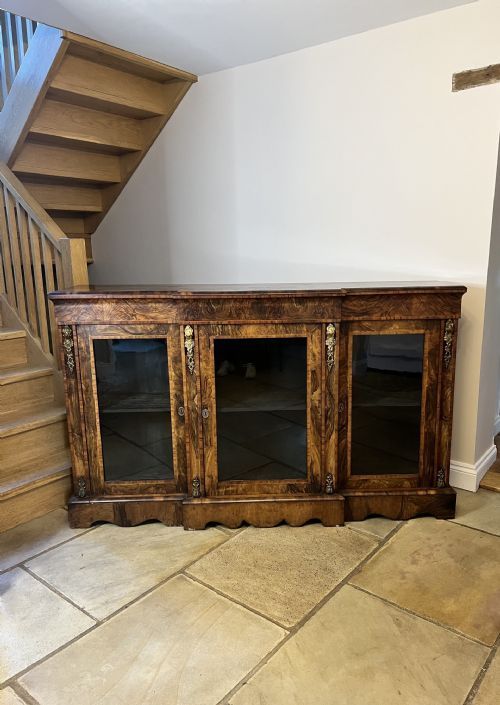
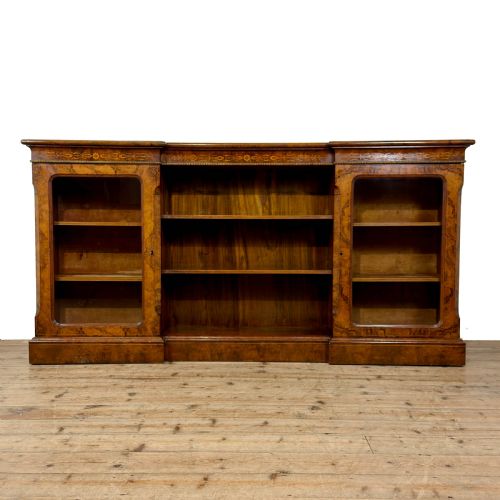
The selections span distinct revival movements and modern designs, including Queen Anne style, Regency revival, and French cabinet work. Buyers encounter various configurations, from breakfront bookcases to glazed pier cabinets and inlaid sideboards.
Originating across England, France, and Sweden, these items reflect diverse regional tastes in domestic storage and display furniture. The overarching style unites rich brown timber surfaces with functional cabinetry designed for domestic interiors.
How they were made
Cabinet makers utilised solid timber alongside figured walnut and burr walnut veneers to achieve striking grain patterns across flat surfaces and curved doors. These veneers are carefully laid over a secondary wood base to create symmetrical patterns.
Decorative elements often incorporate brass mounts, ormolu details, and boxwood stringing, alongside marquetry inlay for surface ornamentation. Glazed panels and bevelled glass frequently form the doors of display cabinets and bookcases.
Listings feature walnut credenzas and cabinets spanning the Victorian era, Regency period, and 1930s Art Deco movement.
What varies in quality
The excellence of a piece rests in the selection of the timber veneer, where dense burr or highly figured grain demonstrates superior craftsmanship. Artisans who matched veneer cuts symmetrically across doors and drawers achieved a level of visual harmony missing in simpler examples.
The refinement of secondary details such as cast ormolu mounts, inlaid boxwood stringing, and internal cedar or oak linings distinguishes workshop output. Structural integrity in the joints and the crispness of carved mouldings further separate standard production from exceptional cabinet work.
Gillows of Lancaster·Hille of London·Whytock and Reid·Bowman Brothers·Maple and Co
The Walnut Low Credenza Glossary
- Burr walnut
- A specialised timber cut from the wart or growth on a walnut tree, yielding a swirling and highly decorative grain pattern. Cabinet makers prize this material for accenting door panels and principal display surfaces.
- Marquetry
- The art of applying pieces of veneer to a structure to form decorative patterns and pictorial designs. Craftsmen use contrasting woods such as boxwood to delineate floral or geometric motifs.
- Ormolu
- Gilded bronze used for decorative mounts, handles, and feet on high-status furniture. The technique involves applying a mercury and gold amalgam to cast brass or bronze.
- Pier cabinet
- A narrow display cabinet designed to stand against the wall space between windows. These glazed pieces became popular during the nineteenth century for exhibiting porcelain and small collectables.
- Breakfront
- A cabinet design where the central section projects forward from the flanking wings. This architectural arrangement creates depth and shadow across large bookcases and sideboards.
Walnut Low Credenza: Frequently Asked Questions
Where should I place a walnut low credenza?
These low cabinets suit living rooms, dining spaces, or hallways where their horizontal proportions help balance wall art or mirrors without blocking light. Their enclosed cupboards and glass shelves provide functional storage for glassware, books, or collections.
Positioning them away from direct sunlight protects the walnut veneer and delicate inlay work from fading over time. Pairing the credenza with neutral walls allows the rich grain and brass details to stand out.
How do I care for antique walnut furniture?
Maintain the finish by dusting regularly with a soft, dry cloth and applying occasional quality beeswax to nourish the timber. Avoid using modern silicone sprays or placing the furniture near direct heat sources that could dry out the wood.
Keeping room humidity stable prevents the timber and underlying veneers from expanding or contracting excessively. Gentle handling of brass mounts and glass doors ensures the hardware remains secure.
What is the difference between Victorian and Art Deco pieces?
Victorian examples lean towards ornate marquetry, figured burr walnut, and revival styles such as Queen Anne or Rococo, emphasising traditional craftsmanship and decorative detail. These pieces often feature darker tones and intricate brass or ormolu mounts.
Art Deco items focus on clean geometric lines, smooth satin birch and walnut surfaces, and simplified forms without heavy ornamentation. They reflect a modern aesthetic centred on streamlined function and minimalist elegance.
How can I identify the period of my cabinet?
Examine the construction methods, interior linings, and hardware styles, as these change noticeably between the nineteenth and twentieth centuries. Hand-cut dovetails and specific lock mechanisms often point to earlier Victorian workshops.
Compare the overall silhouette against documented revival styles and documented maker signatures if present on the backboards or drawer linings. Wood finishes and veneer thickness also offer clues to the manufacturing decade.