


Traditional Walnut Shelf Unit
These traditional walnut shelf unit examples bring warmth to a room while holding a serious collection of books.
Traditional Walnut Shelf Unit
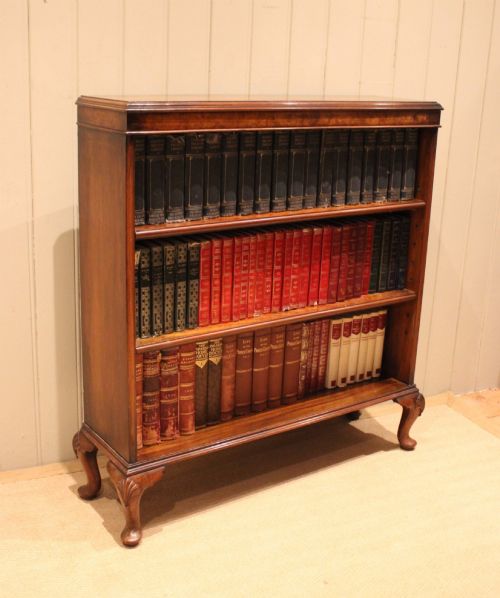
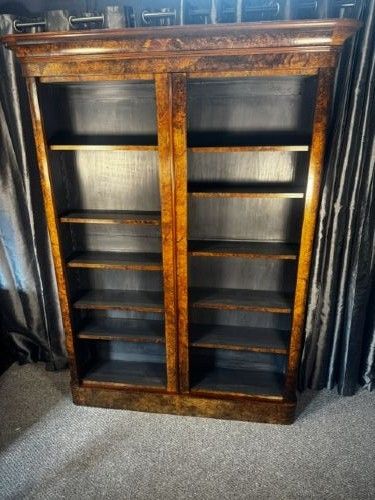
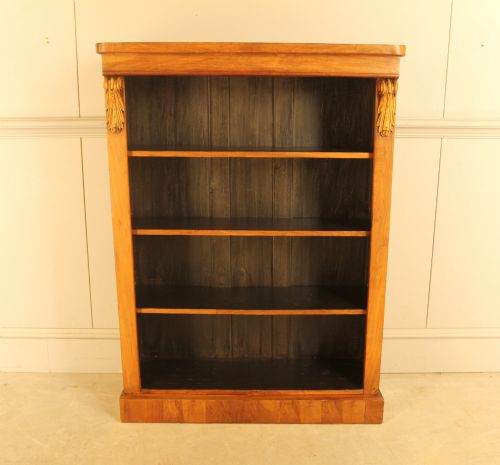
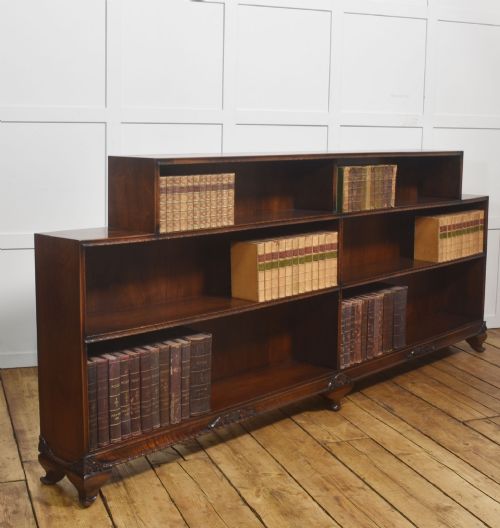
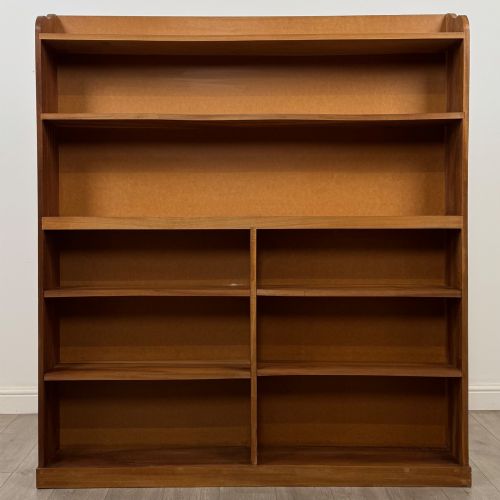
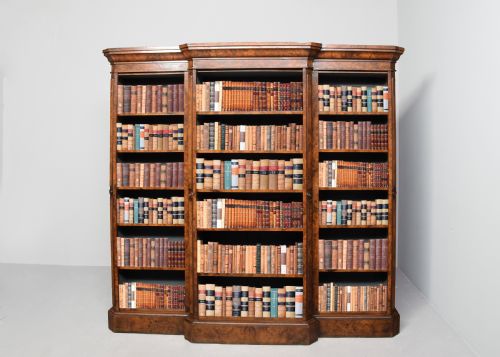
A traditional walnut shelf unit takes the form of an open bookcase, built to display volumes with easy access in domestic rooms and libraries. The examples seen here range from simple single sections to large breakfront configurations with multiple bays.
Larger variations incorporate stepped tiers, break-fronted facades, and fitted drawers beneath the shelves. These larger forms suit substantial rooms, whilst simpler open formats fit smaller spaces.
How they were made
Cabinet makers utilised solid walnut, burr walnut, and figured walnut veneer over supportive timber carcasses to achieve rich grain patterns and deep colour. Brass hardware often secures adjustable shelves and internal fittings within the bookcases.
Decoration relied on skilled timber work, featuring carved friezes and barley twist columns rather than applied ornamentation. Glazing occasionally appears on related cupboard sections, though open shelves predominate in this selection.
Some Victorian bookcases feature barley twist columns so enthusiastic they almost make the books look dizzy.
What varies in quality
The selection of the wood dictates much of the visual appeal, with highly figured burr walnut veneers commanding greater presence than plain timber surfaces. Finely executed carvings, such as barley twist columns and detailed friezes, separate standard pieces from more ambitious commissions.
Architectural scale and clever planning also determine distinction, particularly in breakfront and multi-section layouts. Superior examples integrate adjustable shelving systems and drawers smoothly into the overall design.
The Traditional Walnut Shelf Unit Glossary
- Breakfront
- A piece of furniture whose central section projects forward from the flanking wings. This architectural layout adds depth and shadow to large bookcases.
- Frieze
- The flat or decorated horizontal band running beneath the top cornice of a bookcase. Carved details often enrich this prominent upper section.
- Barley twist
- A spiral turning technique resembling a twisted rope, used to shape wooden columns and supports. It became particularly popular during revivalist periods.
- Veneer
- A thin slice of superior wood applied over a stable secondary timber like pine. This technique allows cabinet makers to display magnificent grain without wasting scarce materials.
Traditional Walnut Shelf Unit: Frequently Asked Questions
How do I care for walnut furniture?
Keep wooden surfaces away from direct sunlight and strong heat sources to prevent the timber and veneer from drying out.
Dust regularly with a soft, dry cloth and apply a quality beeswax occasionally to nourish the grain.
Are the shelves adjustable?
Many traditional bookcases feature movable shelves supported by adjustable racks or wooden pegs.
This flexibility allows you to house books of varying heights without wasting vertical space.
How do I date a walnut bookcase?
Examine the construction methods, secondary woods like pine, and stylistic clues such as carved friezes or revival details.
Victorian and Edwardian pieces often display distinct proportions and timber treatments compared to 1930s examples.
Where should I place a large breakfront bookcase?
Position large breakfront units against a principal wall in a study, library, or drawing room where they can anchor the space.
Ensure there is enough clearance in front for the projecting central section and any lower drawers to open fully.