

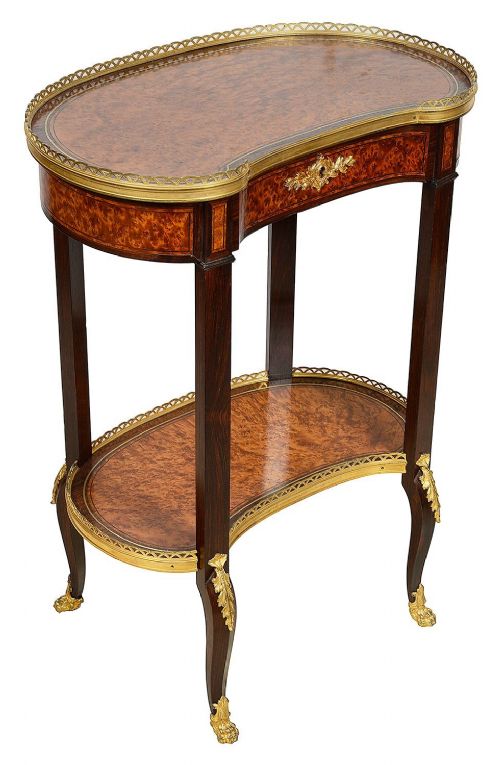


Walnut Kidney Shape Table
A walnut kidney shape table combines flowing serpentine curves with practical proportions, serving as a graceful writing desk, dressing table or occasional surface.
Walnut Kidney Shape Table
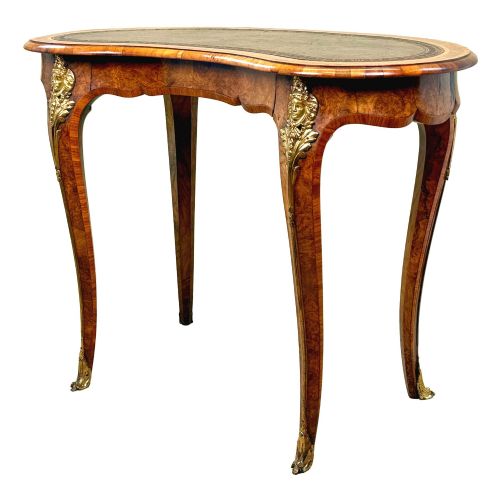
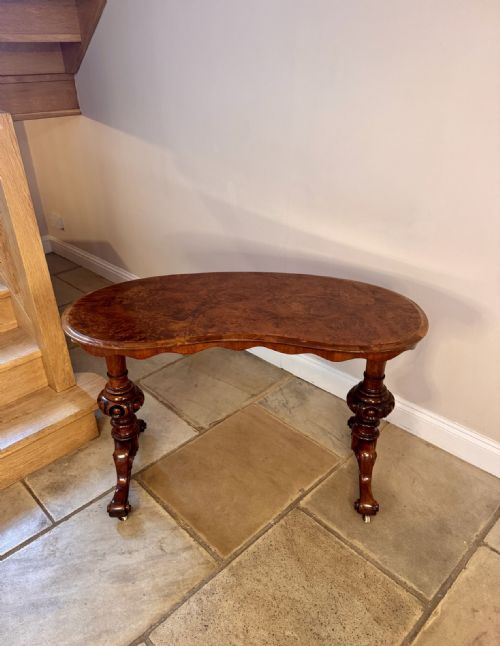
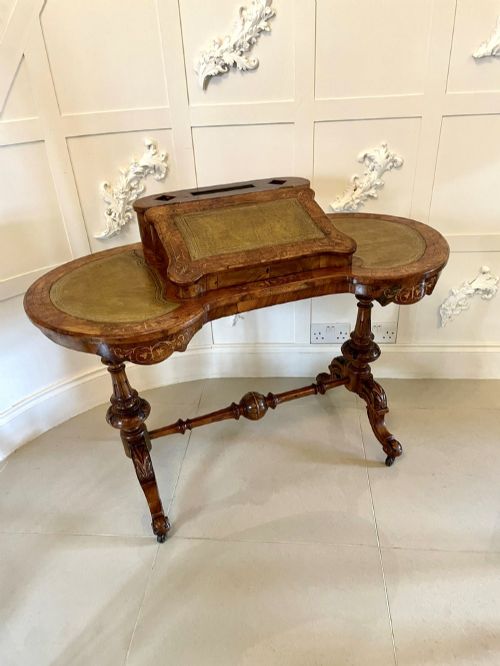
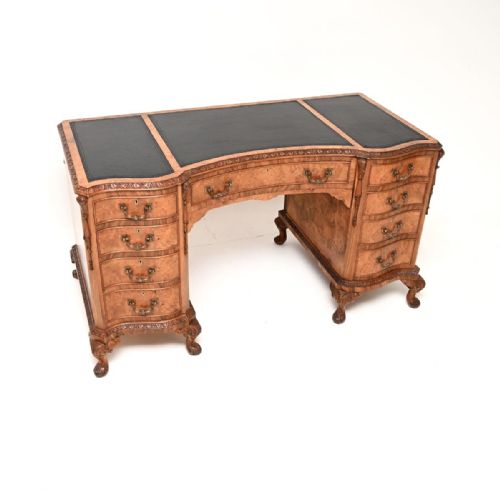
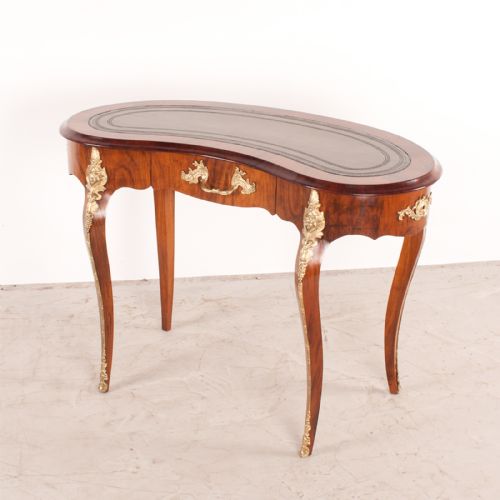
A walnut kidney shape table most commonly appears in nineteenth century Victorian pieces and revival styles, designed with a curved front to fit closely against the body. These tables serve multiple functions across the archive and current listings, functioning as writing desks, library tables, bedside stands, and dressing tables.
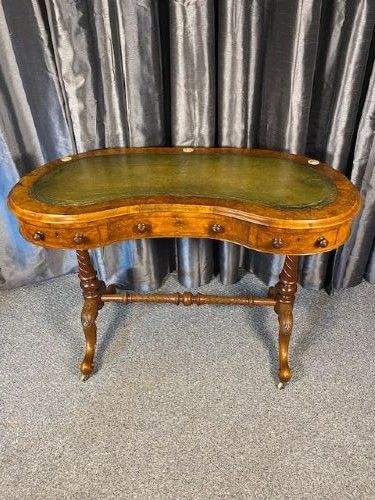
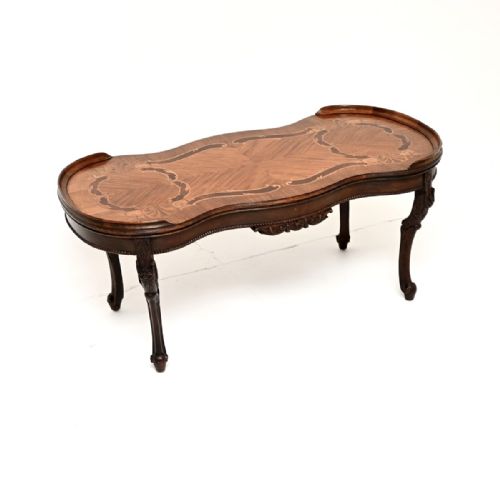
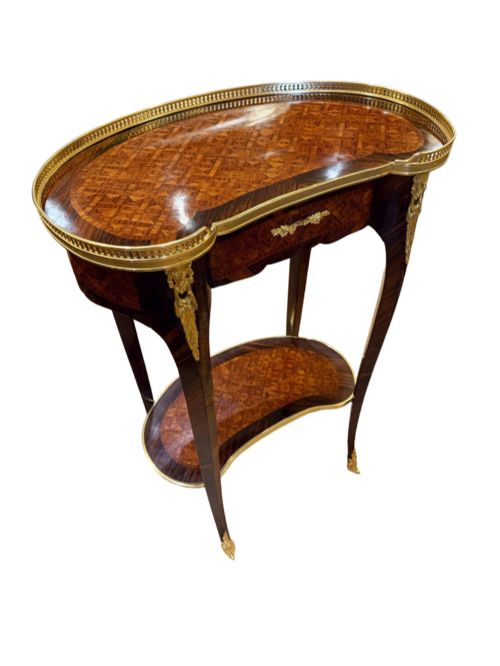
Victorian examples dominate the selection, often executed in figured burr timber and fitted with inset leather writing surfaces or delicate marquetry. Makers frequently adopted French Louis styles alongside domestic Victorian production, resulting in freestanding pieces finished on all sides for placement in the centre of a room.
Materials and Technique
Cabinetmakers constructed these pieces using solid walnut frameworks overlaid with highly figured burr walnut veneers to create rich, swirling grain patterns across the curved tops. Contrast is introduced through delicate stringing and marquetry inlay utilising lighter timbers such as boxwood and fruitwood.
Mounts in cast ormolu and brass accent the drawers and legs, while writing variants frequently incorporate hand-tooled leather inserts bordered by gilt tooling. Structural integrity on complex curves relied on precision veneering and stable secondary softwoods beneath the show wood.
Walnut Kidney Shape Table Retail Price Guide 2026
Typical asking prices for walnut kidney shape table among the pieces listed under this phrase on Sellingantiques today, from the lower quarter to the upper quarter. They describe what is for sale here now, not the wider market.
Listings feature items spanning the Victorian era through the early twentieth century, incorporating French Louis styles and Edwardian production.
Judging Quality
The distinction between standard examples and superior work rests on the selection of the burr walnut veneer and the crispness of the marquetry inlay. Master workshops utilised highly figured timber with matched grain flowing across the curved top, rather than mismatched patches.
Construction details also dictate grade, notably whether the piece is finished fully on the reverse for freestanding placement and whether original cast ormolu mounts and leather writing inserts remain intact.
Tehan·Gillows·Maurice Adams
The Walnut Kidney Shape Table Glossary
- Burr walnut
- A prized timber harvested from walnut tree growths, displaying complex, swirling grain patterns used for decorative veneer on high-end furniture.
- Marquetry
- The art of applying small pieces of veneer to a structure to form decorative patterns or pictures, utilising contrasting woods like boxwood and fruitwood.
- Ormolu
- Gilt bronze ornamentation mounted onto furniture pieces, prevalent in French revival designs and high-status Victorian pieces.
- Crossbanding
- A narrow strip of veneer applied around the border of a tabletop with the grain running perpendicular to the central panel.
- Davenport
- A compact writing desk featuring a sloped leather-lined top over a pedestal of drawers, occasionally incorporated into curved desk designs.
Walnut Kidney Shape Table: Frequently Asked Questions
Where should I place a kidney table?
Because many nineteenth-century examples are finished on all sides with polished backs, they look best floated in the centre of a study or drawing room rather than pushed flat against a wall.
The curved profile also makes them effective as dressing tables in bedrooms or compact writing desks where floor space is limited.
How do I care for the leather top?
The leather writing surface benefits from occasional cleaning with a slightly damp cloth followed by a neutral leather cream to keep the material supple and prevent drying.
Avoid placing damp glasses or unsealed inkwells directly on the vintage leather to preserve the original gilt tooling.
How can I tell Victorian from later revival pieces?
Victorian versions typically display heavier construction using solid walnut frames, dense burr veneers, and hand-cut dovetails within the drawer construction.
Later twentieth-century iterations often employ lighter internal framing and machine-cut elements while continuing traditional French Louis revival aesthetics.
What is the difference between a writing table and a desk?
Writing tables usually feature slender legs and shallow drawers beneath a finished top, designed primarily for light correspondence and decorative display.
Desks often incorporate heavier pedestal storage compartments or built-in superstructure elements like Davenport tops for extensive paperwork.