
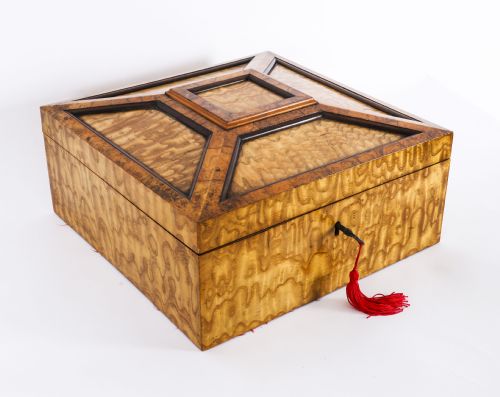


Walnut Keepsake Box
A walnut keepsake box brings warmth and refined timber grain to a dressing table while keeping small treasures secure.
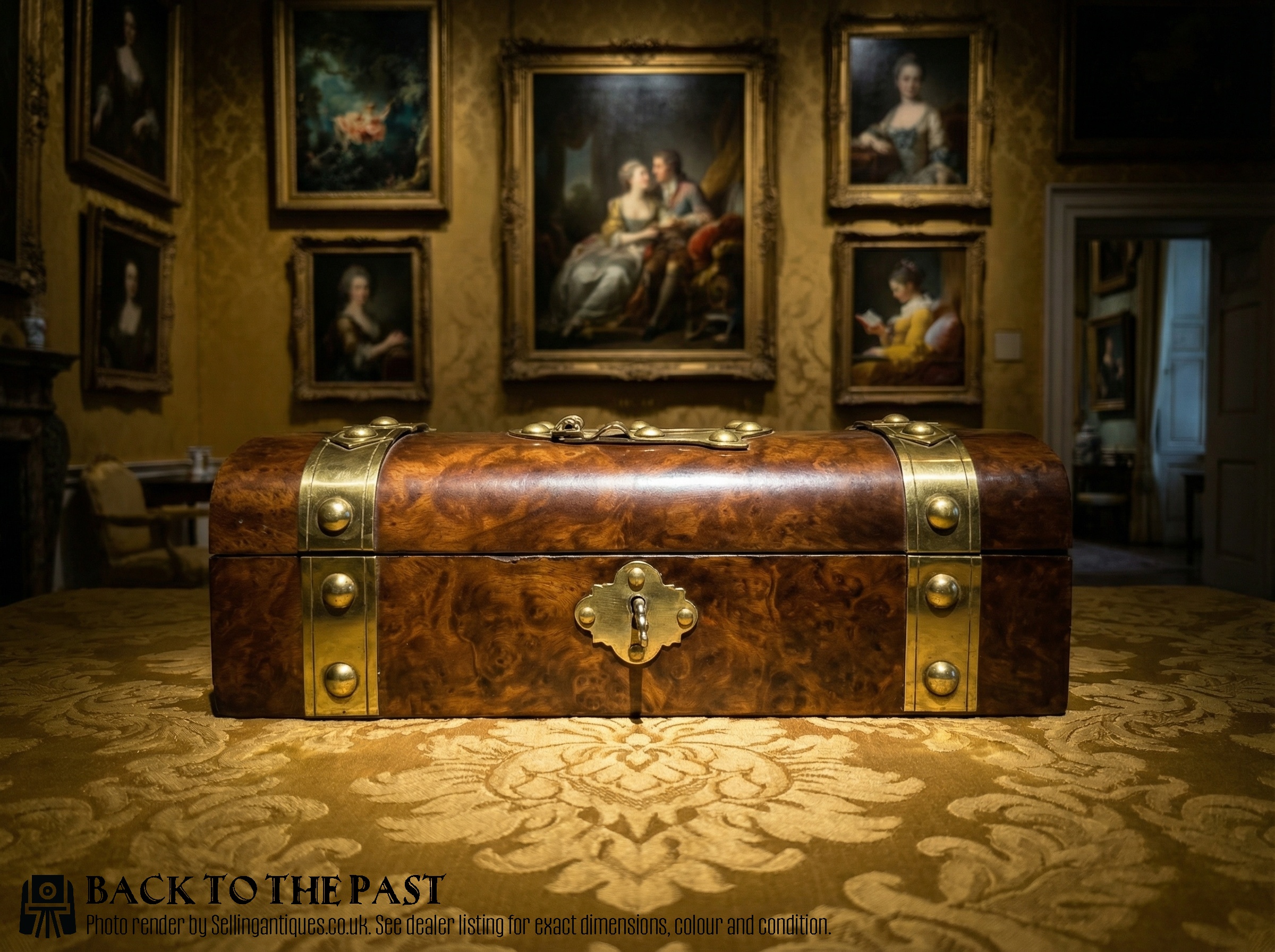
Walnut Keepsake Box
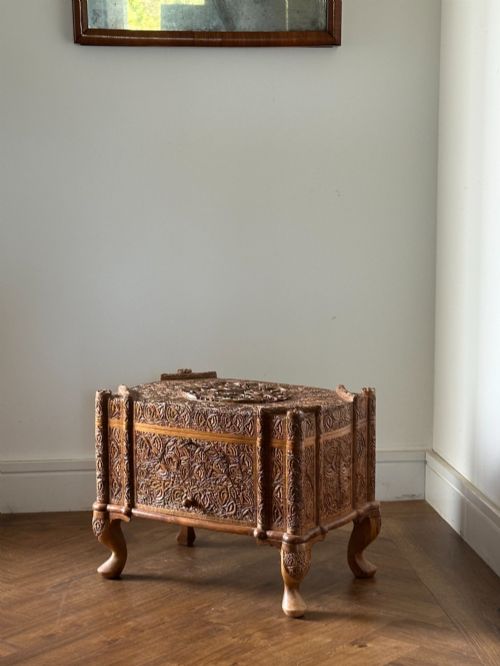
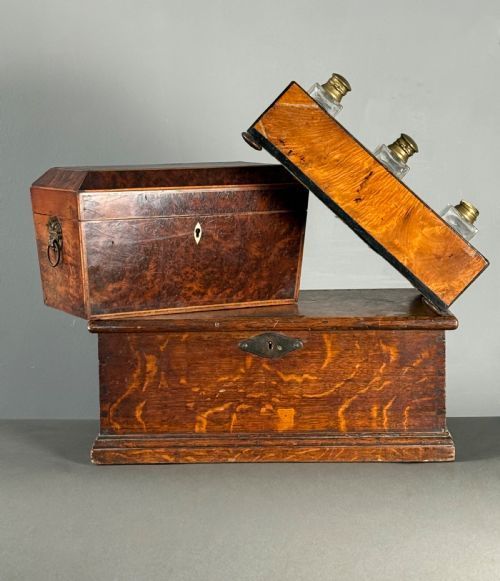
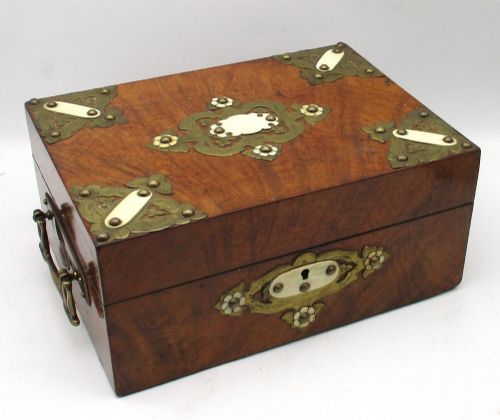
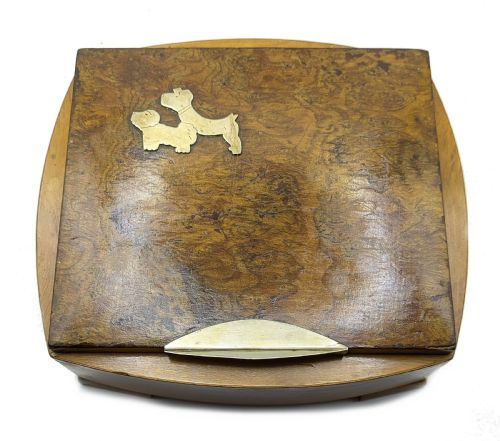
The assortment on this page spans simple table caskets to fitted dressing cases and intricate parquetry boxes. Victorian burr walnut examples dominate the selection, often featuring contrasting brass mounts or inlaid geometric patterns.
Beyond the standard rectangular caskets, the forms range from sloping tea caddies to domed caskets and glove boxes. Each version serves the dual purpose of domestic organisation and decorative display, relying on the natural figured grain of the timber for its primary visual appeal.
How they were made
Cabinet makers utilised solid walnut and decorative veneers like burr walnut, laying thin slices of highly figured timber over stable softwood or mahogany carcasses. This technique allowed artisans to showcase swirling grain patterns across the main lid and panels without risking the splitting associated with solid burr timber.
Construction details often included hand-cut dovetail joints on the corners of the box structure to ensure durability. Interiors were lined with silk, velvet, or paper, and fitted with compartments, mirrors, or removable trays tailored for sewing implements, gloves, or jewellery.
Decoration relied on precision woodworking techniques such as parquetry, marquetry, and Tunbridge Ware mosaic detailing, sometimes complemented by brass banding, boxwood stringing, or mother-of-pearl inlay set flush into the timber surface.
Walnut Keepsake Box Retail Price Guide 2026
Typical asking prices for walnut keepsake box among the pieces listed under this phrase on Sellingantiques today, from the lower quarter to the upper quarter. They describe what is for sale here now, not the wider market.
The listings show walnut keepsake boxes spanning the Georgian, Victorian, and Art Deco periods, incorporating brass, boxwood, and mother-of-pearl details.
What varies in quality
The quality of a walnut keepsake box rests largely on the choice and matching of the timber veneer. Finer examples display symmetrical, heavily figured burr walnut wrapping continuously around the exterior, whereas lesser pieces rely on plain timber with minimal grain movement.
Internal fitting and hardware execution separate standard utility boxes from high-end bespoke pieces. Superior boxes feature original working locks with matching key escutcheons, robust brass hinges, and cleanly fitted internal trays lined in quality materials rather than basic modern replacements.
Precision in decorative inlay distinguishes master craftsmanship from routine production. Crisp geometric parquetry, tight Tunbridge Ware mosaic bands, and flawlessly flush stringing indicate a workshop dedicated to exacting standards.
The Walnut Keepsake Box Glossary
- Burr walnut
- A prized timber harvested from the irregular growth or wart of a walnut tree, yielding swirling, knotty grain patterns used for decorative veneers. It provides a highly textured and luxurious finish on 19th-century cabinet work.
- Parquetry
- A geometric mosaic of wood pieces laid down on a structure to form a solid pattern, similar to mosaic tiling. This technique frequently decorates the lids of Victorian and Regency boxes.
- Tunbridge Ware
- A distinct type of decorative woodwork produced in Kent featuring intricate mosaic patterns made from many tiny pieces of naturally coloured woods. These tiny blocks combine to form pictorial or geometric motifs on trinket and glove boxes.
- Marquetry
- The art and craft of applying pieces of veneer to a structure to form decorative designs and pictures. Artisans utilise various tinted woods to create floral or architectural scenes across the box lid.
- Tea caddy
- A small box or chest originally constructed to store precious loose tea leaves securely under lock and key. Many surviving antique caddies have been adapted over time to serve as general keepsake boxes.
Walnut Keepsake Box: Frequently Asked Questions
How do I date a walnut box?
Dating a box relies on observing construction methods, timber choices, and internal linings. Georgian pieces tend to show simpler lines and solid timber construction, while Victorian examples frequently employ burr walnut veneers, elaborate brass mounts, and velvet-lined fitted interiors.
Hardware such as locks, hinges, and escutcheons also offers clues. Hand-cut screws and traditional dovetailing point firmly towards 19th-century manufacture.
What were keepsake boxes used for?
Keepsake boxes served as secure receptacles for personal valuables, letters, trinkets, and jewellery in the home. Different internal fittings designated specific uses, such as glove boxes, sewing chests, or dressing cases with integrated mirrors.
Wealthier households utilised these decorative boxes to display taste on drawing room tables or dressing chests. They kept private items neatly organised and protected from dust and light.
What is the difference between parquetry and marquetry?
Parquetry involves arranging small geometric wood veneers to create repeating patterns like cubes, squares, or chequered designs. It focuses on symmetrical, architectural motifs across the surface of the box.
Marquetry uses varied wood veneers to form pictorial scenes, scrolls, or floral arrangements. This technique requires greater artistic freedom to shape organic curves and tonal shading.